Adversam — Daimon Review
Adversam is an Italian black metal entity. Eleven years after their last album, Adversam unleashed their new full-length Daimon on March 28, 2026, co-released via Masked Dead Records and Sulphur Music.
Adversam, Daimon Review: This review will evaluate every aspect of the album, from its intricate musical composition to its production.
The First Three Sins, The Summary
The First Sin, The Strings/Keys: Cold, serrated tremolo lines — precise, mid-forward, and structurally driven, carving through the mix with calculated intensity. The Second Sin, The Vocals: Harsh, clear enunciation — a rasped, philosophically charged voice that observes rather than performs. The Third Sin, The Percussions: Relentless, machine-like precision — high-velocity blasting balanced with controlled, deliberate pacing.
The Fourth Sin, Overall Discussion
Opening: The Threshold of Daimon
The moment the listener presses play, and the first note and vocal strike, they are instantly drawn into a world of unyielding extreme music. Across nine hymns spanning a forty-minute runtime, Adversam creates a sonic landscape that offers no quarter.
It is an immediate immersion — a sudden drop into a realm where the boundaries of the self are tested by the sheer intensity of the composition.
Invocation of the Hidden Interior
Adversam drags the listener through a lyrical landscape steeped in the mythic, esoteric history of Turin. The record acts as a bridge between the physical world and the hidden interior, drawing heavily from the following:
- Jungian Psychology: Exploring C.G. Jung’s concept of the daimon — the shadow-self and the vast, often terrifying unconscious that dictates our hidden nature.
- Gustavo Rol’s Occultism: Tying the music to Rol’s concept of constant possibilities, where the esoteric experiments of the past bleed into the extreme sounds of the present.
Lyrically, the nine hymns function as a grim interrogation. Adversam does not merely perform; they question the very essence of evil and the complex, often contradictory nature of humanity. The album probes the potential — and the inherent darkness — of human consciousness, making the listener confront the daimon that resides within.
Regenerative Black Metal Form
The musical style of Daimon is firmly rooted in classic black metal, yet constantly regenerates through modern, original insight. Adversam manages a rare feat — creating a sound that is expressive and fast, yet technically precise.
This is not just a chaotic blur; it is a calculated, sharp-edged form of black metal that demands the listener’s full attention.
Architectural Devilmanship
Adversam provides the listener with a form of devilmanship defined by a sophisticated sense of balance. The dual guitar work by Asterion and Tiorad is defined by balance and surgical austerity. Their approach is not ornamental; it is structural — almost architectural. Utilising high-velocity tremolo that is sharpened rather than blurred, they maintain a tone that is cold, serrated, and mid-forward. This deliberate production choice avoids the modern wall of sound, allowing the listener to perceive the precise geometry of every riff.
The guitars feel like they are actively carving the daimonic interior: precise, relentless, and intentionally stripped of excess. When the chords do open up, they create a chilling void-space rather than warmth, reinforcing the album’s esoteric coldness.
Two hymns stand as pillars of this technique:
- Echoes of Pain: Carries the album’s most memorable motif — a spiralling, minor-key figure that feels like a physical descent into a sealed chamber.
- Pillars of Decay: Utilises tightly coiled patterns that snap open into sudden, violent accelerations, mirroring the unpredictable nature of the unconscious.
Subterranean Force & Percussive Authority
The bass work, helmed by The Cardinal, is treated as a subterranean force. It operates as a dark current flowing beneath the serrated guitar work, providing a foundation of dread rather than acting as a melodic counterpoint. This choice anchors the hymns in a heavy, grounding reality, ensuring that the psychic surgery of the guitars has a weight that is felt in the chest of the listener.
The drum performance by Summum Algor is arguably the most aggressive and commanding element on the record. Defined by machine-like precision, the drumming propels the hymns forward through high-speed blasting executed with a relentless, unwavering intensity, mirroring the constant possibilities of the esoteric mind.
The cutting snare carries a sharp, piercing tone that slices through the dense mid-forward mix, ensuring the rhythm is never lost in the chaos. Meanwhile, his cymbal work acts like sparks flying from a grinding wheel — violent, hot, and industrial.
The Void Expanded — Synth as Psychological Frame
The synth work by Essyllt is atmospheric and gloom-bearing, yet it remains strictly non-symphonic. These are not keyboard-forward melodies or epic layers; instead, they function as a psychological framing device.
They widen the void behind the guitars, providing a chilling depth that reinforces the album’s Jungian and philosophical themes through cold, minimal pads. These are used to expand the sonic space, making the interior of the Daimon feel vast and empty. The gloom-texturing and low-frequency drones sit deep in the mix, acting as a subterranean pulse of dread.
Finally, the shadow-tones are subtle frequencies that mirror the hidden interior, heightening the sense of an occult experiment in progress.
In hymns like The Silent Alignment, the synths create a ritual threshold — a period of haunting stillness that prepares the listener’s mind for the violence that follows. It is the sound of the shadow-self emerging from the dark before the technical fury of the guitars begins its work.
Voice of the Daimon
The vocals of Katharos tear through the music with a harsh, philosophically charged intensity. They are positioned somewhere between a rasp and a sharp bark. There are no Gothic theatrics, no layered choirs or growls — justclear enunciation. Despite the harshness, every word is delivered with clarity and intention.
The vocals feel like the voice of the Daimon itself — not pleading for mercy, nor triumphant in its darkness, but coldly observant.
It is the sound of an internal force witnessing the collapse of the ego, narrating the psychic descent with a detached, terrifying precision.
Weathered Precision — Production Doctrine
The production on Daimon strikes a rare balance: it feels like a professional studio recording intentionally weathered by the elements. While the centre of the mix is modern and precise, the edges remain raw, cold, and harsh. This is not a lo-fi accident, but a high-definition capture of atmospheric violence.
The Collapse Within
The journey reaches its inevitable conclusion with the final hymn, The Collapse Within. It is the sonic realisation of the Jungian process — the moment where the ego finally gives way to the hidden interior.
As the music fades, it leaves the listener in the ruins of their own psychic architecture, having survived the constant possibilities of the esoteric mind.
Final Reflection — The Daimon Endures
Overall, Daimon is a heavy, raw, and atmospheric fruit of art — one that has been sitting and ripening in the dark corners of the Italian occult scene. It is a disciplined, esoteric return that sharpens Adversam’s legacy into something cold, philosophical, and violently alive.
For those willing to brave the Turin shadow, this record stands as a fruit of technical psychic surgery.
The Fifth Sin, The Memorabilia
For me, Daimon is pure black metal — frostbitten, atmospheric, and raw to the core. It possesses an energy that simply refuses to fade out. There is something unique about Italian black metal and its lyrical themes: it is never over the top, but rather acts as a precise map of the interior.
Daimon hits every nail in the coffin, offering a descent into a personal Grimoire that is as musically rewarding as it is intellectually dense.
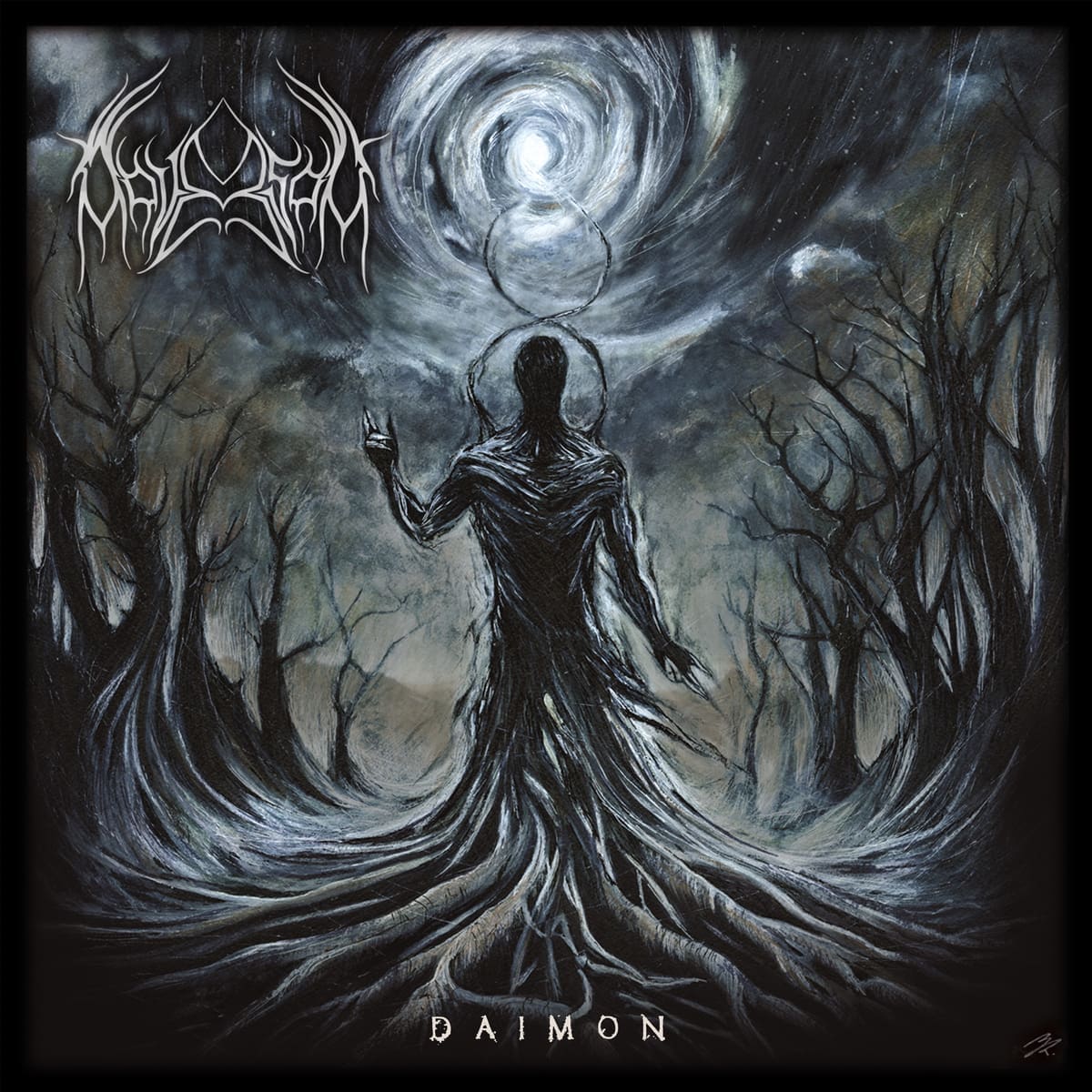
The Sixth Sin, The Artwork
The artwork is far more than just a visual accompaniment; it is a map of the internal landscape, rendered through a lens of occult-cosmic symbolism. It visually anchors the Jungian and esoteric themes, serving as the first page of the Grimoire the listener is about to explore.
The Seventh Sin, Disrelish
There is little to disrelish for the dedicated listener. This is pure esotericism, philosophy, and psychology distilled into the medium of black metal. If one is seeking a shallow experience, they will not find it here — Daimon is built for those who wish to descend.
The Hymns
01. Fall of Illusions
02. Pillars of Decay
03. Insignificance of Evil
04. The Silent Alignment
05. Echoes of Pain
06. Dead Inside, Alive for a Lie
07. Essence of Existence
08. Outro Disperata
09. The Collapse Within
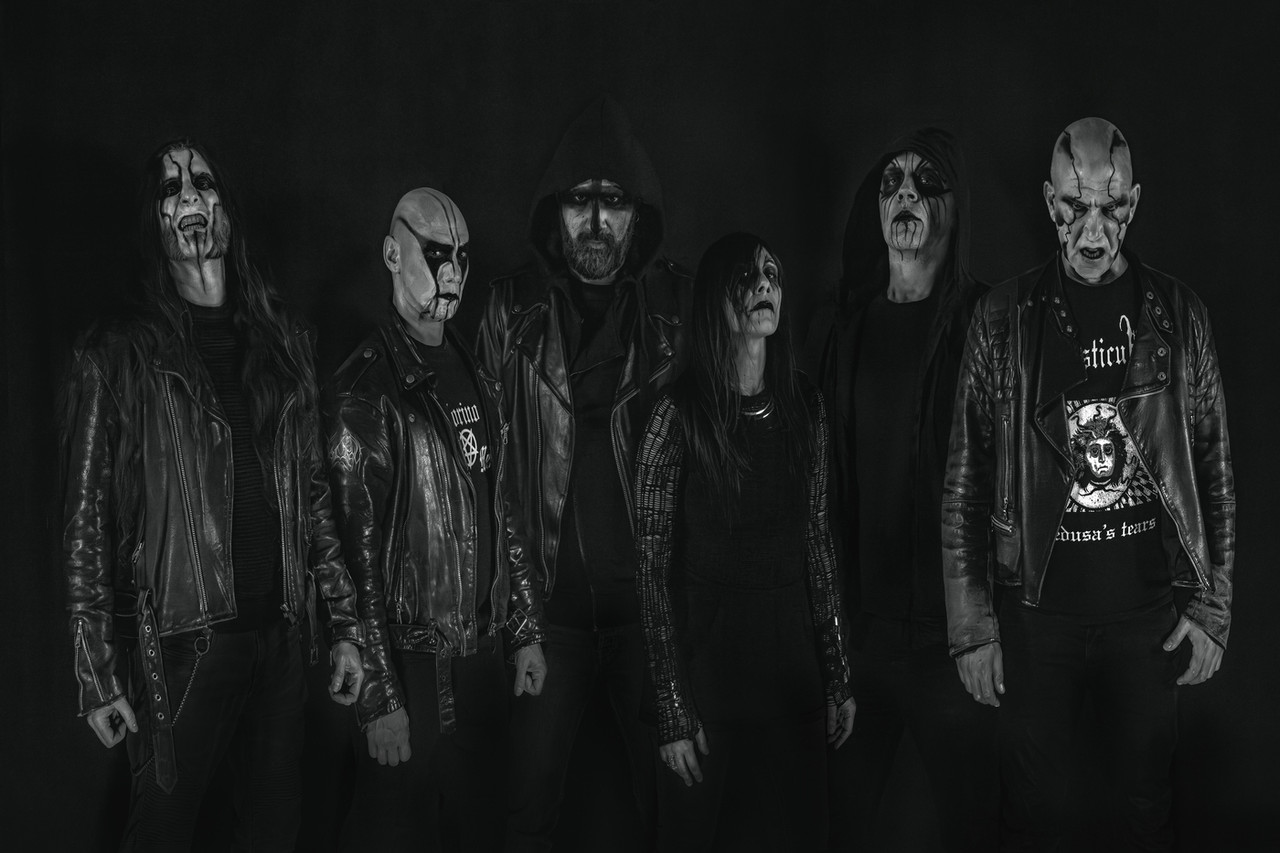
Adversam
Katharos — Vocals
Asterion – Guitars
Tiorad – Guitars
The Cardinal – Bass
Essyllt – synths
Summum Algor
Hear The Music
Social Links
Masked Dead Records | Home Page