Black Rain — Too Goth to be Punk. Too Punk to be Goth Review
Black Rain is a UK dark post-punk entity. In 2025, the band released their independent debut album, Too Goth to be Punk. Too Punk to be Goth, the album stands at the collision point between punk energy and the brooding atmosphere of goth.
Black Rain, Too Goth to be Punk. Too Punk to be Goth Review: This review will evaluate every aspect of the album, from its intricate musical composition to its production.
The First Three Sins, The Summary
The First Sin, The Strings/Keys: Post-punk guitar lines built on serrated rhythm and minimalistic tension, balancing gothic atmosphere with raw punk urgency. The Second Sin, The Vocals: Shadowed baritone vocals delivered with cold restraint and punk abrasion, echoing the melancholic authority of classic post-punk. The Third Sin, The Percussions: Driving mechanical percussion combining tight punk momentum with disciplined post-punk restraint.
The Fourth Sin, Overall Discussion
A Descent Through Nine Hymns
From the moment the first note strikes, the listener is submerged in a dim instrumental tide of sound. This journey of nine hymns is a descent— one that begins with the first five hymns in the controlled gloom of the studio and ends with the last four, in a live recording setting.
Where Punk Meets Gothic Atmosphere
Across nine hymns— the band balances sorrow and electricity. The sound is a fruitful haunting, combining the energy and sorrow of Joy Division with the cathedral depths of The Sisters of Mercy. Topped with mechanical percussion reminiscent of early Killing Joke, a shadow-baritone echoing the ghost of Bauhaus, and the pulse of The Damned fused with the gloom of The Cure.
The result? A dark, catchy atmosphere built on driving rhythms and an industrial funeral for the dance floor— everyone is invited.
The Devilmanship of the Trio
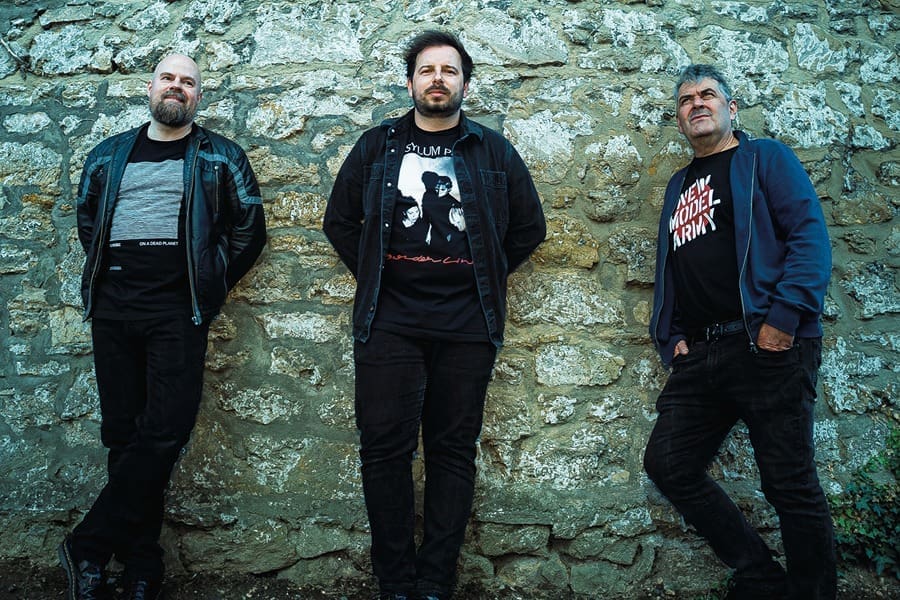
Black Rain’s devilmanship is undeniable, delivering a composition forged to perfection. This sonic architecture is built on the collective proficiency of the trio: Mick’s rhythmic discipline on drums, the grounding pulse of Scott’s bass, and the dual threat of Josh’s guitar work and shadow-baritone vocals.
Together, they weave an industrial-gothic and post-punk tapestry that is as technically precise as it is emotionally raw.
Steel and Discipline in the Rhythm Section
The bass is the spine of these hymns— thick, driving, and unexpectedly melodic. Scott’s lines don’t just provide low end; they carry the songs forward, carving a path through the gloom with a heavy, purposeful momentum.
Mick’s drumming is defined by a machine-like tightness that stops short of being robotic. With a crisp, cutting snare that signals the band’s attack, his rhythms are no-nonsense— stripped of ornament and wasted motion. This is punk energy filtered through a cold, post-punk restraint: fast when necessary, but always under absolute control.
Rust-Edged Guitar and a Shadow-Baritone Voice
Josh’s guitar work is lean, serrated, and deliberately unornamented. He rejects the lush, chorus-drenched shimmer of traditional goth rock in favour of a sharp, rusted-steel tone. Through a lens of post-punk minimalism, his contribution consists of short, stabbing phrases and rhythmic aggression. The guitar often locks into a percussive wall with the drums, creating a singular, impenetrable force.
It is not a melodic leader; it is a blade slicing through the rhythm section. With occasional bursts of noise-leaning feedback and harsh overtones, it provides the abrasive edge that cements their too punk to be goth identity.
Josh’s vocal delivery occupies a shadowed, forceful space between a classic goth baritone and a visceral punk bark. While echoing the low, resonant spirit of Ian Curtis, he is no clone. The delivery is more aggressive, infused with a snarling punk attitude and emotional abrasion.
These phrases are direct and confrontational—stripped of all theatricality, leaving only a raw, haunting presence.
Forged in Live-Room Energy
The debut was not polished in a high-end studio; it was forged in the friction of live-room energy. Eschewing the glossy over-produced aesthetics of the era, the band embraced a dark, gritty post-punk realism. This is music shaped by the bleak industrial shadows of Sunderland—a landscape reflected in every note.
The Sound on the Wear
Overall, Black Rain is a dark, gothic fruit of art. From the first moment of play, they build a relentless musical arc— a three-piece war machine designed for precision and impact. This record does not just represent Sunderland; it is Sunderland. Not through the lens of nostalgia, but in that hard-edged, no-nonsense, steel-under-the-skin reality that only this region can produce.
You can hear the ghosts of the shipyards vibrating in the strings; the rhythmic ghost-pulse of old factories in the percussion; the coal-dust lungs of the mines in the vocals. It is the same lightning that made Joy Division inseparable from Manchester, now filtered through the haunted industrialism of Wearside.
When the Hymns Fade
The final hymns of the live set dissolve, leaving only the cold air of the North. The music fades into the darkness, but the dance beats still echo in the back of your mind. The three-piece war machine has passed through, leaving its rusted steel signature on your soul.
The Fifth Sin, The Memorabilia
For me, Black Rain is more than a sequence of hymns; it is the dark aura of Sunderland— the city where I was born and raised— captured in a thirty-minute descent. It is the sound of the North’s industrial ghost, channelled through the gothic and post-punk lineage of Joy Division, Bauhaus, and The Sisters of Mercy.
The live hymns that close the record are not what you expect. They are an essential haunting that must be experienced alongside the first five opening hymns to truly understand the band’s reach. From the devilmanship of the trio to the skeletal precision of the instrumentation—the vibrating steel of the bass, the serrated guitar, and the mechanical pulse of the drums—this music sends a cold, damp vibe directly down the spine.
It is the sound of home— if home is a place of rusted shipyards and winter mist.
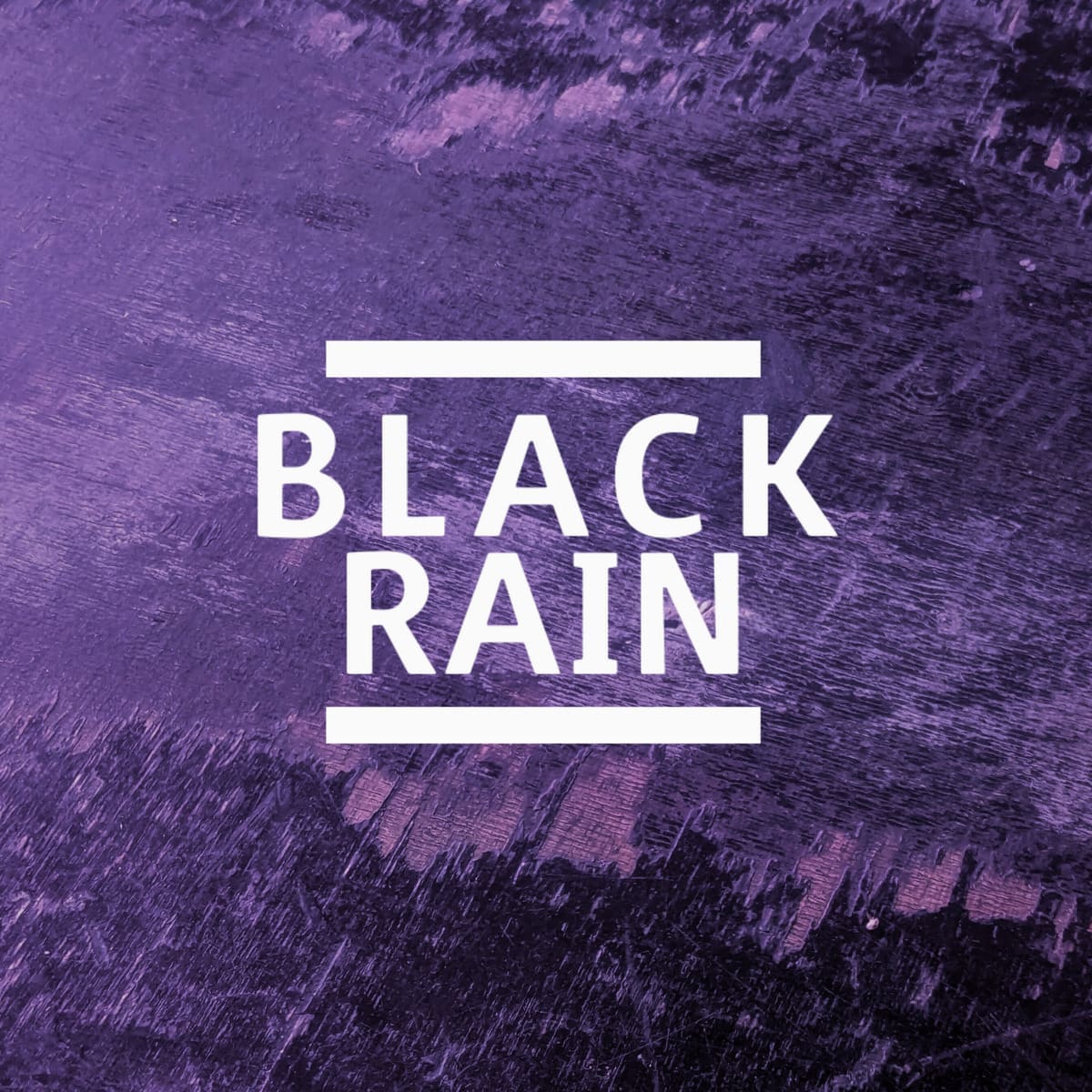
The Sixth Sin, The Artwork
The visual skin of the record is a mirror to its soul. It does not just reflect the music; it captures the grim industrial heritage of a city defined by its mines and shipyards. To look at the artwork is to witness the physical architecture of Sunderland—the soot, the iron, and the hard-edged reality that birthed the devilmanship within.
The Seventh Sin, Disrelish
In a composition floored to perfection, there is little here to disrelish. The only sin is the obsession it triggers. The devilish replay button has become a new plaything—an invitation to return to the darkness again and again. As the music fades, you find yourself reaching back into the shadows to start the nine hymns once more.
The Hymns
01. Inside
02. Save Me
03. Shotgun
04. Satanists
05. Fear
06. Shadows Cry (Live at the Bunker)
07. Broken Words (Live at the Bunker)
08. I Suffer Alone (Live at the Bunker)
09. Dust Tube (Live at the Bunker)
Black Rain
Josh Cowey — Vocals, Guitars
Mick Christon — Drums
Scott Hays — Bass