Max Enix — Beauty In Darkness Pre-review
Max Enix is a French progressive (fusion/cinematic) entity. In Spring 2027, Max Enix will return with his second full-length, Beauty In Darkness.
Max Enix, Beauty In Darkness Review: This review will evaluate every aspect of the album, from its intricate musical composition to its production.
The First Three Sins, The Summary
The First Sin, The Strings/Keys: Progressive riffing, melodic leads, atmospheric piano, cinematic synths, and grandiose orchestrations forge an expansive soundscape. The Second Sin, The Vocals: Clean, harsh, theatrical, and processed vocals traverse wide emotional extremes. The Third Sin, The Percussions: Dynamic progressive drumming shifts between restrained passages, intricate fills, and aggressive double-kick bursts.
The Fourth Sin, Overall Discussion
Beyond The Looking Glass
Before stepping into the core critique of Beauty In Darkness, this feature adopts a specialised approach to match the sheer scale of the album. Spanning approximately seventy-eight minutes across ten expansive hymns, the album functions as a portal — transporting the listener far, far away, through the looking glass and into a transcendent, spiritual world.
Beauty In Darkness stands as a multidimensional fusion where dark atmosphere, elevated spirituality, futurism, and metaphysical imagery collide. Lyrically, its apocalyptic journey moves from the darkness of this world towards light and divine spiritual realms, where spirits and souls intertwine beyond the scourge of humanity.
The Ritual Of Unbroken Listening
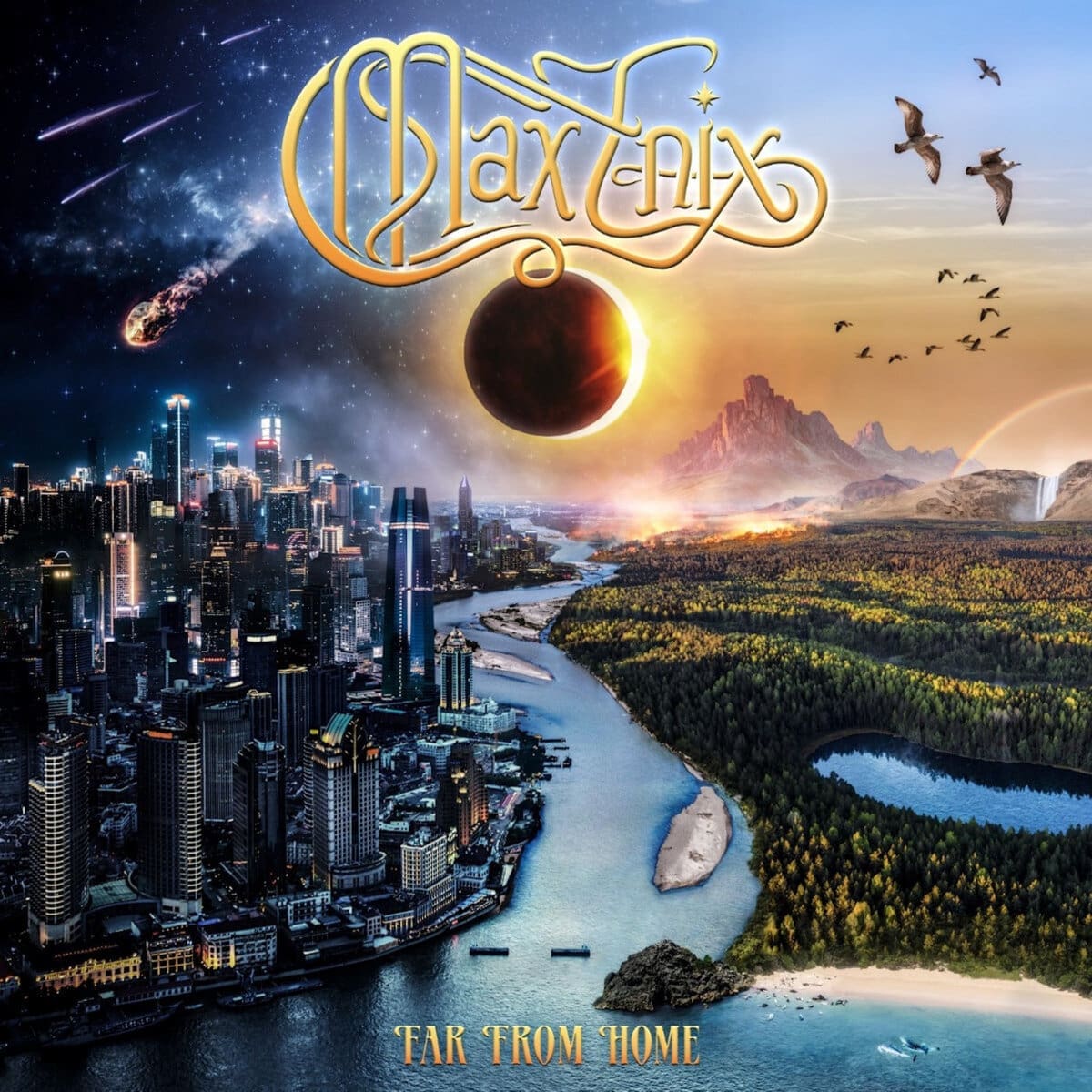
Beauty In Darkness is noticeably more aggressive, symphonic, emotional, cinematic, and avant-garde than Max Enix’s 2023 debut, Far From Home. A release of this magnitude demands a specific kind of reverence: sit back, relax, disconnect from the outside world, and experience the music through a pair of headphones.
This is an album engineered to be experienced as a complete, unbroken work. To truly absorb its metaphysical scale, it should be played from start to finish without skipping a single hymn. It is a record for finding the right moment — allowing its musical spectrum to wash over your ears and flood your room.
Ambient Lanterns & Ritual Stillness
- Hymn I — Ghost Of Yesterday — The journey opens with mist-like ambience. Clean guitars pick slow, deliberate arpeggios while piano motifs drift through the mix like lanterns floating through thick fog. Synth pads suspend all sense of time, gradually leaning into a heavy, atmospheric prog-cinematic landscape.
- Hymn II — A Pale Light — Transitioning seamlessly, the guitars shift towards warm, singing leads, riding atop shimmering synths and a steady percussive engine punctuated by double-kick flourishes. The vocal delivery is soaring and hopeful, backed by powerful choral layers throughout the chorus.
- Hymn III — The Sacrificial Dove — The mood darkens into a slow, processional tempo. Strings, tremolo runs, and fluid legato passages build dramatic tension. The vocals take on a wildly theatrical tone, interweaving spoken-word declamations, rap/harsh vocals, and sweeping operatic invocations before dissolving into stillness — as if a sacred ritual has just concluded.
Rupture & The Golden-Crimson Monolith
Hymns IV and V mark a pivotal shift within Beauty In Darkness, shattering the ritual stillness of the opening movement with violent extremity before expanding into a majestic, mournful doom-prog monument.
- Hymn IV — Sodomizing The Snakes — This hymn violently fractures the album’s preceding stillness. An extreme fusion of styles unleashes harsh vocal expulsions, sudden double-kick bursts, rapid tom fills, angular riffing, and dense string clusters. Here, the choral arrangements are no longer a comforting balm — they are weaponised into an engine of pure sonic assault.
- Hymn V — In This Golden and Crimson Tomb — Standing as a twelve-minute emotional monolith, this hymn shifts the album into epic doom-prog territory. Built on slow, heavy chords and reverb-drenched guitar leads, the rhythm section becomes spacious and ritualistic. Warm, sepia-toned synths blend with mournful vocal harmonies, while orchestral strings and brass build towards a radiant yet deeply tragic climactic swell.
Cybernetic Fracture & Industrial Apocalypse
Hymns VI and VII drag the listener through a technological nightmare — replacing organic spirituality with synthetic malice and crushing apocalyptic warfare.
- Hymn VI — Hacked AI of Death — This hymn marks a severe experimental and technological shift — the violent intrusion of the synthetic into the spiritual realm. Vocals are processed and layered with robotic harmonies and vocoder touches, set against mechanical chugs, syncopated riffs, glitch textures, and digital distortion. The percussion merges acoustic and electronic elements, pulsing with stuttering patterns and cybernetic drive.
- Hymn VII — Destruction Camps — As the abyss before the ultimate ascent, this hymn delivers an apocalyptic cinematic landscape. Built on punishing guitar work and blast-adjacent drum passages, the vocal delivery descends into harsh, multi-layered screams of pure anguish. The atmospheric space is choked with industrial synths, low drones, harsh noise, and cold, metallic textures.
Luminous Ascension & Reflective Grace
Hymns VIII and IX bring the listener out of the industrial abyss, emerging into cathartic illumination before settling into a peaceful state of grace.
- Hymn VIII — Beauty In Darkness — Serving as the emotional heart of the album, the title hymn is a transcendent prog-cinematic fruit of art. Built on melodic guitar riffs, soaring lead solos, and wide harmonic beds, the hymn features dynamic drumming and multi-layered cathartic choral vocals. The orchestral arrangements build towards a climax where the album’s darkness transforms into pure luminosity.
- Hymn IX — Deliverance Of a Soul — Following the emotional peak, the focus shifts to intimate piano and lush orchestral arrangements. The guitars remain clean and minimal, while the percussion retreats into subtle cymbal swells and sparse accents. The vocals navigate gentle, harsh, and reflective tones, allowing the spirit to settle after the preceding storm.
Remembrance Beyond the Mirror
The tenth and final hymn, Remembrance, brings the narrative arc to a poignant, meditative close. Carried by ghostly vocal motifs, soft synth pads, and distant choral echoes, the album concludes not with a violent eruption but with a gentle, fading descent into metaphysical silence.
Yet the metaphysical journey continues. The release offers ten additional companion hymns — reimagining the same ten hymns in fully orchestral instrumental form, stripping away the metal substrate to expose the raw, classical architecture beneath.
Far from a simple collection of hymns, Beauty In Darkness is a spiritual opera that explores the soul’s journey through darkness — not as punishment, but as a necessary initiation.
- Memory haunting the present
- Light failing, then flickering back to life
- Sacrifice through transformation
- Violence as revelation
- Technology corrupting the sacred realm
- Apocalypse as purification
- Beauty emerging from ruin
- Deliverance through Remembrance
Devilmanship Without Boundaries
The execution across Beauty In Darkness displays remarkable precision — placing each complex musical motif where it can maximise its emotional impact. It delivers a firm statement that art knows no boundaries, combining technical brilliance with sprawling avant-garde fusion.
- Guitars — A hybrid of heavy, cinematic metal riffing and expansive progressive-rock chord architecture, balancing technical complexity with soaring melodic leads.
- Vocals — Serving as the emotional spine of the album, the vocal performance leans into maximal expression — guiding the listener through dark despair, harsh intensity, and transcendent illumination.
- Drums — A sophisticated balance of cinematic restraint and progressive metal complexity, pacing the album’s dynamic shifts with surgical precision.
- Synths & Electronics — Futuristic, ethereal, and narrative-driven, providing everything from subtle ambient warmth to industrial glitch textures and cybernetic pulses.
- Orchestral Scoring — Grand, Gothic, and deeply cinematic, featuring integrated strings, brass, and choral arrangements that elevate the album’s dramatic weight.
The Ensemble Behind the Darkness
Much of the personnel behind Far From Home returns for Beauty In Darkness. Xavier Boscher handles guitar solos, leads, and acoustics, Soilwork’s Simon Johansson provides rhythm guitar, Misanthrope’s Jean-Jacques Moréac handles bass, while Pain of Salvation’s Léo Margarit performs drums. Nile drummer George Kollias takes over the percussion for two of the album’s apocalyptic hymns, Sodomizing the Snakes and Destruction Camps.
Rather than employing a full orchestra, Beauty In Darkness features grandiose orchestrations by returning collaborator Thomas Kubler, who also worked on Far From Home and revisited the piano parts for the new album. Additional guests include Michael Herrington Onetwenty, bringing rap/R&B elements into the fusion, alongside Shining’s Niklas Kvarforth.
A Triumph of High-Density Production
Overall, Beauty In Darkness stands as a boundary-shattering, avant-garde fruit of art. Max Enix seamlessly weaves cinematic metal, progressive storytelling, and dark spiritual atmospherics into a transcendent journey through the looking glass.
Mixed by David Castillo at Studio Gröndahl and mastered by Tony Lindgren at Fascination Street Studios, the production balances heavy progressive metal riffing, electronic glitches, and Thomas Kubler’s grandiose orchestrations while maintaining remarkable clarity and dimensional separation.
The Fifth Sin, The Memorabilia
For me, Beauty In Darkness is far more than a musical release or simple concept album — it feels as though it were being read directly from the pages of a dark, metaphysical book. Attempting to select a single favourite hymn across these seventy-eight minutes is like being blindfolded and asked to pick a prize from a vault of treasures; every hymn serves a purpose within the wider journey.
While Far From Home provides valuable context, Beauty In Darkness stands firmly on its own. Each return has drawn me further into its music and lyrics, while the arrangements, compositions, and multi-instrumental devilmanship remain razor-sharp throughout.
Personally, rap is not something I typically enjoy, yet its presence within the third hymn, The Sacrificial Dove, adds an unexpectedly beautiful and emotional dimension to the ritual. Likewise, when that vocal dynamic returns within Hacked AI of Death, it provides exactly the right touch at exactly the right moment.
The Sixth Sin, The Artwork
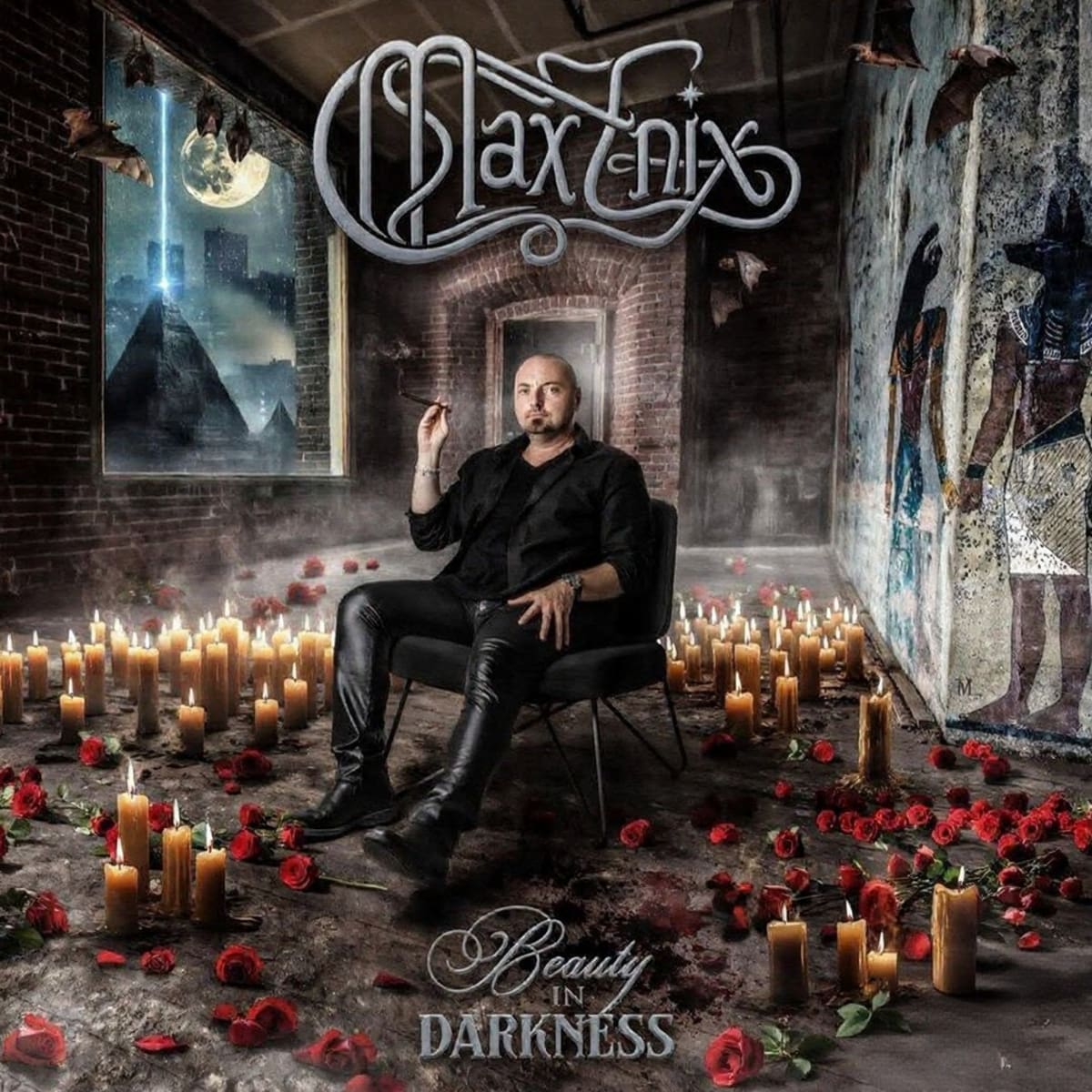
The visual presentation mirrors the album’s core lyrical concept, serving as a striking portal into Max Enix‘s dark, spiritual, and futuristic world beyond the looking glass.
The Seventh Sin, Disrelish
There is nothing to disrelish within the vast musical spectrum of Beauty In Darkness. If anything, my only disrelish is that seventy-eight minutes somehow does not feel like enough — I keep returning to the mirror, only to find myself reluctant to return.
The Hymns
01. Ghosts Of Yesterday 04:25
02. A Pale Light 08:00
03. The Sacrificial Dove 12:42
04. Sodomizing The Snake 09:00
05. In This Golden and Crimson Tomb 12:00
06. Hacked AI of Death 05:19
07. Destruction Camps 08:42
08. Beauty In Darkness 09:36
09. Deliverance of a Soul 04:52
10. Remembrance 01:24
Hymns 11—20 are Orchestral instrumental compositions
Max Enix
Max Enix — Composer/Songwriter (music), Vocals, Lyricist/Story