Praise of Death — Rivers of Gore Review
Praise of Death is a German death metal entity, who returned to bludgeon the senses with their second independent full-length Rivers of Gore, released on 2 October 2026, and promoted through GlobMetal Promotions.
Praise of Death, Rivers of Gore Review: This review will evaluate every aspect of the album, from its intricate musical composition to its production.
The First Three Sins, The Summary
The First Sin, The Strings/Keys: Crushing riffs, intricate shredding, savage tremolo runs and thick bass foundations. The Second Sin, The Vocals: Abyssal growls and haunting backing vocals intensify the suffocating atmosphere. The Third Sin, The Percussions: Explosive blast beats, relentless aggression and slow, funeral-paced rhythms.
The Fourth Sin, Overall Discussion
A Calculated Descent into the Abyss
From the very instant the listener presses play, Rivers of Gore unleashes an unrelenting, fifty-minute sonic onslaught of unbridled brutality and meticulous progression, spread across ten punishing hymns.
This is not merely an album, but a calculated descent into the abyss, immediately dragging the listener headfirst into a bleak lyrical landscape dominated by uncompromising nihilistic philosophy, existential horror, and dark atmospheric elements.
Every hymn serves as a monument to decay, weaving technical precision with harrowing, visceral aggression that leaves no room for light or redemption.
Navigating the Crimson Torrent
Musically, the composition of Rivers of Gore functions much like a vessel violently navigating a torrent of viscera and blood, surging forward with relentless, churning momentum. Every instrumental arrangement and structural shift mirrors the turbulent current of a crimson waterway, pulling the listener deeper into a macabre landscape.
This harrowing journey is delivered with a devilmanship that’s more than executed — a chilling and calculated malice. All of this is captured within a meticulous production framework that successfully resurrects the suffocating, brutal and raw aggression of ‘90s old-school death metal, yet remarkably avoids muddiness in the mix, preserving a razor-sharp clarity between every individual instrumental component.
Ten Hymns of Individual Torment
Wading through this torrential river of gore, the listener will discover that no two hymns are alike; each hymn carves out its own distinct identity through shifting tempos, intricate riff-crafting, suffocating atmosphere, and visceral vocal deliveries.
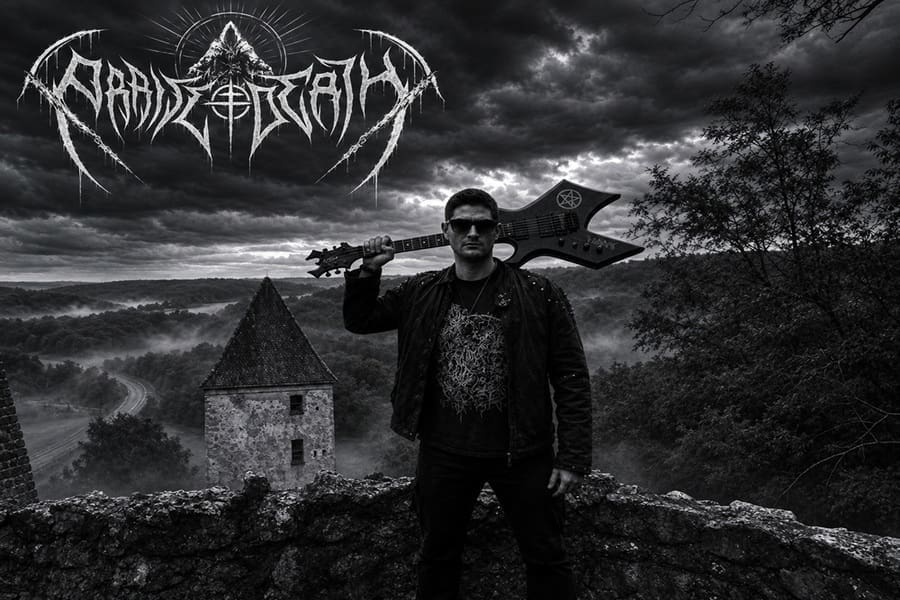
Guiding this brutal voyage is the devilish instrumentation of Mark Raziel, whose razor-sharp precision anchors the chaos. Above the carnage stands Finnish vocalist Topias Jokipii, whose ferocious delivery commands the abyss, while Succubus Dani contributes backing vocals.
The Strings of Carnage
The guitars anchor the composition in a thoroughly traditional, old-school death metal approach, driven by heavy, crushing and relentlessly aggressive riffs that pay homage to old-school death metal. Within this dense framework of heavy riffcraft, the guitar work proves remarkably dynamic: it weaves together soaring solos, shredding and palm-muted chugging that locks tightly with the percussion.
These elements are punctuated by savage tremolo runs that evoke a sense of chaotic frenzy, yet they are counterbalanced by dark, atmospheric, and mysterious passages that lend the music an eerie, otherworldly depth. Underneath this multi-layered guitar attack, the bass guitar is a strong pillar of the heavy instrumental basis; occasionally, it is audible, especially on the seventh hymn, Mortuary Chamber.
The Percussive Machinery of Death
Driving this entire sonic engine is a drum performance that is as aggressive as it is relentless. The percussionist delivers a punishing tour de force, characterised most notably by explosive, high-velocity blast beats that keep the tension at a fever pitch, ensuring the composition never relents in its forward momentum.
Furthermore, the percussion acts as the vital architectural backbone of the record, relentlessly supporting the crushing, high-energy death metal arrangements. This rhythmic foundation does not merely keep time; it actively reinforces the sheer weight and sonic aggression of the down-tuned guitars, creating a suffocating wall of sound.
Depending on the shifting thematic tone of each individual hymn, the drumming demonstrates remarkable versatility: it can decelerate into agonisingly slow, mortuary-paced funeral doom sections, evoking a grim, sepulchral atmosphere, before seamlessly pivoting into frantic, blast-beat-driven assaults that simulate the chaotic spread of disease and visceral gore.
Voices from the Abyss
Complementing the instrumental brutality, the lead vocals are characterised by abyssal, deep-throated growls delivered with an unrelenting, ferocious intensity. Rather than functioning as a conventional second lead, the backing vocal layers are strategically deployed to provide maximum impact. They serve as heavy atmospheric reinforcement and textural emphasis — echoing key phrases like cavernous hauntings — thereby thickening the overall mix and elevating the hymns into a realm of pure, claustrophobic dread.
The Final Descent into Darkness
The album reaches its chilling conclusion with the haunting outro, Entangled in Thorns. Rather than offering a sense of closure or comforting resolution, this final piece ends the record’s suffocating existential horror with stark, unsettling piano instrumentation. Yet, despite this shift in texture, this is by no means a comforting return to the roots or a nostalgic homecoming to where the nightmare all began; instead, it feels like a descent into an even deeper, more desolate psychological abyss.
Ultimately, Rivers of Gore stands as a vicious, aggressive, and deeply horrific fruit of art that lingers long after the final notes fade.
The Fifth Sin, The Memorabilia
When diving into Rivers of Gore, the immediate impression is just how much is happening at any given moment. The album is an overwhelming, multi-layered assault featuring frantic drumming, guttural vocals, complex guitar work, and intricate overall songwriting.
Focusing specifically on the guitar sections, I found them thoroughly enjoyable, though I can certainly see how they might be a lot for some listeners to digest. Rather than relying on a relentless, straightforward brutal onslaught — the kind you might expect from a band like Cannibal Corpse — these elaborate guitar passages actively break up the brutality. They infuse the album with an avant-garde flair reminiscent of old-school technical death metal, adding a much-needed layer of depth and sophistication to the chaos.
Another standout detail for me was the mix and production, particularly the bass. One of my favourite auditory experiences while listening through headphones was hearing the thick bass strings echoing clearly throughout the hymns. This was especially prominent on the seventh hymn, Mortuary Chamber, which easily became my favourite hymn on the entire release.
The Sixth Sin, The Artwork
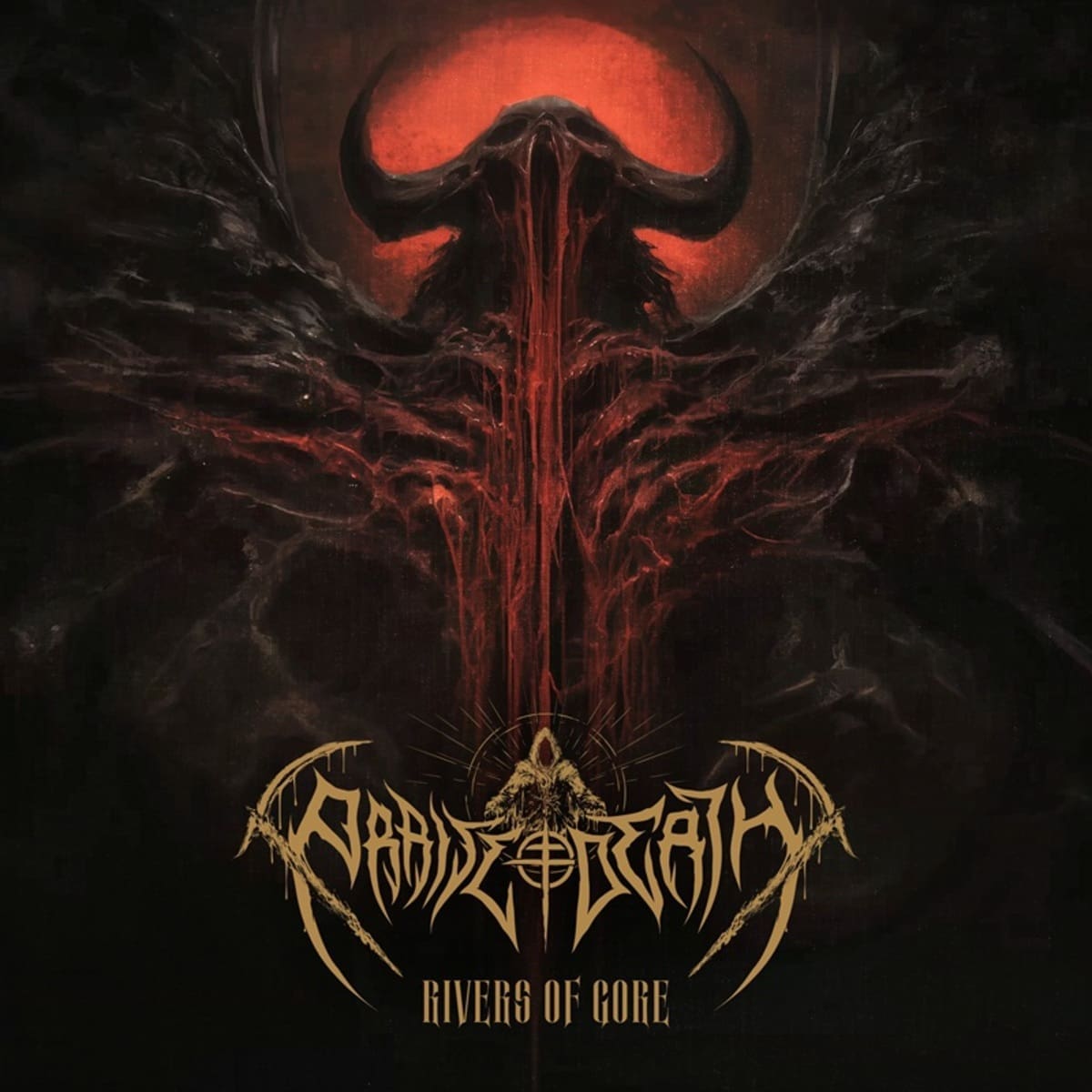
Visually, the album cover captures the exact atmosphere and thematic darkness of the lyrics. What I love most about the artwork is its distinct texture and aesthetic; it does not look like a standard digital rendering, but rather possesses the rich, textured quality of a traditional oil painting.
The Seventh Sin, Disrelish
As for dislikes, there is nothing to dislike. Rivers of Gore delivers on all fronts — compositional complexity and devilmanship.
The Hymns
01. Almanac Of Self-Mutilation
02. Ephemeral Fever
03. Gnawing On Your Flesh
04. Only Death Is Real
05. Permafrost
06. Chained To The Flames
07. Mortuary Chamber
08. Grotesque Um
09. River Of Gore
10. Entangled In Thorns
Praise of Death
Mark Raziel — Instruments
Topias Jokipii – Vocals
Succubus Dani – Backing Vocals