Coldwinter — Where Memories Drowning Review
Coldwinter are a Brazilian blackened atmospheric doom metal entity. March 20th, 2026 will see the release of their second full-length, Where Memories Drowning, issued as a co-release via Mutilation Productions and C.W. Music Records.
Coldwinter, Where Memories Drowning Review: This review will evaluate every aspect of the album, from its intricate musical composition to its production.
The First Three Sins, The Summary
The First Sin, The Strings/Keys: Slow, mournful guitar progressions and submerged tremolo lines build a frozen, melancholic atmosphere, supported by distant synth and piano textures. The Second Sin, The Vocals: Deep growls, distant screams, and restrained whispers carry the emotional weight of grief and memory. The Third Sin, The Percussions: Slow, ritual-paced percussion anchors the hymns in doom tempos, with restrained blackened surges used sparingly.
The Fourth Sin, Overall Discussion
The Descent Begins
Before pressing play, understand that Where Memories Drowning is no stroll in the park; it is a slow, deliberate walk through memory, grief, and emotional erosion. This is an invitation to witness the slow dissolution of the self.
Memory as Ritual
Where Memories Drowning is built around nine hymns that delve into the depths of melancholic doom. Through long, mournful chord progressions and blackened textures, Coldwinter weaves a sense of ritual descent. This is a story of grief and memory—a moving, lyrical theme that mirrors the personal narrative of The Shadow of the Great Tree (the full lyrical content can be found in the January 2026 edition of my magazine).
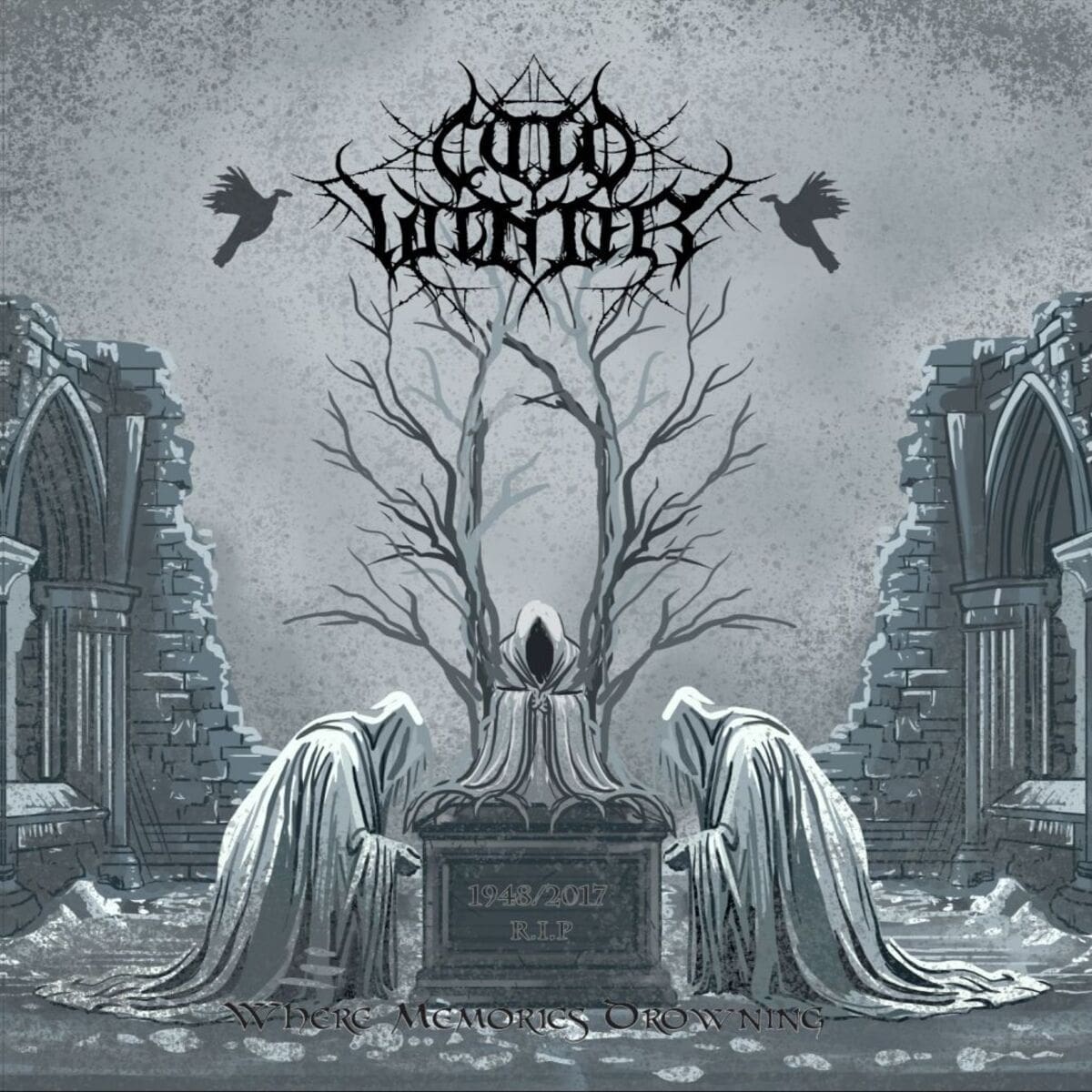
Inspired by the album cover and the loss of a father, these hymns act as a vessel for the weight of absence, capturing the exact moment where memory begins to drown in the shadow of what remains.
Following their debut, Cold Light of the Horizon Dawning, this latest offering is a significantly stronger, more expansive, and sorrow-laden work. While it continues Coldwinter’s thematic focus on eternal sorrow and memory, it does so with a heightened sense of slow-burn emotional decay. The band has refined their ability to hold the listener in a state of suspension—where the light of the horizon has finally been eclipsed by the drowning weight of the past.
The Core of the Drowning
The heart of the album resides in the transition between the fifth and sixth hymns. Void of Silence unfolds like a hollowed-out chamber of memory: isolated guitar notes drift into long, cold reverb tails while synths—mimicking a lone, mournful violin—swell and recede like breath in a frozen room. Here, the drums are merely distant ritual pulses, and the ghostlike vocals haunt the periphery of the mix.
This stillness is shattered by I Buried Your Heart, which deepens the descent. Shifting from hollow void to crushing lament, the instruments regain a suffocating mass. The guitars and drums take on a ritual heaviness, and the vocals emerge rawer and closer—a wounded growl carrying the dual weight of accusation and resignation. It is asoundscape where memory and emotional collapse fuse into a single, slow-moving mass of sorrow.
Glacial Devilmanship
Coldwinter’s devilmanship is defined by a rigid, glacial structure where the guitars serve as the spine. The guitar work utilises a thick, mid-scooped distortion with a grainy, analogue roughness—intentionally eroded to avoid any modern polish. The playing is a slow, dragging progression of chords and mournful tremolo, all submerged in deep reverb.
By pushing the guitars wide in the stereo field, Coldwinter creates a hollowed-out centre for the vocals and synths to inhabit—a sonic empty corridor. These guitars act as stone pillars: weight-bearing, cold, and ritualistic. Between these pillars, the synths provide the emotional glue, filling the negative space to maintain a frozen, suspended atmosphere where every note feels like a heavy drop of water in a darkened cave.

The Weight of Silence
The drums on Where Memories Drowning mirror the sensation of memory dissolving into the subconscious. Eschewing aggression for ritual pacing, the sound is defined by a dry, heavy kick and a reverberant snare with a distant, tomb-like crack. The cymbals are washed in reverb, providing a ghostly shimmer rather than brightness. The performance remains slow and deliberate, moving at doom tempos with only occasional, restrained blackened surges. Because the drums are mixed behind the guitars, they emphasise weight and inevitability—the sound of a soul trudging through its own emotional debris.
Echoes of the Inner World
Composed by multi-instrumentalist Elvis Limac, Where Memories Drowning is a captivating architecture of contrast, brought to life through the dark vocals of Alessandro Paiz and Gustavo Grando. However, the true vitality of the hymns lies in the guest performances, which include Fabio De Paula (HellLight) and Jéssica Gartz on the opening hymn, while on hymns five and six, Agnes Rodrigues’ contributions deepen the sorrow as a physical texture.
The vocal production—heavy in reverb and layered with slight delay trails—mimics the fading of memory itself. These are not front-and-centre performances; they are echoes from a collapsed inner world, characterized by deep, mournful growls, distant screams, and whispered passages that suggest a state of emotional dissociation.
The Drowned Soundscape
The production of Where Memories Drowning is a fruit of art in terms of clarity, prioritising a cinematic hierarchy where the orchestration sits atop a bedrock of layered, yet never muddy, instrumentation. The guitars and drums provide the structural floor, while the vocals occupy the central focus, framed by choral arrangements that expand the stereo field into a massive, panoramic space.
When the Chamber Falls Silent
As the album fades into darkness and silence, the ritual slowly closes. It feels like the extinguishing of the final flame — the instruments fall silent, the chamber empties, and only memory remains.
After the Descent
Where Memories Drowning is a cold, blackened ritual fruit of art – a cold slow-motion ritual of mourning – an album that makes you feel submerged, waterlogged, or blurred by emotions. A band that continues the legacy of atmospheric doom metal, drawing influence from HellLight, Mythological Cold Towers, Evadne, and The Howling Void.
The Fifth Sin, The Memorabilia
For me, Where Memories Drowning is everything I could ask for in an album — dark, deep, and a slow-motion ritual of mourning. The devilmanship, composition, and arrangement work together to carry both the emotional and musical weight of the record. Reading the lyrics alongside the music transforms the experience; the hymns become more than sound — they become a narrative of grief, memory, and absence.
The Sixth Sin, The Artwork
The artwork captures the album’s lyrical themes while visually telling the story of loss, memory, and emotional erosion.
The Seventh Sin, Disrelish
There is little to disrelish here — Where Memories Drowning stands as a cold, slow-motion ritual of mourning, immersing the listener in grief, atmosphere, and memory.
The Hymns
01. Everlasting Pain
02. I Tried to Forget You
03. A Life That Is Gone
04. Just Memories
05. Void of the Silence
06. I Buried Your Heart
07. A Meeting in a Dream
08. Tears of Sorrow (Nevain Cover)
09. No Hope, No Life
Coldwinter
Limac — Guitars, Bass, Keyboards
Gustavo Grando — Vocals
Aleske — Lead Vocals
Simon — Drums
Jéssica Gartz — Guest Female Vocals
Agnes Rodrigues — Guest Female Vocals
Fabio de Paula — Guest Male Vocals
Hear The Music
Social Links
Mutilation Productions | Home Page