Culloden Interview
The Interview — Culloden: On Historical Storytelling, Heavy Metal, and Tales of the Tyne
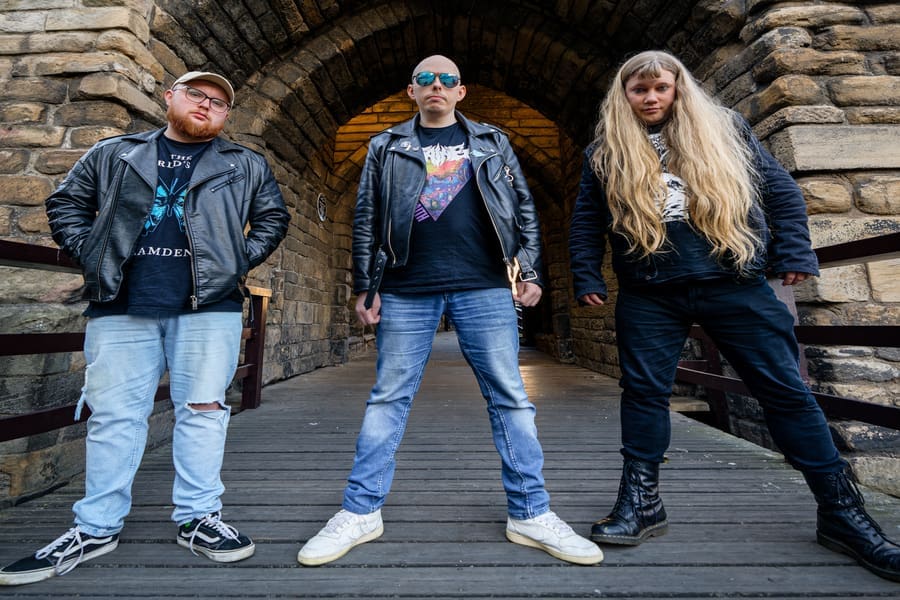
Culloden channels the spirit of old-school British heavy metal through a deeply rooted fascination with history and storytelling. With Tales of the Tyne, the entity brings centuries of conflict, folklore, and turbulent events to life through an old-school heavy metal framework.
This interview explores the creative world behind Tales of the Tyne. Across thirteen questions, we discuss Culloden‘s evolution, musical influences, songwriting, historical storytelling, the events behind the album, and the creative vision that continues to shape the entity.
Thirteen Questions constructed through old-school steel, historical bloodshed, & forgotten chronicles.
Q1: For readers discovering Culloden for the very first time, who are Culloden, and what vision originally brought the band together?
Andrew Halliday: We’re a Heavy Metal band from the North East of England that merges our love for 80s metal with history. The original vision way back in college when the band was first formed was to write and play the sort of music we want to hear. A kind of Heavy Metal that sounded more like our idols in Saxon, Iron Maiden and Judas Priest. The sound slowly changed over years to more of a Venom, Tank, Motorhead, early NWOBHM with a bite type of sound.
Q2: History has been embedded within Culloden‘s identity from the beginning, from the band’s name itself to the stories explored on Witchpricker, including Lindisfarne and Hills of Culloden. What originally drew you towards the past as a source of storytelling, and how did that fascination eventually develop into the North East focus of Tales of the Tyne?
Andrew Halliday: I’ve loved it when bands such as Iron Maiden have covered historical events, Saxon have done it on occasion and one of my favourite albums is Skyclad’s Prince of the Poverty Line which brings to life stories of how life was in the East End of Newcastle during Thatcherite times. It was an album full of emotions to the point its almost as if you’re there in every song feeling every emotion.
Local history has been a passion of mine for years, I’ve had volunteering stints at Arbeia Roman Fort, Newcastle Castle, Segedunum Roman Fort and the best thing I picked up from all that was story telling. I learned how some of these places, unsuspecting as they look today, were the stage for some significant historical events in medieval times and its that drama, that theatre I want to capture. I just love stories, I love history and I want to inject a bit of local identity and culture into our music to make us us.
Q3: Culloden‘s recorded history stretches from The Void demo in 2011 to the release of your debut full-length, Tales of the Tyne, fifteen years later. Looking across that journey, how has your understanding of what Culloden should sound like — and what the band should represent — evolved?
Andrew Halliday: In the days when we recorded that demo we were just playing and not thinking of a specific sound or style but the three of us in the band back then had a lot of fun experimenting and jamming with different sounds and styles. Real life commitments got in the way as we started getting older and the lineup dissolved. In the years between that and reforming the band in 2017 which is the lineup we recorded the Witchpricker EP the NWOTHM started really taking off, and bands doing the whole 80s metal revival thing were dime a dozen with some fantastic releases and still diverse sounds.
We were caught in a whirlwind of so many of these newer bands flying the Traditional Metal banner that we ourselves were inspired and motivated to find, write and play our own brand of that. Skip forward from then to today and its a different lineup with different experiences, influences, ways of thinking. The story telling is still the heart of what I believe should shape the sound just now the band consists of people with a much wider array of musical influences to shape those stories.
Q4: You’re based in Newcastle, a city with an enormous heavy metal legacy, while citing bands such as Venom, Tank, Saxon, Atomkraft and Motörhead among your influences. How has that old-school British metal tradition shaped Culloden, and how important is it to preserve its spirit without simply recreating the past?
Andrew Halliday: Pastiche is a thing I’ve been heavily wary of. Its an easy but dangerous creative trap to fall into with Traditional Metal. Saxon are a fantastic band who’ve explored the very limits of that classic British Metal sound and beyond, and if the old guard aren’t afraid to do it that’s motivation for us to do the same. We incorporate some influences from early Black Metal into the music to compliment our guitarist’s penchant for that era of music, and in turn I’ve experimented vocally to try and match that while keeping the band’s classic British Metal influence as the core of the sound.
Seeing some of these acts live has been an inspiration as well. Seeing some of South Shields and Newcastle’s best from that era, like Hollow Ground and Fist was a great privilege. Mythra and Satan are still going delivering some of their best and most inspired music of their career. So even today when we’re writing or looking for inspiration we can just stick on one of these bands’ newer records or go see them live if they’re in town.
Q5: Newcastle and the wider North East possess an unusually rich history of conflict, folklore and cultural identity. What is it about the region’s past that continues to fascinate you, and what made you want to tell these stories specifically through Tales of the Tyne?
Andrew Halliday: Its something I picked up from my volunteering stints, and still do on my trips to various historical sites here that there’s so much that’s happened and so many stories right beneath my feet and bringing them to life through music from a local perspective is something I thought would create a sense of musical identity.
Way back in the Witchpricker EP days I had wrote songs we played live about events from across the world. About the 47 Ronin, Battle of Red Cliffs, Thermopylae but the thing that I felt I couldn’t grasp as a songwriter with songs that cover general history, is that’s not my culture, my language, my heritage so I’m always in danger as a writer of injecting an Anglocentric and pop culture influenced bias onto these topics which as good stories as they are to tell, is a limit I’m not satisfied with.
I would ideally rather leave it to someone from those areas of the world to write about as they’ll know them in a way that I know the history from around here. There’s only so much books can tell you.
Q6: When transforming historical events into heavy metal, where does the songwriting process usually begin? Does the story dictate the riffs, atmosphere and structure of a song, or does the music sometimes come first and lead you towards the history that ultimately accompanies it?
Andrew Halliday: Its a bit of both, sometimes I have an idea in my head of a topic or some incomplete lyrics set to older ideas from years ago and a riff we come up with brings to mind this topic. Sometimes we write music to an already established set of lyrics. The two then begin to shape one another as the song comes together. Sometimes words are changed to suit the riff, or the riff is changed to suit the words.
Q7: The Siege brings the 1644 Siege of Newcastle upon Tyne into the album, when Scottish Covenanters moved against the Royalist stronghold and its strategically important coal supply. What drew you towards this episode of the English Civil War, and how did you approach transforming a conflict fought on the streets and fortifications of Newcastle into a heavy metal narrative?
Andrew Halliday: I was exploring Newcastle Castle one day many years ago and saw the etchings on one of the walls from the Civil War. I sat there for about half an hour thinking about what the people of Newcastle saw during that time and over weeks I went deep diving into the topic. I wanted to cover a summary of the events but I didn’t want to create a diatribe set to music either. I went exploring the city using an old mad to retrace the route of the old town wall, of which there’s still remains of today scattered throughout the city. Just thinking as I walked and walked about the events. Jotting down notes on my phone which I then went home and applied to the song.
It took some time to come together but its one of my favourites to play because the scene I set out in the end was the day the walls were eventually breached after a siege of seven months. As a story teller a specific scene in an historical event is about as good as it gets. I originally wanted to cover the desperation of Thomas Marley the mayor at the time, exchanging hot worded letters with the Earl of Leven who lead the Scottish forces refusing to surrender and trying to delay the final push but eventually homed in on the day of the walls being breached and the march through the streets.
Q8: Harrying of the North confronts one of the most devastating episodes associated with Norman rule in northern England. What drew you towards this particular event, and how did you approach translating its scale and brutality into music without losing the human story behind the history?
Andrew Halliday: With it being such a big event in North East history I’d known OF the event for years and had wanted to attempt a song on it since way back in 2014 but never had the right vision, the right words or music. It was only after doing a very brief stint of volunteering at Jarrow Hall, formerly known as Bede’s World where I was sat in the reconstructed long house staring at the fire did the gears start clicking together.
I had come up with the intro riff at a rehearsal ages ago and had it on video, it was originally a video to demonstrate my bass setup and sound but what I was playing turned into the beginning of the song. Lyrically I’m not really fond of going too far into the gore and macabre side of things as its not my sort of style of writing but it was still a brutal campaign. I wanted to capture the vindictive, viciousness of William and the helplessness to all in the warpath.
Q9: The album’s midpoint introduces Bonny at Morn as an instrumental interlude, drawing a distinctly Northumbrian element into the record. Why was it important to incorporate regional musical tradition alongside the historical narratives, and what role does the interlude play within the album as a whole?
Andrew Halliday: With Lords of a Lawless Land the song just kicks straight in with no intro and I was thinking after we had wrote it and debuted the song live we need something more from it for the album so I did some asking around. A lovely older gentleman who was asked by a mutual friend of ours popped into the studio at our next recording session with a set of Northumbrian Pipes and proceeded to play and record a couple songs for us. We picked Bonny at Morn as it reflects everyday life at the time and what better for the prelude to a brutal Border Reiver Raid?
Q10: From the Border Reivers of Lords of a Lawless Land to the civil conflict of The Anarchy and the persecution explored through Witchpricker, Tales of the Tyne moves between very different periods of regional history. How did you decide which stories belonged on the album, and what connects them within the wider narrative you wanted to tell?
Andrew Halliday: We didn’t really think of how they’re connected as the songs just came together individually but when it come to picking for the album it was a story in of itself. It was originally intended to be an EP and we had some new songs in the making at the time we wrapped up recording. As we rehearsed and played these songs more we sat outside the studio one day saying we should have had this song, that song on the EP, and I was thinking about it all for narrative and thematic reasons too.
The stories stand alone in the songs but the songs come together to bring to life various times of strife and conflict in the region and the two we had leftover fit that mould. So we just booked a couple extra days in the studio to record them. We left out potentially also re-recording Lindisfarne despite it fitting the mould too but only because we didn’t want two re-recordings on the album.
Q11: Witchpricker first appeared on your 2018 EP of the same name and now returns eight years later on Tales of the Tyne. What made you revisit the song for the debut album, and what does its journey from the earlier release to this new incarnation reveal about Culloden‘s musical evolution?
Andrew Halliday: When this lineup first got together in 2023 Witchpricker was one of our favourite songs to play together and remains so, but I was never happy about the original lyrics on the EP version. We added some changes to the musical side too all to make the song even more vicious.
It feels like a complete, more mature song musically now but also story telling wise. It still centres around that one lick our then rhythm guitarist in 2017 Karl Moore wrote but we built on it and the original song to reflect the band’s current sound. I picked Witchpricker over Lindisfarne to be the re-recording on the album because I felt it was a much more vicious song that would be the perfect closer for the album in its current form whereas Lindisfarne great a song as it is, wouldn’t have had that same impact.
Q12: The artwork for Tales of the Tyne draws upon the same turbulent regional history explored throughout the music. How did you develop the visual concept, and how important was it that the artwork felt rooted in the North East rather than simply presenting a general medieval or historical aesthetic?
Andrew Halliday: We wanted something to reflect the music, something rooted in local heritage, culture, conflict. When speaking to our artist Lynsey Coultas about the idea she did some deep diving for inspiration based on what I told her of the Border Reivers and sent her the song Lords of a Lawless Land. So not only is the art reflective of one of our songs, its done by a local artist as well.
The visual concept is something she put together herself based on what she was told by us but truly reflects the music and a scene of brutal reiver conflict. They were often enlisted as mercenaries in various skirmishes and conflicts by both Scottish and English forces so illustrating their role in more than just wild west-esque pillaging ended up being a fantastic idea from her for the album. The idea of a general medieval or historical aesthetic didn’t really sit right with me when thinking of a cover either.
Q13: Beneath the battles, witch trials, lawlessness and political upheaval, Tales of the Tyne seems concerned with something larger: the events that helped shape the North East and its people. When listeners reach the end of the album, what do you hope they understand or feel about the region, its history, and Culloden‘s connection to it?
Andrew Halliday: We hope listeners enjoy the music first most but also feel and reflect on the stories we bring to life. When it comes to history in the North East and the culture that surrounds it, there seems to be a massive bias to late Georgian, Victorian and Edwardian. Especially industrial history and while its a very important aspect of who we are as a people here, there’s so many stories from further back that get neglected by those who aren’t as enthusiastic about medieval history as those like myself. I want to help with that even if its just a tiny amount with this album and its stories.
There will be more from us in future that also follow this theme and for the inspiration for some of this music I went trekking all over the Northumbrian countryside to seemingly random beautiful rural market towns but with stories of their own waiting to be found.
Is there anything we haven’t covered that you’d like to share about Culloden, Tales of the Tyne, the history behind the album, or what lies ahead for the band?
Andrew Halliday: Closing Prompt:
I would like to share that despite all the setbacks and challenges over the years, from lineup changes to lockdown its a pleasure to finally have an actual album out for you all to hear. To be able to say “this is who we are” and “this is just the beginning”
We aim to bring even more stories to life in future.
This closes the interview. The rite is complete — the voice of Andrew Halliday now etched into the archive of sin.
I extend my deepest thanks to Andrew Halliday for sharing their voice — and to the reader, for bearing witness to this craft-rite.