Paranoia Church Interview
The Interview — Paranoia Church: Mythological tragedy, fractured identity, sonic transformation, & eventual absolution
Paranoia Church is a one-man studio entity where traditional heavy metal, progressive tendencies, darkened atmospheres, and an expansive spectrum of influences converge. With She Answers to Another Name, the entity enters a darker and more atmospheric chapter, where mythology, fractured identity, trauma, revenge, and healing intertwine within the developing narrative of Harbinger of Tragedy.
This interview explores the creative world behind Paranoia Church and Harbinger of Tragedy. Across thirteen questions, we discuss the entity’s evolution, songwriting and collaboration, the mythology and real-world themes behind the four-act narrative, the transformation embodied within She Answers to Another Name, and the darker musical identity now taking shape.
Thirteen Questions constructed through mythology, trauma, transformation, & darkened musical evolution.
Q1: For those encountering Paranoia Church for the first time, can you introduce yourself and tell us how the project came into being and what you originally set out to create?
Bruno Rios: Hey guys, thank you for having me!
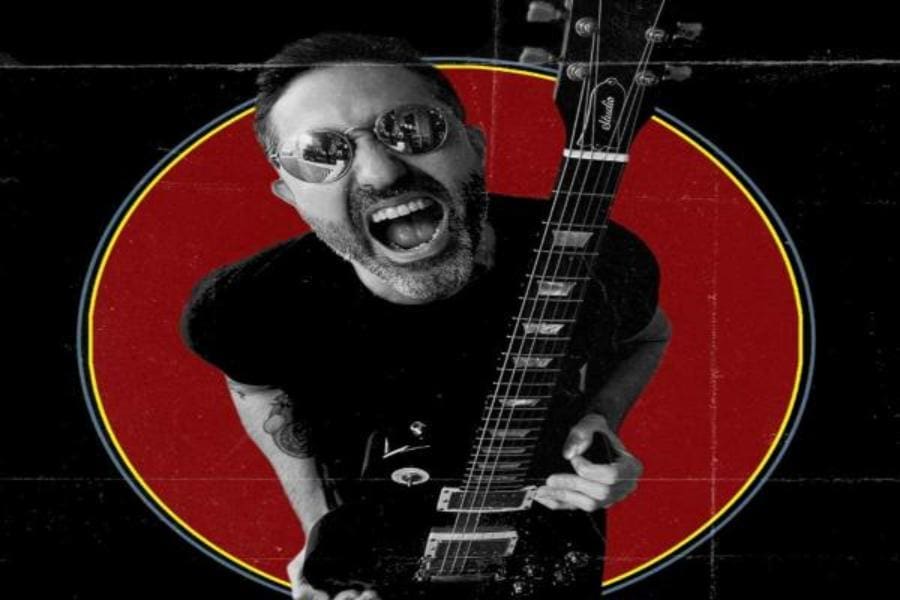
My name is Bruno Rios, and I’m a Brazilian guitar player who has been based in Toronto, Canada, for the past 11 years. Back in Fortaleza, Brazil, where I’m from, I was pretty active in the underground Metal scene between 1998 and 2015. In 2007, I released an EP with my band, Walking Back to Hell, and during that time, I had the opportunity to share the stage with names such as Brazilian Power Prog legends Angra.
I tried to join a couple of bands after moving to Toronto. However, as I got older and started a family, it became increasingly challenging to find time for band practices, juggle everyone’s schedules, and manage everything else.
So, in September 2023, I started Paranoia Church: a midlife-crisis-fueled, one-man studio project drawing on influences ranging from Mercyful Fate to Tears for Fears, with detours through Marillion, Annihilator, and Type O Negative. Essentially, it became my outlet to keep making music and stay creative on my own schedule and with no concessions.
Two years later, in August 2025, Paranoia Church’s debut album, ‘Till the Wolves Come Home’, was released on vinyl, CD, and across all your least-hated streaming platforms.
Q2: A year has passed since the release of ‘Till the Wolves Come Home’, and Paranoia Church is now entering a new chapter with ‘She Answers to Another Name’. How has the project evolved creatively since the debut album?
Bruno Rios: I listen to a lot of music and draw inspiration from a huge range of genres. Trad Metal and Prog Rock (or Neo Prog) are probably my biggest influences when it comes to songwriting, but I’m into all kinds of Metal and Rock music, as well as Synth-Pop, Blues, Southern Rock, Contemporary Jazz, Trip-Hop… you name it!
For that reason, when I finally decided to take the time and make the effort to write my own music, I was eager to experiment as much as possible. Even though I believe ‘Till the Wolves Come Home’ is a somewhat cohesive album, I worked with five different singers across eight songs and brought in a bunch of other guests. There are trumpets, trombones, Hammond B3, synths, saxophone…
Somewhere along the way, Paranoia Church started to take shape (or at least, the version of it I currently envision). I love all the songs I’ve released so far and everyone who has contributed to them, but in the end, I felt like the tracks I made with Samtar on vocals are where the project sounded the most original.
Those songs are a little moodier and have a more progressive feel, and both his voice and his delivery are really unexpected for the kind of music I tend to make. I naturally lean towards Traditional Metal and Hard Rock, where you might expect the singer to gravitate a little closer to a Bruce Dickinson or Rob Halford (and I did explore that direction on other songs). But if I had to describe how I hear Samtar’s voice, I’d say it’s something between Chris Cornell, Serj Tankian, and Peter Steele. On paper, it shouldn’t work. But it does! And I think that this weird combination is part of what makes it unique.
So, to me, the new material feels like an expansion or evolution of that particular side of Paranoia Church.
Q3: ‘Harbinger of Tragedy’ will unfold as a four-part concept EP. What inspired the story behind the EP, and why did you decide to tell it across four connected acts?
Bruno Rios: The inspiration came from many different places. I wrote the first draft of the lyrics for ‘She Answers to Another Name’ shortly after the release of the first album, initially inspired by ‘Wuthering Heights’. At that point, it was simply meant to be another standalone song.
I didn’t touch those lyrics again for months. Then, one day, I came across a painting by a Polish artist I’m absolutely obsessed with, Justyna Koziczak. It struck me like lightning!
I had been a huge fan of her work for quite some time. In fact, when I first discovered her, I had already commissioned the painting that became the cover for ‘Till the Wolves Come Home’. But even so, I liked her work so much that I seriously considered scrapping that idea and using one of Justyna’s paintings instead. But I digress…
When I saw her painting, ‘Head of a Goddess’, it immediately told me an entire story, and somehow it fit perfectly with the mood of the lyrics I was working on. So, I decided it would be the cover for the material and to evolve the idea I initially had for ‘She Answers to Another Name’ into a concept EP that could bring that story to life.
Justyna’s painting evokes revenge while carrying a powerful symbolism around abuse and femicide. For the story, I wanted to reframe those themes through the lens of tragic female figures from mythology, such as Circe, Medusa, Scylla, Eurydice, and Astraea. I condensed all of that into a single character: a woman who has been abused by the gods, with each song representing a stage of her journey through rebellion, revenge, and, ultimately, absolution. A process of revolt, grief, and, at last, healing.
Q4: “She Answers to Another Name” stands as Act II of the narrative. Without revealing too much, what happens in Act I, and how does it lead into the events of the new single?
Bruno Rios: Act I represents the abuse the main character endures and her state of submission. Act II, ‘She Answers to Another Name’, is her descent into hell and return as a force seeking revenge. For the rest of the story, you’ll have to spin the vinyl (or the CD) when it comes out in 2027.
Q5: The single follows a woman broken by the gods, cast down into Hell, and ultimately returning as something they can no longer control. Where did this character and her mythological journey originate?
Bruno Rios: I’m a big fan of strong female characters, and the concept is really a mix of several things: the original elements of ‘Wuthering Heights’ that inspired the first draft of ‘She Answers to Another Name’; the female mythological characters I mentioned above; Justyna’s painting; and, perhaps most importantly, my young daughter. She actually came up with the title of the song by accident and, in many ways, inspired the whole thing in the first place.
The overarching narrative leaves some room for interpretation. It can simply be read as a mythological tale, or as a story about violence against women. But it can also be about abuse and trauma in a broader sense, and the long, difficult process of healing and finding a way out.
Q6: Beneath the mythology lies a metaphor for violence against women, trauma, survival, and healing. Why was it important for you to explore these real-world themes through a mythological narrative?
Bruno Rios: As I mentioned, the concept can go beyond that. I wanted to leave enough room for anyone who has experienced any kind of trauma to find something of themselves in the story. In many ways, it can also be a reflection of how I feel about certain things. It could be about the current geopolitical climate, religion, or any number of other forms of oppression and abuse.
That said, having a daughter, a wife, a sister, and so many important women in my life, violence against women is obviously something that hits very close to home. It’s not only a huge problem in society, but one that continues to persist and, in many places, seems to be getting worse. That makes it something I feel is absolutely worth talking about.
And there’s also a very personal message behind the story: I want her to hunt, haunt, and devour those who hurt her. It’s more than a story about abuse. It’s a tale of survival, resilience, revenge, and ultimately, healing.
Q7: Identity appears to be central to “She Answers to Another Name.” What does the title represent within the protagonist’s transformation and her journey towards reclaiming herself?
Bruno Rios: That’s pretty much what your question gets at. Victims of abuse can lose their sense of identity, especially when they go through the process of “allowing” the abuse or their abusers to define who they are and how they see themselves.
‘She Answers to Another Name’ is a declaration that the main character refuses to let that happen to her. Not anymore. She decides who she is. She breaks free, rises stronger, and fights back. It’s ultimately about reclaiming her identity and refusing to let what was done to her define who she is.
Q8: You describe “She Answers to Another Name” as a more progressive chapter in Paranoia Church’s evolution. What does that progression mean musically, and where do you feel it is most evident within the new single?
Bruno Rios: I’m a very mediocre musician, with no false modesty. But I do have a lot of passion, and I’m inspired by a lot of different forms of art. I believe that, somehow, that passion and grit, combined with my lack of technical ability, accidentally helped define the identity of Paranoia Church. I think all my stuff sounds pretty much like me, despite all my influences.
That said, when I say “progressive,” I definitely don’t mean it in the virtuoso sense. There are no crazy odd time signatures or ridiculously complex instrumental passages. What I can say about this new music is that I’m much more focused on telling the story than on writing a particular guitar riff or checking off a list of things I think a song is supposed to have. ‘She Answers to Another Name’, for instance, doesn’t even have a guitar solo. And that’s totally fine.
With that in mind, the EP has more atmospheric passages than the first album, along with some orchestration and perhaps a little more experimentation with different moods, textures, and instruments. I’d say the focus is more on ambience and storytelling, and a little less on the Trad Metal side of my songwriting.
Q9: You wrote and produced the single while also performing guitars, bass, and keyboards. How did you approach translating the story’s themes of suffering, transformation, and empowerment into the music itself?
Bruno Rios: I’m very visual when I’m writing my music. More often than not, I’ll have a title, some lyrics, or even the artwork in place before I start writing the music, and that initial idea tends to define the mood I want the song to have. From there, I try to translate that feeling into music.
For this EP, the painting I mentioned, ‘Head of a Goddess’, was a huge part of establishing the overall mood. As I developed the themes and lyrics for each of the four songs, and realized that each one represents a different stage in the main character’s journey, it became much clearer to me what kind of atmosphere and vibe each act needed to have.
Q10: Samtar returns on vocals and Fabián Carrión Troya on drums. What made them the right musicians for this particular composition, and what did each bring to the finished piece?
Bruno Rios: Fabián became a great ally since I started Paranoia Church. I’m terrible at writing drums, and my first demos always have some of the lamest drum arrangements you can imagine. But then I send them to Fabián, and he completely transforms them. I worked with him on five of the eight songs on the debut album, as well as on the singles I released in collaboration with Silas Young (Crypted Roots) and Leonard Hansson (Vulture City, Hellforce). I also recommended him to Crypted Roots, with whom he went on to record their two most recent albums.
Fabián is a fantastic drummer, the nicest guy, and incredibly easy to work with. He takes my ideas and turns them into something incredible, while still being impressively down-to-earth and patient enough to accommodate all my annoying feedback.
And what can I say about Samtar? Honestly, I’m a huge fan of his work. He’s one of my favourite singers out there right now. He’s a great lyricist and a melody master! I absolutely love what he has done on the Paranoia Church songs so far. He also has this X factor that his voice is incredibly unique for the kind of music I make, his delivery is very emotional, and he’s also somewhat under the radar in the Metal community because most of his own material leans more towards Dark Folk. I think all of that helps give Paranoia Church a bit of its own identity.
Q11: Guilherme de Siervi handled the orchestration, mixing, and mastering. How did the orchestral elements develop, and what did they add to the atmosphere and scale of the composition?
Bruno Rios: I first found Guilherme through his collaboration with the project SoundScars, but he really got on my radar after he produced, mixed, and mastered the first solo single by Trevas, the frontman of one of Brazil’s first Heavy Metal bands, Azul Limão. The song sounded heavy, had great dynamics, and featured some orchestral elements that I thought sounded really cool. So, when I started writing the EP and decided I wanted it to go with a more epic mood, it seemed like a good opportunity to try to work with him.
The result can be heard on ‘She Answers to Another Name’. The production sounds quite different from the debut album. And while the orchestrations are relatively subtle, they make a huge difference to the mood of the song and really help set the tone for the EP.
Q12: Paranoia Church began as a one-man studio project but has featured numerous guest musicians and returning collaborators. How important has collaboration become to the identity of the project while you remain its central creative force?
Bruno Rios: Working with multiple guests on the first album was actually a bit of an accident. Initially, I thought I would write everything, record the guitars, bass, and keys, and hopefully work with the same singer and drummer across the whole album, so the project could feel like an actual band.
I had the same guys on the first three songs I released: Tasos Lazaris on vocals and Fabio Alessandrini on drums. But it was a bit challenging to work around their schedules, so for the fourth song, I decided to invite a different singer. Then I thought it would be cool to make it a duet with a female vocalist. I had already had two friends record guitar solos, so I thought, why not invite another one?
And then the whole thing snowballed. I got increasingly excited about working with different voices, different instruments, and exploring different genres and ideas. In the end, ‘Till the Wolves Come Home’ had 17 guest musicians, and I even found a way to squeeze in cameos from my wife and daughter.
So, for the first album, I think having all those different guests allowed me to portray Paranoia Church as something that represents the many different sides of me. It didn’t have to be just one thing. In a way, it helped me avoid putting the project in a box, which I think could have easily happened after those first three songs.
Now, with the guest list being considerably smaller, the current team helps solidify a new identity for this next phase of the project. We’re gravitating around a new concept, Samtar’s vocals, Guilherme’s orchestrations, and a more cohesive overall sound.
For this second release, we have a much moodier and darker Paranoia Church.
Q13: With ‘Harbinger of Tragedy’ scheduled for 2027, what can you reveal about Acts III and IV, and where will they take the story — and Paranoia Church — after “She Answers to Another Name”?
Bruno Rios: As I mentioned, the first act represents the character’s innocence being abused and corrupted, ultimately leading to her demise. Then comes her rebirth as something seeking revenge, in ‘She Answers to Another Name’, followed by the act of destruction itself and, finally, the realization that this world is no longer worthy of her presence. Instead of simply achieving revenge, she finds absolution and leaves this realm behind, escaping both her abusers and the hopelessness of humanity.
Open Invitation: Is there anything we haven’t covered that you would like to add — whether about “She Answers to Another Name,” Harbinger of Tragedy, Paranoia Church, or anything else you would like our readers to know?
Bruno Rios: This project is a labour of love. I am not a professional musician. I am a normal guy who works quite a lot, has 2 kids, and is approaching his mid-forties. I write and record late at night, mostly by the kitchen table, whenever I have energy at the end of a long day. Everything is really rudimentary and I am totally self-taught. But this is truly a work done for my love for music, and for my excitement around all the people I have been fortunate enough to have the chance of collaborating with. Not only the musicians, but visual artists as well. So, if anyone is interested in checking it out and taking the time to listen to the songs, that means the world, because having the songs heard is the ultimate goal. And if you have the chance to dig into the work of all the friends I have been working with, you will find some of the absolute best out there right now.
Lastly, thank you so much for the space and for the support. I am really grateful for that.
Cheers and stay heavy!
This closes the interview. The rite is complete — the voice of Bruno Rios now etched into the archive of sin.
I extend my deepest thanks to Bruno Rios for sharing their voice — and to the reader, for bearing witness to this craft-rite.