Urku Llanthu Interview
The Interview — Urku Llanthu: Ancestral Memory, Andean Landscapes, Cultural Identity, & Sonic Journeys
Urku Llanthu emerges from Ecuador’s underground landscape through an atmospheric convergence of Dungeon Synth, Dark Folk, Andean instrumentation, nature, and ancestral themes. Across an extensive body of work, the entity has developed a distinctive sonic identity where landscape, cultural memory, contemplation, and atmosphere become integral parts of the musical experience.
This interview explores the creative world behind Urku Llanthu. Across thirteen questions, we journey through its origins and evolution, compositional philosophy, Andean cultural influences, the relationship between landscape and sound, the conceptual journey of Wachuma, the deeper meaning and visual transformation of Runa, and the path that lies ahead.
Thirteen Questions constructed through ancestral memory, Andean landscapes, sonic contemplation, & cultural identity.
Q1: For readers discovering Urku Llanthu for the first time, who are you, and how would you introduce the entity and the person behind it?
Pablo: Urku Llanthu was born from a deep connection to the land and culture, and from the need to preserve and share knowledge that is integral to our identity.
Behind Urku Llanthu is me, Pablo Mesías—someone deeply committed to the conviction that our roots and ancestral knowledge hold value that transcends both generations and borders.
For those encountering Urku Llanthu for the first time, I define it as a project within the Dungeon Synth genre. My aim is to build a bridge between the richness of our heritage and the contemporary world.
More than just an entity, Urku Llanthu represents a way of understanding and relating to our surroundings grounded in respect, identity, and the responsibility to keep alive what we have inherited from our ancestors and to share it with future generations.
Q2: Urku Llanthu has developed a distinctive identity combining Dungeon Synth, Dark Folk, Andean instrumentation, atmospheric soundscapes, nature and ancestral themes. When you first created Urku Llanthu, did you already have a clear vision of what the entity would become, or did its identity develop naturally over time?
Pablo: When I created Urku Llanthu, I had a very clear intuition about the world I wanted to build, even though I hadn’t yet fully defined what it would become. From the start, I knew I wanted to explore the connection between music, nature, ancestral memory, and the atmosphere of Andean landscapes.
However, Urku Llanthu’s identity revealed and solidified itself naturally throughout the creative process.
Dungeon Synth and Dark Folk offered me a language through which I could work with darkness, contemplation, and mystery, while Andean instrumentation and ambient elements allowed me to incorporate something deeply rooted in my own context and my relationship with the land. Over time, these influences ceased to feel like separate elements and began to form a language of their own. I believe this evolution has been fundamental to Urku Llanthu: it is not simply about combining genres, but about creating an atmosphere and an identity that make sense within our own cultural and geographical experience.
Q3: Before creating Urku Llanthu in 2018, your musical journey stretched back many years through Ecuador’s underground scene. What can you tell us about those earlier years, the bands you were involved with, and how those experiences eventually shaped the musician behind Urku Llanthu?
Pablo: My early years in music were deeply intertwined with Ecuador’s underground scene. Before Urku Llanthu, I had the opportunity to be part of this journey starting in 1997 with my first band, Acracia; after several years there, I went on to play with Nekropsia, Blasfemo, and Alkitran. Spanning 29 years of uninterrupted musical activity, these experiences have been fundamental—not only to my development as a musician but also to understanding what it means to create and sustain an artistic vision within an independent scene.
During those years, I learned a great deal through hands-on experience: playing in various venues, sharing the stage with other bands, experimenting with different sounds, and—above all—developing a unique identity without relying on established structures or the mainstream industry. The underground scene taught me that music can be built upon freedom, perseverance, and a genuine need for expression.
Each project contributed something distinct to my artistic growth. Some experiences leaned toward thrash metal and others toward black metal, yet all of them allowed me to explore different approaches to composition, performance, and the creation of atmosphere.
Those were also the years when I began to better understand which musical elements truly resonated with me and which ones I wanted to take into more personal territory.
By the time Urku Llanthu was born in 2018, many of those experiences had already become a part of who I was. The difference was that, for the first time, I could bring them together around a much more intimate vision: exploring the connection between music, landscape, nature, and ancestral memory. In that sense, Urku Llanthu does not represent a break from my musical past, but rather a natural evolution of everything I had lived and learned over those years.
Q4: Urku Llanthu’s music often feels carefully constructed despite drawing upon atmosphere, repetition and relatively minimal arrangements. After so many years of making music, what have you learned about knowing when a composition needs another layer—and, perhaps more importantly, when it needs nothing more?
Pablo: I think one of the most important things I’ve learned over the years is that a composition doesn’t necessarily become stronger just by having more elements. Sometimes, the hardest decision is recognizing that a piece has already said everything it needs to say.
With Urku Llanthu, I tend to approach composition from an atmospheric perspective. Repetition, silence, texture, and space are just as important to me as melody or instrumentation. I usually let a piece unfold gradually and listen closely to what the atmosphere itself is calling for.
If a new layer adds depth, movement, or meaning, then it serves a purpose. If it simply makes the arrangement feel fuller, I prefer to leave it out. I’ve also learned the value of patience.
Sometimes a composition needs to remain unfinished for a while before I can understand what it’s missing; at other times, that time allows me to realize that nothing is actually missing at all. With experience, you learn to trust that instinct more. For me, restraint doesn’t mean an absence of ideas.
It’s a conscious choice. In this type of music, leaving space can be just as expressive as filling it. I believe this is especially important for Urku Llanthu, because I want the listener to have enough room to enter the atmosphere and become part of it, rather than having every detail presented directly.
Q5: You work as a multi-instrumentalist, incorporating keyboards and piano alongside guitars, bass, percussion and traditional Andean wind instruments such as quena and zampoña. When constructing a new composition, where does the process normally begin: with a melody, an atmosphere, an instrument, a concept, or something entirely different?
Pablo: There are several starting points. For me, the primary one is on-site research—immersing myself in the place or community where the biographical information originates—which shapes the vision that launches the musical composition. Sometimes a piece begins with a very simple melody; at other times, it emerges from a texture, a specific sound, or the atmosphere I wish to convey.
It can also stem from a specific instrument, particularly when I feel its timbre can define the character of the piece. Often, however, the process begins with an image or a sensation. It might be the impression of standing before a landscape, a memory, an experience connected to nature, or simply a specific feeling I want to transform into sound.
From there, I begin to experiment and let the music find its own path. Instruments play a significant role in this process, too. As a multi-instrumentalist, I particularly enjoy the ability to shift perspectives and discover which instrument best expresses what I am looking for. I prefer to find the core of the composition first—whether it is a melody, rhythm, texture, or atmosphere—and then build around it. As the piece grows, I discover what it needs and, just as importantly, which elements should be left out.
I believe that freedom is essential for Urku Llanthu. I do not want the creative process to be constrained by a formula. Each composition has its own starting point and, in a way, eventually reveals its own direction.
Q6: Dungeon synth is frequently associated with medieval, fantasy and dark ambient aesthetics. Urku Llanthu takes that musical language into a distinctly Andean world. Was it important to you to create something rooted within your own cultural landscape rather than simply follow the imagery commonly associated with the genre?
Pablo: Yes, it was fundamental. I have always held deep respect for the roots and aesthetics historically associated with dungeon synth, yet I never felt compelled to replicate its medieval or fantasy imagery to participate in that musical language.
For me, it felt far more natural to look toward the place I come from. The Andes possess an immense wealth of landscapes, stories, symbols, sounds, and ways of understanding the relationship between humanity and nature. That environment is part of my daily life, so it inevitably finds its way into my music as well.
Urku Llanthu was born precisely from the need to explore what might happen if I took certain elements of dungeon synth and transposed them into a context that felt truly my own. Incorporating instruments like the quena and zampoña—alongside specific textures, rhythms, and atmospheres—isn’t just about giving the music an “Andean” flavor; it is a way of connecting the sound to a specific territory and cultural memory.
I also believe it is important that music need not choose between tradition and experimentation. One can adopt an existing musical language, learn from it, and simultaneously transform it through one’s own experience. In my case, that meant letting the Andes serve as the reference point—not merely as a decorative element or an external aesthetic, but as an essential part of Urku Llanthu’s identity.
Perhaps that is why I have never viewed Urku Llanthu as an attempt to create “Andean” dungeon synth. Instead, I see it as a quest to forge a unique language—drawing on elements of dungeon synth, dark folk, Andean music, and atmospheric experimentation—to build something that resonates with this specific territory.
Q7: Across Urku Llanthu’s releases, the music often communicates without conventional lyrical storytelling, allowing instrumentation, atmosphere and sound to carry much of the narrative. How do you approach telling a story or expressing a philosophical idea when words are absent or deliberately restrained?
Pablo: For me, the absence of words does not mean an absence of narrative. On the contrary, it allows the story to be constructed in a much more open and subjective way. In Urku Llanthu, I try to ensure the music doesn’t tell the listener exactly what to feel or imagine, but rather provides a space where they can build their own interpretation.
When I want to express an idea or convey a specific feeling, I think about the atmosphere first. The choice of an instrument, a particular progression, a texture, the rhythm, or even a moment of silence can serve a narrative function.
Music can generate tension, contemplation, darkness, calm, or a sense of transition without needing to explain it verbally. I also think a great deal about the concept of landscape.
A landscape doesn’t need to speak to tell a story. The mountain, the wind, the darkness, the rain, or the silence can evoke different associations and memories in each person.
I am interested in bringing that quality to music: creating a soundscape that suggests more than it explains. When there is a concept behind a composition, I usually try not to turn it into an overly literal story. I prefer to work with symbols, sensations, and sonic imagery. That way, the music retains a certain mystery and allows the listener to actively engage with it.
I believe that is one of the most interesting possibilities of instrumental music: not having to define everything. Sometimes a piece can express a philosophical idea precisely by leaving questions open. What remains unsaid can also be part of the story.
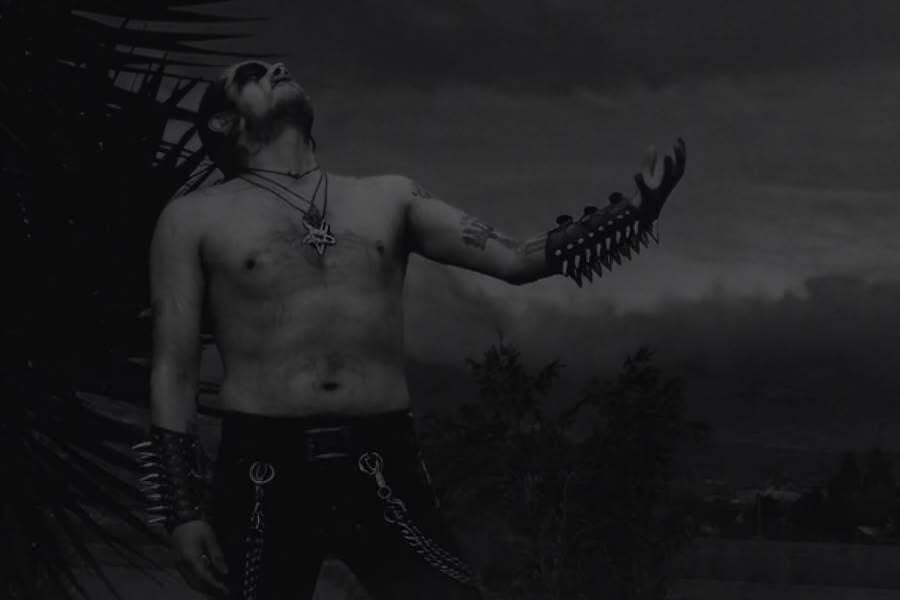
Q8: Wachuma, your sixth studio album, is deeply connected with ancestral Andean thought and the Wachuma cactus. What first inspired you to build an entire album around Wachuma, and what does it represent to you personally and artistically?
Pablo: The inspiration for Wachuma stemmed from my interest in the ancestral relationship between Andean cultures, nature, and the plants that have held a significant place in specific practices and worldviews. I view Wachuma—also known as San Pedro—not merely as a plant, but as part of a much broader cultural context involving memory, territory, spirituality, and various ways of understanding our relationship with the natural world.
The idea of dedicating an entire album to it arose precisely from a desire to explore that universe through music. I did not want to create a literal representation or attempt to explain a tradition through songs; instead, I sought to craft a sonic experience that would evoke specific states, landscapes, and sensations associated with the bond between humanity and nature.
Musically, Wachuma allowed me to delve deeper into elements already present in Urku Llanthu: repetition, contemplation, expansive atmospheres, Andean instruments, and a sense of transition between different sonic spaces.
The album ultimately became a kind of journey, where each composition functions as part of a larger landscape.
On a personal level, it represents a quest for connection with something I feel is deeply rooted in our land and our cultural memory. I do not aim to speak on behalf of a tradition or reduce it to a personal interpretation; rather, I seek to approach it with respect and through my own artistic language.
That is why Wachuma holds a special significance within the Urku Llanthu discography. It is an album where the music, the territory, and the project’s ancestral dimension converge in a particularly profound way.
Q9: Wachuma contains five compositions — Amawta, Chakuk, Hamutana, Pawana and Runa. Do you view these as five individual works united by a common concept, or as different stages within one continuous journey?
Pablo: I view them as both. Each composition has its own identity and can be listened to independently, yet all five were conceived as parts of a single journey.
From the start, I wanted Wachuma to have a sense of continuity—as if the album could be experienced as a voyage through different states, landscapes, and moments. Amawta, Chakuk, Hamutana, Pawana, and Runa represent distinct stages of that journey, though not necessarily in a literal or narrative sense.
I wanted each piece to possess its own character while maintaining a relationship with the others. There are sonic and atmospheric elements that forge this bond, alongside contrasts that allow each composition to breathe on its own.
I believe this duality is essential to the music of Urku Llanthu. A work can have an overarching concept without every element needing to be explicitly explained. In Wachuma, the concept functions more like a connecting thread than a self-contained story.
That is why, if someone listens to the five compositions separately, each offers a unique experience. Yet, when heard together in the album’s sequence, I hope something different emerges: the feeling of having traversed a single landscape, even though each stretch of the path holds its own distinct atmosphere.
Q10: The closing composition, Runa, takes its name from a Kichwa and Quechua term associated with the human being, but its meaning reaches into ideas of community, reciprocity, nature and collective existence. Why was Runa chosen to close Wachuma, and what does this final piece represent within the album’s wider journey?
Pablo: I chose “Runa” as the closing track because, for me, it represents a return to the human being after the journey through the landscape, nature, and the ancestral dimension that runs through the entire album.
The word runa holds a depth that goes beyond the mere concept of a “person” or “human being.” In various Kichwa and Quechua contexts, it relates to a view of the human being as part of a community and a much broader environment. That idea was important to me because Wachuma doesn’t aim to speak solely of an individual experience, but rather of our relationship with the world around us.
That is why I felt “Runa” had to close the album. After traversing different atmospheres and states of mind across the preceding compositions, the final piece turns the gaze back toward ourselves—not from a perspective of separation, but of belonging. Musically, I also wanted the ending to convey a sense of arrival. Not necessarily the definitive end of a story, but rather the moment one returns to the starting point with a shifted perspective. The journey concludes, yet what was experienced remains.
In that sense, “Runa” represents a kind of reconciliation between the human being and the landscape for me: a reminder that we do not stand outside nature, observing it from a distance, but are instead an integral part of it. And I believe that idea encapsulates the spirit of Wachuma.
Q11: Runa is now receiving its own official video. How did you approach translating a composition carrying such cultural and philosophical meaning into a visual form, and are there particular images, symbols or details within the video that you would like viewers to pay close attention to?
Pablo: Translating Runa into an audiovisual format was a very special process, because I knew from the start that I didn’t want to turn the video into a literal explanation of the composition or a superficial representation of the cultural concepts behind it. The aim was to create a visual extension of the music, preserving the piece’s contemplative and symbolic nature.
I work with images that seek to establish a relationship between human beings, the land, and nature. The landscape plays a fundamental role because—much like the music—it is not merely a backdrop; it is part of the narrative itself.
The presence of the mountains, the earth, the vegetation, the light, and specific natural elements helps build that sense of belonging and connection. There are also symbols and details that can take on different meanings depending on the viewer. Some relate to Andean identity and the concept of community, while others function more abstractly—as images associated with transition, origins, and return.
It is particularly important to me that viewers do not feel they must decipher the video in one specific way. While certain elements hold concrete meaning within the universe of Urku Llanthu, we also leave room for each person to form their own associations.
In a sense, the video follows the same principle as the music: to suggest rather than explain. If Runa speaks to our relationship with the land and our existence as human beings within a community and within nature, I wanted the images to convey that feeling without turning it into an overly explicit narrative.
That is why I believe it is worth paying attention not only to the symbols but also to the silences, the spaces, and the relationship between the human body and the landscape. Often, what appears to be a simple visual detail is precisely what holds the work’s deepest meaning.
Q12: Through the years, Urku Llanthu has accumulated a substantial body of work while maintaining a recognisable ancestral identity. Looking back from your earliest material to Wachuma, where do you feel the project has changed most—musically, technically, or within your own philosophy as an artist?
Pablo: I believe Urku Llanthu has evolved in all three respects, though I would say the most profound change has occurred in how I understand the project and in my own philosophy as an artist.
Musically, over the years, I have learned to better recognize which elements are part of my language and which ones I do not need to incorporate. My early compositions were, to some extent, an exploration—experimenting with sounds, instruments, structures, and atmospheres until I discovered what I wanted to express. Over time, that search has become more conscious, and Urku Llanthu’s musical language has gained greater clarity.
There has also been a technical evolution. Experience has allowed me to better understand production, recording, arranging, and the possibilities offered by each instrument. As a multi-instrumentalist, I still enjoy experimenting, but I am now better able to distinguish when a technical decision truly serves the composition and when it simply adds unnecessary complexity.
However, I believe the most important transformation has been conceptual. At first, I was perhaps more focused on discovering what I could do musically. Over the years, the question has shifted toward why I do it and what I want to convey through it. My relationship with the land, nature, memory, and ancestral thought has become increasingly important.
Wachuma represents that process quite well. I do not view it merely as an evolution toward more elaborate production, but rather as a work where the various experiences accumulated over the years could converge with a more defined vision.
In that sense, Urku Llanthu has grown technically and musically, but it has also become more introspective. Today, I feel I have a better grasp of the space I want to occupy as an artist, though that does not mean I have stopped exploring.
On the contrary: having a more defined identity allows me to experiment with greater freedom without losing the connection to the project’s essence.
Q13: With Wachuma now complete and Runa receiving its individual visual presentation, where does the path lead next for Urku Llanthu? Are there new recordings, concepts, collaborations or other plans already beginning to take shape?
Pablo: With Wachuma complete and RunaRuna now taking on a visual dimension of its own, I feel that an important chapter for Urku Llanthu is closing—but it is certainly not the end.
Ideas for the next chapter are already beginning to take shape. They are still in the early stages, so I prefer not to reveal too much just yet, though I can say that I am continuing to explore new sonic and conceptual possibilities.
There are instruments, textures, and specific ideas related to territory and memory that I still wish to develop.
I am also interested in extending the universe of Urku Llanthu into other mediums. The experience with the Runa video opened up new ways of thinking about the relationship between music, image, and landscape—something I would like to explore further. As for collaborations, I am open to working with other musicians and artists whenever there is a genuine connection to the project’s spirit. I am not interested in collaborating simply to add names to the list; rather, I want to find people with whom I can share a creative and cultural dialogue that adds something authentic to the work.
For now, my priority is to keep creating and to allow future compositions—and especially the next album—to find their own direction.
Over the years, I have learned that Urku Llanthu works best when I do not try to force it toward a predetermined destination.
Wachuma represents a very important chapter, but the journey continues. There are still many sounds, landscapes, and ideas I want to explore, and I believe part of the project’s essence lies precisely in that constant search.
Finally, the space is yours. Is there anything we have not discussed that you would like to share with the readers of Athenaeum of Sin Reviews — about Urku Llanthu, Wachuma, Runa, Ecuadorian and Andean culture, or whatever else you feel should be spoken?
Pablo: Perhaps what I would most like to share with readers is that Urku Llanthu does not aim to be a definitive representation of Andean culture, nor does it seek to speak on behalf of such a vast and diverse tradition. It is, above all, my own way of connecting with that territory—with its sounds, its memory, and the experiences that shape my identity.
Ecuador is a small country in terms of territory, yet it is enormously diverse in its landscapes, cultures, languages, and worldviews. The Andes, in particular, hold a presence that extends far beyond the merely geographical. For me, they also embody memory, identity, silence, and the mountains themselves, as well as a unique relationship between humanity and nature. All of this inevitably filters into my music, even when I am not consciously seeking it out.
With Wachuma—and now with the video for “Runa”—I have tried to delve deeper into that relationship without making it entirely explicit. I hope that those who listen to the album or watch the video can approach this universe through their own sensibilities and, perhaps, feel curious to learn more about Ecuador, the Andes, and the cultures that have inhabited these lands for generations. I would also like to thank the readers of Athenaeum of Sin Reviews for taking the time to discover a project born from a geographical and cultural place that might seem distant to them. To me, one of the most beautiful aspects of music is precisely its ability to build a bridge between different places and experiences.
If Urku Llanthu manages to spark an emotion, an image, a question, or simply the desire to listen more closely in anyone, then I feel the music has already fulfilled a significant part of its purpose.
And, of course, this is just one chapter of the journey. I hope Wachuma and “Runa” serve as a gateway to everything Urku Llanthu has yet to explore.
This closes the interview. The rite is complete — the voice of Pablo now etched into the archive of sin.
I extend my deepest thanks to Pablo for sharing his voice — and to the reader, for bearing witness to this craft-rite.