Deadwood — Rituals of a Dying Light Review
Deadwood is an Canadian blackened deathcore entity. Their latest EP, Rituals of a Dying Light, was released on 9 January 2026 via Innerstrength Records, with promotion handled by Clawhammer PR.
Deadwood, Rituals of Dying a Light Review: This review will evaluate every aspect of the album, from its intricate musical composition to its production.
The First Three Sins, The Summary
The First Sin, The Strings/Keys: Forged in fire and high-gain filth; tightly compressed, extremely distorted tones built around razor-sharp riffing. The Second Sin, The Vocals: Aggressive, raw, dry, and close-mic’d. The Third Sin, The Percussions: Kick drums are highly triggered, delivering a pneumatic, machine-gun consistency.
The Fourth Sin, Overall Discussion
Initiation: The First Descent
From the very first moment of hearing the opening hymn, Tales of Massacre, the listener is plunged into a bloodbath of hyper-technical riffing and guttural savagery. It is a calculated assault on the senses—until the floor drops out. The hymn drags the listener from that frantic, high-speed carnage into a cavernous, suffocating gloom; a sonic burial that does not just surround you; it consumes you.
Relentless Momentum
The carnage does not stop at the gates. Across the remaining four hymns—clocking in at a lean, punishing twenty-minute runtime—Rituals of Dying Light weaponises the brutalisation of death metal and the concrete-heavy breakdowns of the brutal death scene, while retaining the feral intensity and surgical precision of modern deathcore.
Mechanical precision recalls Meshuggah, groove draws from Pantera’s blue-collar weight, and modern brutality aligns with Whitechapel — influences absorbed rather than imitated.
History as Horror
But Deadwood offers more than just crushing riffs; they steep their compositions in the filth of true dark histories. Each hymn feels like a descent into a distinct nightmare, from the paranoid hysteria of the Salem witch trials to the fog-drenched, blood-slicked streets of Jack the Ripper’s London.
It is a rare blend of intellectual grimness and primal power—haunting atmospheres built on a foundation of pure, groove-driven malice.
The Ritual Core
The true heart of the record, however, lies in its longest and most expansive hymn: Rituals of a Dying Light. It is here that Deadwood stretches their blackened deathcore formula into something far more spacious, brooding, and narrative-driven.
The hymn discards the immediate assault for a slower, more deliberate opening that leans heavily into a freezing, blackened ambience. The guitars pivot, trading the chug-heavy brutality of earlier tracks for a colder, tremolo-driven texture that feels like wind howling through a ruin. The drumming provides the ritualistic pulse of the piece, shifting seamlessly between measured, surgical blasts and crushing half-time sections that ground the atmosphere in pure weight.
Amidst this sonic sprawl, the vocals reach their peak versatility. We hear the full spectrum of the abyss: tectonic gutturals and mid-range roars are pierced by high, blackened shrieks, guiding the listener through the record’s most haunting and cinematic chapter.
The delivery becomes narrative, as if recounting a grim historical rite rather than performing a song.
Architecture of Violence
The sheer level of devilmanship on display here is floored to perfection. Deadwood’s composition strikes a rare balance: the execution is claustrophobically tight, yet the instrumentation is afforded enough oxygen to breathe, preventing the complexity from becoming a blurred mess.
The record’s backbone is a dual-guitar assault forged in distortion and industrial pressure. Built on tightly compressed, extremely distorted tones, the riffing is razor-sharp before it collapses into devastating breakdowns. These rhythm guitars sit thick and forward in the mix, delivering a modern deathcore low-end punch that hits with the force of a falling building. It is a technical clinic—precise, punishing, and utterly lethal.
Upper mids are sharpened to give the riffs that blackened, frostbitten edge without losing clarity.
Precision and Pressure
The percussion of this record is a relentless exercise in violence. The kick drums are highly triggered, delivering a pneumatic, machine-gun consistency that anchors the technical chaos. There is no wasted space here; the snares crack with a dry, modern snap, stripped of roomy ambience for instantaneous impact.
Complementing this mechanical precision is a vocal performance that intentionally avoids the glossy, over-processed sheen found in much of modern deathcore. Instead, the delivery is raw, dry, and close-mic’d—a choice that keeps the human aggression intact and uncomfortably close to the listener’s ear.
The vocal range is a tour of the abyss: low gutturals possessing a gravelly density, mid-screams that carry a sharp blackened edge, and occasional higher shrieks that escalate alongside the EP’s mounting atmospheric tension.
Design and Intent
Ultimately, this is a record built for maximum impact over subtle nuance. It makes no apologies for its coldness; there is nothing organic or warm to be found here. Instead, the production is engineered to strike with the cold, calculated force of a weapon.
The blackened elements are treated as a grim texture—a layer of frost over the machinery—rather than the dominant force, allowing the atmosphere to bleed through without ever softening the core brutality.
The mix is surgical, leaving just enough oxygen for the darkness to breathe before the next breakdown suffocates you once again.
Final Dissolution
The album closes with the final hymn, Echoes of the Fallen. As the music falls into silence, the aggression lingers — like death itself.
Final Assessment
Overall, Rituals of Dying Light is a forbidden fruit of art — every instrumental and vocal decision sharpened for clarity, hostility, and immediacy. Nothing here is ornamental; there is no wasted motion or unnecessary flair. Instead, every riff, blast, and shriek has been sharpened for maximum impact.
It is a lean, predatory release that marks a definitive high point for the genre—a masterclass in how to weaponise atmosphere without losing the core, crushing weight of death metal.
It is a deliberately modern, deliberately angry soundscape that fits the band’s ethos and the EP’s thematic darkness.
The Fifth Sin, The Memorabilia
I will be the first to admit it: Deathcore usually is not my lane. But Deadwood is not playing by the standard rules of the genre. Rituals of Dying Light is less of a record and more of a claustrophobic, extreme fruit of art.
It is heavy, sure—but it is a weight that actually means something. This is a dark, suffocating descent that wraps its hands around your throat from the jump. Forget the tough guy clichés; this is pure, atmospheric dread. It is the kind of sound that makes the room feel smaller, the air feels thinner, and the shadows feel heavier.
The Sixth Sin, The Artwork
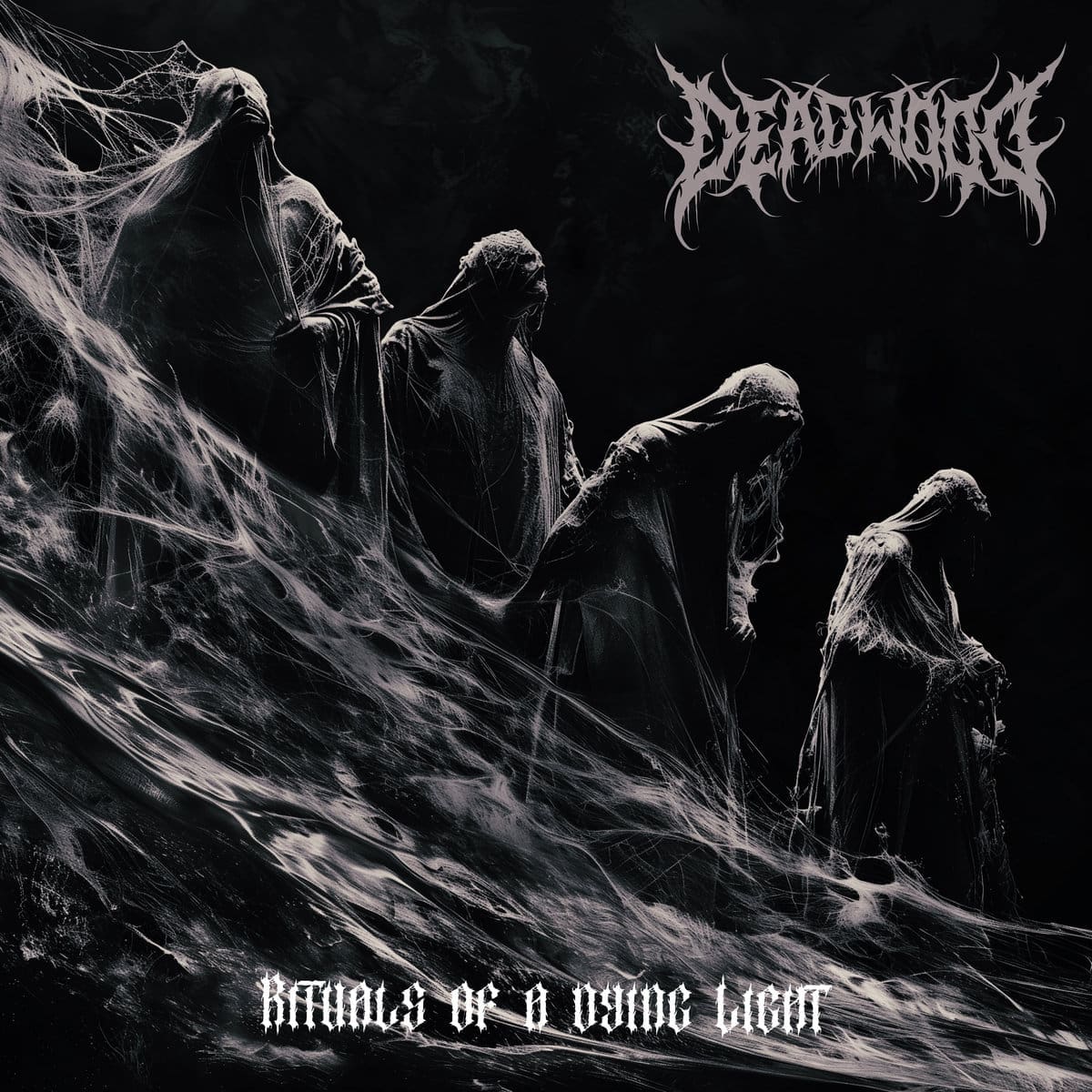
Evokes a spectral liturgy, where shrouded figures enact a rite of passage through decay and obscurity.
The Seventh Sin, Disrelish
There is nothing here to disrelish. Deadwood are forged in suffocation, shaping atmosphere into a weapon rather than an aesthetic. .
Promotional material provided by Clawhammer PR.
The Hymns
01. Tales Of Massacre
02. Heretic
03. Thirst for Blood
04. Whispers of Death
05. Echoes of the Fallen
Deadwood
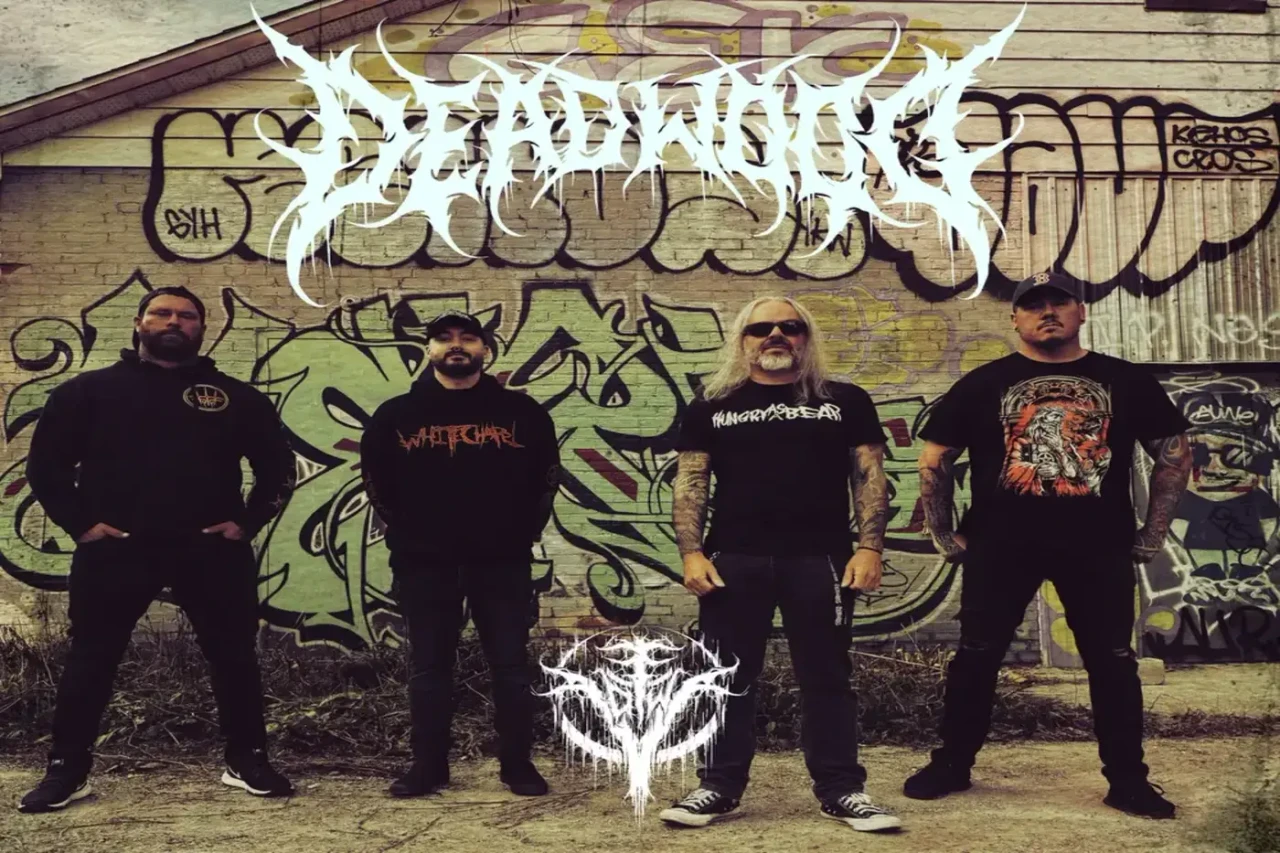
Fred Element — Guitars
Stephane Filion — Lead Guitars
Lerel Heynekemp — Vocals*
Charles Etienne Lafrance — Drums
*Note: Vocals on the EP by Martin Demontigny