Exorcised — Fire & Sulfur Review
Exorcised is a Spanish thrash death metal entity. On 13 March 2026, the band released their debut full-length, Fire & Sulfur co-released via Witches Brew and Cruel Gates Records.
Exorcised, Fire & Sulfur Review: This review will evaluate every aspect of the album, from its intricate musical composition to its production.
The First Three Sins, The Summary
The First Sin, The Strings/Keys: Serrated death-thrash riffcraft merges palm-muted velocity, tremolo menace, and sulphur-stained harmonic chaos into a relentlessly hostile assault. The Second Sin, The Vocals: Joe Kuznik delivers a venomous hybrid of death-metal growl and thrash bark, sounding less like a vocalist and more like a demonic prosecutor. The Third Sin, The Percussions: Traditional thrash propulsion and carefully deployed blast-beat devastation create a muscular rhythmic engine that never relinquishes momentum.
The Fourth Sin, Overall Discussion
Threshold into Hell
Upon pressing the play button, the opening hymn Gates of Hades presents the listener with a malevolent and chilling instrumental prelude. This is not a welcoming overture — it is a direct, auditory descent into hell itself.
Crossing the Sulphur Gate
As the listener progresses beyond the opening invocation, they endure twenty-eight minutes of unadulterated nightmare and anguish — obscuring the horizon and providing no concessions, no illumination, and no means of escape. The air grows thick with the scent of burning stone, signalling that the listener has officially crossed the threshold into a blistering landscape of eternal torment.
There is no filler, no breathing room, no mercy; it is a hyper-concentrated distillation of auditory violence.
Furnace-Forged Hostility
Fire & Sulfur is a relentless onslaught forged directly within the depths of Hellfire — merging the dense, crushing weight of death metal with the jagged, hyper-aggressive speed of thrash metal — an intense, nightmarish manifestation that strips away any sense of safety.
Concurrently, Fire & Sulfur embodies Deicide’s judicial fury, Possessed’s incisive death-thrash precision, and the sulphur-stained early Teutonic trios, while presenting a furnace-forged ferocity that feels less like music and more like a ceremonial practice.
The result is a vortex of pure, unadulterated chaos — a sonic engine specifically engineered to pulverise the listener into absolute oblivion.
The Infernal Trident
Exorcised delivers a display of devilmanship through a hellfire-forged composition and arrangement stripped back to the classic extreme-metal trio framework exemplified by the early incarnations of Venom, Sodom, and Destruction.
Within this three-piece framework, there is no safety net and no wasted space. The guitar, bass, drums, and vocals establish a unified, lethal trident where every single gear turns with razor-sharp precision.
The Prosecutor’s Voice
On guitars and vocals, Joe Kuznik handles a dual assault that serves as the primary weapon of the entire album. His guitar work is serrated, dry, and deliberately hostile. Rather than relying on a thick, bloated wall of fuzz, Kuznik deploys a mid-gain death-thrash bite. The distortion is razor-sharp rather than dense, giving his riffs a cutting, bone-saw articulation where every single note strikes with clinical precision.
His riff craft is exceptionally dynamic:
- The Spine — fast, palm-muted thrash patterns that drive the frantic momentum.
- The Blackened Edge — sudden, lethal bursts of tremolo picking that inject a sinister, occult atmosphere.
- The Harmonic Chaos — chord choices that lean heavily on diminished intervals and descending chromatic runs, ensuring the sonic landscape remains permanently sulfur-stained and structurally unstable.
Kuznik’s vocal approach is less of a traditional performance and more of a hybrid of a cavernous death-metal growl and a biting thrash bark, his delivery is incredibly forceful, perfectly intelligible, and dripping with venom. The distinct dryness of the vocal production strips away any comforting reverb, making the performance feel immediate, confrontational, and hostile —like a demonic sermon shouted directly across a burning pit.
Molten Foundation & Iron Engine
The bass performance by Lolo Sánchez is entirely non-ornamental — it functions as the literal molten underlayer binding the record’s systemic violence. Engineered to be thick and slightly overdriven, the bass possesses a gritty, cutting midrange that keeps it perfectly audible beneath the lacerating guitar tracks.
Héctor Vegas’s drumming acts as the primary mechanical engine driving the record’s hostility — direct, muscular, and completely unpretentious.
- The Kick — mixed to be punchy rather than modern and clinical; it relentlessly drives the frantic tempo without ever dominating the sonic space.
- The Backbone — high-velocity, traditional thrash beats form the uncompromising spine of the hymns.
- The Blasts — occasional, blistering death-metal blast beats erupt when maximum devastation is required, but they never overstay their welcome.
- The Punctuation — thunderous tom runs are deployed with ritualistic precision and act as ritual punctuation that bridges the transitions between hymns.
Heat-Warped Production
The production of Fire & Sulfur operates with a terrifying, physical immediacy. The album sounds as though it were tracked entirely within a sealed, heat-warped chamber, where every single instrument is aggressively forced into proximity with the listener.
There is no cavernous reverb to hide behind; nothing is washed out, and nothing is allowed to feel distant. The mix is bone-dry, immediate, and profoundly hostile — yet it entirely avoids the trap of unreadable lo-fi clutter.
This is a skilfully sculpted display of violence, where every lacerating note and percussive strike lands with absolute, deliberate intent.
Ashes After Damnation
As the album closes with the devastating final hymn, Snake’s Molt/Drained Soul, the furnace doors slam shut, leaving the listener scorched and completely spent beneath the ash.
Overall, Fire & Sulfur stands as a headbanger of a burning fruit of art — a relentless, hyper-focused death-thrash hostility that demands complete submission from start to finish.
The Fifth Sin, The Memorabilia
For me, Fire & Sulfur delivers precisely what is etched onto the album’s title — it is an unyielding manifestation of fire and sulphur. This is an album that does not merely burn the listener; it actively suffocates you in a dense cloud of sulfur and relentlessly torments your soul from the opening invocation to the final silence.
What makes this record truly memorable is how flawlessly this band, their music, and their overall sound capture the pure, unadulterated essence and aesthetics of old-school extreme metal. It is a timeless, fiercely authentic display of devilmanship that refuses to compromise for modern trends.
The Sixth Sin, The Artwork
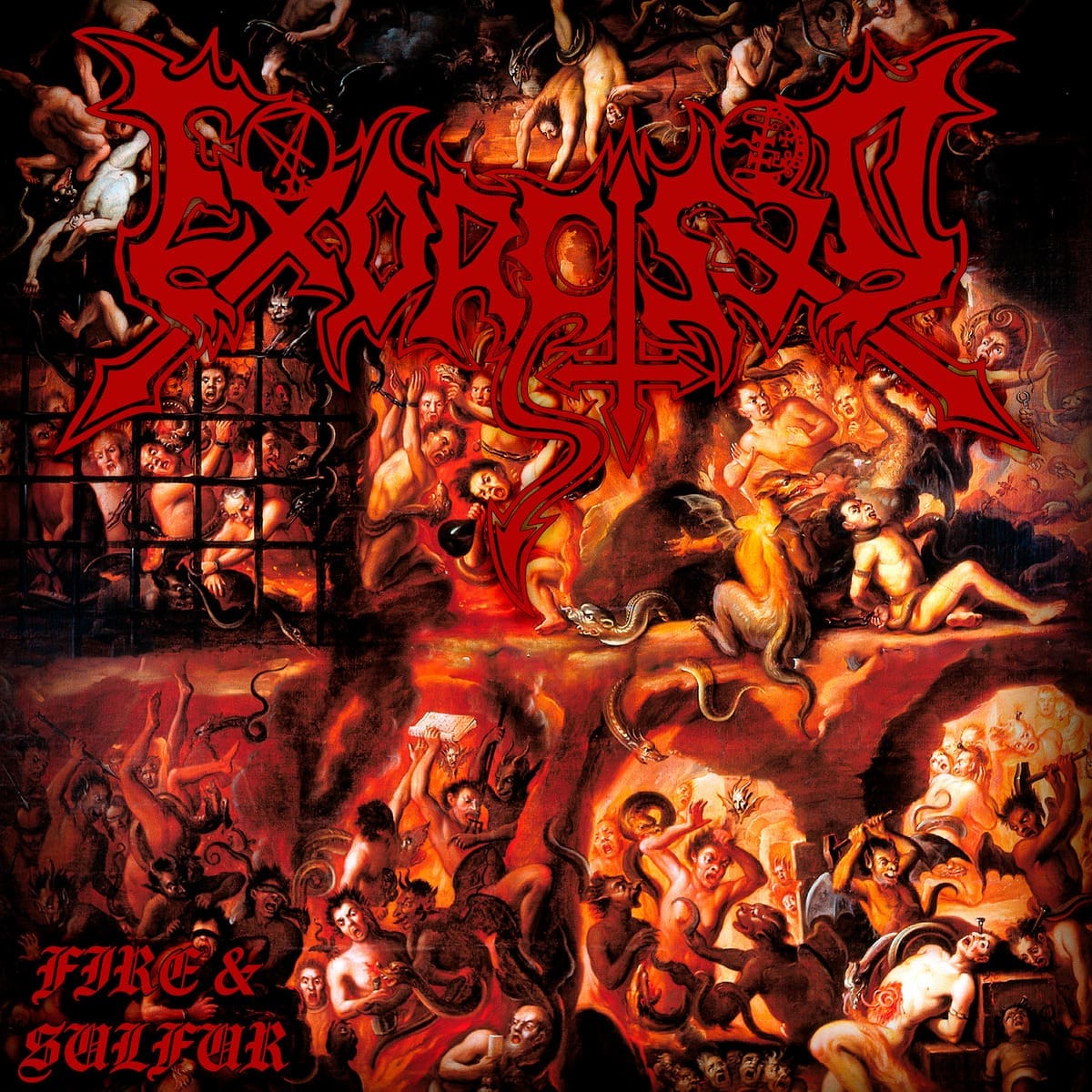
The artwork depicts a bleak, furnace-lit medieval hellscape where the condemned are stacked in writhing layers, dragged downward by horned bailiffs into a sulphur-choked abyss — a judicial vision of damnation rather than a fantasy one.
The Seventh Sin, Disrelish
There is no disrelish to be found within Fire & Sulfur. Every razor-sharp riff, dry percussive strike, and venomous vocal invocation serves a singular, destructive purpose. To demand anything less hostile or more polished would be to extinguish the very hellfire that makes this burning fruit of art so monumentally powerful.
The Hymns
01. Gates Of Hades
02. Torturedd on the Rack
03. Hatred Knife
04. Formulas for the Incantation
05. Robbery With Violence
06. Pit Of Filth
07. Fire & Sulfur
08. Snake’s Molt/Drained Soul
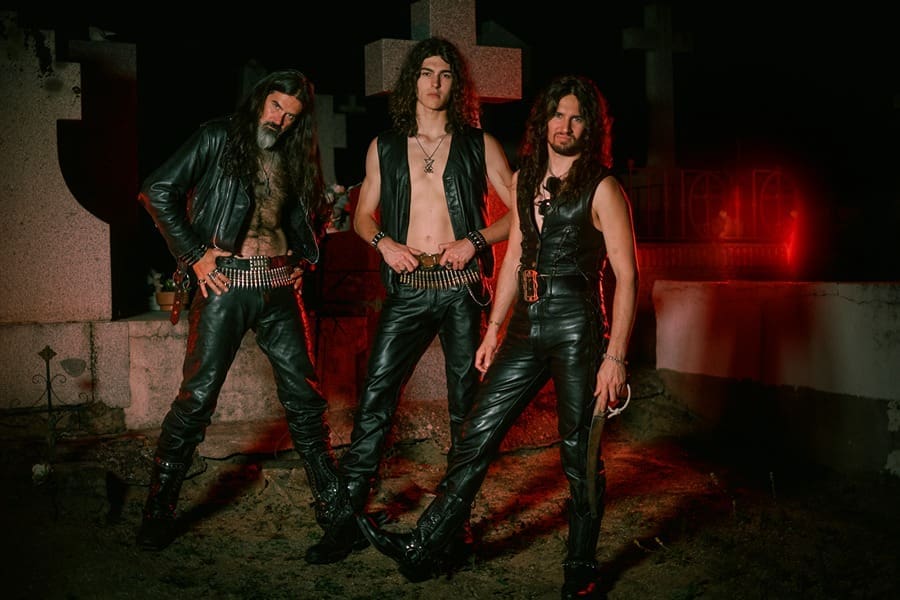
Exorcised
Lolo Sánchez — Bass
Héctor Vegas – Drums
Joe Kuznik – Guitars, Vocals
Hear The Music
Social Links
Cruel Gates Records | Home Page
Cruel Gates Records | Bandcamp
Cruel Gates Records | Facebook