ExpiatoriA Interview
The Interview — ExpiatoriA: On Ritual, Theatre, and Stagecraft
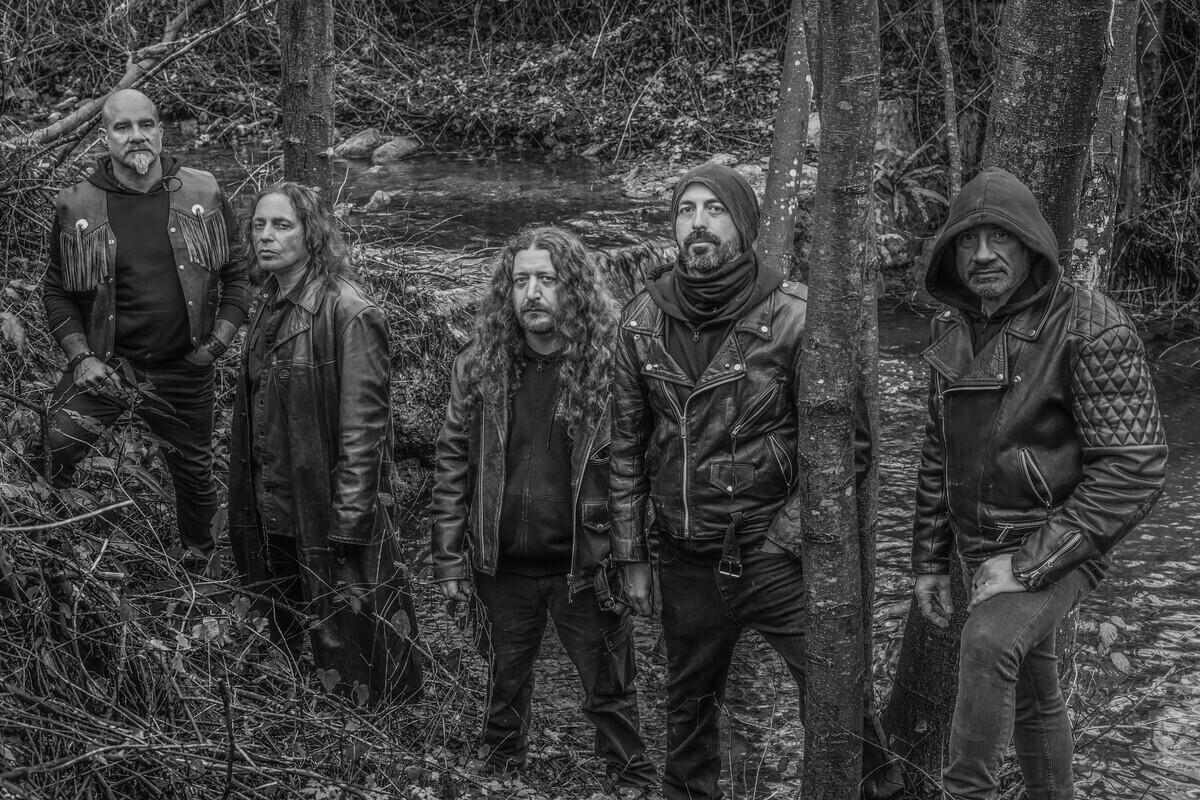
ExpiatoriA are an Italian doom (gothic/heavy) metal entity formed in 1987, where theatre and sound converge beneath a mantle of shadow and ritual weight. Their music does not rush toward spectacle; it unfolds with deliberate pacing, drawing from heavy metal tradition, gothic atmosphere, and progressive sensibility. Melody is treated as narrative force, and darkness is rendered not as chaos, but as staged presence.
This interview enters that theatrical and reflective space. Across thirteen questions, we explore the band’s origins, evolution, dramatic language, and philosophical undercurrents — allowing ExpiatoriA to articulate their journey through doom, gothic resonance, and heavy metal conviction.
Thirteen Questions constructed with measured intent.
Q1: ExpiatoriA was formed in Genoa in 1987. What originally brought the band together, and what was the early musical vision?
ExpiatoriA: The band was founded by the Malachina brothers (GB on bass and Massimo on guitar) and Massimo Cottica (vocals), who, like many metal-obsessed teenagers, wanted to imitate their idols by creating their own music.
The first ExpiatoriA demos were fierce and relentless, indebted to a thrash style contaminated with classic heavy metal à la King Diamond, Death SS, and Mercyful Fate. In short: speed, a desire to shock, and to make a huge racket!
Q2: Across the decades, ExpiatoriA has blended heavy metal, doom, and progressive elements. How has that sound evolved over time?
ExpiatoriA: The early ExpiatoriA sound was very close to certain late-’80s thrash solutions (because, after all, those were the years), then gradually embraced more doom and gothic elements (I’m thinking of Return to Golgotha from 2010).
It wasn’t a softening: the songs have always been heavy metal, but the frantic speed of the early days is certainly gone. From Crimson Evil Eyes (a 2018 mini-CD) to Shadows (2022), there is a clear consecration of the band’s more classically doom style.
With Voci Notturne, the evolution continues and we incorporate progressive elements into our songs. Add to this that the lineup is now stable and we played a lot to promote Shadows, so this latest development happened naturally.
What you’ll hear on the new album is another step forward in composing songs inspired by Mercyful Fate and King Diamond, not just in words, but in practice. We’re really excited about how they’re turning out because they contain all of our past history, with a return to harder sounds but with the progressive key we began exploring in Voci Notturne
Q3: ExpiatoriA is known for theatrical performances where music meets stagecraft. When did theatre become part of the band’s identity?
ExpiatoriA: These elements have always been part of our concerts, but with the release of Shadows we began to take great care of every scenic detail. We like to think of our performances as more than just musical moments, and we try to offer a professional and credible show.
Of course, everything is done in-house, but the final result is convincing and impactful
Q4: How important is visual storytelling to ExpiatoriA compared to the music itself?
ExpiatoriA: It goes almost hand in hand, but the desire to create good music certainly comes first. You can’t try to garnish and embellish a badly cooked dish, if you know what I mean.
Q5: Your latest release, Voci Notturne, is a split album with Il Segno del Comando via Black Widow Records. What made this collaboration feel natural?
ExpiatoriA: Certainly the fact that we’ve always admired this band, creators of wonderful albums such as Il Volto Verde, L’incanto dello Zero, and Il Domenicano Bianco, just to name a few.
We share a musical sensibility tied to dark and esoteric themes, we live and play in the same city, and we’re great friends with the guys from Il Segno. For a few years now we’ve also shared guitarist Roberto, a fantastic person and a great talent.
Q6: The concept for Voci Notturne originated from former ExpiatoriA vocalist Davide Ciccarelli (Krieg). How did his idea develop into the finished project?
ExpiatoriA: As often happens, a casually thrown-out idea can lead to great things, and that’s exactly what happened. From the very beginning Krieg’s idea included collaborating with Il Segno del Comando.
The person responsible for recording, mixing, and mastering the entire album was Edoardo Napoli, our former guitarist, who did an excellent job enhancing the sound of both bands.
We believe that, even though we play two somewhat different kinds of music, the album has its own internal logic, and the two sides of the split remain coherent when listened to one after the other.
Releasing the album with Black Widow Records, a historic Genoese label we’ve both worked with for years, sealed the moment.
Q7: The album is inspired by the 1995 TV miniseries Voci Notturne by Pupi Avati. What drew ExpiatoriA to the atmosphere of that work?
ExpiatoriA: Voci Notturne has always been a cult series within Italian cinema: from its unfortunate broadcast history to the problems caused by references to the Theosophical Society, to the fact that it was never released on VHS or DVD, not to mention its esoteric and occult themes.
If these elements are already enough to spark the interest of any metal band, adding the desire to create something with Il Segno del Comando, a band whose very name reflects this universe, made it inevitable.
Q8: Both bands interpret the same source material on this release. Did you approach the split as a traditional split album or as a shared concept work?
ExpiatoriA: Voci Notturne is a split in every sense: the theme is related to the series, but there’s no narrative thread connecting the tracks, no story with a beginning and an end.
This allowed us to maintain maximum compositional freedom and explore both musically and lyrically.
Q9: Roberto Lucanato performs guitar in both ExpiatoriA and Il Segno del Comando. Did this shared connection help shape the collaboration?
ExpiatoriA: Not really, since the idea for the collaboration dates back to 2022, when Roberto wasn’t yet part of the lineup. But we’re very proud to share such a capable and inventive musician with Il Segno del Comando
Q10: Recording took place between 2023 and 2025 at Evilcation Studios. How did this extended recording period influence the album?
ExpiatoriA: I think taking all that time helped us understand what shape to give the songs, in some cases completely overturning them. There were also some lineup changes during those years: AngeleX replaced Krieg on vocals, and everyone who passed through the band left their mark in some way.
The final versions of the songs are the ones refined over time.
Q11: Voci Notturne will be performed in full at La Claque in Genoa. How are you preparing to bring the album to the stage?
ExpiatoriA: We’re very excited about performing the entire Voci Notturne with Il Segno del Comando in one of the most prestigious venues in Genoa.
There will be special guests, first among them Raffaella Càngero of the band La Janara, with whom we already collaborated on a track from Shadows. There will be other guests as well, and for the occasion we’ll have stage design dedicated to the themes of the TV series.
A concert not to be missed!
Q12: After lineup changes and years of live activity since Shadows, how does this release represent the current identity of ExpiatoriA?
ExpiatoriA: Voci Notturne is a fundamental turning point: this is the tightest lineup we’ve ever had, and we’re all rowing in the same direction (we’ve learned there’s nothing more important than that in a band, and in many other things in life!).
Our concerts are recognizable and powerful. The sound fully reflects what we want to play. Once someone described us as “complicated doom,” meaning the richness of influences and the fact that our music can’t be identified as just doom.
That’s why we like to define our music as heavy metal with doom and prog elements
Q13: What lies ahead for ExpiatoriA following the Voci Notturne release cycle in 2026?
ExpiatoriA: We have several shows with Il Segno del Comando to promote Voci Notturne, and then we’ll play at Luppolo In Rock, one of the most important metal festivals of recent years—if not the most important. We can’t wait!
Next year we plan to release our second album, which will feature a slight thematic, and therefore visual, change, as well as a small shift toward faster sounds.
If there’s anything you’d like to add — about the Voci Notturne, your creative process, or something we haven’t touched on — please feel free to do so here
ExpiatoriA: Pre-orders for Voci Notturne are open, check out the first single off the split Sublicius: https://expiatoria-
A huge thank you to Kris and Athenaeum Of Sin for the in-depth interview!
This closes the interview. The rite is complete — the voice of ExpiatoriA now etched into the archive of sin.
I extend my deepest thanks to ExpiatoriA for sharing their voice — and to the reader, for bearing witness to this craft-rite.