Faded Remembrance — The Blessing of Downfall Review
Faded Remembrance is a Atmospheric gothic doom/death solo project from Hungary. On 12 May 2026, Faded Remembrance released its third full-length, The Blessing of Downfall, released through Bitume Prods label
Faded Remembrance, The Blessing of Downfall Review: This review will evaluate every aspect of the album, from its intricate musical composition to its production.
The First Three Sins, The Summary
The First Sin, The Strings/Keys: Crushing doom/death foundations merge with mournful brass, restrained synthesisers, and gothic melancholy to forge a slow-moving atmosphere of philosophical weight. The Second Sin, The Vocals: Harsh doom/death growls collide with restrained cleans, capturing the album’s constant tension between hostility, contemplation, and human fragility. The Third Sin, The Percussions: Spacious doom pacing and selective mid-tempo surges reinforce emotional pivots while preserving the album’s immense ceremonial weight.
The Fourth Sin, Overall Discussion
Opening the Tomb Gate
The opening hymn, The Blessing of Downfall begins, it greets the listener with a slow, suffocating doom instrumental and crushing vocals. It serves as a grim threshold as one continues the journey through the remaining eight hymns.
Philosophy Beneath Funeral Stone
Spanning an immersive runtime of under sixty minutes, The Blessing of Downfall takes the listener on a harrowing lyrical trek through human nature, inner struggle, faith, existence, and emotion. Rather than relying on simple verse-chorus structures, the lyrics manifest as raw poems and fragments of philosophical thought, deeply rooted in tragedy, human frailty, and the natural world.
Brass Through the Doom Fog
The sonic masonry within the walls of The Blessing of Downfall exposes a slow, heavy, and intensely atmospheric doom/death soundscape. However, Faded Remembrance enriches this bleak landscape with the unexpected integration oftrumpet, trombone, and synthesiser — granting the record a distinctive, avant-doom colour reminiscent of the legendary Pan.Thy.Monium.
Simultaneously, the foundations remain firmly rooted in the melancholic vibes of old-school doom/death and gothic metal from the 1990s and the first decade of the 2000s. The artistic lineage remains clear, drawing lineage from foundational giants such as Bathory, Candlemass, and Moonspell.
The Solitary Codex of Ruin
Faded Remembrance’s devilmanship is shaped entirely by a single hand. Because of this self-contained creative vision, The Blessing of Downfallmoves with a highly deliberate, ceremonial slowness. Its crushing weight is carried not only by standard doom guitars, but by brass and synths that bleed a strange, mournful radiance directly into the gloom.
Ultimately, the album reads like a philosophical codex set to a grand, funereal procession. It handles human frailty, inner fracture, and the cold beauty of nature in long, atmospheric movements. Balancing a bittersweet tonal palette with avant-garde instrumentation, this solitary creation stands apart from the contemporary doom landscape.
Where Brass Becomes Voice
The brass instrumentation on The Blessing of Downfall is entirely devoid of gimmickry. Instead, the trumpet serves as the lead instrument alongside the solo guitar, while the trombone and synthesisers act as the foundational supporting framework. Together, the trumpet and trombone function as a second vocalist — often softening, elevating, or complicating the emotional message of the crushing riffs.
Beneath the avant-garde brass and philosophical lyricism lies a foundational bedrock forged from traditional extreme metal elements. The guitars are tuned down to standard D, delivering a wall of heavily distorted rhythm hymns and a thick, anchoring bass line. However, the true character of the string work shines in the clean and solo passages, which are injected with an atmospheric tonality and a deep sense of internal melody.
The guitar and bass layers work in tandem to balance immense crushing weight with gothic melancholy:
- The Rhythm Guitars — they carry the definitive doom/death backbone of the record. The execution relies on slow, immensely thick chord work, heavy palm-muted accents, and occasional mid-tempo surges that recall classic early-90s death metal tempos.
- The Clean & Solo Guitars — hovering slightly above the rhythm wall, the clean guitars employ a glassy, reverb-touched tone. This specific texture shifts the record away from pure, oppressive funeral weight and guides it into a space of elegant, gothic melancholy.
- The Bass Guitar — rather than wandering, the bass strictly underlines the fundamental chord changes, providing a massive low-end glue that thickens the agonisingly slow sections and gives the brass a solid platform to launch its laments.
Monoliths of Brass & Shadow
To complete the avant-garde tapestry, Faded Remembrance relies on a meticulous division of labour between the lower brass and the keys. These are not filler elements; they are structural pillars designed to expand the dynamic range of the standard metal instrumentation.
While the trumpet handles the high, lyrical laments, the trombone operates in the lower registers to reinforce critical chord changes and underpin the album’s most climactic moments.
It injects a heavy, funereal, and processional weight — a deep brass resonance — that distorted guitars alone simply could not achieve. It gives transitions the gravity of a moving monolith.
The synthesisers are deployed with exceptional restraint, focusing on rich pads, subtle melodies, and sweeping textural swells. Their primary purpose is to fill the acoustic gaps between the crushing guitars, the soaring brass, and the raw vocals — the recurring combination of brass and synthesis is what defines the record’s identity. Together, they infuse the crushing weight of the string section with a bittersweet, deeply melancholic tone.
Ritual Pulse & Internal Fracture
The drums enforce the album’s deliberate doom pacing and mark critical emotional pivots. They signal the exact moments where the musical narrative shifts from quiet, internal contemplation to raw, external confrontation — particularly when the harsh vocals tear through the mix or the riffs gain momentum.
The drums cycle through two primary modes to guide the listener through the philosophical landscape:
- Slow, Spacious Beats — massive backbeats, long, bleeding cymbal decays, and heavy tom accents that heighten the atmosphere of the more ritualistic passages.
- Mid-Tempo Surges — these rhythmic accelerations drive hymns like Thoughts Of Disobedience and Deep In The Forest. Here, the percussion shifts the narrative into an urgent, deeply conflicted space, reflecting the internal friction of the lyrics.
Voices Across the Abyss
The vocals act as the primary vehicle for the album’s emotional conflict. Rather than sticking to a single delivery style, the vocals shift dynamically between absolute hostility and vulnerable detachment, mapping perfectly onto the record’s philosophical architecture.
- The Harsh Growl — the primary vocal delivery is filthy, freezing, and immensely heavy. It masterfully blends a classic, low-end doom/death growl with a sharp, venomous blackened edge.
- The Clean Musings — clean vocals are deployed with precise restraint. They emerge only when the musical arrangement opens up — typically coinciding with glassy guitar tones, long sustained brass notes, and thicker synthesiser pads.
- The Contemplative Anchor — these clean passages align directly with the contemplative side of the record’s thematic concept.
- The Underscoring of Conflict — by routinely preceding or trailing a harsh, blackened outburst, these clean vocals underline a sense of deep internal conflict, capturing the fragile human spirit caught beneath a crushing weight.
The Tomb Breathes Back
The sonic environment feels less like a modern studio recording and more like a solitary ritual captured inside a damp, stone-cold tomb. The entire mix carries a hard, echo-bitten chill that rejects polished modern engineering in favour of a stark, airless, and highly deliberate atmosphere — a sound unearthed, not engineered.
Collapse Beneath Blackened Skies
As the instrumentation fractures and dissolves, the music fades into a total, suffocating darkness with the closing hymn, Slumber In The Darkness. It leaves the listener stranded in the airless quiet of the crypt, staring into the internal fracture that the album so meticulously carves open.
Overall, The Blessing of Downfall stands as a slow, crushing, and deeply atmospheric fruit of art — a solitary monument to human frailty and the bittersweet weight of existence.
The Fifth Sin, The Memorabilia
For me, The Blessing of Downfall was entirely unexpected. It marks a striking evolution from its previous outings, Delusion of Silence and Dying Age, which were both highly enjoyable but operated in a different territory. This album is something else entirely. The embedded integration of brass and synthesisers borders on devilmanship — particularly the brass work, which is never treated as an overused gimmick, but is instead carefully placed and meticulously timed.
The sequence of the fifth and third hymns, Deep in the Forest and Glimmering Hope, captures this magic perfectly. The former genuinely makes you feel as though you are hopelessly lost within a dense, unyielding thicket. The latter, with its slow-tempo cadence, glassy clean riffs, and mournful brass work, feels like stepping directly into a blackened void — yet one that is breathtakingly beautiful.
Overall, there is not a single bad hymn to be found across the entire runtime.
The Sixth Sin, The Artwork
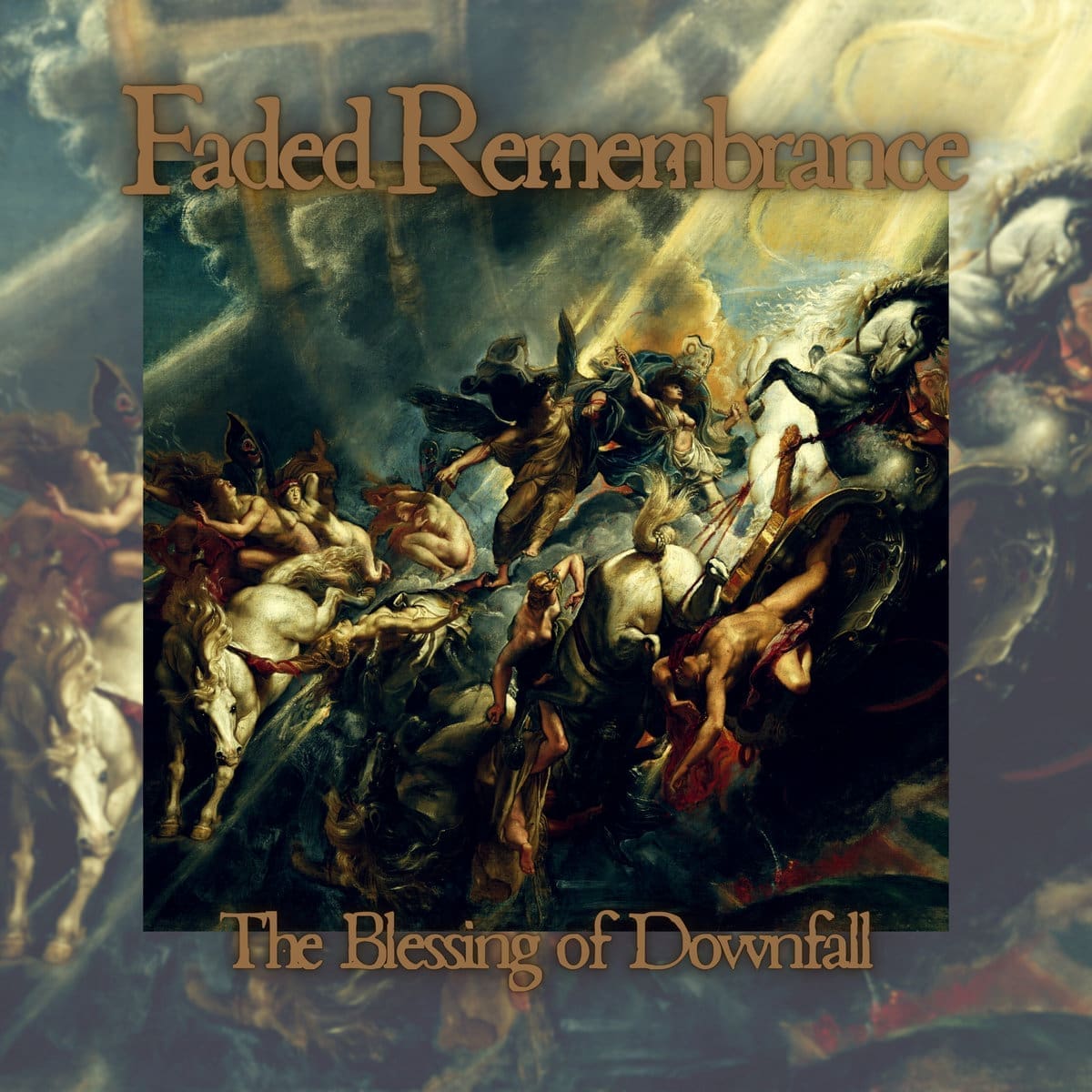
The cover descends like a sanctioned calamity, its storm-lit figures frozen in the exact moment where downfall becomes doctrine. It is a stark visual reflection of the album’s core internal warfare, capturing the precise point where human frailty meets inescapable cosmic ruin.
The Seventh Sin, Disrelish
There is no disrelish to be found within The Blessing of Downfall. Every element of this solo ritual is executed with unwavering conviction, leaving no room for rejection — only a vast, sorrowful monument worth returning to time and again.
The Hymns
01. The Blessing Of Downfall
02. Shadowhaunt
03. Glimmering Hope
04. At the Gates of Avalon
05. Deep In The Forest
06. Requiem
07. Thoughts Of Disobedience
08. Pride Far Gone
09. Slumber In The Darkness
Faded Remembrance
Tamás Albert — Everything