God Unknown Interview
The Interview — God Unknown: Funeral Doom, Atmospheric Desolation, Musical Evolution & Artistic Expression
Combining crushing guitar arrangements, sombre melodies, cavernous growls and atmospheric textures, God Unknown creates funeral doom/death metal compositions steeped in melancholy and emotional depth. Following the release of their seven-hymn debut album, Last Glimpse of Daylight, on 31st July 2026, the entity returned with the single Storms Upon Us on 31st October 2026, marking another chapter in their musical journey.
This interview explores the creative world behind God Unknown, examining the entity’s musical foundations, influences, songwriting, instrumental arrangements, vocal contrasts and lyrical themes. Across thirteen questions, we also discuss the evolving line-up, international collaboration, visual identity and the artistic direction shaping their forthcoming material.
Vocalist Daniel offers his perspective on the entity’s development, the creative process behind its recordings and the ambitions guiding God Unknown towards their next full-length album.
Thirteen Questions constructed through funeral doom, atmospheric desolation, musical evolution & artistic expression.
Q1: Hailing from the United Kingdom and Sweden, God Unknown is an international funeral doom/death metal entity. Could you introduce yourselves to the readers of Athenaeum of Sin, including the current members and their respective roles, and explain how God Unknown originally came together?
Daniel: The original idea for the band came from John Courage, the group’s songwriter and guitarist. His vision was to form an atmospheric funeral doom band, and that is how it all began. He reached out to some like-minded people he had met over the years, all of whom contributed to the band’s debut album, Last Glimpse of Daylight.
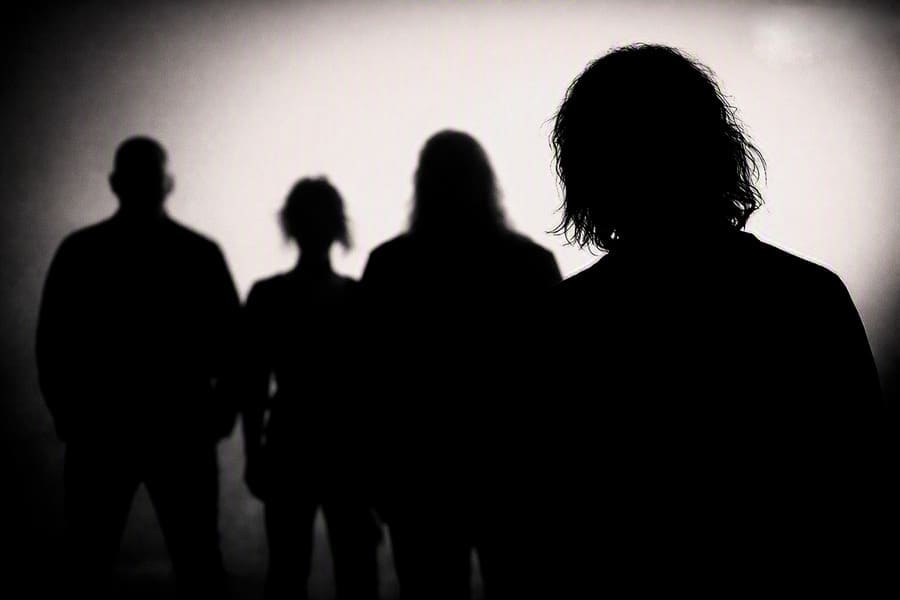
Following the debut in 2026—when the band’s lineup looked a bit different, featuring John Courage on guitar, Kostas Panagiotou (Pantheïst) on keyboards, Adam West (The Shallow Souls) on bass, Tats McGee on drums, and yours truly on vocals—the band later reformed. The new lineup consisted of John on guitar, keyboards, and drums; Camilla Tjernberg on vocals; Michael Lang on bass; and myself, once again, on vocals. Michael Lang actually came in a bit earlier than that, playing on studio recordings of the first album. In addition, we have a George Martin-like figure who operates somewhat behind the scenes—our own “fifth Beatle”—namely my brother Mikael, with whom I write the lyrics, and who provides feedback and so on.
Q2: God Unknown‘s musical identity embraces the crushing weight of funeral doom alongside the darker characteristics of death metal. What initially drew you towards these particular styles, and which musical influences have helped shape the entity’s sound?
Daniel: Hmm, that’s really a question for John to answer, but I’ll do my best in his absence. I suppose we’re pretty much influenced by the dark music wave of the 90s—death-doom and gothic bands like My Dying Bride, Paradise Lost, Anathema, Moonspell, Tiamat, Type O Negative, etc.—you know what I’m talking about. The emotional expression and depth is palpable within these mentioned styles, and that appeals to us.
Q3: On 31st July 2026, God Unknown released Last Glimpse of Daylight, a seven-hymn full-length album exploring sombre atmospheres and deeply melancholic compositions. Looking back upon its creation, what were your original intentions for the album, and how do you feel it represents God Unknown‘s artistic identity?
Daniel: The goal was to create atmospheric doom, and I think we managed to achieve what we set out to do. With the album and its songs we established our sound; now we are building further upon it.
Q4: Last Glimpse of Daylight featured an extensive musical arrangement involving guitars, bass, percussion, synthesisers, and organ textures. How did the songwriting and recording process develop across the album, particularly when balancing its immense heaviness with more restrained atmospheric passages?
Daniel: We want the music to be interesting. Varied music is, by definition, interesting. It was a conscious choice to balance larger arrangements against more stripped-back ones. And the dynamics are very important to us, which is perhaps noticeable.
Q5: One particularly striking aspect of Last Glimpse of Daylight was the contrast between cavernous growls and delicate clean vocals, including Camilla Tjernberg’s appearance on Stay With Me. How did these different vocal approaches contribute to the album’s emotional character, and what influenced their placement within the compositions?
Daniel: The contrast between the different vocal styles works so well in Stay With Me that we have decided to continue along this path—and perhaps the emotional expression becomes even more powerful as a result.
Q6: God Unknown is now entering a new chapter with changes to the line-up. What prompted these changes, and how have the musicians involved in the current incarnation influenced the entity’s creative direction?
Daniel: Everyone involved from the beginning has helped shape the band’s sound and its direction. The reason we have now made some restructuring is that being in a band is time-consuming and sometimes you have to let certain things go in order to focus your full attention elsewhere.
The band has already chosen its direction; all members, both old and new, are simply following the path that has been laid out.
Q7: On 31st October 2026, God Unknown released their single Storms Upon Us. What inspired this particular composition, and how did the initial musical ideas develop into the finished recording?
Daniel: It’s hard to describe creative processes. Sometimes, things just come to you. John composed a demo, my brother and I added the lyrics, and then everyone pitched in to finish it.
Since we have a clear picture of who we are and the path we are to continue following, it becomes easier to find the direction forward.
Q8: The title Storms Upon Us suggests an atmosphere of approaching turmoil or emotional conflict. What lyrical themes and underlying concepts does the single explore, and is there a particular message or personal experience behind its creation?
Daniel: On a personal level, the lyrics are about having faith in something greater than oneself. My brother Mikael and I wrote them from our own perspective. It’s about the idea that not everything is hopeless in a broken world. The sky is falling, though perhaps not today.
Some might interpret them one way, others another—and that is precisely the intention. All our lyrics are meant to be open to personal interpretation.
Q9: With Storms Upon Us introducing the revised line-up, how does its musical arrangement compare with the material presented on Last Glimpse of Daylight? Are there any notable developments in the guitar work, rhythm section, vocals or atmospheric elements?
Daniel: Not really. Not from where we stand. Like I mentioned earlier, we are continuing along the path we’ve set out on.
Q10: Funeral doom often relies upon patience, repetition and the gradual development of atmosphere rather than conventional song structures. When composing new material, how do you determine the balance between musical progression, emotional expression, and the deliberate restraint that defines the genre?
Daniel: Once again, John should answer this, as he is the one who composes the core of the music… But I’d say, there is no elaborate planning; rather, it happens naturally.
Q11: As an international entity with musicians based in different countries, how does God Unknown approach collaboration, songwriting, and recording? Have geographical distances presented any particular challenges or creative advantages?
Daniel: It’s not a hindrance in the slightest, in my view. The internet makes it all possible. We are in close contact with one another, and everything is actually very structured and smooth.
Q12: Beyond the musical compositions themselves, visual artwork and imagery can play an important role in communicating an entity’s artistic identity. What significance do the visual elements surrounding God Unknown hold, and how do they relate to the music’s underlying themes?
Daniel: Yes, of course. Everything we do goes hand in hand. It all stems from our desire to create atmospheric funeral doom, and everything you hear and see is an expression of precisely that.
Q13: Looking towards the future, does Storms Upon Us represent the beginning of a larger body of work, or is it intended as an independent release? What can listeners expect from God Unknown as the entity continues to develop?
Daniel: You can expect us to continue in the same vein that we have demonstrated so far. You could say that we are simply looking to refine the details. Storms Upon Us is intended to be part of a larger work—an album, the follow-up to Last Glimpse of Daylight, which we are currently working on.
The Open Invitation: Finally, is there anything you would like to share with the readers of Athenaeum of Sin that we have not explored throughout this interview? The floor is entirely yours.
Daniel: I’d just like to take this opportunity to say thanks for this little chat, and to invite readers whose interest has been piqued to check us out.
This closes the interview. The rite is complete — the voice of Daniel now etched into the archive of sin.
I extend my deepest thanks to Daniel for sharing their voice — and to the reader, for bearing witness to this craft-rite.