Heidegger — Tyrant Review
Heidegger is an Indonesian blackened crust punk entity. On 8 March 2026, the band unleashed their debut independent full-length, Tyrant.
Heidegger, Tyrant Review: This review will evaluate every aspect of the album, from its intricate musical composition to its production.
The First Three Sins, The Summary
The First Sin, The Strings/Keys: Dual-guitar abrasion merges crust-punk violence with bleak post-black atmosphere, constructing a layered wall of distortion that balances urgency, melancholy, and collapse, The Second Sin, The Vocals: Hoarse, rage-filled screams charged with political fury and emotional exhaustion. The Third Sin, The Percussions: Disciplined d-beat violence and blackened rhythmic intensity, maintaining structural precision at relentless speed.
The Fourth Sin, Overall Discussion
The Machinery of Ruin
Before heading into the review, understand that Tyrant is more than an exercise in volume. It is a calculated journey throughpolitical anger, state critique, and social collapse. While the foundation is built on the raw energy of crust punk, the message is not confined by genre — it explores the rot within the structures of power.
Crustfire & Blackened Dreams
Tyrant is not merely a collection of songs; it is a ten-hymn aggressive and emotional roller coaster. These pieces function as a singular concept, fuelled by a level of devilmanship that is remarkably strong, tight, and uniquely powerful. The composition is remarkably refined — particularly in how the band integrates raw aggression with a haunting, dream-like atmosphere.
Heidegger achieves a unique and ferocious chemical reaction by blending two distinct worlds:
- The Foundation — the raw, kinetic energy of crust punk and the driving, unrelenting pulse of d-beat.
- The Atmosphere — the cold, bleak, and expansive textures of post-black metal.
The result is a dark, ferocious musical composition that refuses to remain one-dimensional. It is rich with emotional dynamics, moving seamlessly between the frantic urgency of a collapsing state and the hollow, dreaming stillness that follows the destruction.
Resistance Ignites
As soon as the listener presses play, the opening hymn Menolak Lupa, greets the listener with an atmospheric, melodic and clean acoustic introduction — before erupting into a driving d-beat surge, guitars layered into a thick, distorted wall that immediately establishes the album’s oppressive tone.
The Anatomy of Collapse: Hymns II—IX reads like a detailed map of a city falling into ruin. Each hymn represents a different stage of the collapse, from the violent sharpening of the state’s edge to the final emotionally exposed silence of the piano.
- II. Invasi — The Sharpening Edge — carrying the momentum from the opening, Invasi is faster, sharper, and more overtly violent. The transition from resistance to open conflict is complete.
- III. Estimotika — The Post-black Chill — the dual-guitar layering becomes more pronounced. Bleak melodic fragments are woven directly into the distortion, injecting the hymn with a distinct post-black metal chill. The drums alternate between relentless d-beat and jarring half-time drops, creating a constant state of structural tension.
Collapse in Motion
- IV. Ekosida — Tectonic Run — one of the heaviest instrumental pieces on the record. The guitars adopt a grinding, almost tectonic motion, physically evoking the sensation of structural collapse. The drums remain fast but shift toward tom-driven accents, giving the hymn a sense of environmental and systemic ruin.
- V. Megosticia — Raw Abrasion — a return to pure speed. The guitars are jagged and frantic, stripping away the atmospheric layering in favour of a raw, unadorned crust attack.
- VI & VII. Rekayasa & Police B**tard — The Brutal Reality — introduces a sense of controlled disorientation, while Police B**tard serves as the record’s most.
- VIII & IX. S.I.A.L & Erenoah — The Mournful Void — brings a darker, more oppressive instrumental tone, leading directly into the emotional heart of the record’s end: Erenoah. Here, a cold, slow and mournful piano enters—sparse and wide-spaced—leaving the listener emotionally exposed following the violence.
Crust Wounds & Post-Black Shadows
The Anatomy of Collapse is captured in a production that leans into abrasion: The result is a cold, oppressive recording aesthetic: crust urgency fused with post‑black metal bleakness, delivered as one continuous, furious pressure front.
The devilmanship of the instrumental score is driven by the dual-guitar attack of Ari and Odi. Together, they construct an explosive wall of sound that bridges the gap between the street and the void:
- The Foundation — dark riffs with deep roots in hardcore punk, crust punk and the chainsaw tone of death metal — providing the structural grit.
- The Expansion — these riffs bleed into cold, post-black metal territories, expanding the scale of the anger.
- The Emotional Layering — by merging a driving d-beat with sombre, melancholic melodic lines, they ensure that the aggression never feels hollow; every riff is weighted with atmosphere.
The overall character of the guitars is defined by a striking duality —crust-punk immediacy meetspost-black metal’s icy expanse. The sound is heavily distorted and layered, yet remains bleak and emotionally charged throughout the ten-hymn journey.
D-Beat Cataclysm
Akom’s bass riffs anchor the recording with a tone that is thick, aggressive, and distinctly groove-driven, providing the necessary weight to support the dual-guitar assault. Driving the music’s momentum is Chepy on drums, who operates as the band’s primary catalyst for both stability and violence.
This performance is a high-velocity hybrid of classic crust d-beats and blackened rhythmic assaults, delivered with a hard-hitting and disciplined precision that maintains total structural integrity even at the most brutal tempos. The result is a percussion style that merges the kinetic energy of crust-punk extremity with a focused, mechanical intensity.
The Human Voice Within Collapse
Vocalist Repin serves as the vital bridge between the instrumental violence and the conceptual message of the record. Delivering the band’s emotional and political core, the vocals are defined by hoarse, rage-filled screams that remain harsh, urgent, and deeply charged with feeling.
This delivery functions as the raw, human articulation of the project’s overarching anxiety, anger, and ideological stance — the voice of an individual caught within the gears of a crumbling state.
Cold Air After the Fire
The album reaches the closing hymn, Outro, a final atmospheric exhale. It could be residual guitar noise, low-end hum, or a fading motif — the point is the dissipation. A closing gesture that leaves the political fury unresolved, hanging in cold air.
Fury, Atmosphere & Structural Decay
Overall, Tyrant is a dark, furious, and emotionally charged fruit of art. An aggressive and emotional roller coaster that successfully bridges the gap between a blackened dream-like atmosphere and raw, crust punk aggression.
The Fifth Sin, The Memorabilia
When I first received Tyrant for coverage, the hymn Police B**tard initially put me off, but after listening to the hymn and understanding the lyrical themes, I was hooked by the band’s raw emotional energy.
The most enjoyable aspect of this discovery was the genuine shock of the post-black metal elements woven into the music. It gives a new name and a new depth to blackened crust punk.
While there is not a single bad hymn on the record, I found the ninth composition, Erenoah, to be particularly enjoyable and emotionally resonant — a moment of stillness that stands out in the storm.
The Sixth Sin, The Artwork
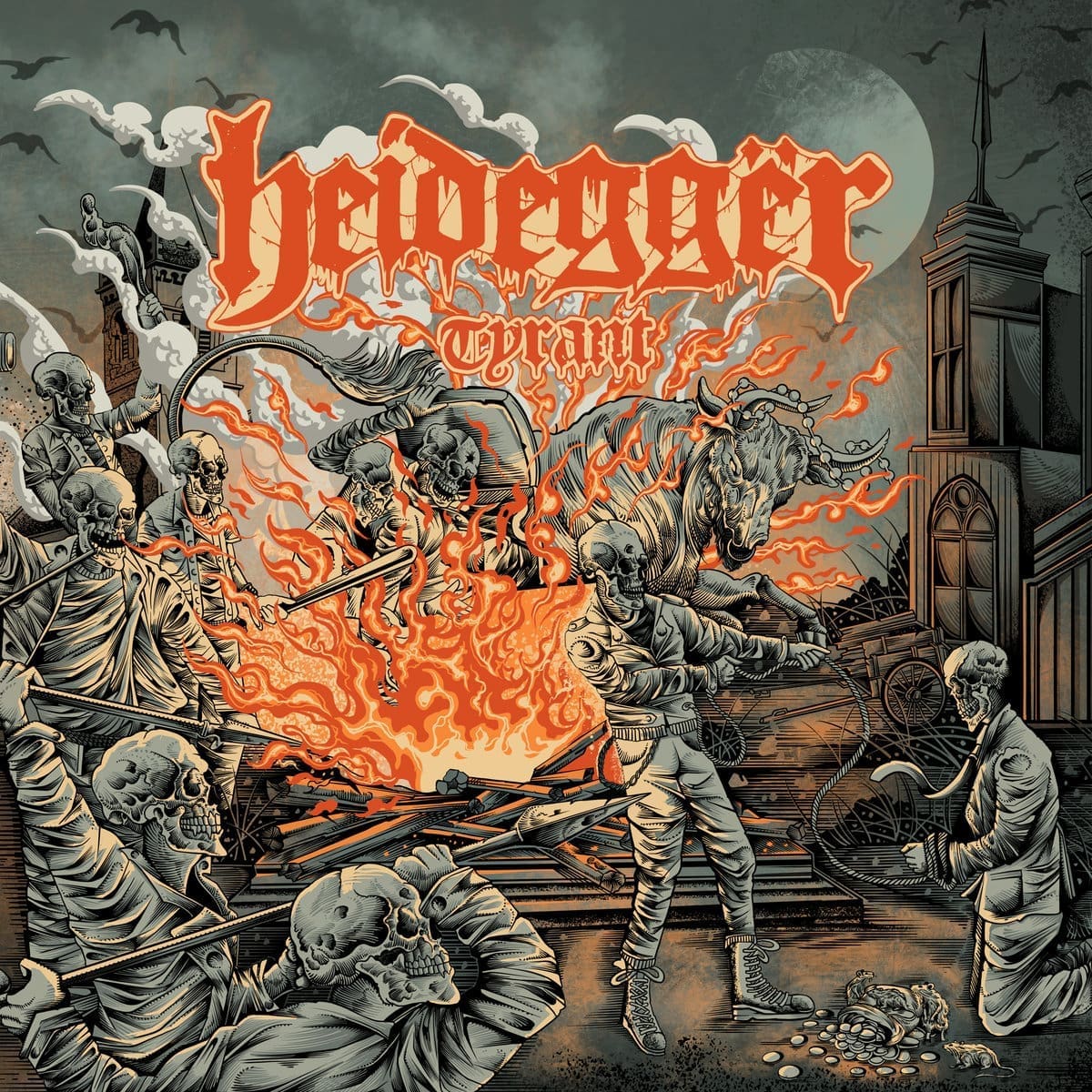
The artwork — a vision of post-mortem resistance, perfectly aligned with Tyrant’s blackened-crust doctrine: the war persists, the tyrant falls, and the dead refuse to stay buried.
The Seventh Sin, Disrelish
There is no disrelish to be found within Tyrant. Tyrant stands as a remarkably executed raw and emotional roller coaster.
The Hymns
01. Menolak Lupa
02. Invasi
03. Estimotika
04. Ekosida
05. Megosticia
06. Rekayasa
07. Police B**tard
08. S.I.A.L
09. Erenoah
10. Outro
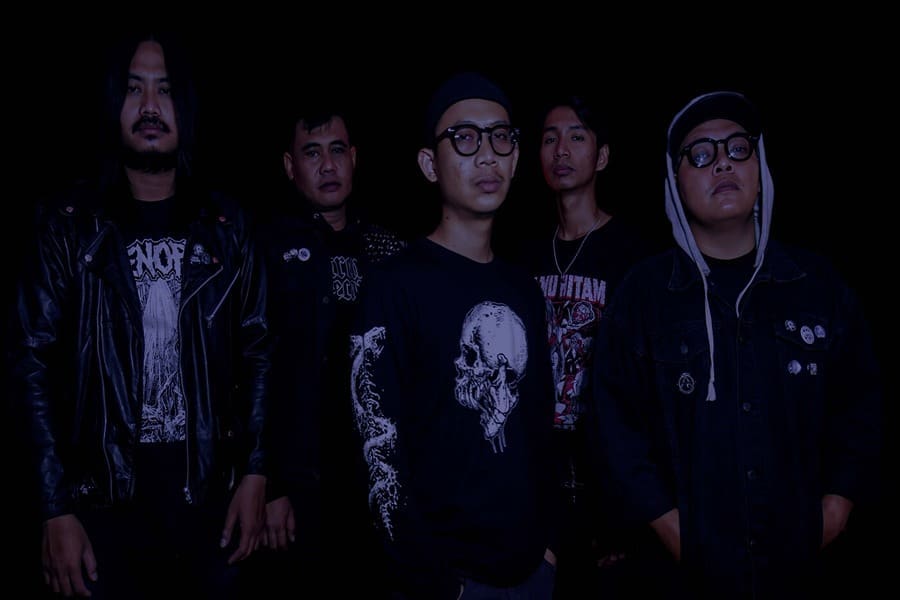
Heidegger
Ari Eka — Guitars
Odi – Guitars
Chepy – Drums
Repin – Vocals
Akom – Bass