Ira Satana — Black Mass Orgy Review
Ira Satana is a one-man black metal entity, birthed from the abyss by Melkor. On 1 January 2026, the project released its debut full-length, Black Mass Orgy, via Melkor’s own label, Studio 13.
Ira Satana, Black Mass Orgy Review: This review will evaluate every aspect of the album, from its intricate musical composition to its production.
The First Three Sins, The Summary
The First Sin, The Strings/Keys: A core ritual blade, cutting deep with high-gain distortion aggressively boosted in the mid-range. The Second Sin, The Vocals: A scorched mid-range delivery that cuts directly through the mix. The Third Sin, The Percussions: Blast beats and mid-tempo pounding serve the ritual sections with mechanical, unyielding energy.
The Fourth Sin, Overall Discussion
Initiation of the Black Rite
As soon as the listener presses play, an unholy ceremony begins—there is no warning, only the immediate onset of the profane. This rite splits into eight distinct invocations, each one acting as a tether that pulls you deeper into the mouth of the dark abyss.
Black Mass Orgy is not just an album title; it is a description of the sonic debauchery contained within.
Isolation and Desecration
Black Mass Orgy takes shape as a ritual of sonic desecration. The album delivers a violent, unholy fusion of raw black-metal aggression and extreme vocal expression, layered with suffocating occult atmospheres. This entire descent into depravity is forged by the project’s sole creator—Melkor.
As a solitary one-man manifestation, the record possesses a terrifyingly focused intent. Every note, every rhythmic shift, and every harrowing scream feels like a direct transmission from Melkor’s own psychological abyss.
It is a work of isolationist violence, where the aggression is not just a style, but a weapon used to carve out a space for the “Black Mass” to take place.
The Black Mass Proper
Black Mass Orgy stands as an eight-hymn anthem spread across over thirty minutes of unyielding shadow. Each hymn functions as a distinct rite, weaving together mythology, esoteric symbolism, and a profound sense of spiritual defiance. Listeners do not simply listen; they plunge step by step through a gauntlet of raw chants and fierce, predatory riffs.
The structure of the album is a cohesive descent into darkness. These hymns are built on blasphemous calls, ritual acts, and firm sonic summons that feel like they were birthed in the deepest shadows. Esoteric signs drive the progression, occult moods feed the atmosphere, and a raw, unrefined spirit of revolt powers every second of the recording.
This is the sound of an ancient law being broken and a new, darker order being summoned into existence.
Black Mass Orgy stands as a testament to the underground ethos: solitary creation, absolute control, and total devotion to the craft of sonic blasphemy.
Primitive Devilmanship
The production of Black Mass Orgy is intentionally primitive. It is a calculated act of devilmanship that utilizes a high-gain, low-fidelity guitar tone to dominate the mix. The grainy texture suggests a deliberate push into analogue clipping or low-headroom digital capture, creating a sound that feels stressed and volatile.
The mix is raw, unfiltered, and unapologetically unpolished; this is the project’s aesthetic contract with the listener. By stripping away modern spatial effects, Melkor creates a terrifying sense of claustrophobia. There is no reverb-soaked distance here—the closed-circle feeling makes it seem as if the listener is trapped inside the rite itself, rather than safely observing it from afar.
Every note is shaped to evoke ritual heat and a thick, blasphemous darkness that refuses to breathe.

The Ritual Blade
Melkor’s guitar work stands as the album’s core ritual blade, cutting deep with high-gain distortion boosted aggressively in the mid-range. This setup grinds out a jagged, rough texture—a sonic profile that feels like serrated edges being dragged over sandpaper. His tremolo riffs do not just play; they loop in tight, suffocating cycles designed to pull the listener into a hypnotic, blackened daze.
These riffs feel intentionally cycled in ritualistic patterns, perfectly mirroring the infernal themes of the hymn titles.
Anchoring this guitar assault is a percussive style that emphasizes the cold and sharp. Whether programmed or recorded live, the production keeps the drums stripped of any room ambience. The blast beats and straightforward mid-tempo pounding serve the ritual sections with a mechanical, unyielding energy. The kicks are cliquey and high-frequency rather than deep and resonant, sitting just enough in the mix to anchor the tremolo waves. The cymbals are thin and splashy—a hallmark of the “home-recorded” or “guerrilla” recording style—further reinforcing the claustrophobic, no-escape atmosphere of the Black Mass Orgy.
Voice and Invocation
Melkor’s vocals are dry, close-mic’d, and entirely unembellished. This creates a tight, throat-to-ear feel where the listener senses raw breath right in their ear—trapping you in a small space like a whisper in the dark. Eschewing deep growls or piercing shrieks, he employs a mid-range, scorched tone that cuts straight through the mix.
It is the sound of someone performing a rite, not a studio take.
Several hymns, such as Whispers of the Abyss, stand out for their use of low-frequency drones and static beds. These elements create a primitive synth ambience, with deep rumbles pulsing below the threshold of normal hearing to build a terrifying tension. Satanic Conjuration adds thick layers of static noise, forming a bed that hums and crackles beneath the chants, pulling the listener further into the dark void.
The Circle Sealed
The album concludes with the final hymn, Satanic Conjuration, where the thick layers of static and low-frequency rumbles finally boil over. As the last chant fades, the static rises to consume the mix—leaving no silence, only the cold, humming resonance of the abyss. The circle is closed, the Orgy is complete, and the listener is left interred in the very darkness Melkor summoned.
Final Assessment
Black Mass Orgy is a forbidden fruit of art. It is a thirty-minute anthem of spiritual revolt, powered by esoteric signs and raw, unpolished spirit. It is an immersive descent into a blasphemous ceremony that refuses to let go.
The Fifth Sin, The Memorabilia
Melkor clearly has no plans of slowing down. With a relentless stream of releases, the output is staggering—and I have no intention of slowing my coverage of it. Whether he is conjuring something blasphemous, ritualistic, folk-driven, or pure dark extremity, the work never falters.
Most artists hit a wall, but Melkor’s visions never feel tiresome or repetitive. Each project is a new shadow, a different ritual, and a fresh descent into the abyss. In a scene that often recycles the same tired ideas, his work remains a vital, evolving force of darkness.
The Sixth Sin, The Artwork
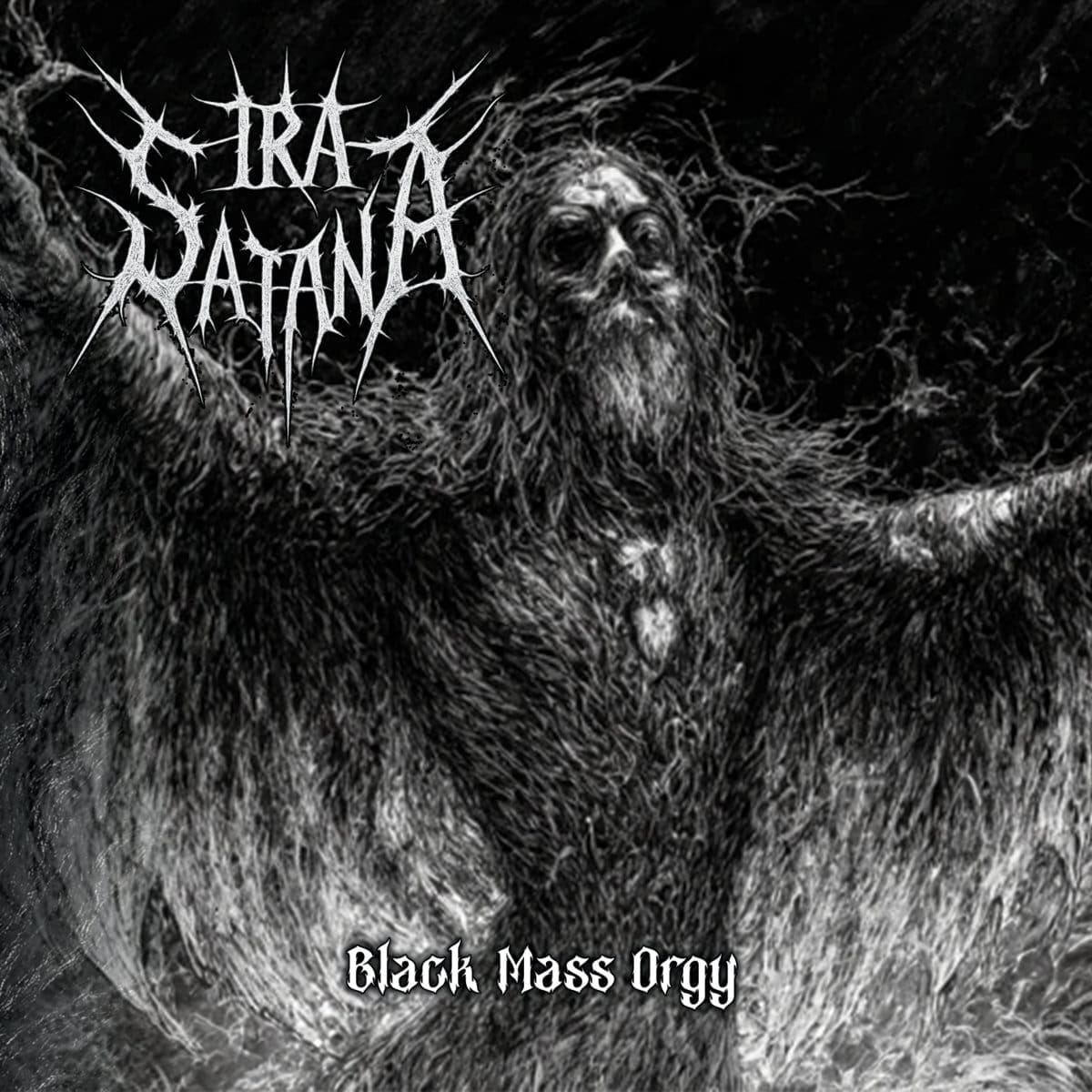
The artwork’s monochrome palette and hostile composition reflect the music’s raw, ritualistic ethos—deliberately rejecting polish in favour of underground extremity.
The Seventh Sin, Disrelish
Ira Satana is forged in darkness, shaped by disciplined isolation and sonic blasphemy. There is no compromise here, no gesture toward accessibility or modern refinement. Every element exists in service of the ritual itself—raw, oppressive, and unwavering in intent.
Promotional material provided by Ira Satana.
The Hymns
01. Lucifer’s Embrace
02. Sacrilegious Ecstasy
03. Flesh and Fire
04. The Ninth Gate of Hell
05. Orgies of the Damned
06. Ritualistic Sacrifice
07. Whispers of the Abyss
08. Satanic Conjuration
Ira Satana
Melkor — All music, lyrics, vocals, guitars, bass, and drum programming