Nihilus — Borealis Review
Nihilus is an Indian technical death metal entity. On 2 October 2026, Nihilus released their crushing independent debut full-length Borealis with promotion through GlobMetal Promotions.
Nihilus, Borealis Review: This review will evaluate every aspect of the album, from its intricate musical composition to its production.
The First Three Sins, The Summary
The First Sin, The Strings/Keys: Razor-sharp, complex riffs, dissonant passages and jazz-influenced rhythms, reinforced by intricate bass work. The Second Sin, The Vocals: Commanding guttural growls and razor-sharp cadences, delivered with remarkable clarity. The Third Sin, The Percussions: Relentless double-bass, blistering blast beats and intricate cymbal patterns executed with surgical precision.
The Fourth Sin, Overall Discussion
The Glacial Prelude to Extinction
From the very instant the listener presses the play button, they are immediately enveloped in the glacial and atmospheric expanse of Borealis. The album opens with its fittingly titled prelude, Intro, which greets the listener with an instrumental composition, priming the listener for the vast and immersive sonic journey about to arrive.
Eight Hymns of Planetary Ruin
The album’s remaining eight hymns follow suit, immersing the listener in a deeply atmospheric, dystopian science-fiction landscape centred on the gradual demise of Earth under various catastrophic forces. While each hymn functions as a distinct, standalone narrative, they collectively weave a much broader, overarching story of planetary collapse and humanity’s inevitable decline.
The thematic trajectory of this ominous journey is sharply foreshadowed by the striking hymn titles.
Hymns like:
- Iridium Delirium and Splitting Atoms immediately evoke themes of runaway technology and nuclear devastation.
- Screwfly Solution serves as a chilling homage to James Tiptree Jr’s famous science-fiction novella of the same name, exploring biological and sociological horror.
- The socio-political decay of mankind is mirrored in the confrontational title Choose Your Tyrant, while Without Grey Matters hints at a profound psychological and neurological collapse from which there is no return.
- Finally, Omega stands as the inevitable end-of-world finale, perfectly anchoring the album’s concept of total planetary ruin.
The Architecture of Calculated Chaos
Musically, Borealis is a combination of technical death metal brutality and progressive songcraft. At its core, the album thrives on jazz-influenced rhythmic syncopation and intricately complex riff construction, navigating treacherous time signatures effortlessly. Yet, for all its cerebral complexity, Borealis never loses sight of emotional resonance, striking a precarious and mesmerising balance between crushing, unrelenting aggression and vast, cinematic atmosphere.
This towering sonic architecture is brought to life through a display of tight devilmanship. Elevating these virtuosic performances even further is the devilish instrumental composition and arrangement, which is captured in a remarkably organic production.
Eschewing the hyper-compressed, sterile sound that plagues much of modern extreme metal, the mix breathes with a natural warmth, granting each individual instrument its own distinct space to resonate.

The Voice of Humanity’s Demise
Front and centre is vocalist Pearl Salhotra, who delivers a devilish vocal performance, alternating between harsh, commanding narrative growls and razor-sharp cadences. Remarkably, this aggressive approach never sacrifices intelligibility; Salhotra maintains a striking clarity of enunciation that ensures the intricate, high-concept dystopian and science-fiction themes remain piercingly clear to the listener, cutting right through the wall of distortion.
Labyrinths of Strings and Dissonance
Guitarist Manu Manjunath anchors his style by drawing heavily from the unforgiving traditions of classic progressive and angular technical death metal. He offers the listener’s ear a calculated, finely tuned balance between razor-sharp, hyper-complex, and rapidly articulated picking. His fretwork is defined by a relentless barrage of frequent tempo shifts, unsettlingly dissonant interval choices, and dizzying rhythmic mutations, all of which are periodically tempered by sophisticated, jazz-fusion-influenced chord voicings that introduce an unexpected harmonic depth to the chaos.
Beneath this intricate sonic architecture lies the bass work of Karthick Hariharan. Though subtly submerged beneath the dense, cascading layers of guitar riffs, Hariharan’s low-end performance serves as a vital anchor — meticulously tracing, shadowing, and reinforcing the labyrinthine guitar lines to give the music its crushing weight and structural integrity.
The Percussive Machinery of Annihilation
At the beating heart of this intricate sonic architecture is drummer Sidharth Manoharan, who elevates the composition with complex arrangements and relentless, razor-sharp double-bass work, punctuated by sudden, blistering eruptions of blast beats whenever the intensity demands it.
Effortlessly defying conventional rhythms, Manoharan navigates frequent, jarring time-signature shifts with surgical precision, weaving a labyrinth of intricate cymbal patterns that shimmer and crash beneath the chaos.
A Final Testament to Technical Devilmanship
Ultimately, Borealis transcends mere music, standing as a highly technical fruit of art — a dazzling synthesis of mathematical precision and unbridled creative vision that demands to be listened to, felt, and remembered.
The Fifth Sin, The Memorabilia
When I first experienced Borealis, it did something extraordinary to me — it earned a permanent, treasured place in my personal musical archive. What captivated me was not merely the expected delivery of brutal technical death metal, nor was it simply the labyrinthine composition, the devilish intensity, or the crushing vocals. What truly struck a chord with me was the fact that this band hails from India.
Furthermore, the third hymn Splitting Atoms stands out as a fruit of art in contrasting dynamics. It begins with wonderfully complex riffs and intricate drum work, but the true magic happens near the middle of the song. Suddenly, the atmosphere shifts and goes silent, allowing haunting, melodic riffs to echo out of the speakers as if the very air — the atmosphere itself — has been violently split in two. As the hymn makes its final approach, it introduces a clean, melodic section and an audio sound clip, creating an atmosphere of impending doom.
The Sixth Sin, The Artwork
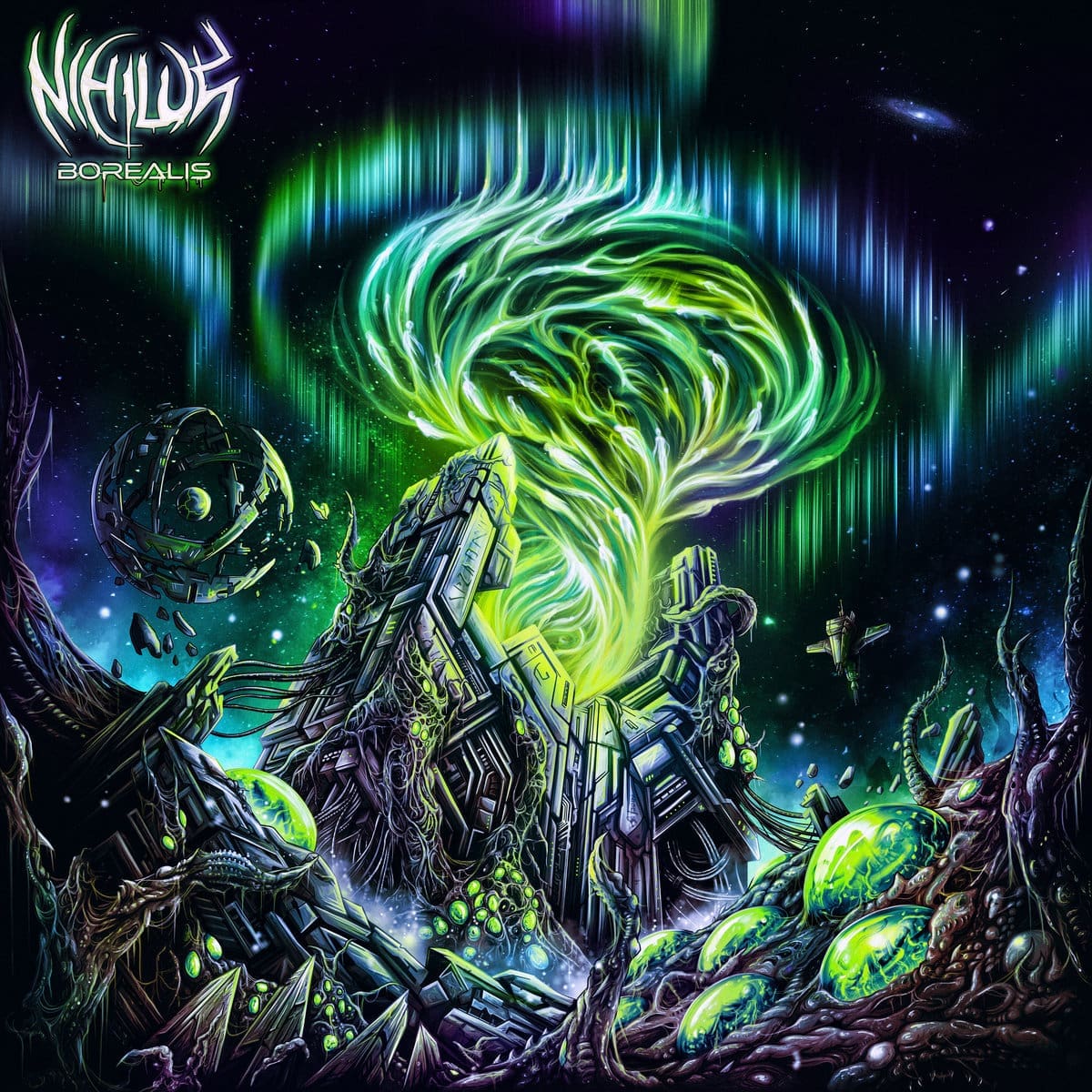
Complementing the sonic journey, the album’s artwork brilliantly captures and visually manifests the apocalyptic lyrical concepts woven throughout Borealis.
The Seventh Sin, Disrelish
As for dislikes, honestly, I have none regarding the core of the music. However, if I had to pinpoint one minor detail that didn’t quite appeal to me, it would be the opening Intro. For whatever reason, it just didn’t sit right with me or set the stage the way the rest of the album so powerfully managed to do.
The Hymns
01. Intro
02. Iridium Delirium
03. Splitting Atoms
04. Screwfly Solution
05. Borealis
06. Absurd Patterns
07. Choose Your Tyrant
08. Without Grey Matters
09. Omega
Nihilus
Sidharth Manoharan — Drums
Karthick Hariharan – Bass
Manu Manjunath – Guitar
Pearl Salhotra – Vocals