Primordial Black Interview
The Interview — Primordial Black: On Ritual Atmosphere, Psychological Fragmentation, and the Architecture of Darkness
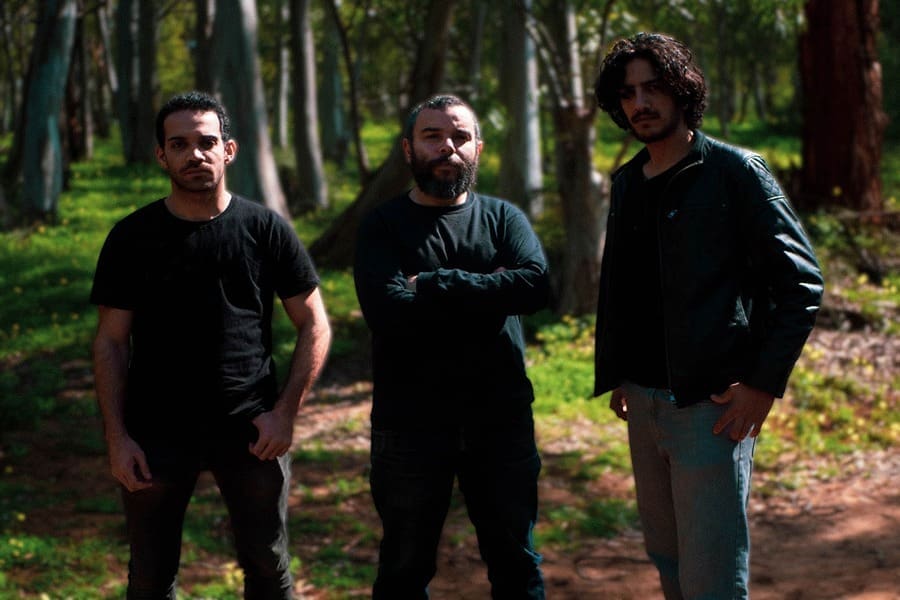
Primordial Black is a Tunisian avant-garde black metal entity that merges ritual atmosphere, cinematic scope, industrial unease, and philosophical introspection into an immersive and psychologically charged sonic vision.
This interview descends into the conceptual world behind Heterotopia. Across thirteen questions, we explore the evolution of the project, the role of atmosphere and literary influence, the balance between aggression and immersion, and the psychological terrain that shapes
Thirteen Questions constructed through ritual atmosphere & psychological fragmentation.
Q1: For those entering the world of Primordial Black for the first time, can you introduce the project and explain what its music and philosophy are fundamentally about?
Primordial Black: Primordial Black is an extreme metal project that uses black metal as a vessel for philosophy, literature, cinema, and atmosphere rather than a fixed aesthetic. From the beginning, the goal was to move beyond the genre’s traditional clichés and create immersive works where sound, concept, and emotion are deeply interconnected.
Musically, we blend feral riffing, spectral electronics, ritualistic rhythms, and cinematic textures to build worlds that feel both oppressive and transcendent. Philosophically, the project explores themes like exile, decay, memory, identity, and the spaces that exist between reality and illusion.
At its core, Primordial Black is about transforming dissonance and chaos into something meaningful, turning extreme music into a place for reflection, vision, and catharsis.
Q2: Primordial Black blends avant-garde black metal with industrial textures, ritual atmosphere, cinematic scope, and philosophical themes. How did this multifaceted identity first take shape?
Primordial Black: Primordial Black’s identity emerged naturally from our influences and from a desire to push beyond the boundaries of traditional black metal. We’ve always been inspired not only by extreme music, but also by philosophy, literature, horror cinema, and experimental sound design.
Rather than treating black metal as a rigid genre, we saw it as a framework that could absorb industrial textures, cinematic atmospheres, ritualistic elements, and avant-garde structures without losing its intensity. Over time, those different influences fused into something more immersive and personal.
From the beginning, the goal was to create worlds rather than simply songs, spaces where aggression, dissonance, emotion, and reflection could coexist.
Q3: The name Heterotopia carries strong conceptual and psychological weight. What does the title represent within the context of the album’s themes and narrative?
Primordial Black: Heterotopia represents the central idea behind the album: the existence of “other spaces” that exist both within and outside reality. Inspired by Michel Foucault’s concept of heterotopias, the title reflects places where contradictions coexist; spaces shaped by memory, ruin, desire, isolation, and transcendence.
Within the album, Heterotopia becomes both a psychological and symbolic landscape. Each track acts like a portal into a different fragmented reality inspired by literature, cinema, or philosophy, but all connected by the same feeling of dislocation and confrontation with the unknown.
More than just a title, Heterotopia is the conceptual axis of the record, a space where chaos and beauty, the sacred and the profane, collapse into one another.
Q4: Dark Matter Manifesto explored existential dread, eldritch horror, historical mysticism, and the “primordial essence of darkness,” while Heterotopia appears to move further into psychological fragmentation and transcendence. How do you view the conceptual evolution between the two records?
Primordial Black: Heterotopia feels like a shift from confronting darkness as an external force to exploring it as an internal, fragmented condition. Where Dark Matter Manifesto dealt with existential dread, mythic horror, and an almost cosmic sense of “primordial darkness,” it was still anchored in something expansive and outward-facing.
With Heterotopia, the focus becomes more psychological and architectural, how perception fractures, how identity dissolves, and how “other spaces” are constructed within the mind itself. The horror is less cosmic and more intimate, tied to memory, exile, and perception.
So the evolution is less about abandoning the themes of the first record and more about turning them inward: from cosmic dread to subjective dissonance, from external darkness to internal multiplicity.
Q5: In our review of Dark Matter Manifesto, we described the album as feeling less like a collection of hymns and more like “echoes — fragments of something ancient.” Do you consciously approach Primordial Black as a form of ritualistic world-building rather than conventional songwriting?
Primordial Black: Yes, but not in a literal or ceremonial sense. The idea of ritual in Primordial Black is more about structure, repetition, and intent than anything symbolic or religious.
We approach each record as a constructed world, where sound, concept, and atmosphere function together like fragments of a larger, fragmented mythology. In that sense, Dark Matter Manifesto already worked like “echoes” of something ancient, and Heterotopia pushes that further into fractured architectures of perception and memory.
The “ritualistic” aspect comes from how these elements are assembled: recurring motifs, layered textures, and cyclical dynamics that create a sense of invocation rather than simple songwriting. It’s less about storytelling in a linear way, and more about building spaces the listener enters and navigates.
So yes, there is world-building, but it’s intentionally unstable, like a ritual where meaning is always shifting rather than revealed.
Q6: Primordial Black balances extreme aggression with atmospheric depth and ritualistic pacing. How do you maintain that equilibrium without losing intensity or cohesion?
Primordial Black: It comes down to treating contrast as part of the composition rather than as interruption. Aggression and atmosphere aren’t separate elements for us—they’re constantly interacting layers of the same structure.
The intensity is maintained by never fully abandoning tension, even in the more spacious or atmospheric passages. Those moments are written with the same sense of weight and density as the extreme sections, just expressed differently. Likewise, the harsher parts are shaped with dynamics and space in mind, so they don’t become flat or purely destructive.
Cohesion comes from recurring motifs, textures, and pacing logic across the album. The ritualistic aspect helps unify everything: repetition, build-up, and release become structural tools rather than aesthetic choices.
In the end, it’s about making sure every shift still feels like it belongs to the same world, so even when the form changes, the atmosphere and intent remain continuous.
Q7: The synths, programming, and ambient layers within Primordial Black never feel electronically dominant, but instead function as psychological and cinematic architecture surrounding the metal framework. How important is atmosphere when shaping the psychological and emotional identity of a composition?
Primordial Black: Atmosphere is essential—it’s what gives the compositions their psychological depth and narrative weight. In Primordial Black, the synths, programming, and ambient layers are never meant to dominate, but to shape perception of what the guitars and rhythms are doing underneath.
We think of atmosphere as a kind of architecture: it defines space, distance, tension, and emotional temperature. The metal provides the physical force, while the ambient and electronic elements shape how that force is experienced—whether it feels claustrophobic, vast, unstable, or transcendent.
Without that layer, the music would lose a large part of its intent. It’s not just about intensity, but about how that intensity is framed and internalized by the listener. Atmosphere is what turns sound into an environment rather than just a performance.
Q8: Heterotopia features several notable collaborators, including Steve Di Giorgio on Immaculate. How did these collaborations come together, and what did each guest bring to the album’s overall vision?
Primordial Black: The collaborations on Heterotopia came together quite organically. Each guest was chosen because they could contribute something that extended the album’s language rather than simply decorate it. In the case of Steve Di Giorgio on Immaculate, it was made possible thanks to the support and network of Darkside Records, who played a key role in opening those doors and helping us bring him into the project. His approach to the bass brought a unique sense of fluidity and precision (almost like a narrative voice within the composition) adding depth without disrupting the atmosphere.
More broadly, every collaboration on the record was about alignment with the concept rather than feature-driven appearances. Each contribution becomes part of the album’s architecture, reinforcing its sense of dissonance, transcendence, and fragmentation.
Q9: Your debut album featured Sakis Tolis alongside other notable contributors, while Heterotopia expands that collaborative spirit even further. Do you view guest musicians as extensions of the conceptual universe behind Primordial Black?
Primordial Black: Yes, but only in a very specific sense.
Guest musicians are not “features” in the conventional way for us. They’re extensions of the album’s conceptual and emotional architecture. Each collaborator is chosen because their artistic identity naturally resonates with a particular fragment of the world we’re building, rather than being added to decorate a track.
With Sakis Tolis and others on the debut, and now the expanded cast on Heterotopia, the idea has always been the same: these voices and performances become additional perspectives inside the same fractured universe. They don’t sit outside the concept; they’re absorbed into it, almost like different transmissions coming from within the same unstable space.
So yes, they function as extensions, but more like echoes or manifestations of the album’s internal logic rather than external guests.
Q10: Primordial Black has maintained a remarkably consistent creative output since its formation. What drives that level of discipline and momentum within the project?
Primordial Black: The consistency comes from treating Primordial Black less as a traditional band cycle and more as an ongoing conceptual necessity. There’s a clear internal vision, and each release feels like a continuation of the same expanding framework rather than a reset.
That discipline is mostly driven by intent: when the material is conceptually clear, the writing process becomes focused rather than sporadic. We’re not generating ideas for the sake of output, we’re following a thread that naturally demands completion in different forms.
And on a very practical level, I’m always working on new music, so there’s a constant flow of material feeding into the project.
Ultimately, it’s about continuity of vision. As long as there are still unexplored “spaces” within the concept, the work keeps moving forward almost on its own.
Q11: Coming from Tunisia, do you feel your environment, culture, or artistic surroundings influence the atmosphere and identity of Primordial Black in unique ways?
Primordial Black: Yes, but more in an indirect and atmospheric way than a literal or folkloric one.
Being based in Tunisia inevitably shapes how I perceive space, contrast, and intensity, there’s a strong sense of layered history, cultural overlap, and visual/sonic density in the environment. That naturally feeds into how Primordial Black constructs atmosphere and emotional weight, especially in terms of light versus shadow, openness versus confinement, and the feeling of something ancient coexisting with something fractured and modern.
That said, I don’t translate local culture into the music in an explicit or traditional sense. It’s more about how the environment conditions perception. The heat, the architecture, the noise, the silences all of it informs the way I think about texture, space, and tension in composition.
So the influence is real, but subliminal: it shapes the psychological framework of the project rather than its surface identity.
Q12: Dark Matter Manifesto drew inspiration from figures such as H. P. Lovecraft, John Milton, Clive Barker, and John Dee. Do literature, occult philosophy, and metaphysical concepts typically shape the music before composition begins, or do they emerge naturally during the creative process?
Primordial Black: It works both ways, but the starting point is usually conceptual rather than purely musical.
Often, a philosophical idea, a literary fragment, or a specific cinematic reference will define the emotional and conceptual “space” of a track before any music is written. That initial framework helps establish the atmosphere, direction, and internal logic of the composition.
Once the writing begins, those influences don’t function as strict references anymore, they tend to resurface organically through texture, structure, and naming, rather than being directly translated into sound. In that sense, literature, occult philosophy, and metaphysical ideas act more like guiding coordinates than templates.
So the process is less about adapting external works and more about letting them shape the lens through which the music is constructed.
Q13: Looking beyond Heterotopia, where do you see Primordial Black evolving next, both musically and conceptually?
Primordial Black: Rather than a fixed direction, I see Primordial Black continuing to expand the same conceptual universe from different angles. Each release opens a new “space,” and the evolution comes from how those spaces interact and fracture over time.
Musically, that likely means pushing further into hybrid forms where extreme metal, sound design, and cinematic composition become even more integrated, less about blending genres, and more about dissolving their boundaries entirely. The focus will remain on atmosphere, density, and structure, but explored through new textures and pacing ideas.
Conceptually, the interest in heterotopias, fragmentation, and psychological dislocation will continue, but from different entry points. There’s still a lot to explore in terms of perception, memory, and the idea of constructed realities—how they collapse, overlap, or contradict each other.
But at its core, nothing changes fundamentally: Primordial Black will keep functioning as an evolving framework for exploring dissonant, immersive “other spaces.”
This closes the interview. The rite is complete — the voice of Primordial Black now etched into the archive of sin.
I extend my deepest thanks to Primordial Black for sharing their voice — and to the reader, for bearing witness to this craft-rite.