Sepulcrum — Lacerator Review
Sepulcrum is an Chilean death metal entity. On 24 July 2026, Sepulcrum released their second full-length, Lacerator, through Chaos Records.
Sepulcrum, Lacerator Review: This review will evaluate every aspect of the album, from its intricate musical composition to its production.
The First Three Sins, The Summary
The First Sin, The Strings/Keys: Razor-sharp death metal riffing, subterranean bass, and atmospheric acoustic textures. The Second Sin, The Vocals: Deep, cavernous gutturals delivered with ferocious authority. The Third Sin, The Percussions: Frenzied blast beats and snapping fills drive the assault with relentless precision.
The Fourth Sin, Overall Discussion
The First Incision
The moment the listener presses play, the opening title hymn Lacerator greets them with a brief, atmospheric melodic instrumental intro. Sepulcrum uses this deliberate opening sequence to draw the listener into theirdark domain — building palpable tension and setting an expectant threshold for the auditory slaughter about to unfold.
The Ten-Hymn Continuum of Ritualistic Mutilation
Spanning a lean, relentless runtime of over thirty-five minutes across ten hymns, Lacerator delivers a tightly executed, violent, and technically sharp death metal album. Sepulcrum fuses an oppressive, old-school death metal atmosphere with razor-sharp songcraft — striking a perfect balance between morbid horror and surgical instrumental precision.
Rather than relying on cheap, senseless gore tropes, Sepulcrum distils its lyrical identity into a single, terrifying continuum of flesh, rot, and spiritual collapse. Across these ten hymns, physical mutilation is executed as a sacred ritual pathway:
- Flesh & Infection — bodies are systematically torn, infected, and re-engineered through violent, terse imagery.
- Psychological Fracture — minds collapse under the weight of delirium, madness, and existential horror.
- Occult Decomposition — spiritual thresholds swing open explicitly through the process of bodily decay — achieving a total, full-spectrum annihilation that mirrors the band’s razor-sharp musical execution.
The Labyrinth of Rot & Atmospheric Ruptures
Musically, Lacerator operates like an intricate, labyrinthine assault — built upon frantic tremolo patterns, mythic guitar tones, and suffocating slow passages punctuated by sudden bursts of chaotic speed. Sepulcrum skilfully manipulates tempo and texture across these ten hymns, using acoustic interludes and feral outbursts to keep the listener in a state of perpetual tension.
Dynamic Movements & Structural Shocks
- The Atmospheric Respite — the third hymn, As I Die, introduces clean guitar motifs paired with the haunting sound of falling rain, while the sixth hymn, Channeling the Oblivion, and the eighth hymn deploy clean acoustic instrumentals. These moments serve as vital atmospheric ruptures, allowing the listener to come up for air before being dragged back under.
- The Decayed Ritual —
Entropic Decomposition stands as the album’s slowest, most decayed centrepiece. It crafts an oppressive ritual out of contrasting elements — fusing delicate acoustic passages, clean motifs, technical riffing, and brutal vocal violence into a single harrowing movement. - The Feral Shock — In stark opposition, the ninth hymn, Let Me Desecrate You, strikes like a violent, punk-length assault. Fast, crude, and deliberately unrefined, this short blast of pure desecration acts as a jarring physical slap — a reminder of the band’s feral roots right before the final curtain falls.
Strings of Surgical Violence
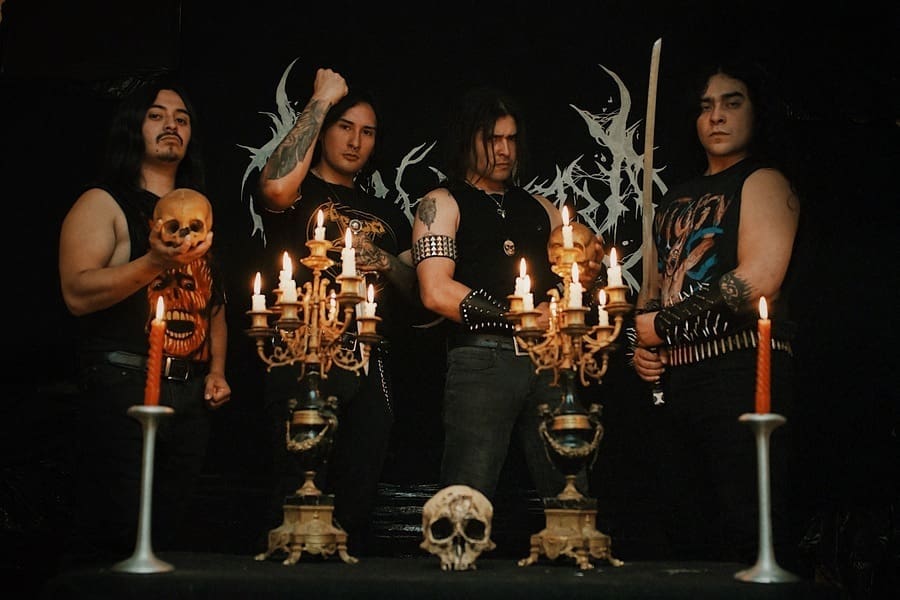
The devilmanship across Lacerator is honed to complete perfection — delivering an instrumental performance that is rock-solid, incredibly tight, and locked to its core. The twin-guitar attack operates with controlled frenzy, balancing raw aggression with strict, ritualistic structure.
Nicolás Miranda’s rhythm guitar work provides the album’s lacerating substrate. Built on frantic tremolo runs, abrupt rhythmic pivots, and tightly muted violence, his performance keeps the riffing foundation viciously precise and unpredictably aggressive. Oscar Gibert’s lead guitar work acts as the ritual incision. Sharp, dissonant, and phrased like an unhinged scream rather than a conventional melody, his solos avoid ornamental flair — striking instead like surgical breaches cut directly into the body of the composition.
Anchoring the string bed, Nicolás Espinoza’s bass is mixed with deep corporeal density. Never buried or secondary, the low end is fused directly to the guitars like infected tissue, giving the string attack a heavy, subterranean mass.
Convulsions & Guttural Expulsions
The percussive execution and vocal delivery across Lacerator lock the record into a relentless cycle of physical trauma and ritualistic decay. Sebastián Zúñiga’s drum performance is defined by frenzied precision and ritual cadence. Built on hyper-accelerated blast beats that feel like physical convulsions, his drumming is about far more than sheer speed — it is deeply intentional. His short, snapping fills strike with surgical violence, punctuating the riff transitions like splintering bone fractures.
Nicolás Miranda’s vocal delivery acts as a wet, guttural expulsion across the mix. Anchored between classic South American death metal ferocity and a dark, cavernous roar, Miranda commands the record with an unhinged, authoritative presence — vividly narrating every hymn’s descent into rot and occult collapse.
Clinical Precision, Necrotic Atmosphere
The production of Lacerator carves a masterful balance between clinical precision and necrotic atmosphere, infused with a swollen, diseased low-end. The guitars retain a dry, serrated edge, the drums cut with surgical clarity, and the vocals sit close and bodily in the mix.
This creates a sound that feels both meticulously engineered and spiritually unclean — utilising modern fidelity strictly to sharpen Sepulcrum’s ritualised violence.
The Final Mutilation
Overall, Lacerator is a ferocious, razor-sharp fruit of art. The album closes with Multideformation, bringing the rite to an expansive, structurally complex finale where the record’s themes — corporeal ruin, ritual descent, and frenzied violence — converge into a monumental culmination.
Sepulcrum has delivered a formidable ten-hymn death metal record — combining technical precision, acoustic atmospheric ruptures, and morbid, ritualistic storytelling into thirty-five minutes of pure, unadulterated desecration.
The Fifth Sin, The Memorabilia
For me, Lacerator proved to be an immensely brutal release — delivering uncompromising old-school death metal wrapped in a dense, modern atmosphere. The most enjoyable aspect of the entire thirty-five-minute runtime is the masterclass in pacing: while the hymns remain unrelenting and ferocious, Sepulcrum strategically embeds atmospheric acoustic motifs that allow the listener to surface and breathe, elevating this record far above a standard, run-of-the-mill death metal soundtrack.
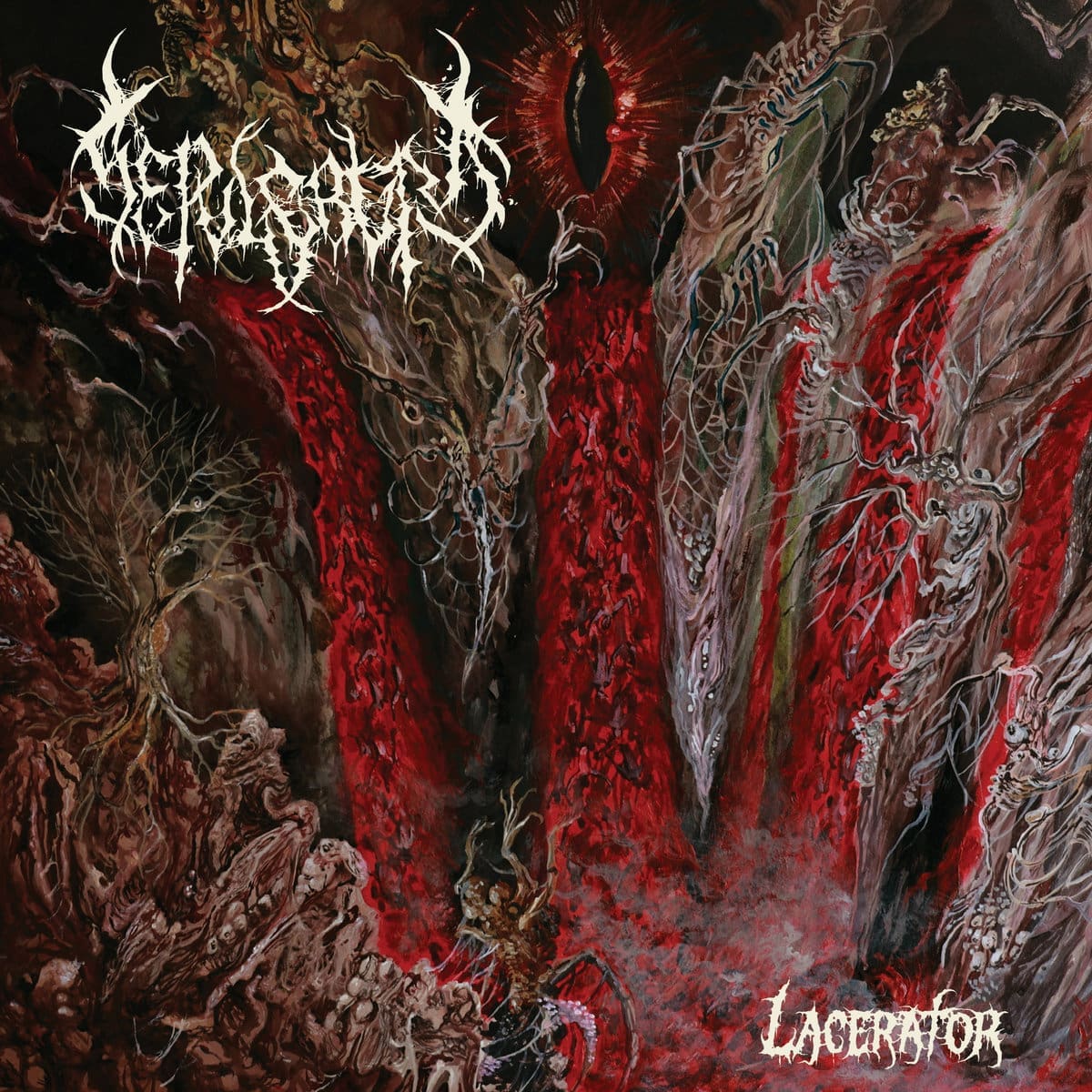
The Sixth Sin, The Artwork
The visual presentation acts as a direct portal into the album’s horrifying world. Stepping eyes-first into the cover art feels exactly like crossing the threshold straight into the music’s living nightmare.
The Seventh Sin, Disrelish
There is absolutely nothing to disrelish within the music — this is a brutal, ferocious, and flawlessly executed nightmare from start to finish.
The Hymns
01. Lacerator
02. The Seven Gates
03. As I Die
04. Into the Infected Bowels
05. Ilusory Stench
06. Channeling the Obivion
07. Phrenetic Psycophony
08. Entropic Decomposition
09. Let Me Desecrate You
10. Miltideformation
Sepulcrum
Nicolás Miranda — Guitars, Vocals
Oscar Gibert – Lead Guitar
Nicolás Espinoza – Bass
Sebastián Zúñiga – Drums