Shade Interview
The Interview — Shade: Lost Reels Under Distant Suns
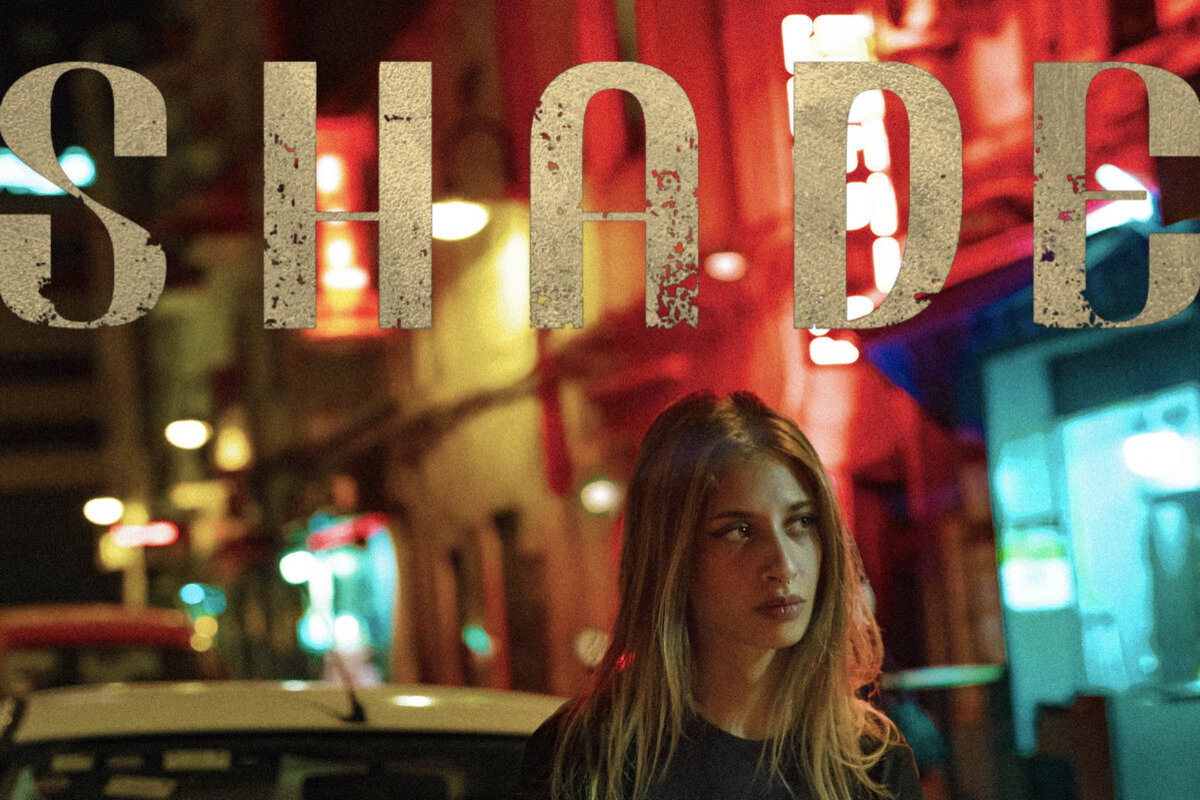
Forged in heat and motion, Shade emerge as a riff-driven force where weight and atmosphere exist in constant tension. Drawing from alternative rock, stoner, and metal, their sound moves through heavy, hypnotic grooves and sudden dynamic shifts. Guitars cycle with trance-like insistence as rhythms lock into physical momentum. This is not heaviness as blunt force, but repetition, space, and pressure shaped into forward motion.
Shade operate within a cinematic terrain, where desert imagery, obsession, and narrative framing inform the architecture of their songs. Their compositions balance groove and tension, allowing tracks to simmer before erupting—drawing the listener into a world defined as much by mood and imagery as by volume and weight. It is a sound rooted in movement rather than isolation—restless, expansive, and charged with intent.
This interview steps inside that terrain, tracing the creative instincts, influences, and concepts that drive Shade’s evolving identity. Across thirteen questions, we explore the origins of their sound, the role of atmosphere and narrative, and the ideas that shape their heavy, hypnotic descent beneath distant suns.
Thirteen Questions Beneath Distant Suns
Q1: Shade’s sound is heavy and riff-driven, yet atmosphere plays an equally important role. When you begin writing, what comes first: the riff, the mood, or the narrative the track is meant to inhabit?
Shade: It starts with a riff and some sort of structure. We try to figure out the rest as we move forward and we spend a lot of time trying things out, see what works and tweak the structure almost endlessly. As the song takes shape, the mood becomes clear and in turn, that is what inspires the narrative.
Q2: Your debut EP Under Distant Suns established a clear cinematic identity. Looking back, what foundations were you consciously trying to establish with that release?
Shade: We’re very attached to diversity. It would have been a disaster for us if we had our first record filled with songs that are way too similar to each other. Framing is also a big thing, and it became self-discipline for us. Presenting our projects to the world in a way that best complements the care we’ve put into them. Themes, sequencing, artwork…
Q3: Desert imagery and space-age themes run strongly through your work. How much of this aesthetic is rooted in lived environment, and how much is drawn from cinema and imagination?
Shade: Not to brag but the Tunisian desert is actually the setting for the planet Tatooine, so we’re right down the middle! It is as much our environment as it is the culture that fed our imagination, be itmovies, comic books, novels, paintings, or video games.
Q4: The Exploitation Tapes leans heavily into concept-driven songwriting. What drew you toward horror and exploitation cinema as the conceptual framework for this EP?
Shade: Exhaustion and self-awareness. Under Distant Suns was emotionally draining. We tried to do everything right, go over every detail a thousand times, and the themes were heavy. Under Distant Suns was built by our doubts and our neuroses. We’re not ready to dig that deep again yet. So we went in another direction completely. Something cool and campy with little to no restraints. Something that’s fun to play live. It felt natural to start thinking of these songs as parts of an anthology of short B movie
Q5: The idea of tracks functioning like “lost reels” from cult B- and Z-movies is central here. How did that idea influence the structure and pacing of the songs themselves?
Shade: The song structures were influenced a lot by this, but it’s more us finally figuring out that we were building our song cinematically and embracing that aspect of our writing. We did our best to sonically capture the essence of those imaginary movies, rather than write their soundtrack.
Q6: Obsession is a recurring theme on the upcoming EP. Was this explored primarily as a narrative device, a psychological study, or something more personal?
Shade: Obsession comes up quite naturally. Many stories revolve around characters who push themselves too far or fixate on one idea until everything else fades into the background, especially in exploitation movies. It’s what drives the action and justifies the extremes that these stories tend to reach. Rather than being a personal statement or a deliberate psychological study, it felt like an organic part of the genre we’re playing with.
That said, it echoes human behavior. Obsession is often where things stop being reasonable and start becoming dramatic or cinematic, which is exactly the territory this EP explores.
Q7: Stoner rock often balances groove with weight. How do you maintain momentum without sacrificing atmosphere or narrative depth?
Shade: It’s like walking on a tightrope, but honestly it’s where we thrive. We experiment and figure out what sounds best. You can’t expect everyone who listens to your music to engage with every aspect of it, so it’s important to us to keep that in mind and never forget that we’re writing rock songs. Narrative depth and atmosphere are more things that we do for us.
Also there’s always one of us, usually Walter, that shakes his head and tells us that we’re “flatlining the song” when we go too far left field. Sometimes bold ideas are stupid.
Q8: Your music feels deliberately immersive rather than immediate. How important is patience — both from the listener and from the band — in how Shade’s songs are meant to be experienced?
Shade: Patience matters, but it’s not a rule. Some songs are meant to hit immediately, others are built to unfold, and we like moving between those two spaces. Context changes everything too. Live, the music is much more direct and physical, while on record there’s more room to let atmosphere and tension settle in.
On The Exploitation Tapes, even the more “in your face” tracks often take a moment to set the scene. Those intros help build the cinematic ambience before things kick off. Immersion can come from being grabbed instantly or from staying with the song as it develops, and both approaches feel essential to how Shade’s music works
Q9: From a production standpoint, how did you shape the sound of The ExploitationTapes to support its cinematic and conceptual intent?
Shade: Surprisingly it’s something that came very late in the process. It didn’t cross our minds at all and I think the reason is we’re very attached to the idea of not overproducing, keeping things raw, and not using layers that we can’t replicate in a live setting. But then we listened to Uncle Acid’s Nell’ Ora Blu and we were like “Oh…we need to step up our game”.
That album was the catalyst behind decisions like adding synths or creating intros for every song, but we filtered those ideas through something closer to a Rob Zombie approach, since it matched the spirit of the EP better.
Q10: As a band emerging from Tunisia, do you feel your geographical and cultural position influences how you approach heavy music, or how your work is received internationally?
Shade: 100%, but it’s subtle. We’re from a country where you have to learn to coexist with heat, slow bureaucracy, and chaotic driving. Tunisia has also historically been a crossroads of cultures. All these seemingly mundane elements are part of being Tunisian and shape how we approach music. We don’t fetishize culture, and we don’t feel the need to pillage Middle Eastern musical heritage to seem more arab than we are.
Unfortunately it’s not something that is easily understood abroad by everyone. We’re lucky that enough people don’t even care where we’re from. They’re curious, of course, and that’s fair. But sometimes, and way too often for our taste, when some people hear “tunisian band” they lowkey expect us to have a belly dancer on stage and orientalism sprinkled all over the place.
Meanwhile no one asks French metal bands why they don’t use accordions in their music.
Q11: There is a strong sense of continuity between Under Distant Suns and The Exploitation Tapes. Do you see these releases as separate chapters, or as parts of a larger ongoing narrative?
Shade: We didn’t feel the need to present Under Distant Suns as a concept EP, because the narration was mostly there for us, to help build a structure. So it was voluntarily cryptic. The Exploitation Tapes is the opposite, we want people to know what they’re getting themselves into and we’re not subtle at all about it. Yes, both projects are related, let’s just say that the protagonist from Under Distant Suns has seen The Exploitation Tapes during her journey. As for the future we don’t know if it’s gonna expand on this narrative or not at this point.
Q12: Visually and thematically, Shade presents a very specific world. How closely do you see the visual identity and the music itself as interdependent?
Shade: Visual identity is integral to our music. There’s a reason why we work with a photographer (Joanna Ben Souissi) rather than illustrators. Photography gives us a sense of reality and texture that mirrors how we write songs, grounded, organic, and cinematic. The images do not explain the music, they live inside the same world.
Q13: At this stage in your evolution, what do you feel Shade is still searching for or refining within its sound?
Shade: We’re figuring out how to write without holding ourselves hostage to perfectionism. The first EP was almost obsessive in its precision. With The Exploitation Tapes, we allowed ourselves to loosen up and let songs evolve naturally. Right now we’re exploring the space between those extremes. We want to keep the focus and weight of our first work while letting the music live and surprise us.