Via Ad Mortem — Requiem I Review
Via Ad Mortem is an Italian black metal entity. On 15 May 2026, the band released their debut full-length, Requiem I: Through The Path, over the Ruins, released via Northern Darkness Records.
Via Ad Mortem, Requiem I: Through The Path, over the Ruins Review: This review will evaluate every aspect of the album, from its intricate musical composition to its production.
The First Three Sins, The Summary
The First Sin, The Strings/Keys: High-velocity tremolo-picked riffcraft, mournful acoustic passages, and monastic synth layers intertwine to create a death-bound atmosphere steeped in ritual, gnosis, and esoteric contemplation. The Second Sin, The Vocals: Santamuerteto Sinister delivers harsh, ceremonial rasps, liturgical spoken-word passages, and venomous whispers that transform each hymn into an invocation rather than a performance. The Third Sin, The Percussions: Traditional black metal blast beats, funeral-march rhythms, and deeply resonant tom work provide a seamless balance between unrelenting violence and solemn ritual procession.
The Fourth Sin, Overall Discussion
The Threshold of Dissolution
Before heading in the review, Via Ad Mortem emerges as a new Italian Black Metal entity. The debut work, Requiem I: Through the Path, over the Ruins, stands at the crossroads between the primordial violence of Spite Extreme Wing and the contemplative vastness of Drudkh.
The band claims its music is holy in an occult and esoteric sense, even if it falls outside the Unblack Metal subgenre; it remains equally distant from traditional blasphemous themes.
The band states that Via Ad Mortem is rooted in the idea of death — not merely as corporeal cessation, but as spiritual and intellectual dissolution.
Esoteric traditions, cosmic cycles, necromantic currents, and the rejection of modern decay converge within a syncretic vision that refuses dogma and shuns judgment. ‘Requiem I…’ does not aspire to instruct; it seeks to awaken and to evoke. Amidst the desolation of contemporary materialism, Via Ad Mortem reaffirm black metal as art, as spirituality, and as philosophy.
Death is treated as a path, not a void.
Forty Minutes Beyond the Veil
As soon as the play is pressed, the opening hymn, The First Steps Towards the Unknown, greets the listener with a deeply unsettling, atmospheric opening. This introductory piece does not merely start the record; it serves as a haunting, liminal threshold.
From the first strike of the second hymn until the final echoes of the closer, the listener is immersed in exactly forty minutes of pure darkness and death-worshipping black metal.
The Funeral Path Unfolds
Rather than relying on short, chaotic bursts of speed, the record allows several of its hymns to stretch into long, epic dimensions. Nothing here feels rushed, forced, or accidental; the band allows the dark atmosphere to breathe, ensuring that every transition, riff change, and rhythmic shift falls naturally into its rightful place within the funerary design.
The true engine of Requiem I reveals itself during the final moments of the fourth hymn. Unexpectedly, the crushing wall of black metal distortion completely falls away, leaving the listener stranded in a sudden, heavy silence.
Out of this void emerges a lone acoustic guitar — from somewhere beyond the circle — an owl calls, distant yet deliberate, a psychopompic witness marking the passage from the corporeal to the liminal.
This monumental songwriting and composition is driven by a display of devilmanship that is honed to perfection, performing with a tight, synchronised discipline that prevents the hymns from ever fracturing.
The Ritual Blade & The Liminal Glow
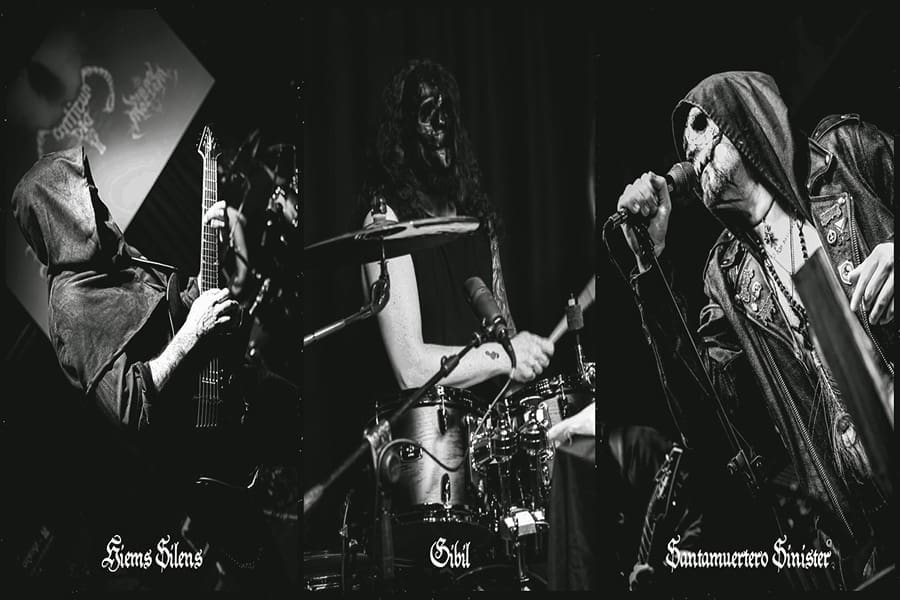
The entire string performance across the album — spanning both the searing guitar lines and low-end foundations — is handled single-handedly by Hiems Silens. His guitar work provides the literal spine for the entire record.
Operating flawlessly within two distinct but deeply interwoven modes:
- The Ritual Blade (Primary Mode) — this dominant style unleashes high-velocity, tremolo-picked phrasings that feel closely aligned with the regional, ritualistic spirit of Italian esoteric black metal rather than standard Scandinavian orthodoxy.
- The Liminal Glow (Secondary Mode) — interspersed throughout the chaos are clean or lightly overdriven passages that function as fragile threshold moments. These sections are transitional, deeply contemplative, and explicitly funereal.
When dark, melodic leads emerge from the gloom, they never arrive as traditional, self-serving guitar solos; instead, they manifest as sonic incantations — brief, flickering flares of illumination within an otherwise death-bound landscape.
March of the Funeral Procession
The percussion is commanded entirely by Gibil. His drum work serves as the album’s primary engine, executing a masterful, seamless shift between absolute sonic violence and solemn, liturgical ceremony.
He unleashes traditional black metal blast beats executed with a distinctly Italian phrasing. When the speed recedes, Gibil drops into slower, deeply resonant, tom-heavy passages. These tribal movements are intentionally arranged to evoke the heavy, limping cadences of traditional funeral marches or ancient ritual processions, giving the listener the physical sensation of marching alongside a casket through a ruined landscape.
Synths are deployed with immense, monastic restraint. They are never ornamental; instead, they function as the literal breath of the unseen — the hidden metaphysical layer operating silently behind the corporeal, physical instruments. The timbre entirely avoids melodic keyboard lines or flashy symphonic hooks. Instead, it leans heavily into monolithic drones, ghostly choral pads, ambient passages, and low-frequency hums.
These ambient elements fill the cracks in the raw guitar tone, ensuring that the air-starved production always carries an undercurrent of supernatural dread.
Voices Beyond the Circle
Standing at the pulpit of this funerary rite is vocalist Santamuerteto Sinister. His vocal performance is delivered as a harsh, rasping scream, but it is executed with a rigid, ceremonial cadence that prioritises invocation over conventional theatrical rage.
This ritualistic atmosphere is deeply magnified by occasional spoken-word passages, which are delivered with the chilling, measured weight of liturgical recitations. Throughout several of the epic hymns, these performances are layered with venomous, detached whispers, creating an unsettling sonic illusion that multiple invisible presences have entered the ritual space.
Within the Temple of Bone & Shadow
The entire production is built like a temple of bone and shadow. Everything across the mix feels raw, close-mic’d, and dryly intentional. By stripping away any cavernous, artificial studio reverb, the band strips away the protective distance between the performance and the audience.
The sonic engineering forces the listener to stand directly inside the suffocating confines of the ritual chamber, close enough to feel the heat of the candles, rather than merely observing the ceremony from a safe, detached distance.
Crossing into the Unknown
As the album draws to its ultimate, crushing conclusion with the final hymn, The Grace of Gnosis, the exhausting pilgrimage through the wasteland is completed.
Requiem I: Through the Path, over the Ruins, is a dark and death-worshipping fruit of art. The entire record moves with the heavy, unhurried weight of a funerary procession marching defiantly through collapsing worlds.
It exists as a complex monument built in equal parts from meticulous spiritual ritual, profound historical philosophy, and raw, uncompromising Italian ferocity. Via Ad Mortem has not merely recorded an album; they have mapped out a terrifyingly beautiful crossing into the unknown.
The Fifth Sin, The Memorabilia
For me, the true memorabilia of Requiem I: Through the Path, over the Ruins is that it ultimately transcends the restrictive boundaries of traditional black metal to become something entirely else. What makes this record profoundly appealing is the masterful marriage of its dense lyrical themes and the seamless, organic flow of the music — it genuinely feels as though death itself is flowing fluidly through the instruments.
This is a deeply personal, spiritual connection to the record, and how it resonates will naturally depend on the individual listener’s relationship with mortality.
Within this sprawling pilgrimage, the magnificent third hymn, Worshipper of Death, and the fourth hymn, Muchita – Night in Lima, stand out as triumphs, perfectly capturing the peak of the band’s creative and evocative power.
The Sixth Sin, The Artwork
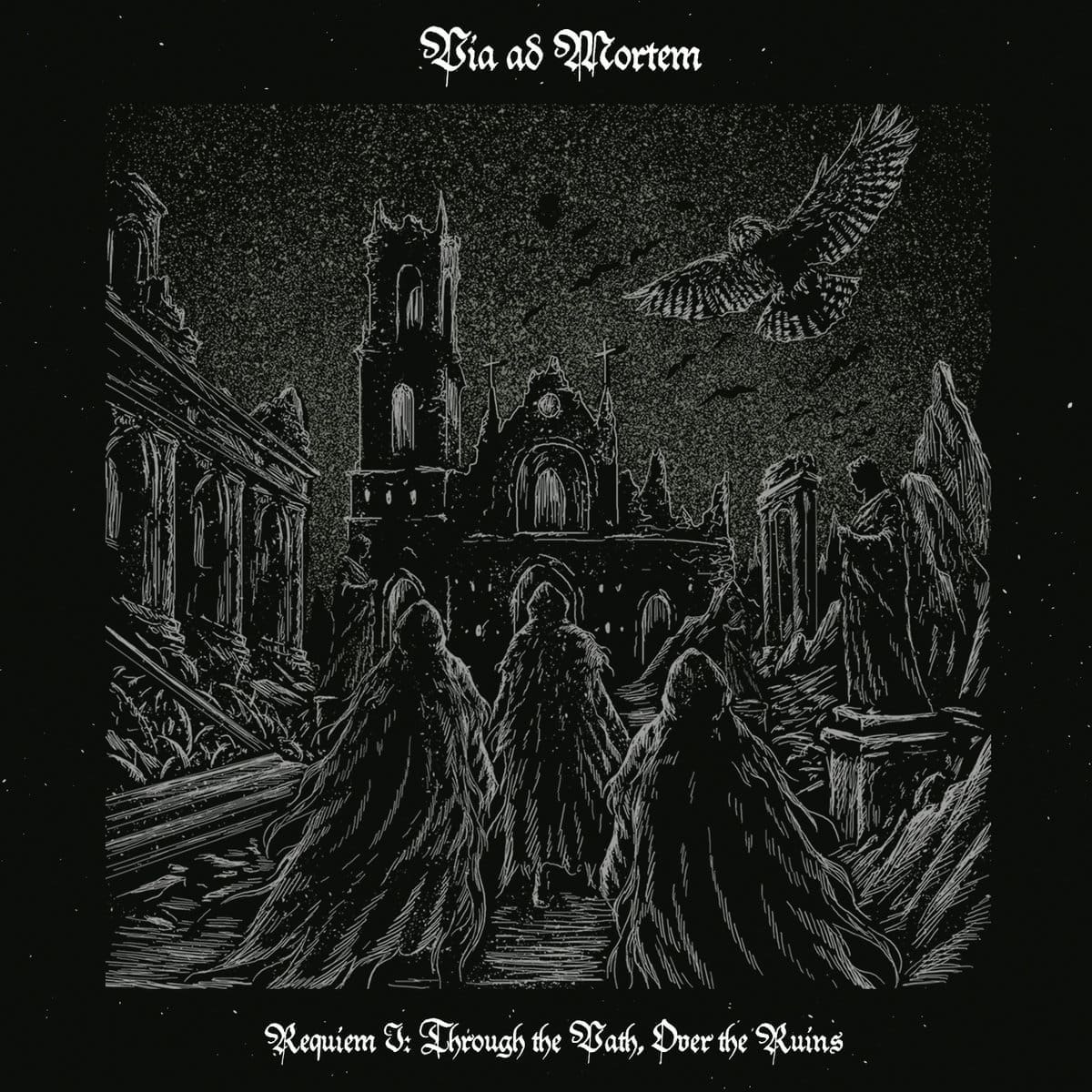
The artwork serves as a flawless visual companion, effortlessly capturing the bleak, overarching feel of the album, its intricate theological themes, and the specific, haunting atmosphere of the fourth hymn. It stands as a visual threshold, preparing the mind for the transition from the physical world into the unmapped ruins that lie beyond.
The Seventh Sin, Disrelish
Proving the flawless execution of this three-piece lineup, there is no disrelish to be found within the borders of Requiem I: Through the Path, over the Ruins. Every element is balanced with monastic austerity and delivered with unshakeable conviction.
The Hymns
01. The First Steps Towards the Unknown
02. Throught the Path…
03. Worshipper of Death
04. Muchita – Night in Lima
05. Into the Bardo
06. Voragine di luce
07. …over the Ruins
08. Rib for a Rib
09. The Grace of Gnosis
Via Ad Mortem
Gibil — Drums
Hiems Silens – Guitars, Bass
Santamuerteto Sinister – Vocals