Violent Omen — Locomotive of Chaos Review
Violent Omen is a Ukrainian progressive thrash metal entity. On 13 September 2026, Violent Omen released their fourth full-length, Locomotive of Chaos, through Nocturnus Records.
Violent Omen, Locomotive of Chaos Review: This review will evaluate every aspect of the album, from its intricate musical composition to its production.
The First Three Sins, The Summary
The First Sin, The Strings/Keys: Hyper-technical thrash riffing, angular shifts, and muscular bass forge a mechanical framework. The Second Sin, The Vocals: Commanding thrash vocals and feral blackened snarls deliver raw, mechanical aggression. The Third Sin, The Percussions: Precision drumming, rapid accelerations, crushing double-kicks, and restless tempo shifts.
The Fourth Sin, Overall Discussion
Ignition of the War-Engine
As soon as the listener presses the play button, they are greeted by the opening hymn Locomotive of Chaos —the ignition point and opening assault.
The opening hymn draws directly from Warhammer 40K mechanised apocalypse; the hymn ritualises the sanctification of war-engines and the sheer, crushing reality of cosmic futility.
The Seven-Hymn Locomotive of Chaos
Across its hyper-technical architecture, Locomotive of Chaos constructs a seven-hymn relentless thematic war-engine, where the listener is thrust into over thirty-four minutes of unyielding, hyperkinetic technical aggression. Locomotive of Chaos functions as a pure steel-bound liturgy of velocity — fusing the feral aggression of Ukrainian thrash metal with intricate progressive structures, sudden time-signature shifts, and razor-sharp instrumental mechanics.
Seven Carriages Through the Mechanical Nightmare
Each hymn operates like an individual carriage in a runaway mechanical nightmare — gears grinding, pistons hammering, and metal twisting under immense pressure.
- Hymn II — The 24 Faces of Lunacy — Shifts the focus inward to evoke a mind fractured into incompatible selves — delivering a psychological kaleidoscope through rapid-fire, erratic technical thrash shifts.
- Hymn III — Killdozer Rampage — Inspired by the cultural legend of Marvin Heemeyer’s armoured bulldozer, this track ritualises the concept of a man merging bodily with a machine to execute catastrophic, unyielding revenge.
- Hymn IV — Path of Illumination — Functions as the album’s metaphysical axis. It explores esoteric revelation, the dangerous, forbidden pursuit of knowledge, and achieving true enlightenment through violent ordeal.
- Hymn V — Shared Sky — Expands into cold existential contemplation, implying that all beings — soldiers, victims, wanderers, and machines alike — exist beneath the same indifferent, unfeeling cosmos.
- Hymn VI — Unit 731 — Standing as the darkest carriage in the train, this hymn directly addresses the Japanese wartime biological experimentation division — confronting one of the most horrifying episodes of mechanised cruelty and human degradation in history.
The Architectural Force & Relentless Heartbeat
Locomotive of Chaos is built entirely around the surgical interaction of high-velocity technical power-trio devilmanship. Rather than collapsing into an indistinct wall of sound, the production ensures that all three instruments remain hyper-audible within the album’s labyrinthine arrangements, allowing each mechanical gear to turn with total clarity.
Turning complex speed into a living, breathing mechanical entity — fusing human rage with machine-like inevitability.
Maestro’s guitar work serves as the album’s principal architectural force. Operating with cold, violent articulation, his playing resembles a machine learning to dream — carving out rapid-fire, angular technical thrash riffs. Every riff acts as a serrated, razor-sharp gear within the record’s overarching war-engine, driving the composition forward through sudden structural shifts and complex, unpredictable time signatures.
Sinitsky’s drums function as the engine’s relentless heartbeat. His precision turns every hymn into a mechanised liturgy — navigating complex, restless tempo changes, sudden accelerations, heavy mid-tempo downbeats, and crushing double-kick propulsion.

The Iron Spine & Conductor’s Proclamation
Bassist and vocalist Serg provides the album’s locomotive iron spine through muscular, clearly audible low-end attacks that grind beneath the guitar work like pistons under immense strain. Vocally, Serg delivers the conductor’s proclamation — a half-ritual, half-command performance riding the knife-edge between human fury and mechanical inevitability.
Guest vocalist Faunus injects a feral, blackened snarl directly into the gears of the third hymn — serving as a stark reminder that beneath the steel and circuitry lies something ancient, wounded, and deeply furious.
Surgical Clarity Within the Machine
The production across Locomotive of Chaos is a triumph of technical mix clarity. Every element of the power trio remains crystal-clear within the complicated arrangements — allowing Maestro’s angular guitar work, Serg’s grinding bass lines and vocals, and Sinitsky’s percussive manoeuvres to hit with maximum kinetic impact without ever collapsing into an indistinct wall.
The Last Carriage: Telling Lies
Concluding the thirty-four-minute journey, the seventh hymn, Telling Lies, ties the album’s technical war-engine back to its core thesis — leaving the listener amidst grinding metal, exhausted pistons, and the cold silence of a ruined cosmos.
Overall, Locomotive of Chaos is a ferocious, hyper-technical fruit of art. Violent Omen has constructed a masterclass in progressive thrash metal — welding grimdark sci-fi, historical tragedy, and mechanical precision into an unyielding, unforgettable thirty-four-minute assault.
The Fifth Sin, The Memorabilia
For me, I was thoroughly pleased to have the hymn Path of Illumination repeated in my ears, standing tall alongside the remaining six new hymns. Having reviewed Path of Illumination previously, I knew long before pressing play that the devilmanship would deliver at the highest level — given the members’ legendary track record in bands I have championed before, such as Tria Prima and Cosmic Jaguar. The album did just that, and so much more.
The entire thirty-four-minute runtime takes progressive, technical thrash metal into an entirely new dimension; a relentless, hyper-complex style best described as Labyrinth Thrash Metal.
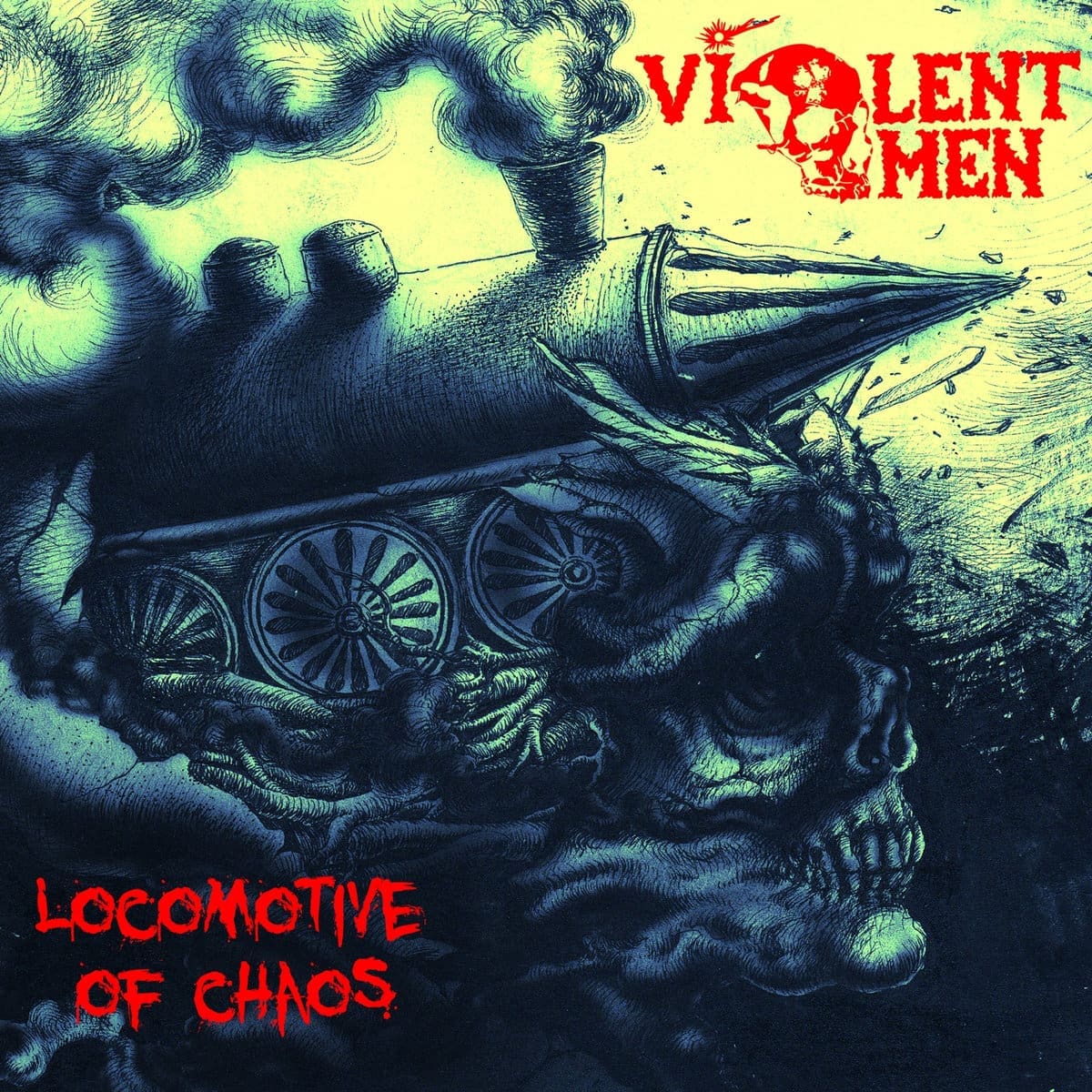
The Sixth Sin, The Artwork
The visual presentation captures a magnificent, old-school charm. What stands out most about the cover art is its hypnotic pull: even if I knew nothing about who or what the band was, the artwork possesses an irresistible command — compelling the listener, “Play me, hear me.”
The Seventh Sin, Disrelish
There is absolutely no dislike to be found anywhere across this compositional labyrinth.
The Hymns
01. Locomotive of Chaos
02. The 24 Faces of Lunacy
03. Killdozer Rampage
04. Path of Illumination
05. Shared Sky
06. Unit 731
07. Telling Lies
Violent Omen
Serg MP — Vocals, Bass, Lyrics, Songwriting
Yuriy Sinitsky — Drums
Evgeniy Maestro — Guitars
Faunus – Guest Manifest vocals