Denominate — Restoration Review
Denominate are a Finnish Progressive and Atmospheric Death Metal entity. On 9th January 2026, the band will release their upcoming album, Restoration, through Dusktone.
Denominate, Restoration Review: This review will evaluate every aspect of the album, from its intricate musical composition to its production.
The First Three Sins, The Summary
The First Sin, The Strings/Keys: Harmonised dual-guitar lines shaped by progressive structures and shifting time signatures. The Second Sin, The Vocals: Deep, resonant growls — forceful yet measured — functioning as texture rather than dominance. The Third Sin, The Percussions: Progressive patterns and intricate fills, supported by cymbal-rich atmospheric passages and disciplined double-kick runs.
The Fourth Sin, Overall Discussion
A Vast Progressive Descent
From the moment Restoration begins, Denominate unleash a vast progressive death metal soundscape. Across six expansive hymns, death metal aggression collides with progressive complexity — drawing natural comparisons to Opeth, Ne Obliviscaris, In Mourning, Black Crown Initiate, and the exploratory edge of modern technical death metal. Beneath this framework, faint traces of black metal surface within the band’s textured sound.
Restoration pulls the listener inward rather than overwhelming them outright. It tests the ear with precision and skill, yet its hooks remain firmly embedded. These six hymns demand full immersion — no skips, no shortcuts.
It is a record built to be experienced as a whole, where momentum unfolds through patience rather than instant payoff.
Weight, Space, and Melodic Tension
Restoration benefits from a dynamic, carefully balanced mix that accommodates crushing heaviness and airy, reflective passages with equal confidence. Dense low-end riffs hit with authority before dissolving into wide-open atmospheres, creating constant tension between aggression and introspection.
Cold, melancholic melodic phrasing recalls the Finnish school of melodic death metal — In Mourning and Insomnium come to mind — where icy guitar lines cut sharply yet retain emotional weight. Guitars remain thick and grounded; drums strike with clarity and restraint; bass reinforces the album’s physical mass without clouding the mix. This transparency allows the progressive songwriting to breathe, ensuring structural detail is never lost beneath density.
Musically, Restoration favours slow-burn gravity over immediate impact.
Precision in Atmosphere — Devilmanship as Discipline
Production across the album is precise and disciplined. Each instrument is clearly articulated, allowing complex arrangements to expand without sacrificing weight. Brooding ambience hangs thick like fog, while layered melodic lines stack gradually, adding depth rather than excess.
Dramatic crescendos build patiently, swelling from near silence into controlled fury. Introspective clean passages follow, offering moments of reflection where vocals soften and guitars shimmer with restraint. These contrasts prevent fatigue and reinforce the album’s emotional pacing.
There is a clear sense of devilmanship at work here — not excess, but control. Every vocal placement, instrumental decision, and moment of restraint feels deliberate. Silence carries as much weight as sound.
Nothing strains for dominance; nothing exists without purpose. This is artistry manifested through discipline, where technique enhances the atmosphere instead of overshadowing it.
Architects of the Riff
Denominate’s dual-guitar interplay blends In Mourning and Ne Obliviscaris–style harmonised leads with Opeth-influenced progressive riff structures and shifting time signatures. Distortion remains modern, tight, and biting — never sterile. Clean breaks slice sharply through the mix, while extended melodic leads coil and stretch with expressive intent rather than technical excess.
Longer hymns push this approach further. “The Cistern” layers textures into a dense, immersive mass — synths humming beneath pulsing drums as guitars spiral overhead. “Restoration” expands similarly, stacking sound in waves that create vast spatial depth. “Liminal” introduces acoustic strings, their fragile warmth offering contrast amid the surrounding storm.
This is far from a riff-dump album. Each hymn functions as a chapter, pulling the listener forward through tension, release, and resolution. You emerge altered — disoriented, reflective, and immersed.
Rhythmic Authority
The drumming gleams with crisp modern metal polish while remaining deeply musical. Rapid stylistic shifts occur effortlessly — blast beats tear through with controlled ferocity before giving way to grounded mid-tempo grooves that lock tightly with the guitars.
Progressive patterns and intricate fills add movement without slipping into showboating. Cymbal-rich atmospheric passages and double-kick runs serve the melodic direction rather than dominating it. Dynamic control is central here: delicate touches in clean sections contrast sharply with explosive peaks, ensuring the drums feel expressive and purposeful rather than mechanical.
Voice, Presence, and Internal Motion
Vocals arrive as deep, resonant growls — forceful yet measured — functioning as an extension of the instrumentation rather than a commanding focal point. Any restrained or cleaner vocal moments are used sparingly, serving emotional contrast rather than accessibility.
Atmosphere plays a defining role throughout Restoration. While rooted in death metal’s physical mass, the album frequently opens space for reflection, melodic tension, and controlled restraint. Hymns transition fluidly between oppressive heaviness and uneasy calm, reinforcing internal movement rather than outward aggression.
Ambient layers, reverb-drenched guitars, and subtle textural interludes replace traditional verse-chorus repetition. Emotional delivery takes precedence over brute force, allowing the vocals to guide the listener through the album’s long-form narrative arcs.
Consolidation and Identity
Overall, Restoration feels less like a display of technical prowess and more like an act of consolidation. Denominate refine ideas introduced on earlier releases into a cohesive, mature statement that rewards close listening and repeated immersion.
As patterns begin to reveal themselves, questions of direction fade. This is a record that feels earned — confident, deliberate, and resolved.Restoration firmly cements Denominate’s place within the progressive death metal continuum — a fruit of discipline and intent.
Dissolution into Silence
Restoration closes with its nine-minute title hymn, slowly dissolving into darkness as tension releases and echoes fade. The journey ends not with excess, but with quiet finality — leaving the listener suspended, reflective, and unwilling to break the silence too quickly.
The Fifth Sin, The Memorabilia
For me, Restoration is not simply played — it is conducted and controlled. The music moves like a vessel carried through a river, guided rather than forced. It functions equally well when played loud and unrestrained through speakers, or experienced in full detail through headphones, where its depth and nuance fully reveal themselves.
The Sixth Sin, The Artwork
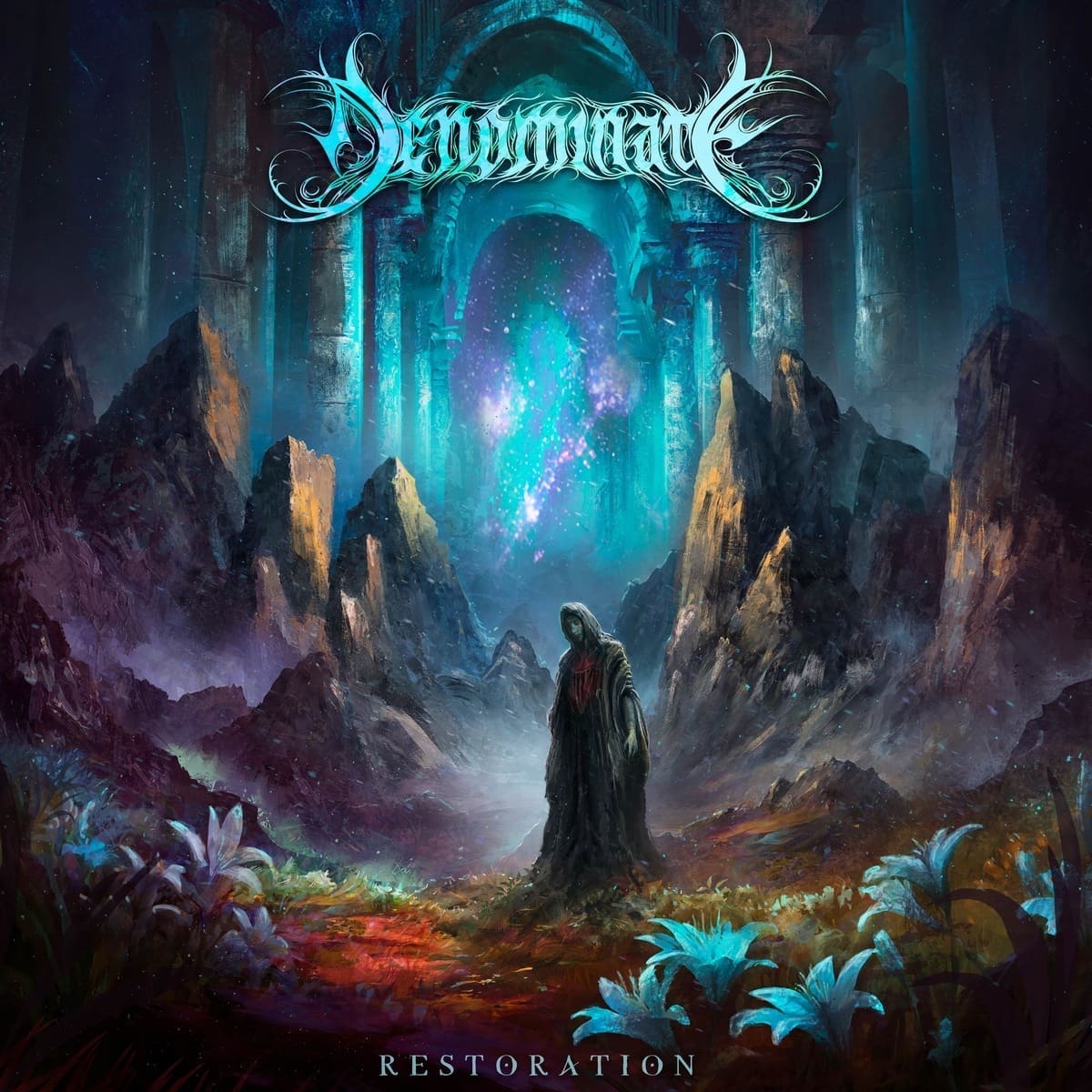
The artwork reflects the album’s quiet intensity and introspection. A lone figure faces a glowing, ruinous archway between fractured terrain and cold, spectral colour. The image depicts a gap between decay and renewal.
Like the music, the artwork reveals itself slowly. Detail emerges through stillness, reinforcing the record’s themes of discipline, control, and transformation.
The Seventh Sin, Disrelish
There is nothing here to dislike. Restoration is forged in darkness, shaped by a progressive death metal soundscape and atmospheric moments. Denominate deliver a release that feels both progressive and dreamlike — a rare balance, executed with intent.
Promotional material provided by Denominate.
The Hymns
01. The Loathe Process
02. Husk
03. Of Passing
04. Liminal
05. The Cistern
06. Restoration
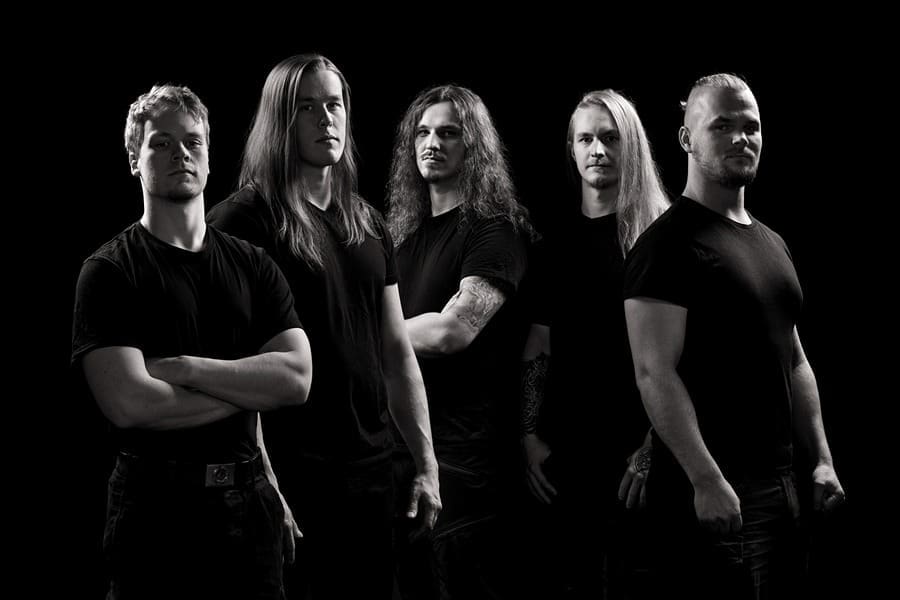
Denominate
Ville Männikkö — Vocals
Kimmo Raappana — Guitars
Eetu Pylkkänen — Guitars
Tuomas Pesälä — Bass
Joni Määttä — Drums