Noctivagum — De Arcanis et Ritibus Sulphuris Review
Noctivagum is an international (Germany/Italy) occult black metal entity, formed in 2025 and featuring members of Hagalaz, Korrigans, and several Italian underground acts. On 14 January 2026, the band released their independent debut EP, De Arcanis et Ritibus Sulphuris.
Noctivagum, De Arcanis et Ritibus Sulphuris Review: This review will evaluate every aspect of the album, from its intricate musical composition to its production.
The First Three Sins, The Summary
The First Sin, The Strings/Keys: Mid-tempo, incantatory riff cycles that function more like ritual chants than conventional metal figures, with the bass felt more than heard beneath them. The Second Sin, The Vocals: Varied and ritualistic — low, rasping deliveries that favour chants and demonic lithurgies over screams. The Third Sin, The Percussions: Resonant toms and floor toms create a tribal, occult undertone, anchoring the candle-flicker dynamics of the mix.
The Fourth Sin, Overall Discussion
Threshold of Invocation
As soon as the listener triggers the play button, the opening hymn, Initium Caerimoniae, greets the senses with a haunting soundscape and a clean acoustic intro.
It is a moment of deceptive calm—a cold, atmospheric threshold that prepares the spirit for the descent to come. From this chilling doorway, the listener begins a journey through the remaining six hymns of De Arcanis et Ritibus Sulphuris, a record that trades the blunt force of the street for the occult sulphur of the abyss.
Occult Austerity and Lineage
De Arcanis et Ritibus Sulphuris is built on a foundation of occult black-metal austerity. It rejects the need for modern gloss, excessive speed, or cheap theatrics, opting instead for a sonic palette that feels carved from smoke, stone, and ritual fire. There is a weight here that is not just physical; it is spiritual.
The recording captures a lethal intersection of black metal’s most sacred lineages. It mirrors the trance-ritual minimalism of early Burzum, the shadow-ritual atmosphere of Mayhem, and the sulphur-drenched ceremonial gravity associated with Behemoth. By weaving these influences together, Noctivagum creates a melodic, profound, and intense wintry atmosphere.
It achieves a rare balance—a record that breathes through its soft, acoustic passages before suffocating the listener with aggressive, blackened surges.
Arcane Texts and Ritual Language
The lyrical world of De Arcanis et Ritibus Sulphuris is a deep descent into arcane rites, hidden texts, and the relentless pursuit of forbidden wisdom. This is not standard narrative storytelling; there are no linear tales to be found here. Instead, the band utilises invocatory language, with lyrics written like jagged, salvaged fragments of a ritual manuscript.
By treating the lyrics as ritualistic fragments rather than stories, Noctivagum ensures the atmosphere remains mysterious and untouchable—a linguistic shadow that mirrors the smoke and stone of the music.
Ritual Structure and Movement
Each of the seven hymns possesses its own distinct identity. Noctivagumrefuses to repeat itself; they shift the sound, atmosphere, tempo, and mood constantly.One moment you are trapped in a high-speed wintry blast, and the next, you are drifting through a melodic, profound silence.
This is not just songwriting; it is an arrangement of shadows. The balance is so precise that the listener never feels jarred, only deeper submerged in the sulphurous narrative the band is weaving.
Devilmanship and Instrumental Discipline
The devilmanship on display is executed with disciplined precision; the instrumental composition is carefully controlled and deliberate. The guitars serve as the backbone of the album’s occult identity, utilising mid-tempo, incantatory riff cycles that feel more like ritual chants than standard metal riffs. Dissonant chord shapes ring out like cracked bells in a forgotten chapel, saturated in a warm, murky distortion that feels purely analogue, as if wrapped in a sulphurous haze.
Beneath the strings, the bass is felt more than heard—a low, humming resonance that thickens the ritual space and provides a subterranean pulse. The drums are laced deep within the room, possessing a stone-chamber echo that rejects blast-driven extremity in favour of a mid-tempo ritual pulse. The resonant toms and floor toms create a tribal, occult undertone that anchors the candle-flicker dynamics of the mix.
The vocals are not meant to dominate this space; they are meant to haunt it. They are varied and ritualistic—low, rasping deliveries that favour chants over screams. They are blended deep into the mix, becoming part of the smoke rather than sitting on top of the music.
Analogue Murk and Candle-Flicker Dynamics
The recording aesthetic of De Arcanis et Ritibus Sulphuris is a total rejection of modern black-metal clarity. Instead, it embraces a warm, analogue-leaning murk that feels as though it were pulled from a forgotten ritual tape on a cold, windy night.
There is nothing sharp or surgically defined here; the entire mix is wrapped in a thick, smoky veil.
This aesthetic allows for a sense of natural decay—notes do not sit in isolation, but bleed into each other to create a blurred, dreamlike haze. With minimal compression, the dynamics are allowed to breathe, giving the compositions a living, candle-flicker quality. The music does not just play; it pulses with the organic, unpredictable rhythm of a ritual fire.
It is a production style that honours the depth of the atmosphere over the precision of the performance.
Finis Caerimoniae
The album closes with the final hymn, Finis Caerimoniae. As the ritual smoke fades, so does the album, drifting out on a dissonant acoustic riff. It effectively seals the circle, extinguishing the sulphur flame and letting the last embers of the rite sink into darkness.
Final Assessment
Ultimately, De Arcanis et Ritibus Sulphuris is a profound, heavy fruit of art. It is a fruitful balance of soft and aggressive parts, creating a melodic yet intense wintry atmosphere that demands total immersion
The Fifth Sin, The Memorabilia
De Arcanis et Ritibus Sulphuris unfolds as a dark, candle-flicker ritual that hits every mark—occult, blackened, dissonant, and extreme. But within the smoke of this record lies its own distinct identity. It offers something fresh and new; it is not ‘old-school’ nor is it ‘modern,’ but rather something ancient and lost in between. I could not get enough of this descent. It is a ritualistic experience that feels like discovering a forbidden text in a collapsing ruin.
The Sixth Sin, The Artwork
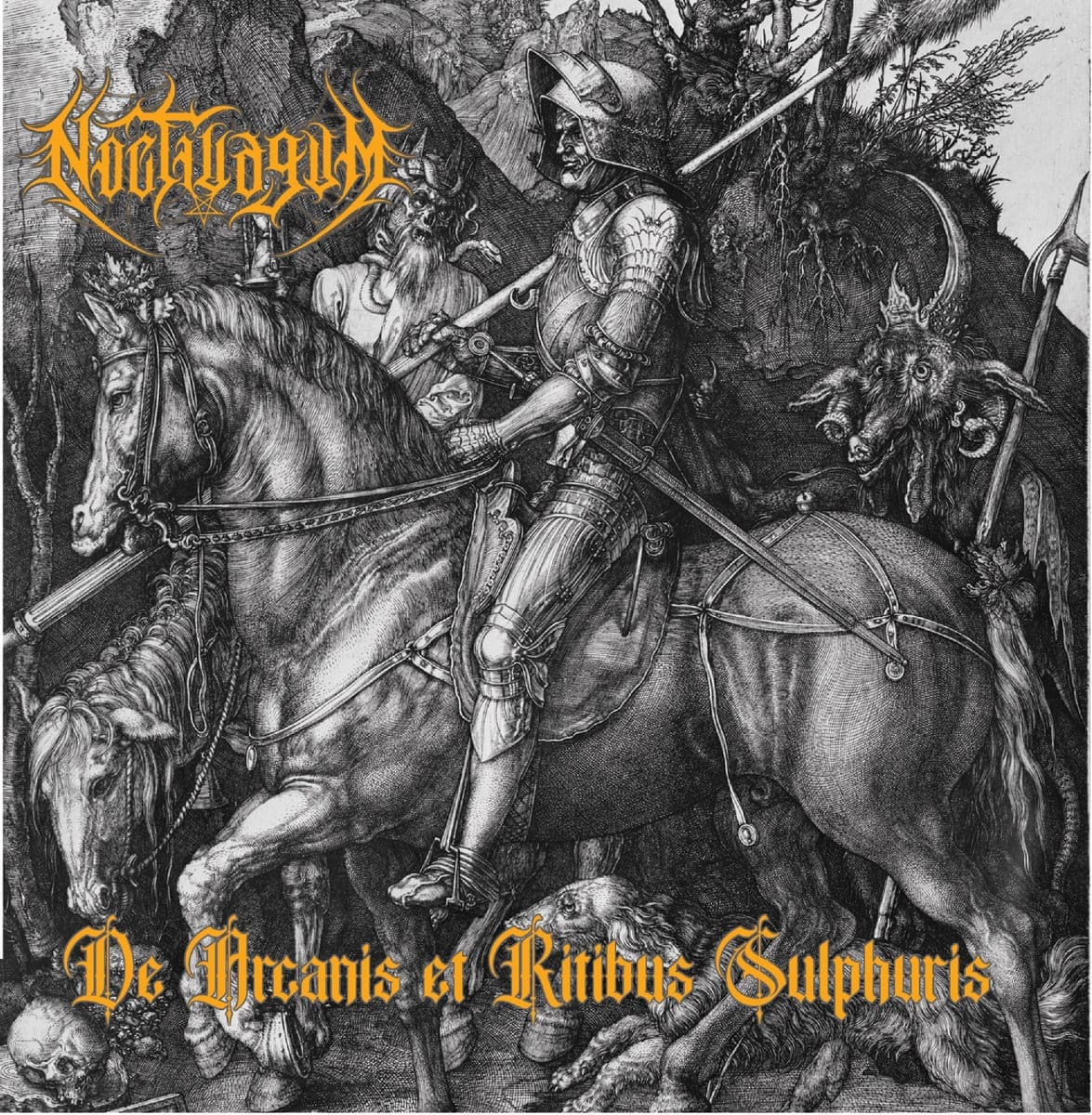
The artwork fuses medieval engraving aesthetics with occult symbolism, echoing the esoteric and ritualistic themes of the album’s title. It draws heavily from Albrecht Dürer’s Knight, Death and the Devil (1513), recontextualized to evoke sulphuric rites and infernal processions.
The Seventh Sin, Disrelish
There is nothing here to dislike. De Arcanis et Ritibus Sulphuris is a disciplined and immersive work, where atmosphere, performance, and intent align without excess or compromise.
Promotional material provided by Noctivagum.
The Hymns
01. Initium Caerimoniae
02. Ignis
03. Arcana Noctis
04. Ex Inferis
05. Carpe Noctem
06. Occulta Suprema Ars
07. Finnia Caerimoniae
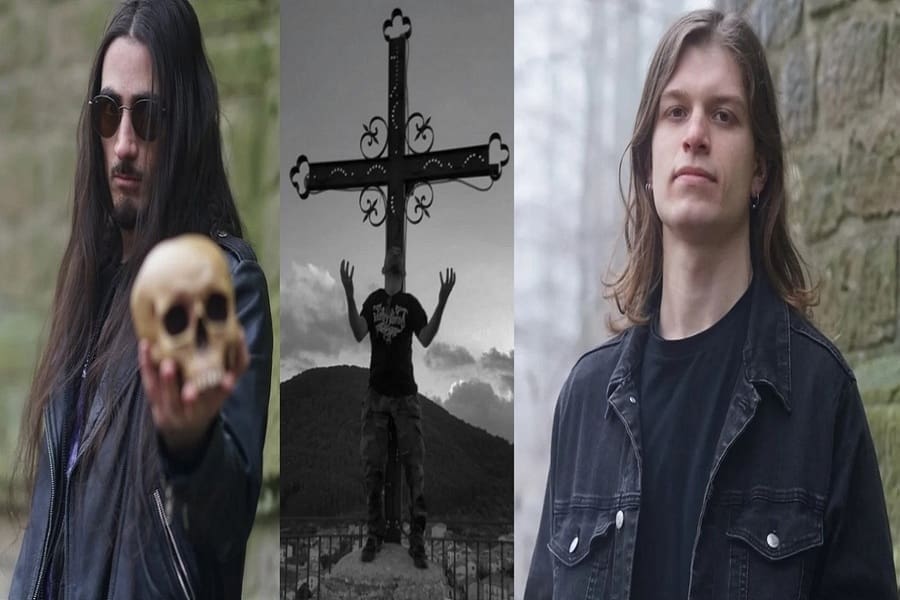
Noctivagum
D. — Drums
Lighting — Guitars Bass
Wolf — Screams, Growls and Demonic Lithurgies