Celestial Silence Interview
The Interview — Celestial Silence: On Being, Absence, and Sound
Celestial Silence is an international black metal entity where sound is shaped through inquiry rather than excess. Space, pause, and restraint function as deliberate forces, and silence is treated as presence rather than absence. Drawing from metaphysical and existential thought, riffs, and rhythms emerge with measured intent, and atmosphere operates as structure rather than ornament. This is not spectacle-driven extremity, but meaning approached through negation.
This interview enters that reflective space. Across thirteen questions, we examine the philosophical foundations, compositional intent, and conceptual architecture of Celestial Silence, allowing the project to articulate its position on being, absence, and sound.
Thirteen Questions constructed with cold deliberation.
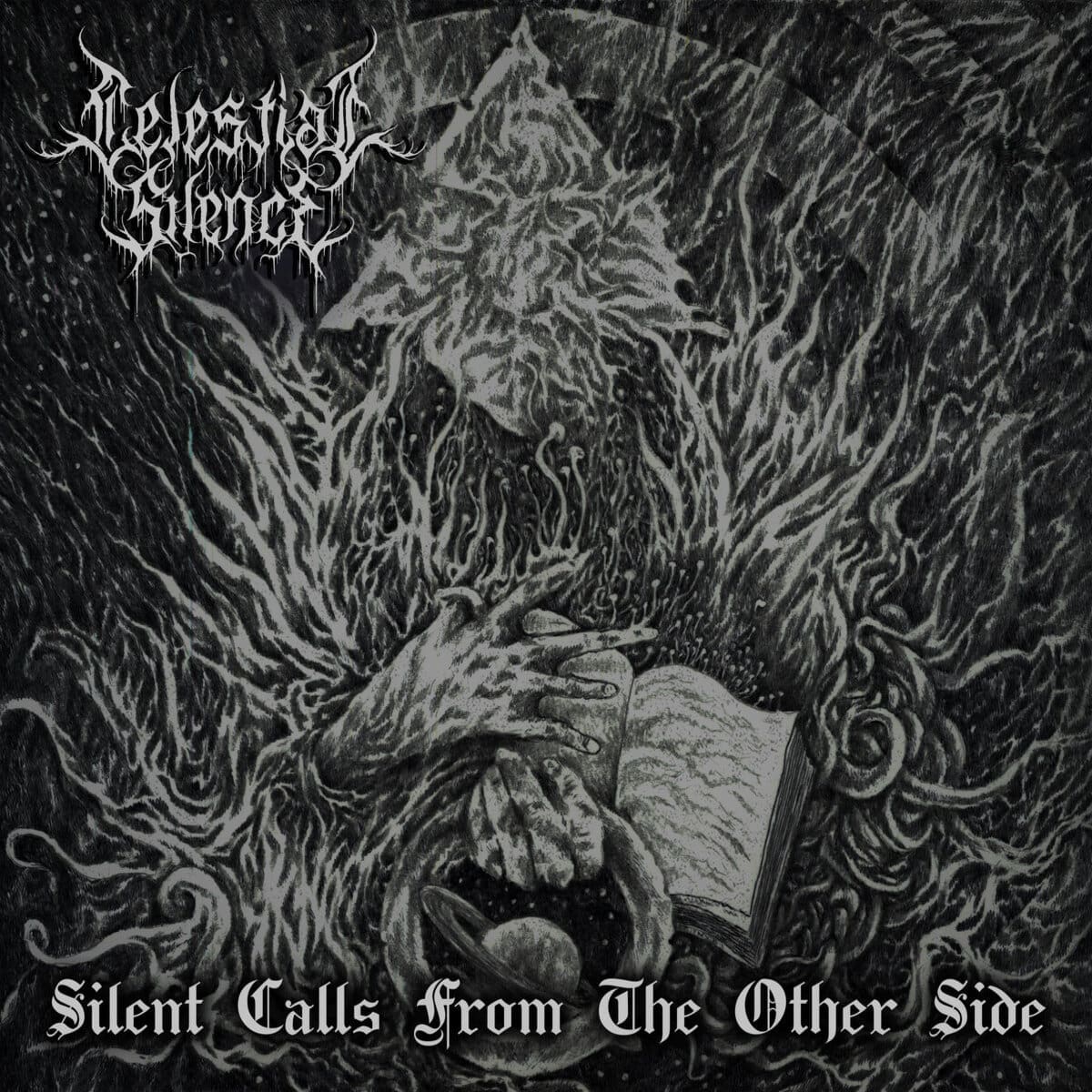
Q1: Silent Calls From The Other Side carries a sense of distance — emotional, geographic, and spiritual. What does “the other side” represent to you: death, exile, memory, or something more internal?
Celestial Silence: I don’t want to share what this means personally for me, and I don’t think it’s necessary. This is something each listener has to discover for themselves. That’s the goal of the music: to make the listener ask questions and find their own answers
Q2: Celestial Silence exists across distance rather than a single place. How has working across separation shaped the emotional weight and atmosphere of this project, both musically and psychologically?
Celestial Silence: The songs for Silent Calls From The Other Side took shape during rehearsals with Dødes Kor, so I wouldn’t say we were fully working across separation. However, having Klemi as a remote member did make things unusual for me, since I’m used to rehearsing with the whole band. Surprisingly, it wasn’t a problem – despite everything, composing and recording went pretty smoothly
Q3: Your sound is raw, melancholic, and restrained rather than explosive. Was this minimalism a conscious aesthetic decision, or did it emerge naturally from the themes you were exploring?
Celestial Silence: The creation process of the album was pretty chaotic, and now it’s difficult to pinpoint cause-and-effect relationships. While writing the music, the sound was taking shape. And vice versa – sometimes the sound guides you toward the right melodies, riffs, and words.
Q4: Melancholy in black metal can manifest as sorrow, rage, or numbness. Where does Silent Calls From The Other Side sit emotionally for you?
Celestial Silence: For me personally, it’s about finding answers and inner peace. It helps to cope with difficult emotions such as sorrow, pain, and other feelings we used to label as “negative.” But they are just emotions – they shape our personality, and it’s important to find a way to live with them.
Q5: The album feels introspective rather than confrontational. Do you view Celestial Silence as a form of personal catharsis, or as a vessel meant to transmit shared grief?
Celestial Silence: Both. The album is full of personal experiences. Although humans tend to feel each experience as unique – sorrow, loss, apathy, and many more – these feelings have already been lived through over thousands of years of human history. That’s why it’s important to share your experiences, as they may help someone. When I listen to music and truly understand what it’s about, I think, “The author feels what I feel. I am not alone.” And it gives me the strength to carry on, to keep going. I believe this approach resonates with many people
Q6: Raw production often strips away comfort and polish. How important was sonic imperfection in conveying the emotional truth of this release?
Celestial Silence: When it comes to music, sound is one of the most important elements – just as important as the riffs you play or the lyrics you sing. A bad sound can ruin a good song. In black metal, the genre itself is far from comfort and polish.
Since the invention of sound recording, artists have tended to make their music cleaner and more polished. Today, listeners are often fed up with bands that rely on the same “perfect” sound to mask a lack of creativity with high-quality production. Using a broader artistic term, raw sound is a form of post-modernism – a return to the roots.
Q7: Silence plays a powerful role in your music — pauses, space, and restraint. How do you approach silence as an active element rather than an absence?
Celestial Silence: That’s absolutely correct. Silence is not just the absence of sound; it is an important element both musically and philosophically. Silence acts as a trigger for introspection, reflection, and self-analysis.
Q8: Black metal has long been associated with isolation and transcendence. What traditions of the genre does Celestial Silence consciously embrace, and which ones do you intentionally avoid?
Celestial Silence: I cannot say that we avoid something on purpose. We just choose what will fit better for the songs to convey emotions in the best way.
Q9: There is a sense of timelessness in the album — it could belong to any era. Was this detachment from modernity intentional?
Celestial Silence: I wouldn’t say we intentionally avoid anything. We simply choose what fits the songs best to convey the emotions most effectively
Q10: Distance and displacement often surface in melancholic black metal. For this release, are these themes drawn primarily from inner experience rather than specific external circumstances?
Celestial Silence: For me, these sources of inspiration are deeply connected – external circumstances can trigger internal experiences, and this is certainly the case for me. The war in Ukraine obviously doesn’t contribute to a positive state of mind, so music takes on a therapeutic role. It’s my way of coping with difficult times.
Q11: How does Celestial Silence differ from your other creative outlets, if any? What does this project allow you to express that others cannot?
Celestial Silence: All members are involved in other bands or projects. Dødes Kor and I play in the bestial black metal band Goatflesh, and he also leads the black metal band Grave Circles. Klemi is best known for Circle of Ouroborus, Absolute Key, and Rotten Moon. For me, Celestial Silence is very personal music, and it is also musically very different from Goatflesh. As for the others, their other projects don’t involve anything similar, so Celestial Silence has naturally become an integral part of our musical lives.
Q12: Do you envision Celestial Silence as a continuing entity, or was Silent Calls From The Other Side conceived as a singular statement?
Celestial Silence: Silent Calls From The Other Side is definitely not the last album. We are already working on the second one – several demos and some lyrics are ready, and we are continuing to compose. I can’t give any timeframes yet, but work is underway. So stay tuned!
Q13: When the final note fades, what state do you hope the listener is left in — reflection, discomfort, mourning, or quiet resolve?
Celestial Silence: Since each of us perceives music differently, I just hope the listener finds what they were looking for.
If there’s anything you’d like to add — about the Silent Calls From The Other Side, your creative process, or something we haven’t touched on — please feel free to do so here
Celestial Silence: Thank you for the interview, deep questions and your support. Support the underground!
This closes the interview. The rite is complete — the voice of Celestial Silence now etched into the archive of sin.
I extend my deepest thanks to Celestial Silence for sharing their voice — and to the reader, for bearing witness to this craft-rite.