Phileas — Chapitre 1: La Chute Review
Philéas is a French black metal solo project created by Lord Of Misery (Dark Plague). On 29 March 2026, Philéas released his debut full-length Chapitre 1: La Chute via Fetzner Death Records.
Phileas, Chapitre 1: La Chute Review: This review will evaluate every aspect of the album, from its intricate musical composition to its production.
The First Three Sins, The Summary
The First Sin, The Strings/Keys: Dry, descending tremolo lines pull relentlessly downward — melodic yet bleak, each riff tracing the geometry of collapse. The Second Sin, The Vocals: Raw, rasping screams delivered with human strain — less performance than witness, a voice dragged through the fall in real time. The Third Sin, The Percussions: Measured black metal rhythms shaped by restraint — blasts used sparingly, mid-paced patterns guiding a steady, inescapable descent.
The Fourth Sin, Overall Discussion
The Threshold of the Fall
The moment the listener presses play, the opening hymn, Au Commencement, greets them with a purely instrumental invocation. It serves as a threshold — a breath of atmospheric stillness — before the record transitions into the remaining eight hymns.
This opening acts as a cinematic prologue, establishing the emotional stakes for La Chute.
It is the calm before a descent that promises to be both expansive and deeply narrative.
A Descent Without Resistance
Do not let the brief, two-minute opening hymn mislead you; Chapitre 1: La Chute is a forty-minute descent into a specialised form of black metal. It is a dark fruit of art — melodic yet bleak, it swaps pure aggression for a pervasive sense of the depressive and the introspective.
The sound is notably dry and gritty, eschewing the polished sheen of modern recordings for a texture that feels tactile and weathered. This sonic choice serves perfectly the album’s emotional core, which carries that unmistakable French black metal tension.
This is not a record that attacks; it is a record that haunts, capturing a melodic sorrow that is as gritty as it is graceful.
The Geometry of Damnation
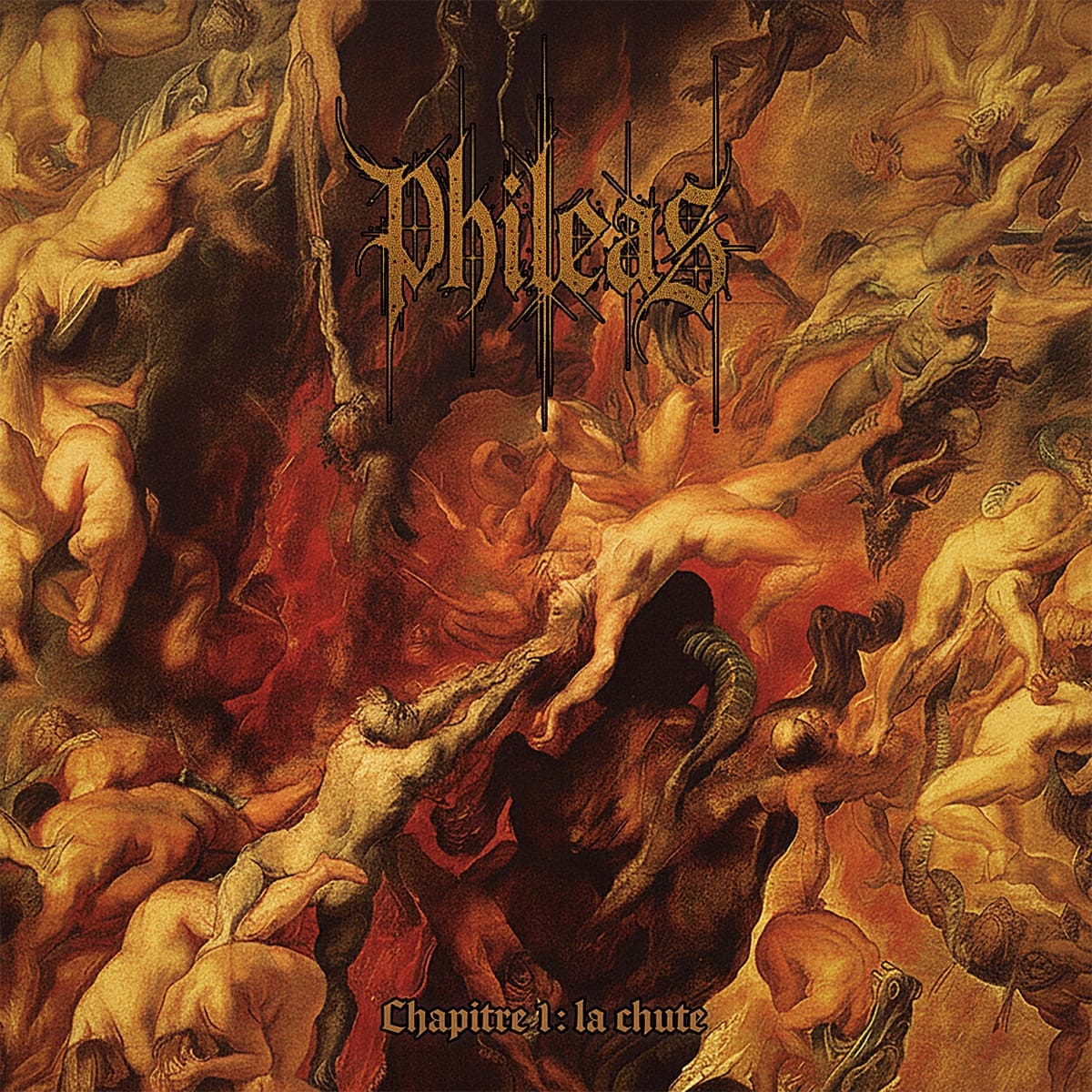
The conceptual heart of Chapitre 1: La Chute is built upon the harrowing geometry of Peter Paul Rubens’The Fall of the Damned.
The music does not attempt to depict the tortures of hell itself; instead, it inhabits the precise, agonising moment when salvation becomes an impossibility. The bodies in Rubens‘ work are not yet being punished — they are simply, irrevocably lost. Phileas captures this irreversible movement toward the abyss with a sonic palette that mirrors a total spiritual collapse.
The album is constructed as a single, continuous descent — an uninterrupted fall into the dark.
The musical progression follows this descent with chilling accuracy —
The Glimmer — it begins with a faint, fragile light (the opening instrumental).
The Slip — it slowly loses its footing, sliding into a dry, gritty melodicism.
The Erasure — it culminates in a total descent into darkness and silence.
This is not a collection of hymns, but a single inexorable fall. The music carries the weight of those falling bodies, creating a sense of kinetic dread where the movement itself is the condemnation.
Strings That Collapse Inward
The devilmanship behind Phileas is a solitary labour, resulting in a composition and arrangement that is remarkably solid. As a single-entity project, it carries a focused, singular vision of collapse.
The guitars are the primary driver of this emotional descent, utilising melodic but bleak riffing that is often built on minor-key tremolo lines. Most impressively, the guitar work employs descending motifs, musically mirroring the album’s central theme of the fall.
These are not just riffs; they are the sonic representation of losing one’s footing and slipping into the abyss. The guitar work is also expressive but pointedly never polished. It is meant to feel human, strained, and collapsing. The riffs shift between cold, mid-paced marches — capturing the sombre realisation of the descent — and frantic passages, evoking the panic of the irreversible slide toward the dark.
The guitar tone is dry, gritty, and unvarnished, matching the intentionally raw production of the record. There is no studio magic here to hide the pain; it is a naked, tactile sound. The bass is mixed with restraint, serving the narrative of the fall rather than drawing attention to itself — acting as the heavy, silent anchor that ensures the descent remains constant.
Rhythms of the Unavoidable
The drums are either performed or programmed by Lord of Misery, but they are crafted with a deliberate sense of organic reality. By utilising a dry, close-mic production, the percussion reinforces a claustrophobic atmosphere, making The Fall feel intimate and suffocating.
The rhythmic structure of the hymns is defined by straightforward black metal blasts, used sparingly to punctuate the most intense sections of the descent — where rock- and jazz-influenced rhythms appear in the transitions — a sophisticated stylistic choice that separates Phileas from more linear black metal acts.
Ritualistic mid-paced patterns — these dominate the majority of the runtime, providing a steady, hypnotic pulse that guides the listener deeper into the abyss.
A Voice Dragged Through the Abyss
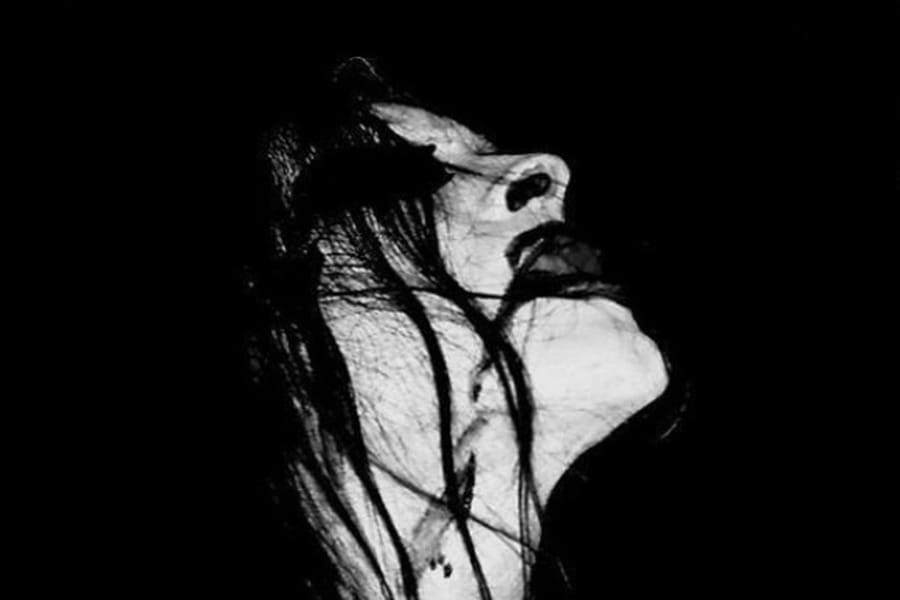
The vocals are one of the album’s defining features: raw, expressive, and profoundly human. They are primarily delivered as harsh, rasping black-metal screams, punctuated by occasional deeper growls to emphasise the most harrowing moments of the descent.
The delivery is intensely emotional and strained — almost theatrical in places — sounding less like a polished recording and more like a narrator being dragged through the fall in real time.
Atmosphere Without Ornament
Chapitre 1: La Chute is built without the aid of traditional synth pads or symphonic elements. Instead, the ambient textures are forged through clean guitars, heavy reverb, and deliberate noise layers. This minimalistic sound design ensures the atmosphere remains dry, gritty, and unpolished. By eschewing keyboards, Phileas keeps the sound grounded in a physical, string-driven reality that matches the unvarnished pain of the concept.
The Language of the Lost
The lyrics are delivered in French, and despite the extremity of the vocals, they carry a striking sense of clarity and intention. This linguistic choice reinforces the narrative of a spiritually wounded existence, lending the record a liturgical, tragic weight.
The listener does not just hear the noise; they feel the specific, articulated pain of a soul losing its grip on salvation.
The Final Vanishing
As Chapitre 1: La Chute draws to a close, there is no resolution — only the final stages of the descent. The music does not erupt or conclude; it diminishes, as if the fall has reached a point beyond sound — where motion continues but expression fails.
Phileas does not end the journey — he lets it disappear into the abyss.
A Descent Without Redemption
Overall, Chapitre 1: La Chute is a dark, forbidden fruit of art — the odyssey is structured as a continuous descent, a sonic translation of Rubens’ The Fall of the Damned. The oppressive, introspective weight — so characteristic of the French school — is generated through four specific pillars:
(I) Despair-laden guitar lines: melodic but bleak, pulling the listener downward. (II) Raw, expressive vocals: a human witness to the spiritual collapse. (III) Rhythmic slippage: shifts in tempo that feel like the losing of one’s footing. (IV) Sparse ambient breaths: moments of haunting stillness that act as the final gasp before the next plunge into the abyss.
A descent without redemption, Chapitre 1: La Chute stands as a stark, sonic testament to the crushing weight of the fall.
The Fifth Sin, The Memorabilia
For me, Chapitre 1: La Chute is not for the weak-minded. This is French black metal elevated to another level — an atmosphere that is utterly suffocating. It is music that demands you take a step back, put on the headphones, and simply let the composition pull you down into its depths.
It is a rare Memorabilia item that does not just play; it colonises the listener’s headspace
The Sixth Sin, The Artwork
The artwork, taken from Peter Paul Rubens’ The Fall of the Damned, aligns perfectly with the album’s descent. Rubens captures the precise moment salvation is lost — bodies spiralling downward, swallowed by chaos — and that same irreversible fall shapes the album’s entire narrative. The cover becomes a visual echo of the music: a plunge from light into darkness with no hope of return.
The Seventh Sin, Disrelish
There is nothing to disrelish here. The only issue is the music’s absolute power; it is designed to consume and suffocate you. If you enter this Chute, do not expect to emerge the same.The Hymns
01. Au Commencement
02. Je suis éterne
03. Arrogance & décadence
04. Le visage de la honte
05. Lame de vérité
06. L’orée du gouffre
07. Vox Morits
08. L’antichambre
09. D’enfer!
Philéas
Lord Of Misery — All Instruments, Vocals
Hear The Music
Social Links
Fetzner Death Records | Home Page
Fetzner Death Records | Facebook