Tsar Stangra — Hymns of the Broken Worlds Review
Tsar Stangra (Химните на разрушените светове) is a Canadian progressive/pagan black metal entity. On 1 July 2026, the band will released their independent second full-length, Hymns of the Broken Worlds, promoted via GlobMetal Promotions.
Tsar Stangra, Hymns of the Broken Worlds Review: Based upon a promotional copy provided ahead of release, this review will evaluate every aspect of the album, from its intricate musical composition to its production.
The First Three Sins, The Summary
The First Sin, The Strings/Keys: Dual-guitar black-metal ferocity, triumphant folk melodies, ancestral tambura phrasing, and vibrant keyboard arrangements forge a sweeping pagan landscape steeped in Bulgarian heritage. The Second Sin, The Vocals: Bestial snarls and vicious black-metal aggression are balanced by haunting female vocal passages that emerge like ancestral spirits from the heart of the storm. The Third Sin, The Percussions: Adventurous percussion blends relentless black-metal force with folk-inspired rhythmic movement, creating a kinetic pulse that drives these broken worlds ever forward.
The Fourth Sin, Overall Discussion
The Broken Gates Open
As soon as the listener presses the play button, they are welcomed into a vast, sweeping musical journey through forgotten kingdoms, shattered faiths, and deep ancestral memory.
Across Kingdoms Forgotten
Hymns of the Broken Worlds manifests as a forty-minute odyssey artfully spread across eight hymns. The album continuously walks the line between the vast, expansive vistas of atmospheric black metal and the raw, savage aggression of pagan-tinged extremity.
Hymns of the Broken Worlds balances its unyielding black metal hostility with intricate dual-guitar melodic phrasing, allowing a sense of regal, triumphant melancholy to pierce through the driving blast beats and soaring wall of sound.
What elevates this release into a sovereign class of its own is the seamless integration of traditional Bulgarian folk-ritual instrumentation. Tsar Stangra does not use these acoustic elements as a superficial gimmick or a brief intro hymn; instead, the traditional melodies are deeply woven into the very fabric of the heavy arrangements.
Deeply rooted in and influenced by the rich tapestry of Bulgarian ancestral history, these ancestral sounds inject the record with an authentic, blood-soaked spirit of antiquity, making the entire forty-minute runtime feel like an unearthing of long-buried cultural memory.
Forged in Ancestral Fire
Hymns of the Broken Worlds is forged through unyielding devilmanship, mixed directly from within the band’s own bloodstream and captured in a production that completely bypasses commercial, sterile studio conventions.
Instead, it achieves a towering, cinematic weight, allowing every delicate folk filament to gleam through the centre of the black-metal blaze. The result feels significantly less like a standard, artificial studio creation and far more like a fully functional cultural weapon.
Tambura and Steel
Hymns of the Broken Worlds thrives upon the interplay between black metal instrumentation and authentic Bulgarian folk elements. In particular, the integration of the tambura acts as a vital sonic axis for the record.
The instrument’s bright, rhythmic acoustic plucking does not simply mimic the guitars; instead, it cuts through the dense wall of distortion, dancing across the heavy rhythm section to provide an organic, ancestral contrast.
This pairing ensures that the ancient spirit of the Balkans is never drowned out by the savage metal assault, but is instead amplified by it.
Working in tandem with this traditional core, the dual electric guitars unleash an array of high-energy melodic phrasings. The guitars remain flawlessly interlocked in tight, harmonised melodies that shift effortlessly across the record’s emotional landscape — twisting from bright, celebratory folk-dance motifs into the freezing, dark, and menacing timbres of classic atmospheric black metal.
The bass is nimble, refusing to sit buried beneath the mix; instead, it carves out its own distinct sonic space, actively shaping the music’s overarching movement and driving the rhythmic tides of these broken worlds forward with immense physical presence.
The Rhythms of the Balkans
The percussion drives the compositions forward with adventurous and rhythmically propulsive energy that contributes heavily to the epic scale of these hymns.
- Maintains a flawless balance between a swinging, folk-inflected bounce and unyielding black-metal aggression.
- Rather than relying solely on repetitive blast beats, the tracking incorporates rapid, dance-like rhythmic patterns that mimic traditional Balkan time signatures, injecting a kinetic momentum into the heart of the battle.
Voices of Blood and Spirit
Floating atop this rhythmic tempest are the vocals: bestial, scorching, and viciously gnashing.
- The snarling performance enters with immense dramatic timing, precisely when the instrumentation shifts from jubilant folk celebration to menacing black metal intensity.
- The vocals maintain this harsh, snarling character even when the surrounding music returns to brighter, triumphant moods, serving as a permanent, scarred reminder of the album’s darker emotional undercurrent.
- Clean female vocals rise through the album like ancestral visitations — not softening the black-metal core but illuminating it, cutting through the snarls with a cold, ceremonial clarity. They appear as spectral witnesses, threading Bulgarian folk lineage into the modern assault, and the production frames them with reverence: close, resonant, and unmistakably human against the storm.
Keys Beneath the Bonfire Sky
- Heavily enhances the celebratory, spinning-dance atmosphere during the album’s early and late phases, acting as a crucial architectural tool to articulate the album’s overarching folk-ritual identity.
- Keyboard integration reaches a zenith on the third hymn, Cherna Pesen. Around the three-minute mark, the arrangement carries an unmistakable Jon Lord of Deep Purple feeling.
The keyboards are sprightly, adding a vital layer of melodic brightness and high-energy folk-dance vitality to the record. They weave seamlessly through the roaring wall of dual guitars to create a richly layered, three-dimensional sonic texture.
A Monument to Memory
The journey concludes with Bulgarian Language, serving as a final, proud monument to the very cultural roots that birthed this project.
Overall, Hymns of the Broken Worlds stands tall as a deeply evocative pagan fruit of art. Tsar Stangra has crafted an album that is unequivocally, unapologetically black metal, yet remains thoroughly, exhilaratingly fun to listen to.
It rejects the sterile, monotone bleakness of traditional atmospheric or progressive black metal in favour of a vibrant, galloping, and celebratory spirit. It invites the listener not into a frozen void, but into a roaring bonfire ritual where ancient history is brought roaring back to life.
The Fifth Sin, The Memorabilia
For me, Hymns of the Broken Worlds was not what I was expecting — a fusion of raw, progressive, and atmospheric black metal intertwined with deeply rooted Bulgarian pagan traditions. From the composition and devilmanship to the production and folk instrumentation, it is a solid and enjoyable album to listen to, and a way to escape from the cold darkness of traditional black metal. Yet, there was still that breeze wrapped around my ankles from the blackened atmosphere of the music.
I must say the sixth and seventh hymns were my favourite compositions. Especially near the end of the sixth hymn — it beautifully captures the album’s pagan spirit.
The Sixth Sin, The Artwork
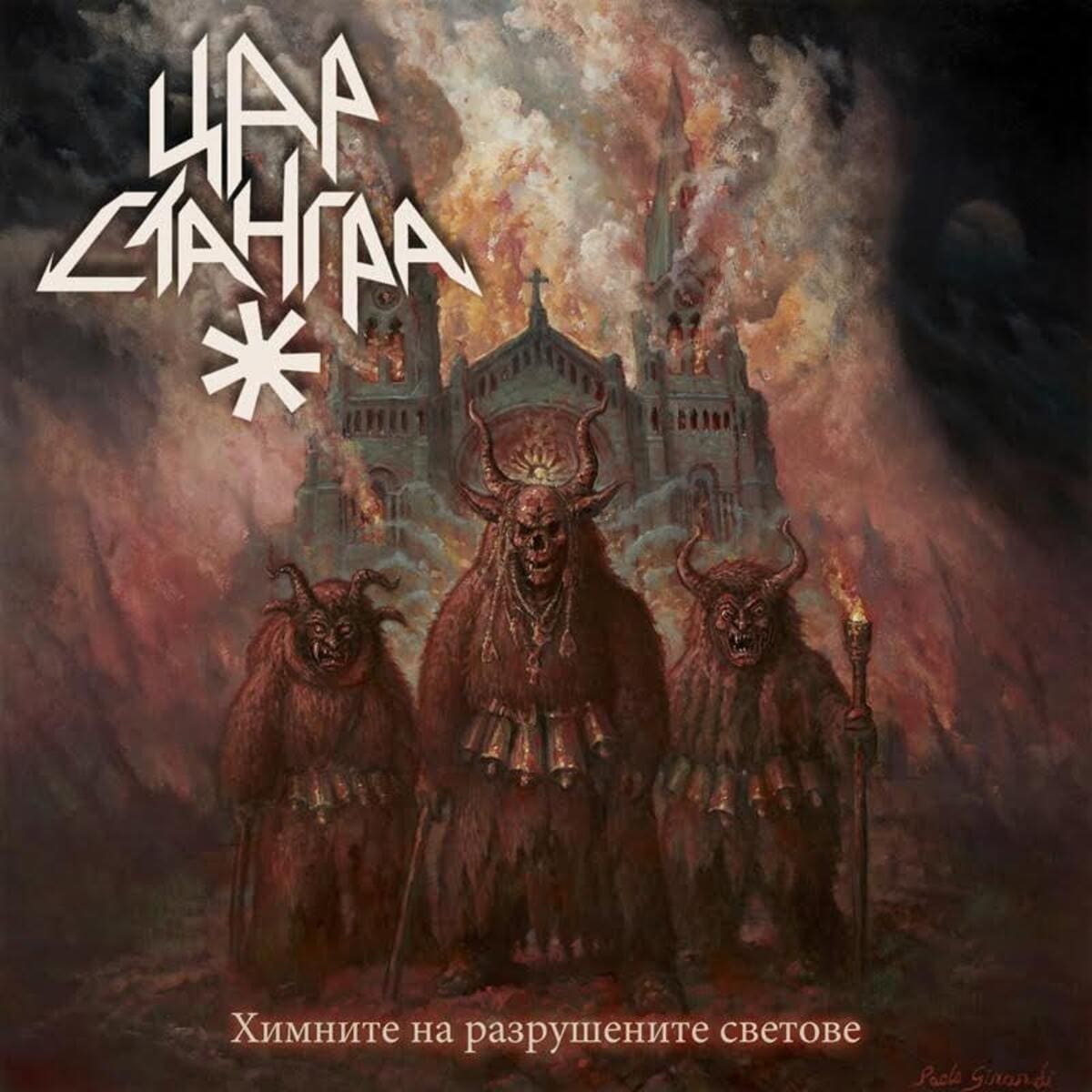
Cover art by Paolo Girardi, and he states: The artwork depicts Kukeri setting the Saint-Anne-de-Beaupré Basilica aflame. And yes—it is intentional.
This image is layered with meaning:
- The eternal conflict between Paganism and Christianity
- The violent collision of Bulgarian and Québécois cultural identities
- Kukeri, ancient ritual guardians who drive away evil—here turned against Christian domination
- A personal symbol: every rehearsal meant passing before this cathedral… a monument watching over a chapter of life now reduced to ashes Paolo Girardi added his own vision to this apocalypse:
Paganism returning to the present with all its strength and dark mystery. The ancient world rising again to crush the symbols of foolish civilization.
The Seventh Sin, Disrelish
Very little to disrelish. If anything, some listeners devoted solely to harsher or more traditional forms of black metal may find the album’s celebratory folk spirit too vibrant for their tastes.
The Hymns
01. Тракийци — Черни химни за изгубените (Thracians — Black Hymns for the Lost Ones)
02. Хан Аспарух (Khan Asparuh)
03. Черна песен(Black Song)
04. Последният поход (The Final March)
05. Тъга за Юг (Longing for the South)
06. Земни стражи (Guardians of the Earth)
07. Завръщането на родния 6or (The Return of the Native God)
08. Българският език (Bulgarian Language)
Tsar Stangra
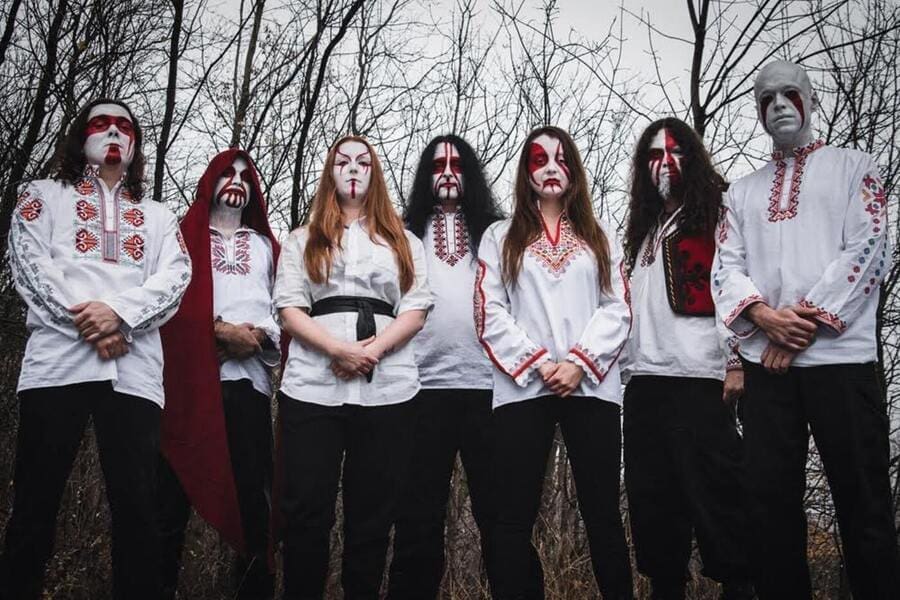
Stanislav Stefanovski — Vocals, tambura
Olivier Vaillancourt-Girard – Guitars
Samuel Paré – Guitars
Waynee Barr – Bass
Cindy Tecca – Keyboards
Simon Vaillancourt-Girard – Drums
Fanny Grenier, Teodora Stoyanova Freya – Guest Vocals