Aeonik — The Roamer of Heaven and Hell Review
Aeonik is a Luxembourg melodic black-death metal entity. On 30 April 2026, the band release their debut full-length, The Roamer of Heaven and Hell, through Fetzner Death Records.
Aeonik, The Roamer of Heaven and Hell Review: This review will evaluate every aspect of the album, from its intricate musical composition to its production.

The First Three Sins, The Summary
The First Sin, The Strings/Keys: Swedish-influenced tremolo riffing, harmonised melodic leads, and sharp acoustic contrasts forge a guitar-driven assault that balances aggression with epic structural atmosphere. The Second Sin, The Vocals: High-pitched rasps and deeper growls collide to embody the shifting tension between celestial coldness and infernal weight. The Third Sin, The Percussions: Blast-beat violence, precise double-kick patterns, and constant tempo shifts drive the nine hymns with relentless momentum and structural discipline.
The Fourth Sin, Overall Discussion
The Gateway Opens
As soon as the listener presses play, there are no fancy openings or atmospheric preludes — only pure melodic aggression. The Roamer of Heaven and Hell is a substantial journey, clocking in at just under fifty minutes and spread across nine distinct hymns.
The Vortex Between Worlds
As Fetzner Death Records states on their website: The Roamer of Heaven and Hell tells the story of a mysterious protagonist whose identity remains in the dark. The Roamer moves between dimensions and times – a motif that runs through both the music and the visuals. The band logo, a triangle with a vortex, symbolises this gateway between worlds and is a recurring element in the artwork and staging.
The Architecture of Aggression
Aeonik creates intense soundscapes where the raw aggression of death metal collides with the oppressive darkness of black metal. This is not a chaotic mess, but an uncompromising and dynamic fusion that remains instantly recognisable.
- Swedish-Influenced Riffing — strong, harmonised, and rhythmic guitar work that provides a melodic backbone to the violence.
- Blast-Driven Rawness — unfiltered passages of speed that push the intensity into the red.
- Frequent Tempo Changes — a shifting structural approach that keeps the listener disoriented yet engaged across the fifty-minute runtime.
These nine hymns function as expansive structures that breathe. Aeonik balances the relentless assault with dark atmospheres and well-placed acoustic respites. These moments of quiet do not offer comfort; they act as the void between the branches, allowing the listener to feel the scale of the journey between Heaven and Hell.
Tremolo, Steel & Tragic Grandeur
The devilmanship on display throughout The Roamer of Heaven and Hell reveals a composition that is honed to perfection. The instrumentation is exceptionally tight and powerful, sounding as if every element has been meticulously knitted together into a single, unbreakable garment of sound.
The guitars serve as the primary engine for Aeonik’s sound, heavily utilising fast tremolo lines and melodic black-death phrasing. The influence of the Swedish Dissection school is undeniable, providing a skeletal structure of icy, melodic riffing that supports the album’s epic scale.
The guitar work dynamically alternates between four distinct states:
- Aggressive Tremolo — raw and piercing lines that drive the intensity during the high-speed blast sections.
- Harmonised Leads — melodic, dual-guitar work that defines the mid-tempo passages, adding a layer of tragic grandeur.
- Atmospheric Breaks — clean and acoustic interludes that provide a sharp contrast to the distortion, acting as a momentary breath in the void.
- Lyrical Solos — rather than focusing on technical flash, the solos appear as mournful, coldly melodic extensions of the album’s emotional core.
The Pulse Between Realms
The bass follows the guitars closely, acting as a shadow to the melodic phrasing. Rather than getting lost in the mix, it adds essential warmth and body to the composition. The drumming navigates the album’s frequent tempo changes with precision, unleashing a relentless mix of blast-beats and double-kick runs that utilise sharp, cutting snare patterns that pierce through the melodic layers.
The percussion does not just provide speed; it dictates the epic structures of the nine hymns, grounding the Roamer as the journey moves between realms.
Celestial Rasps & Infernal Growls
The vocal performance mirrors perfectly the Heaven and Hell theme. The delivery is primarily composed of high-pitched rasps, embodying a cold, atmospheric black metal energy. These are punctuated by deeper, death-metal-leaning growls used for strategic emphasis.
The overall delivery is harsh, commanding, and emotionally strained, ensuring the melodic aggression is rooted in genuine human experience rather than theatrical artifice.
The Precision-Cut Void
Without the aid of keys, the atmosphere of The Roamer of Heaven and Hell is generated purely through melody, contrast, and meticulous structure. Every emotional peak and valley is carved out through the interplay of fast tremolo lines and clean, acoustic breaks. The scale of the work is felt in these shifts, moving from aggressive surges to moments of cold, structural clarity.
The production carries the signature of a modern, precision-cut workflow. It feels as though the nine hymns were tracked in a sealed chamber where no outside interference could intrude.
This creates a sound that is:
- Airtight — there is no tape-saturation or cavernous murk; instead, there is a vacuum-sealed intensity.
- Clinical yet Powerful — the lack of fuzz or raw room-sound allows the Swedish-influenced phrasing to hit with maximum transparency.
- Focused — by stripping away electronic layers, the focus remains entirely on the knitted-together instrumentation.
A Monument to Melodic Devilmanship
The Roamer of Heaven and Hell stands as a melodic, atmospheric, and entirely guitar-driven fruit of art. By eschewing the artificial, the band has crafted a monument to structural purity, where the devilmanship is found in the meticulous knitting of melody and aggression.
Descending into Finality
The album reaches its inevitable conclusion with the closing hymn, Eternal Descent. This final movement serves as the definitive end of the fifty-minute journey, pulling the listener back from the celestial heights and grounding all momentum within the finality of the void.
The Fifth Sin, The Memorabilia
For me, The Roamer of Heaven and Hell is a rare artifact that manages to be both expansive (nearly fifty minutes) and tightly knitted together. The memorabilia value lies in its ability to channel the classic Swedish melodic death/black spirit without feeling like a mere imitation; it feels like a genuine transmission from the void between worlds.
The Sixth Sin, The Artwork
The artwork reflects the Roamer as a figure caught between the blinding heights of celestial light and the crushing depths of infernal darkness.
The Seventh Sin, Disrelish
The only disrelish to be found is the sheer density of the work. With nine hymns and frequent tempo shifts, it requires a listener who is willing to commit to the entire fifty-minute descent and ascent.
The Hymns
01. Beyond
02. Scars Are What Remains
03. Where Light Fades to Ash
04. Aeonian Lights
05. Soulharvester
06. Visions
07. Ruins of the Divine
08. The Roamer of Heaven and Hell
09. Eternal Descent
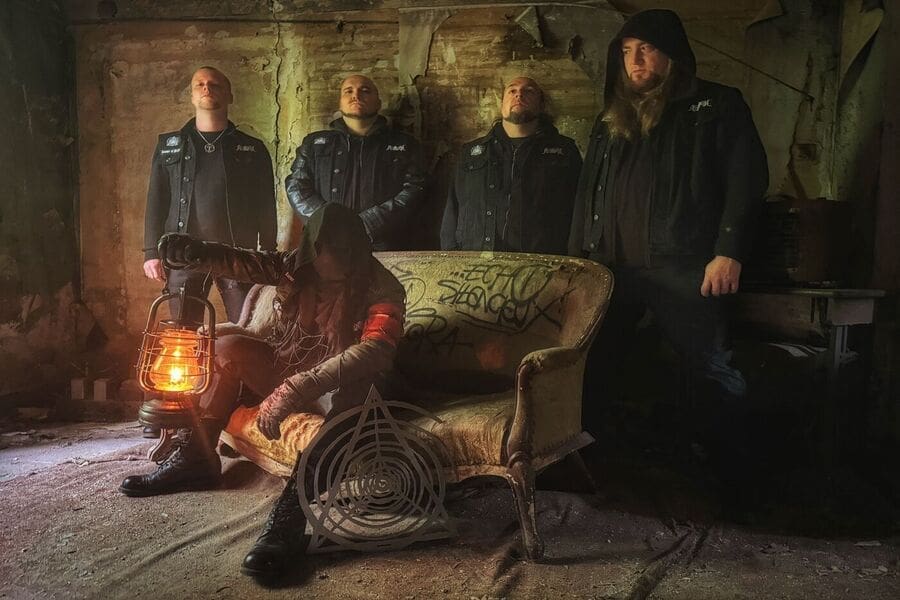
Aeonik
Änder Millim — Drums
Jeff Buchette – Vocals
Raph Gambuto – Guitar
Marc Geiben – Guitar
Tim Wilson – Bass
Hear The Music
Social Links
Fetzner Death Records | Home Page
Fetzner Death Records | Facebook