Årxøytt — Sunder Review
Årxøytt is a German one-person fourth-dimensional black metal entity. On 21 December 2025, Årxøytt released his independent debut EP Sunder — a dimensional realm transmitting messages into humankind’s reality through black metal.
Årxøytt, Sunder Review: This review will evaluate every aspect of the album, from its intricate musical composition to its production.
The First Three Sins, The Summary
The First Sin, The Strings/Keys: Frost-bitten tremolo lines and grain-laden textures favour repetition over flourish, with sparse synth layers adding cold dimension without softening the edge. The Second Sin, The Vocals: Buried, distant, and ritualistic, the vocals feel transmitted rather than performed, shifting between rasped proclamations and sermon-like invocations. The Third Sin, The Percussions: Minimalist and heartbeat-like, the drums reject spectacle — less performance, more strain.
The Fourth Sin, Overall Discussion
Invocation of Descent
The moment the listener presses play, they are plunged into a realm of fourth-dimensional black metal, five hymns spanning twenty minutes of harrowing transit.
Sunder acts as a dark portal into raw atmospheric depths, exerting a sense of glacial pressure and slow spiritual erosion. It feels as though the music is transmitting messages into our reality from a distant void, evoking visceral themes of decay, perennial frost, and the inner abyss.
Internal Collapse
While each hymn on Sunder functions as a distinct chapter, they ultimately fold into a singular, cohesive void of darkness. The opening hymn, Pain, is a suffocating, inward-turning, claustrophobic experience. It opens with a cold mid-tempo riff that feels like the slow, rhythmic tightening of a ribcage.
The vocals are buried and distant, sounding like a frantic shout from behind a thick, impenetrable wall. The drums remain simple and ritualistic—less a performance and more a heartbeat under extreme strain. Subtle synth pads are utilised not for melody, but to exert a physical sense of atmospheric pressure.
A study in internal collapse — not explosive agony, but the dull, grinding ache that never leaves.
External Fallout
If Pain is the internal collapse, the second hymn, Future, is the vast external fallout. It is a bleak, suspended hymn characterised by repetitive tremolo lines that stretch out like a horizon never quite reached. While the tempo rises slightly, the atmosphere remains completely frozen. The shift in vocal delivery is particularly striking, transitioning into something more sermon-like — from a buried cry to an authoritative, grim proclamation.
The keyboards are utilised with surgical precision, layering a thin, translucent frost over the guitars rather than softening the blow.
A vision of the future as erosion — not progress, but the slow wearing-down of the self.
Ceremonial Centre
If the previous hymns were journeys, Demiurgo, the third hymn, is a destination. It is a ritualistic, oppressive, and metaphysical ceremonial piece that anchors the centre of the record. Here, the riffs abandon linear progression, moving instead in circular patterns that mimic the cadence of a dark chant. The drums lock into a trancelike, mid-pace rhythm, providing a steady pulse for the unfolding rite.
The vocals shift seamlessly between rasped, blackened proclamations and low, chillingly calm spoken invocations.
It feels less like a song and more like a formal summoning — a ceremonial surrender to the darkness.

Elemental Drift
As the fourth hymn, Tide drifts in not as a structured composition, but as a natural force. Here, the guitars feel abandoned in favour of oscillating textures: they move like waves—rising, breaking, and receding into a vast, grey distance.
The production opens outward, creating a vast, breathless space. The synths swell and fade like a distant wind front, carrying the hymn forward with a sense of slow, inescapable pull.
A moment of surrender — not peace, but acceptance of the pull that drags everything away.
The cycle completes itself with the closing hymn, Opfer — sacrificial, final, hollow. The guitars return raw in tone; the vocals are harsher and more exposed. The tempo slows again, returning to the oppressive weight of the opener.
Negative Space & Devilmanship
Within these twenty minutes, Årxøytt delivers music executed with flawed-to-perfection devilmanship. It is a testament to the power of the singular creator: one person crafting an exacting composition and instrumental arrangement that feels both ancient and alien.
Beyond the hymns themselves, a profound sense of negative space haunts the entire recording. Instruments bleed into one another, their edges softened by a reverb that opens into blackened air. The synths do not behave as traditional musical layers; instead, they drift like weather fronts—unpredictable, cold, and enveloping.
Sunder is recorded with a deliberate austerity, embracing a raw, frost-bitten production style that strips away any sense of comfort. The mix feels intentionally distant, as if the entire EP is happening in a collapsing chamber rather than a studio.
Årxøytt’s vocals are buried, distant, almost smothered. The use of the Spanish language as a deliberate act of denouncing “god,” projected through cold shrieks and four-dimensional tones that echo into the void.
Guitars smear into cold, grainy textures — frost-bitten tremolo lines with repetitive phrasing that feels like pressure building in the skull, slightly overdriven, raw in tone — no polish, no warmth. The drums sit low and unembellished, more pulse than percussion, almost heartbeat-like. The synths: thin pads that sit behind the guitars like cold air — no melody, just atmosphere.
Sacrificial Closure
With Opfer, the album does not simply end; it is consumed. It is the sound of the shadow finally overlapping the source.
Frozen Descent
Overall, Sunder is an aggressive yet atmospheric fruit of art. The EP moves from internal pain to fatalistic vision, to metaphysical confrontation, to surrender, to sacrifice.
It is a small release, yet the emotional gradient is deliberate and coherent — a descent carved in ice.
The Fifth Sin, The Memorabilia
For me, Sunder transcends the label of black metal; it is something else entirely. While it begins within the familiar structures of the genre, the transition into the fourth hymn—a move into atmospheric instrumentalism—breaks the initial aggression. By the closing piece, the EP has folded into a dense, dark atmospheric-ambient aura.
It feels like five-dimensional realms collapsed into a single cohesive void.
This is a bridge for those who walk between traditional raw black metal and the experimental frontiers of post-black metal. While some might view the fourth hymn, Tide, as a mere intro or outro, its placement is vital—it serves as a necessary breather, a moment of suspension before the final sacrifice.
The Sixth Sin, The Artwork
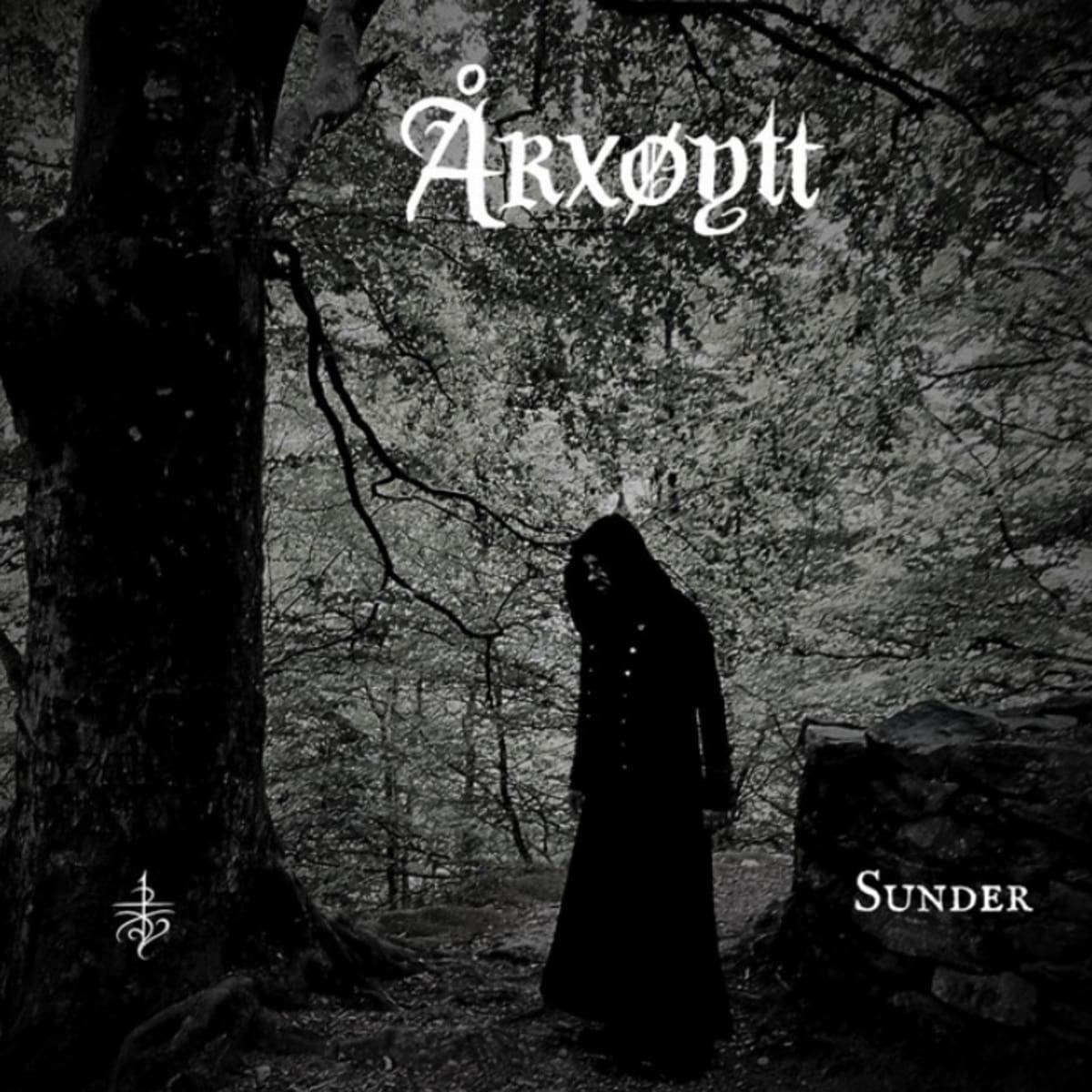
The artwork occupies a strange middle ground; it is neither the best nor the worst, yet it possesses a captivating quality. It acts as the visual threshold for the frost-bitten sounds contained within.
The Seventh Sin, Disrelish
There is very little here to disrelish. One could argue that Sunder is too short—that it demands more time—but would a longer duration spoil the purity of the EP? Perhaps not. Besides, that is precisely why the devil invented the re-play button.
The Hymns
01. Pain
02. Future
03. Demiurgo
04. Tide
05. Opfer
Årxøytt
Årxøytt — Everything