Kartel — Ordo Karnivora Review
Kartel is an Indonesian crossover/hardcore entity, weaponising thrash-leaning aggression with street-level hardcore intensity. On 5 December 2025, the band released their independent debut release, Ordo Karnivora — a raw and relentless statement rooted in speed, impact, and urban hostility.
Kartel, Ordo Karnivora Review: This review will evaluate every aspect of the album, from its intricate musical composition to its production.
The First Three Sins, The Summary
The First Sin, The Strings/Keys: Relentless thrash-leaning down-picking fused with hardcore chug patterns—barbed-wire riffs, built for impact. The Second Sin, The Vocals: Street-level hardcore vocals: shouted, rhythmic, and confrontational—pure riot voice, no theatrics. The Third Sin, The Percussions: The drums are the factory heartbeat: tribal, punchy, and raw—driving the chaos with disciplined force.
The Fourth Sin, Overall Discussion
Invocation of Smoke (Tetap Berasap)
The moment the listener invokes the opening hymn, Tetap Berasap, they are met with a creeping instrumental introduction—a slow-burning fuse designed to heighten the senses for the ritual ahead. This is not just an intro; it is a calculated build-up into a state of pure, headbanging extremity.
From there, the atmosphere fractures before transitioning seamlessly into the remaining nine hymns of raw, carnivorous chaos.
Hardcore–Thrash Devilmanship (Urban Pressure & Teeth)
Ordo Karnivora weaponises the barbed-wire speed of thrash, the aggression of industrial city hardcore punk, and is fuelled by a jagged punk rock bite. The result is a sound rooted in urban pressure and street-level anger—raw, politically charged, and driven by the baleful tumult of industrial chaos that gnaws at the edge of sanity.
This is a pure hardcore-thrash hybrid, defined by aggressive, riff-driven songs rooted in a heavy metal backbone, charged with hardcore urgency. Both the guitars and vocals mirror the texture of Tangerang’s industrial landscape: abrasive, compressed, and intentionally claustrophobic.
Beneath the chaos lies a tight, calculated devilmanship. The compositions and arrangements are honed to perfection, striking a lethal balance between instrumental precision and raw power.
Barbed-Wire Riffs & Concrete Bass
The guitar tone is mid-gain and deliberately abrasive—dry, sharp, and percussive. With almost no reverb and a close-mic’d intimacy, the sound mimics a rehearsal room trapped within the concrete shell of an industrial plant.
The guitar work is a relentless display of fast, thrash-leaning down-picking fused with heavy hardcore chug patterns. These are not melodies; they are riffs built on rhythmic insistence, acting as the album’s engine—driving momentum and forging the urban-industrial tension that defines the record.
Providing the foundation, the bass is thick, warm in the low-midrange, and slightly overdriven. It sits heavily beneath the guitars, acting as the glue that prevents the sharp, abrasive tones from sounding thin. It adds massive weight to the sound without ever stepping out of line, ensuring the sonic wall remains impenetrable.
Factory-Heart Percussion
The drums are the heartbeat of the factory—tribal, punchy, and unpolished in the best way possible. They possess a room presence that makes you feel the air moving around the kit. The snare work is particularly sharp: a crisp, metallic crack that echoes through the mix. This is not a studio-perfect snap; it is a raw, jagged strike that feels immediate and dangerous. It is the sound of wood hitting metal in a hollow space, anchoring the hymns in a grounded, physical reality.

Riot Voice (Bahasa Indonesia as Weapon)
The vocals are stripped of theatricality—shouted, rhythmic, and purely confrontational. Rejecting the tropes of metal growling, the delivery stays rooted in street-level hardcore.
Throughout Ordo Karnivora, Kartel perform almost entirely in their native Indonesian. The vocal delivery, phrasing, and sharp political edge sit naturally within Bahasa Indonesia, reinforcing the album’s street-level realism. By leaning into this identity rather than pivoting to English, the band keep the lyrics grounded in the specific social conditions they are documenting. It is a refusal to sanitise their message for a global market.
There is a slight saturation to the tone, giving the voice a megaphone-like edge that cuts through the industrial chaos of the mix. By avoiding heavy effects, the vocals retain a raw, midrange-forward presence. It doesn’t sound like a recording from a studio booth; it feels like a shout emerging from the centre of a riot, immediate and unignorable.
The Raw Truth (Production & Pressure)
The production on Ordo Karnivora strikes a lethal balance between modern tightness and a raw, aggressive edge. The mix rejects high-gloss sheen in favour of midrange dominance, ensuring the riffs — and the political urgency of the message — hit the listener first.
There is a palpable DIY ethos throughout the recording; the hymns feel like they were tracked live, or semi-live. It is the sound of a sprawling studio captured like a tight room. Through close-mic techniques and minimal ambience, the record captures the friction of a band playing together in a confined space—prioritising collective energy and raw grit over sterile perfection.
In truth: the record thrives on minimal studio gloss: there are no layered guitar stacks, no hyper-edited drums, and none of the sterile processing of modern metal. A glossy production would have undermined the urgency of the message. Instead, the rawness becomes a vital part of the storytelling—the grit under the fingernails of the music that makes every word feel earned.
Ordo Karnivora captures the pressure of life in an industrial city, where corrosive power, war, violence, and the slow erosion of human empathy form a continuous thread throughout the album. The record reflects brutal yet familiar realities: systems that dominate, bodies that endure, and minds pushed to their limits. — Kartel (press pack)
Urban Decay Captured in Real Time
Ultimately, Ordo Karnivora is the dirty and aggressive fruit of extreme art. The album breathes; it avoids being brickwalled into sonic oblivion, remaining loud without ever becoming sterile.
There is a tangible sense of air between the instruments, breathing life into the mix and providing a communal, live energy. It is the sound of urban decay captured in real-time—a ritual that refuses to be polished.
After the Hymns: Echoes in the Mind
The album closes, the music fades, but the urban decay still echoes in the foreground of your mind.
The Fifth Sin, The Memorabilia
For me, Ordo Karnivora does not feel like hardcore punk or crossover thrash—it sits between the two, as something different. Kartel have crafted a sound I’ve rarely encountered: raw, occasionally catchy, heavy, and rooted in underground street influence.
Of course, this depends on the listener—but at times I hear a faint echo of Sepultura’s Roots: that percussive, stomping, primal groove/tribal presence. It’s strongest in the mid-tempo, chest-caving sections where the riffs breathe, and the rhythm turns into a ritual march—primitive, stomping, and built for the listener’s neck to obey.
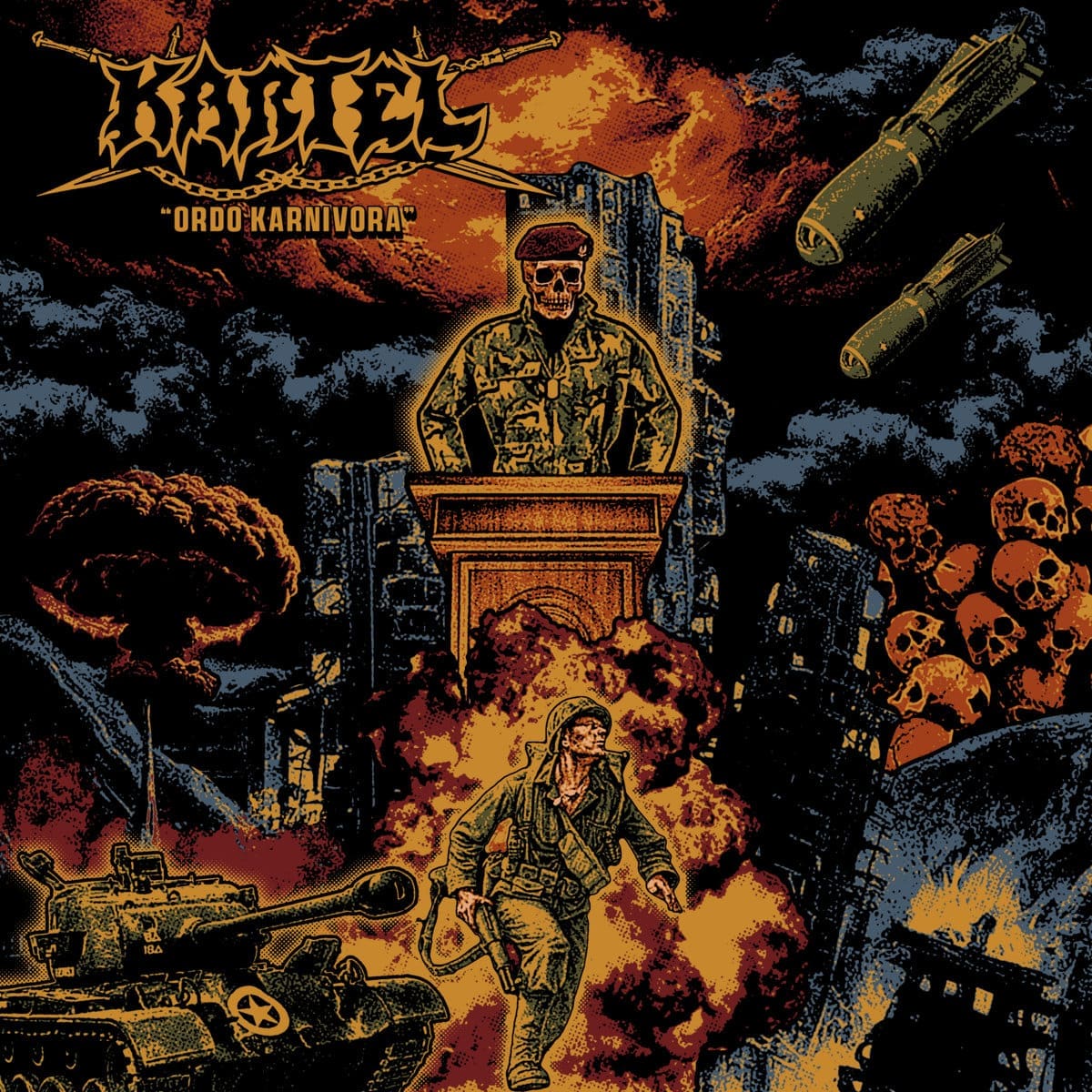
The Sixth Sin, The Artwork
The artwork isn’t merely thematic—it feels ritual-coded, stitched into the record’s violent atmosphere and lyrical intent. It reflects the same industrial ceremony found in the music: raw, confrontational, and carved from urban pressure.
The Seventh Sin, Disrelish
There is nothing here to disrelish. Ordo Karnivora is a fierce offering of hardcore and thrash metal—delivered with grit, discipline, and pure underground intent. Even if hardcore or crossover isn’t your usual taste (as with one of my many distastes), this is not something to disrelish—it’s something to relish.
The Hymns
01. Tetap Berasap
02. Propaganja
03. Outsor(((jing)))
04. Ordo Karnivora
05. Sinaloa
06. Berapi
07. Bermain Jiwa
08. Soah
09. Pesta Terlarang
Kratel
Rilo Pambudi — Vocals
Dhika Chriswara — Guitar
Dani Andrean — Drums
Komarrudin — Bass