Ludus Umbrarum — Ascensus Cadentium Review
Ludus Umbrarum is an Serbian symphonic black metal entity. On 22 May 2026, Ludus Umbrarum will released their third debut full-length, Ascensus Cadentium, through Darkside Records.
Ludus Umbrarum, Ascensus Cadentium Review: Based upon a promotional copy provided ahead of release, this review will evaluate every aspect of the album, from its intricate musical composition to its production.
The First Three Sins, The Summary
The First Sin, The Strings/Keys: Sweeping symphonic orchestration, dream-occult atmospherics, serrated tremolo riffcraft, and haunting piano-led passages forge a vast cinematic landscape suspended between spiritual ruin and cosmic ascension. The Second Sin, The Vocals: Grain-scoured ritual rasps, whispered invocations, spectral vocal layers, and commanding narrative delivery transform each hymn into a descent through the subconscious abyss. The Third Sin, The Percussions: Controlled blast-beat deployment, precise rhythmic architecture, and powerful narrative-driven drumming provide a disciplined foundation beneath the album’s symphonic grandeur.
The Fourth Sin, Overall Discussion
The Gates of Ascension
As soon as the listener presses the play button, the grand gates of the underworld slowly turn on their hinges. The opening hymn, Ascensio Arcana, greets the listener with a deeply atmospheric opening — a cinematic gathering of shadows that builds a palpable tension for what is about to come.
Dreams Beyond the Mortal Veil
As the journey continues through the remaining hymns, the full scale of this forty-six-minute opus gradually reveals itself. Emerging, not merely as a collection of hymns — but a fusion of relentless, aggressive black metal, atmospheric and symphonic elements, haunting orchestration, and melancholic passages that draw from the darkness of the human psyche, occult philosophy, and visions beyond mortal perception.
Thus, the album creates a cinematic and immersive experience, resulting in a hauntingly exquisite dichotomy — akin to a portal revealing a neglected chamber of the soul:
- The raw black metal components represent the fracturing of the mind — the violent, chaotic reality of spiritual ruin.
- The haunting orchestration represents transcendence — the vast, terrifying beauty of the cosmic unknown.
- The production favours clarity over empty spectacle, and deep atmosphere over modern studio gloss
- Together, these elements create a controlled, inward-facing soundstage where every component serves the album’s dream-submerged descent.
It is a musical translation of a lucid nightmare, capturing the exact moment the soul detaches from reality to gaze into the infinite.
The Architect of the Ritual
At its core, Ascensus Cadentium is a solo creation. The project’s mastermind handles the entirety of the songwriting, lyrics, instrumentation, and intricate drum programming, alongside the additional vocal contributions of Nino Đurić.
To manifest a vision this vast and multi-layered from a singular mind requires a devilmanship of the highest order. The composition of the instrumentation and the grand architecture of the music are tightly controlled, ensuring the narrative never loses its way in the dark.
Yet, to fully unlock the hidden corridors of the subconscious, the architect summoned a select circle of key collaborators to leave their mark on the ritual:
- Srđan Todorović — delivers the dominant lead vocals, acting as the primary, commanding voice slicing through the symphonic chaos.
- Alesha Hurlock — provides guest vocals to Her Screams From Depths, adding a harrowing contrast to the aggression.
- Nikola Dušmanić — presents session drums on the final assault of track nine.
Sub-header IV
The synthesisers are the atmospheric bloodstream of the album — the vital element that elevates the release from standard black metal into something far more cinematic, surreal, and occult.
Rather than fighting the guitars for dominance, the keys are woven into the very fabric of the mix to define the album’s dream-occult character.
Ludus Umbrarum employs sweeping choir pads, ominous low drones, and shimmering, high-end layers that feel suspended in air. These are punctuated by occasional bell-like tones, solemn organ notes, and dramatic piano swells that rise and fall like a tide of shadows.
The keys serve three distinct purposes across these hymns:
- First, they construct a sacred, ritual space around the feral guitars, giving the raw metal a vast cavern to echo within.
- Second, they guide the emotional contour of the narrative arc—surging majestically during motifs of cosmic ascension, and thinning out into fragile, icy lines during moments of psychological collapse and spiritual ruin.
- Third, they function as a silver veil rather than a lead instrument, ensuring that the raw, aggressive core of the project remains grounded in the black metal underground while the atmosphere touches the infinite.
The Serrated Spine
If the synths are the bloodstream, the guitars are the spine of the album. They are cold, serrated, and deliberately layered to create an intense sense of vertical pressure over the listener.
The fretwork lies in its refusal to play it safe. It favours fast tremolo lines that utilise striking intervallic movements rather than simple, predictable scalar runs. Furthermore, the chord shapes often stack seconds and fourths, injecting an unstable, tilted harmonic feel into the atmosphere.
This relentless speed is broken up by occasional slower, doom-leaning passages. In these heavy down-tempos, the distortion is allowed to bloom into a thicker, more atmospheric smear, letting the weight of the notes hang in the air like black fog.
The Pulse Beneath the Shadows
Beneath this wall of razor-sharp wire, the bass operates as a subtle but vital force. It is felt more than it is heard, occupying the lowest depths of the recording. The percussion serves as the rhythmic engine, alternating seamlessly between compact, focused strikes and broader, sweeping surges.
This gives the entire forty-six-minute runtime a defined, breathing pulse that perfectly supports its more expansive, symphonic passages.
Rather than relying on continuous, blinding speed, the album uses blast beats with deliberate restraint. They are present but not constant — employed strictly as sharp punctuation rather than background wallpaper.
This authoritative drumming remains beautifully subservient to the overarching atmosphere, driving the narrative forward with immense power while never stealing focus from the dream-occult visions floating above the mix.
Voices from the Subconscious Abyss
The primary vocal force belongs to Srđan Todorović, whose grain-scoured, sermon-like rasp serves as the central ritual conduit across the entire album. His delivery is authoritative and incantatory, cutting through the cold, serrated production with a controlled ferocity that defines the record’s narrative voice.
Project architect Nino Đurić intentionally contributes additional vocal textures that lurk beneath the surface: whispered invocations, atmospheric layers, and shadow-voices woven tightly beneath the lead.
These are not competing lines, but crucial ritual accents that reinforce the album’s occult atmosphere while leaving the primary narrative firmly in Todorović’s hands.
The Descent Complete
The album comes to a close with Her Screams From Depths, which expands the palette into a dual-aspect invocation. While Todorović’s lead remains the dominant force, he is joined by guest vocalist Alesha Hurlock. Her voice haunts alongside his rather than replacing it, creating a harrowing, two-voiced descent that closes the album in a chamber of echoing ruin.
This final ritual is further distinguished by the live drums of Nikola Dušmanić. His performance gives the closing hymn a raw, physical, and breathing weight that contrasts beautifully with the programmed precision found elsewhere on the record.
Overall, Ascensus Cadentium is a work of relentless fury and a genuinely ritualistic fruit of art.
The Fifth Sin, The Memorabilia
For me, Ascensus Cadentium embodies a raw, aggressive black metal style that carries the classic, majestic weight of titans like Emperor and early Dimmu Borgir, yet it remains a distinctly original entity. It successfully evokes a haunting, deeply dark atmosphere—a deliberate journey through psychological chaos, esoteric revelation, and ultimate spiritual collapse.
While all nine hymns feel like a calculated descent through spiritual ruin, transcendence, and the hidden corridors of the subconscious, the specific path that completely captivated me was the sixth hymn, Psalm 666. This hymn stands as the pinnacle of the album’s devilmanship, capturing the perfect equilibrium between symphonic majesty and feral violence.
The Sixth Sin, The Artwork
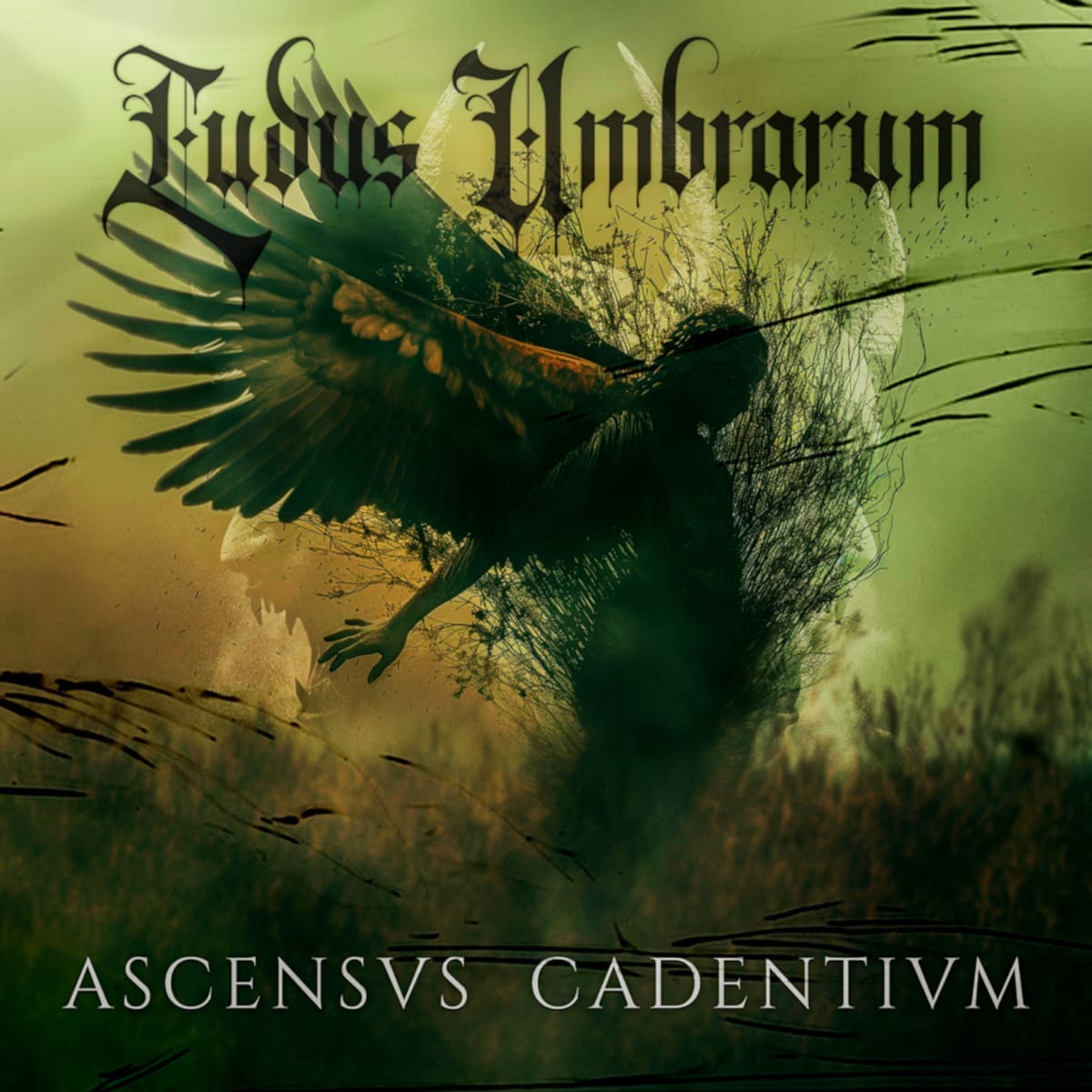
The artwork depicts a shrouded seraph caught in a timeless freeze between holy ascent and total annihilation. Its wings unravelled in a toxic, green-lit void — a striking visual representation of the ego fracturing into pieces as it steps into the dream-occult unknown.
The Seventh Sin, Disrelish
I find very little to disrelish across this entire forty-six-minute opus. Every element has been placed with solitary, home-forged precision, making the challenge of mapping its psychological terrain an addictive and deeply rewarding experience for anyone who appreciates the high art of the extreme underground.
The Hymns
01. Ascensio Arcana
02. Severed Will
03. Venefica Carnalis
04. Baptized in Sanguine
05. Spectral Dominion
06. Psalm 666
07. Gospels of the Hollow Breed
08. Monarchia Daemonum
09. Her Screams from Depths (Bonus hymn)
Ludus Umbrarum
Nino Đurić — Additional Vocals, All instruments, Drum programming, Songwriting, Lyrics
Srđan Todorović – Lead Vocals
Alesha Hurlock – Vocals
Nikola Dušmanić – Drums on hymn nine