Nachtkreatur — Kreaturenkrankheit Review
Nachtkreatur is a German raw/experimental black metal entity. On 26 June 2026, the band re-released its independent debut full-length, Kreaturenkrankheit (originally released on 31 October 2025), through Fetzner Death Records.
Nachtkreatur, Kreaturenkrankheit Review: This review will evaluate every aspect of the album, from its intricate musical composition to its production.
The First Three Sins, The Summary
The First Sin, The Strings/Keys: Abrasive, dissonant guitar work rejects conventional melody, carving diseased soundscapes through raw distortion, primitive tension, and relentless psychological unease. The Second Sin, The Vocals: Dual vocal performances fuse tortured screams with ritualistic snarls, creating a fractured dialogue of madness, decay, and inhuman despair. The Third Sin, The Percussions: Cold, mechanical drum programming unleashes repetitive, industrial rhythms that intensify the album’s suffocating claustrophobia and relentless dehumanisation.
The Fourth Sin, Overall Discussion
The First Infection
The instant that play button is pressed, Kreaturenkrankheit does not welcome the listener with open arms. Instead, this creature born under the cover of darkness greets you with an experimental, dark, raw, and thoroughly diseased blackened abyss.
It is a psychologically unhinged threshold that refuses comfort, immediately plunging the listener into a cold, predatory environment where all familiar musical anchor points are stripped away.
Beneath Human Skin
As the listener continues their desperate journey through a passage of over forty-four minutes, spread across thirteen hymns, the record delves deeply into the terrifying abyss of total dehumanisation. Kreaturenkrankheit is no ordinary work of extreme music; it functions as a relentless, unforgiving glimpse into the madness and horror hidden just beneath the fragile human surface.
Warning to thee:
- This is no casual walk in the park
- Nor is it music that has any intention of holding the listener’s hand
- It is a confrontational, experimental vacuum designed to test psychological limits
Every Creature Has a Voice
Nachtkreatur explains, each song tells the story of a distinct creature – trapped between pain, hunger, and decay. Themes such as cannibalism, mental breakdown, and physical degeneration are powerfully conveyed through the raw sound, distorted soundscapes, and haunting screams.
The album deliberately leaves plenty of room for interpretation.
At times, it feels like a dark ritual, at others like the confession of a being that has long since lost all trace of humanity.
Engineering Disease
The devilmanship within Nachtkreatur is far more than merely honed to perfection; it is a pure, unadulterated nightmare. This project functions as a terrifying dual manifestation orchestrated by Graf Ares on vocals alongside Køldbrynger handling dual vocal duties, strings, and percussion programming. Together, they craft a sonic architecture built around abrasive guitars, a heavy subterranean bass presence, dual feral vocals, and cold, mechanical drum programming — all meticulously engineered to feel completely diseased, claustrophobic, and actively hostile to the listener.
Two Mouths Sharing One Singular, Horrific Infection
The vocal delivery from both Ares and Køldbrynger acts as the primary vehicle for the album’s psychological horror. When two different entities describe the same human decay from entirely different psychological perspectives, their voices blend to create a terrifying dialogue of sickness.
- Ragged, tortured screams that communicate a sense of complete psychological rupture, balanced against lower, far more controlled snarls delivered with a cold, ritualistic cadence
- The unhinged vocal frontline resembles multiple fractured personalities fighting for control within the same diseased consciousness
- These screams and cavernous roars sound less like traditional singing and more like a desperate, unhinged dialogue born from the depths of isolation, instantly heightening the record’s diseased atmosphere
Strings of Rust and Rot
Beneath this vocal warfare, Køldbrynger’s instrumentation constructs a towering, inescapable cage. The guitar functions as the album’s primary carrier of sickness, scratches and scrapes with an abrasive, razor-sharp edge, refusing any classic melody in favour of raw, dissonant tension. Carving out a sonic landscape that feels significantly closer to rusted, jagged metal being forcefully dragged across cold stone than to any form of conventional extreme metal riffcraft.
The guitar tone itself is a dry, completely sandblasted distortion stripped of almost all low-end bloom; instead, the upper mids are sharpened to an agonising, painful edge that slices directly through the mix. The songwriting trades traditional structure for short, looping phrases that feel like severe psychological compulsions rather than standard melodies. Tremolo lines relentlessly fray at the edges, dissolving into chaotic static, while occasional lurching, primitive chord-stabs interrupt the momentum like sudden physical jolts.
This is thickened by a subterranean bass frequency that rumbles beneath the surface like a shifting tectonic fault line.
Mechanical Ritual
The percussion is entirely programmed, but it is executed with clear, malicious intent — not to mimic modern, sterile precision, but to feel purposefully inhuman, freezing cold, ritualistic, mechanically and completely unyielding. Køldbrynger weaponises dry, snapping kicks, brittle snares, and cymbals that hiss aggressively through the static like steam forcefully escaping a cracked pipe.
The percussion relies heavily on repetitive, hammer-like industrial rhythms that systematically reinforce the album’s intense, suffocating claustrophobia and a clinical conveyor belt of dehumanisation.
The Architecture of Madness
The sonic engineering of Kreaturenkrankheit rises like a towering wall — a suffocating monolith of sound assembled entirely from deranged geometry and impossible angles. The final mix entirely refuses to open outward; instead, it aggressively presses inward, folding the listener into a claustrophobic chamber whose very architecture seems to mutate as you listen.
Every single instrument on the record feels mortared into place with some unnameable, toxic substance. The guitars are stacked heavily like massive slabs of cursed stone whose very grain actively crawls, while the bass seeps menacingly through the structural cracks like thick black ichor. The automated drums hammer forward with the dull, clinical inevitability of heavy machinery built by hands that simply should not exist.
Vocals seep directly from raw fissures in the instrumentation, as if the wall of sound itself has grown physical mouths, whispering and screaming in ancient languages specifically designed to erode sanity. Clearly, nothing inside this mix breathes. Nothing releases. The entire production stands as a static, impossible edifice — a monumental sonic testament to pure madness, where every single frequency feels meticulously carved from the same diseased masonry.
The Forbidden Experiment
Ultimately, Kreaturenkrankheit is far more than just music; it stands as a severe psychological experiment in pain, a harrowing journey through the absolute deepest shadows of human existence, and a defiant manifesto for all those who do not fear the darkness. They find their ultimate truth buried within it.
At its core, this record is pure, unadulterated diseased ritual horror-metal with heavy black-metal contamination — raw, devastatingly honest, and born deep from the prehistoric darkness.
It stands as a psychological, forbidden fruit of art that crafts a suffocating soundscape that constantly oscillates between unhinged frenzy and despair.
The Final Sedative
This monolithic architecture reaches its final threshold not with a burst of fury, but with a terrifying lullaby from the abyss. The album closes with the final track, Schlaflied, which introduces a frail, skeletal piano melody and those unsettling voices of the void.
It is the creature’s last breath, the wall’s final whisper, and the exact moment where the sickness stops screaming and simply remains.
The Fifth Sin, The Memorabilia
For me, I have come across many bands that are atmospheric, suffocating, ritualistic, raw, or brutally heavy — but Kreaturenkrankheit goes far beyond all of that.
The strings scrape with razor-sharp malice and the dual vocals bleed the ears, but it is the drumming and the overwhelming sense of psychological dissonance that seal the experience.
- Despite being entirely programmed, those hammering, ritualistic, mechanical beats relentlessly batter both the mind and the senses
- Before this review was even half complete, I found myself physically stepping away from the headphones. Not because the record lacked quality, but because its oppressive psychological intensity demanded distance before I could continue
The Sixth Sin, The Artwork
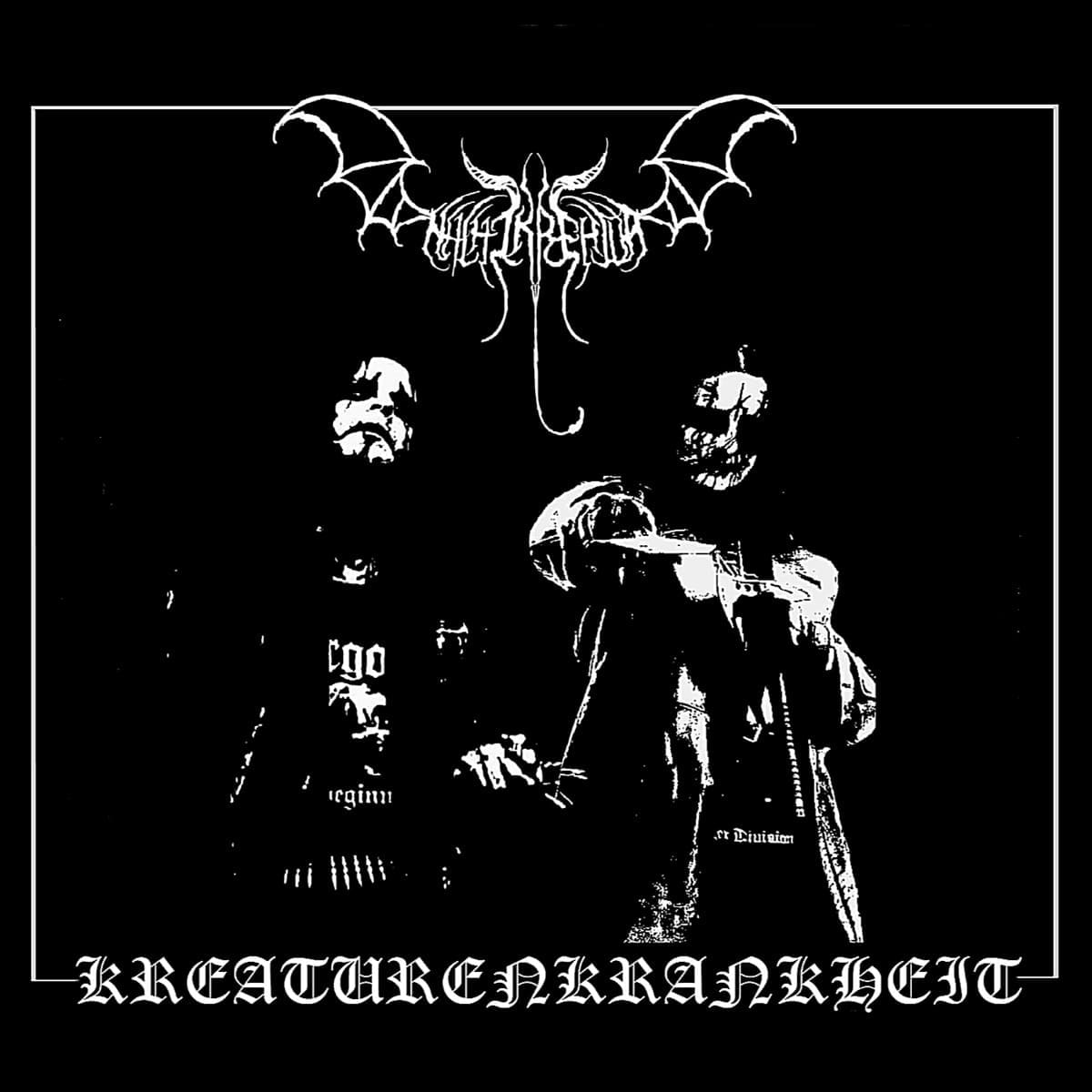
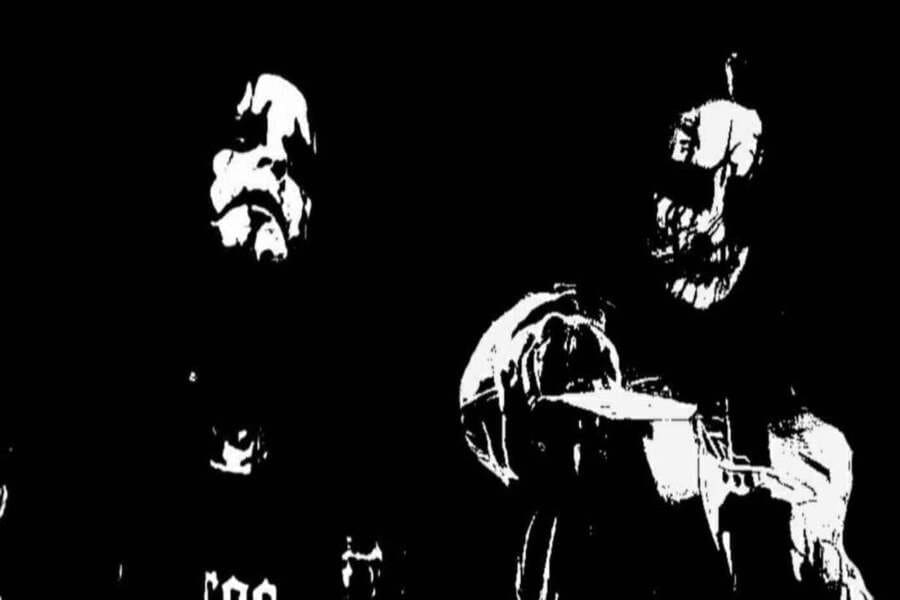
The visual presentation acts as a perfect time-capsule to the origins of the underground, showcasing the classic, iconic Norwegian black metal aesthetic. Utilising a raw, stark, black-and-white band image, the artwork strips away any modern digital pretence or over-produced commercial graphics.
The Seventh Sin, Disrelish
I find nothing to actively disrelish across this entire, blistering release. Every abrasive decision serves the album’s singular artistic vision. Within the boundaries it deliberately establishes, Nachtkreatur achieves exactly what it sets out to create.
The Hymns
01. Kreaturenkrankheit
02. Mein Himmel
03. Nacht der Dämonen
04. Dämmerfluss
05. Stahlwerk Satans
06. Letzter Schrei
07. Totenschlange
08. Teufelswache
09. Meine hasserfüllten Schwingen
10. Schattenscänder
11. Verblutet und Vergessen
12. Fahlgestalt
13. Schlaflied
Nachtkreatur
Graf Ares — Vocals, Lyrics
Køldbrynger – Vocals, Guitar, Bass, Programming, Lyrics
Svartscorpio – Piano on the closing hymn
Hear The Music
Social Links
Fetzner Death Records | Home Page
Fetzner Death Records | Facebook