Nothing New In Heaven — Crossing The Bloodred Sea Review
Nothing New In Heaven is a French melodic death metal entity. On 31 October 2025, the band unleashed their latest independent release, Crossing The Bloodred.
Nothing New In Heaven, Crossing The Bloodred Review: This review will evaluate every aspect of the album, from its intricate musical composition to its production.
The First Three Sins, The Summary
The First Sin, The Strings/Keys: Tight, high-gain melodic death riffing with neoclassical lead work—balancing precision and atmosphere without excess. The Second Sin, The Vocals: Mid-range growls, and sharper screams delivered with control—expanded by guest voices that deepen the ritual weight. The Third Sin, The Percussions: Programmed precision with disciplined double-kick drive—shaping momentum without overpowering the composition.
The Fourth Sin, Overall Discussion
The First Tide Rises
From the first notes of Fall of the Believer, Crossing The Bloodred Sea establishes itself as a monolith. The opening hymn pairs a sweeping instrumental swell with spoken-word delivery, creating an atmosphere of impending dread that feels both ancient and cinematic.
The Breaking of the Waters
Once the atmosphere breaks, Fall of the Believer unleashes a composition as aggressive as it is melodic—a dual energy that carried across the remaining four hymns. Across this twenty-minute journey, the band sounds markedly more composed than on their previous releases; the songwriting is sturdier, more structured, and undeniably more formidable.
Echoes of the Northern & Wintry Flame
While the band’s foundation was forged in the icy technicality of the Finnish scene, Crossing the Bloodred Sea transcends simple homage. It draws from the neoclassical precision and duelling-lead architecture of Children of Bodom, the frostbitten aggression of Norther, and the sweeping, cinematic grandiosity of Wintersun.
Yet rather than mimicking the frantic party-metal energy of their predecessors, Nothing New In Heaven grafts these elements onto the dramatic pacing and mythic atmosphere of the French scene.
The result is a crystalline production where themes of seekers and salvation breathe within a sophisticated, high-definition framework.
The Twin Architects of Passage
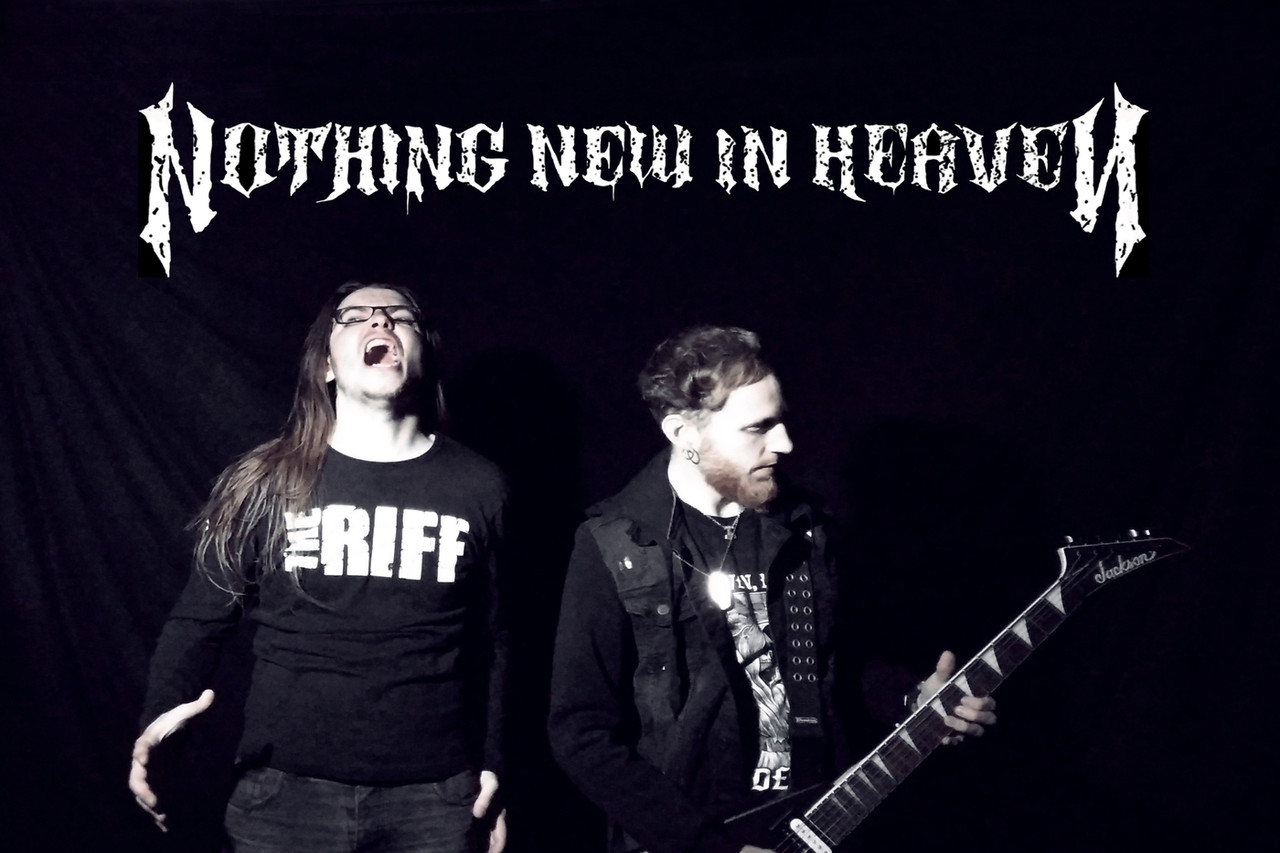
The sheer scale of Nothing New In Heavenstems from a two-man devilmanship. Alexandre Hoerner acts as architect—commanding the guitars, bass, keyboards, and drum programming—while Simon Cousin delivers the voice for this descent. Together, they build a composition as vast and unrelenting as the seven seas.
Strings Beneath the Waves
Alexandre Hoerner’s string work forms the spine of the record. Rhythm tracks hinge on tight, palm-muted riffing and articulate mid-to-high gain chugging, even at peak intensity. The lead work carries the emotional weight—particularly on Waves of Salvation and the title hymn—where occasional tremolo picking mirrors the surging, unpredictable pull of the sea.
Choirs in the Deep
Rather than taking a lead role, the synths function as a spectral backdrop. Low-mix string and choir pads bloom beneath the choruses, widening the stereo field and adding an ecclesiastical weight. Reversed swells and low-frequency drones ensure the quieter passages feel just as vast as the high-gain sections.
The Measured Storm
The drum programming exemplifies modern precision. Through sample-reinforced kicks and snares, the duo achieves a consistent, tight foundation, allowing cymbal detail to shimmer in the overheads.
More than a backbeat, the percussion shapes the record’s narrative arc—pulling into sombre intros before surging into climactic crossing sections driven by punishing double-kick patterns.
The Many Voices of the Sea
Simon Cousin’svocals anchor the record’s narrative weight, shifting between authoritative mid-range growls and piercing screams. On Crossing the Bloodred Sea, that isolation fractures. Guest vocalists—Alexia, Lucie JB, Louis Dorigny, and Clément Dellis—introduce contrasting timbres that move through the record like figures in a pagan drama.
These contributions deepen rather than soften the impact, layering ritual tension and human texture into the symphonic framework. What emerges is no longer a solitary voice, but a multi-voiced crossing of the symbolic sea.
The Vessel Made Whole
Crossing the Bloodred Sea bears the razor-sharp hallmark of multi-track precision. Eschewing live unpredictability, it is deliberately constructed—layer by layer—into a towering wall of sound.
Every element is tight, bright, and controlled. The mix centres on the interplay between guitars and vocals, with carefully sculpted midrange ensuring clarity without collision. The result is a high-fidelity experience where atmosphere is delivered with modern, punchy precision.
The Strength of the Crossing
Overall, Crossing the Blooded Sea stands as a stronger, more refined fruit of art—focused, deliberate, and structurally assured.
The Sea Does Not Release
As the hymns recede into the ghostly sea, their presence lingers—cold, suspended, and echoing through the air long after the final note.
The Fifth Sin, The Memorabilia
Crossing the Bloodred Sea is a significantly stronger fruit of art than its predecessors. It exists within a transitional space—firmly rooted in melodic death metal, yet extending beyond its conventions.
The record functions as a vessel, bridging frostbitten technical aggression with expansive, cinematic atmosphere.
The Sixth Sin, The Artwork
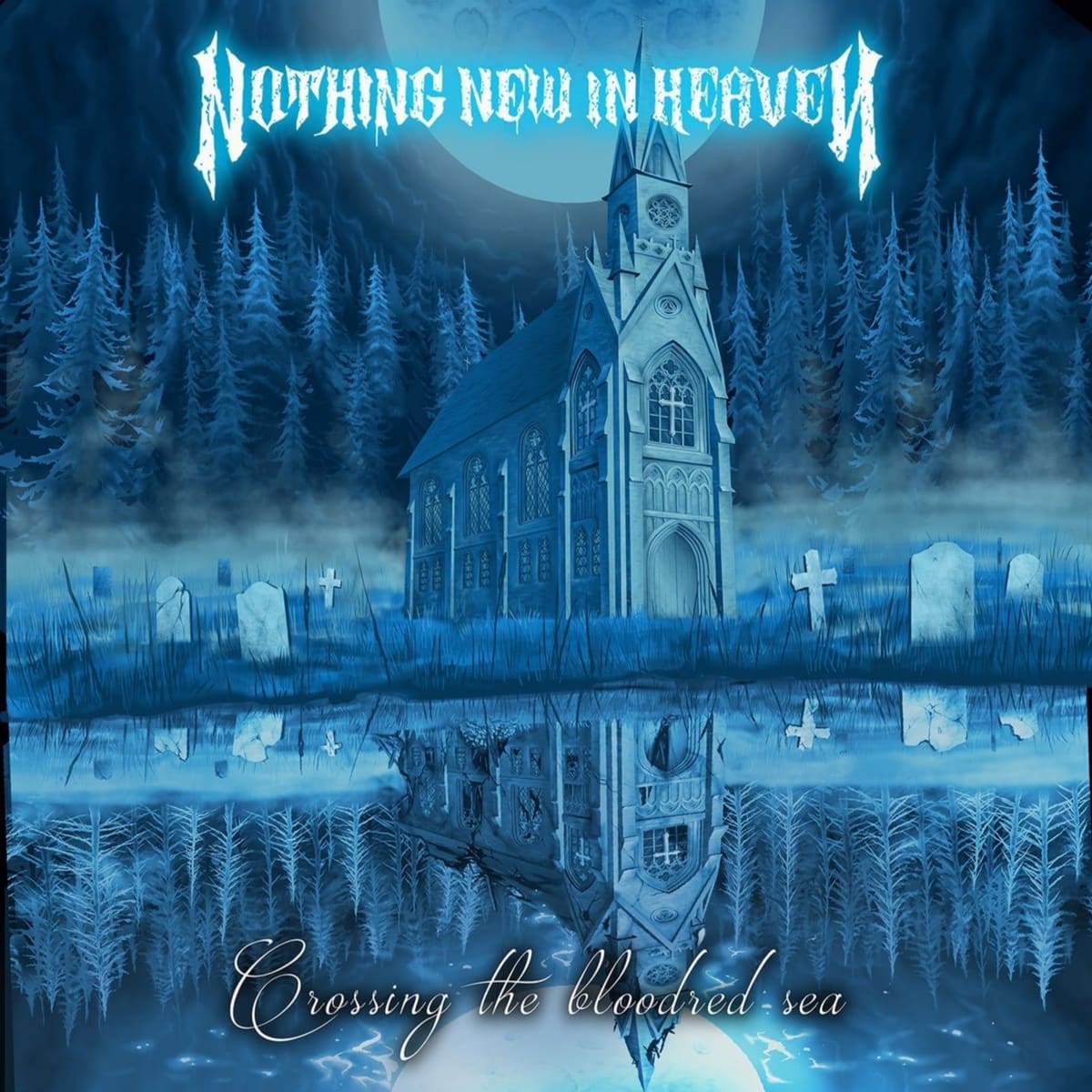
The central gothic church is rendered like a reliquary—tall, spired, and isolated—reinforcing the album’s themes of faith, collapse, and transcendence.
The Seventh Sin, Disrelish
For a release this calculated and composed, there is little to fault. From its crystalline production to its controlled narrative pacing, Nothing New In Heaven strips away excess, leaving a lean, high-definition descent into musical extremity.
The Hymns
01. Fall of the Believer
02. Waves of Salvation
03. Rise of the Nihilist
04. Crossing The Bloodred Sea
05. Opa Groovy Style (‘Opa Gangnam Style’ by Psy cover)
Nothing New In Heaven
Alexandre Hoerner — Guitars, Bass, Keyboards, Drum Programming
Simon Cousin – Vocals