Pusta Noc — Funus Vampyri Review
Pusta Noc is a Polish atmospheric & ceremonial black metal solo entity. On 6 March 2026, Pusta Noc released its second independent full-length album, Funus Vampyri.
Pusta Noc, Funus Vampyri Review: This review will evaluate every aspect of the album, from its intricate musical composition to its production.
The First Three Sins, The Summary
The First Sin, The Strings/Keys: Processional guitar harmonies, earthy bass, and sparse atmospheric synthesisers construct a cold, melancholic funeral soundscape. The Second Sin, The Vocals: Distant, anguished harsh vocals operate as a ghostly lament, guiding the narrative through grief, anger, and tragic resignation. The Third Sin, The Percussions: Restrained programmed percussion maintains a hypnotic ceremonial pulse, favouring deliberate mid-tempo procession over chaotic aggression.
The Fourth Sin, Overall Discussion
The Empty Night Begins
The moment the listener presses play, they are welcomed into over thirty minutes of immersive atmospheric music — spread across four expansive hymns deeply rooted in Slavic folklore.
Pusta Noc constructs an atmospheric sanctuary with Funus Vampyri, inviting the listener into a traditional nocturnal vigil where ancient folk customs, dark superstition, and melancholic black metal converge.
Thematic Pillars
The album’s central narrative is constructed around the 2022 archaeological discovery of a 17th-century woman buried with anti-vampiric measures — an iron sickle placed across her neck and a padlock affixed to her big toe — in the Polish village of Pień.
Sensationalised by modern media as “Zosia the vampire,” Pusta Noc reclaims this historical case not for cheap shock value or standard horror tropes, but as a profound exploration of human tragedy:
- Social Ostracism & Fear of the Dead: — Examining how community fear, superstition, and suspicion alienate those deemed other, even into the afterlife.
- Grief, Anger, & Acceptance: — Navigating the complex emotional spectrum of loss, betrayal, and tragic resignation.
- Ritualised Mourning: — Channelling the authentic Slavic tradition of Pusta Noc (Empty Night) — a traditional overnight wake spent beside the deceased before burial.
Thematic Foundations
The devilmanship across Funus Vampyri is honed to perfection and crafted entirely solo by Grymuar. Emphasising extreme intimacy, personal expression, and immersion, the creator treats each release as a self-contained narrative world rather than a simple collection of hymns.
Pusta Noc’s creative palette draws directly from four core pillars:
- Polish Folklore: — Exhuming forgotten historical tragedies to give voice to the silenced and ostracised.
- Ritual, Mystery, & Darkness: — Crafting a solemn, ceremonial atmosphere that surrounds the listener in cold, reverent gloom.
- Late-90s Black Metal Spirit: —Channelling the raw, melancholic, and deeply atmospheric spirit of classic late-1990s black metal pioneers.
The Processional Guitar Work & Fog-Bound Low-End
Musically, Funus Vampyri deploys a deliberately restrained, ritualistic instrumental palette. Rather than relying on frantic, chaotic aggression, the guitars carry almost the entire emotional weight of the record — operating with patient, processional solemnity.
Instead of the icy, high-speed tremolo picking typical of standard second-wave black metal, Pusta Noc‘s guitar work feels distinctly processional — evoking the physical sensation of walking slowly behind a coffin in a cold, fog-shrouded cemetery. The mid-tempo pacing allows layered harmonies to build a thick, mournful atmosphere, while subtle folk-horror motifs weave through the riffs to gently echo ancient Slavic funeral traditions.
Beneath this guitar architecture, the bass remains earthy, deep, and steadfastly supportive, grounding the record’s tragic narrative weight.
The Ceremonial Heartbeat & Ghostly Lament I
The percussive foundation and vocal execution on Funus Vampyri maintain the record’s strict commitment to funeral ceremony, eschewing chaotic speed for hypnotic, mournful dread.
The programmed drums behave explicitly like the heartbeat of the funeral rite. Mid-tempo beats dominate throughout, while blast beats are intentionally kept rare or completely absent — maintaining an unbroken, hypnotic dread. Beneath this rhythm, synths are deployed sparingly and with total purpose; ambient pads and subtle orchestral touches act like the biting, cold air hovering over the burial site — ever-present and atmospheric, yet never overwhelming the central instrumentation.
The Ceremonial Heartbeat & Ghostly Lament II
Rather than deploying a standard, high-register black metal shriek, Pusta Noc operates as a solemn lamenter — authoritatively guiding the listener through the emotional progression of the funeral vigil:
- Narrative & Anguished Delivery: — A harsh, sorrowful voice that remains strictly disciplined rather than chaotic.
- Emotional Spectrum: — A harsh, sorrowful voice that remains strictly disciplined rather than chaotic.
- Ghostly Mix Placement: — Positioned slightly behind the guitars, imparting a distant, haunting spectral presence.
- Storytelling Focus: — Utilised purely as an instrument of storytelling, tragedy, and mourning rather than aimless aggression.
The Acoustics of the Burial Wake
The production across Funus Vampyri is cold, spacious, deeply atmospheric, and ritualistic — capturing the raw, unpolished spirit of late-90s atmospheric black metal while maintaining complete mix clarity. By placing the anguished vocals slightly behind the shimmering, processional guitar layers and grounding the low-end with earthy bass and ceremonial percussion, the recording achieves the exact acoustic ambience of a nocturnal burial wake.
Funus Vampyri sits between classic atmospheric black metal, funeral rite, and modern folk-horror sound design, with a strong emphasis on storytelling through tone.
When the Vigil Ends
Overall, Funus Vampyri is a profoundly melancholic, deeply moving fruit of art. Grymuar has crafted an extraordinary four-hymn monument to Slavic mourning, exhuming historical tragedy to deliver a solemn work of atmospheric and ceremonial black metal.
As the final hymn fades, the sunset sits low over the horizon, and the music settles like the dust and ashes of a funeral now been and gone.
The Fifth Sin, The Memorabilia
When the first drops of Funus Vampyri echoed, the music initially carried the distinct chill of late-90s black metal — yet as the four long-form hymns unfold, it becomes clear this is something far deeper. Pusta Noc transcends standard black metal boundaries, forging an atmospheric funeral rite steeped in the folk-horror tales of a bygone era when vampire hysteria and dark superstitions gripped the land.
Grymuar has masterfully taken elements of black metal, dense atmosphere, funeral doom, and folk horror to create something deeply melancholic, raw, ceremonial, and ritualistic — delivered with the cold, captivating precision of a dark tale narrator.
The Sixth Sin, The Artwork
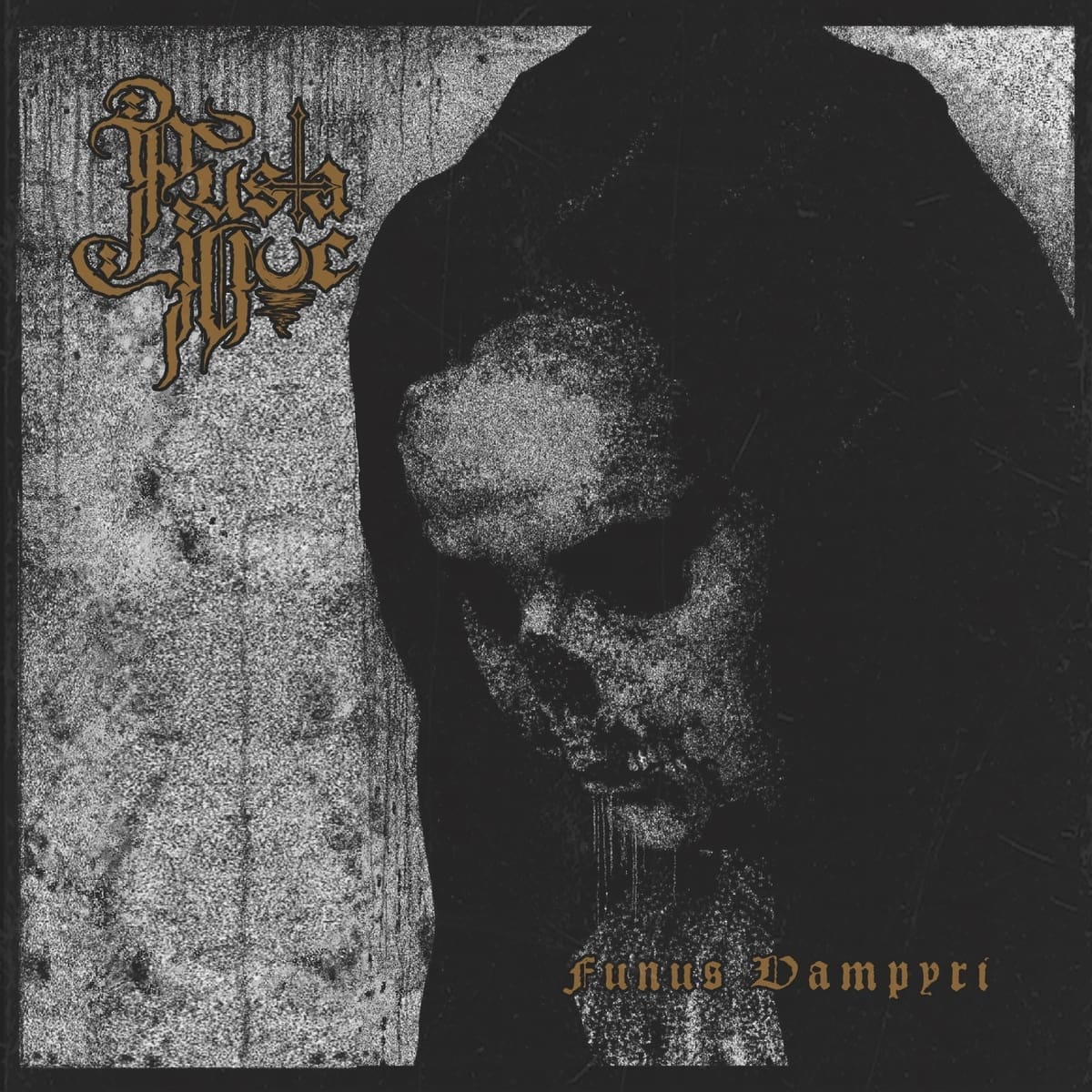
The visual presentation stands as a stark, grain-scoured icon: a hooded, half-eroded figure rendered in cold monochrome, framed by gold gothic lettering that reads like a solemn funerary plaque.
It feels significantly less like modern album cover art and far more like a sacred, forgotten relic exhumed directly from an ancient crypt.
The Seventh Sin, Disrelish
There is absolutely nothing to disrelish across this entire funeral rite.
The Hymns
01. Exordium
02. Laudatio
03. Comploratio
04. Consolatio
Pusta Noc
Grymuar — All Instruments, Vocals, Drum Programming