Virtaus – Ajaton, ikuinen kuolema Review
Virtaus are a Finnish black metal entity. The band released their second full-length, Ajaton, ikuinen kuolema, on May 3, 2025 via Wolfspell Records, and again on January 23, 2026 via Fetzner Death Records.
Virtaus, Ajaton, ikuinen kuolema Review: This review will evaluate every aspect of the album, from its intricate musical composition to its production.
The First Three Sins, The Summary
The First Sin, The Strings/Keys: Cold, mid-focused tremolo riffing supported by sparse, distant symphonic textures that deepen the album’s fatalistic atmosphere. The Second Sin, The Vocals: Shredded, throat-ripped screams delivered from within the mix, conveying pain, despair, and emotional collapse. The Third Sin, The Percussions: Natural, unpolished drumming balancing relentless blasts with heavy, funereal mid-tempo passages.
The Fourth Sin, Overall Discussion
Epäonnistuneille introduction
As soon as the listener presses play, the opening hymn, Epäonnistuneille, greets them with a deceptive, brief symphonic introduction. It is the calm before a total rupture—as hell, a freezing atmospheric aura and extreme instrumentation break forth, carrying the listener through the remaining hymns. This is a descent into a timeless, eternal death, where the symphonic elements serve only to highlight the sheer intensity of the black metal abyss.
Timeless Fatalism
Ajaton, ikuinen kuolema is built upon nine hymns of raw intensity and emotional bleakness. It is a work steeped in a cold, fatalistic mood—ferocious in its delivery, yet fully aesthetic in its atmosphere. Virtaus captures the heart of the Finnish black metal tradition—melodic and sorrow-laden—without merely mimicking the classics. Instead, they evoke a sense of ‘timeless, eternal death’ that feels both ancient and immediate.
Devilmanship in Mourning
Virtaus offers the listener flawless devilmanship. Their approach captures a rare balance of solid songwriting and raw execution—composition and arrangements that anchor aggressive outbursts within a deeply mournful atmosphere. The music is structured, yet feels emotionally unhinged, granting the nine hymns a sense of ritualistic momentum that carries the weight of a fatalistic journey.
Razor Tremolo Lament
The guitars are razor-edged, but never succumb to lo-fi muddiness. The distortion is grainy, with pushed high-mids that grant the riffs a cutting, anguished presence. Consistent with the classic Finnish approach, the low end is restrained, keeping the atmosphere cold and airless.
The tremolo lines eschew triumph in favour of mournful, repetitive, mantra-like riff cycles that build immense emotional pressure. These are punctuated by occasional chordal surges that feel like collapsing structures rather than grand moments—a sonic representation of the endless falling at which Virtaus excels.
The Mortal Heartbeat
The percussion on Ajaton, ikuinen kuolema feels dry, close-mic’d, and intentionally unpolished, rejecting modern sheen for a raw, claustrophobic presence. The snare is sharp and cracking, while the kicks sit recessed within the mix, felt more than heard. The performance balances fast blasting with a distinctly human touch—slight fluctuations that heighten the tension—while the mid-tempo passages take on a heavy, funereal quality.
Rather than providing brightness, the cymbals create a washing haze. Ultimately, the drums function as the record’s vital sign: a heartbeat stressed—relentless, mortal, and uncomfortably intimate.
The Ritual Wound
The vocal delivery on Ajaton, ikuinen kuolema is shredded and throat-ripped—a raw conduit for pain, despair, and total collapse. Recessed slightly within the mix, the vocals feel like a voice screaming from deep within the music’s core, rather than sitting atop it.
With no cavernous reverb or layering to hide behind, the result is exposed agony. The vocals serve as the ritual wound of the album—the human element pushed to its absolute breaking point.
The atmosphere of the album is a deliberate invocation built through repetition, emotionally broken vocals, and cold, mid-focused guitar layers. The drumming remains human and unpolished, while sparse synth fog—distant and ghostly rather than melodic—widens the space without ever softening it. This is cosmic emptiness, not warmth.
Airless Production
The production is raw but intentional, prioritising emotional violence over technical polish. Guitars dominate the midrange, while the vocals bleed directly into the instrumentation. Because the drums are natural and un-triggered, they feel uncomfortably alive. With almost no low-end bloom, the resulting sound is cold, airless, and suffocating—a jewel in Finnish black metal’s fatalistic aura.
Fade into Nothingness
The album draws to a close with Kuoleman saattaman. The music eventually fades into nothingness, yet the oppressive atmosphere continues to lurk in the darkness long after the silence takes over.
Timeless, Eternal Death
Overall, Ajaton, ikuinen kuolema is a dark fruit of art—a ritual performed in a sealed, lightless room. Its production creates a haunting sense of timeless, suspended suffering that embodies perfectly its title. It is not just an album; it is a permanent state of being.
The Fifth Sin, The Memorabilia
For me, Ajaton, ikuinen kuolema provided a cold, forbidden release — less a musical journey and more a descent into suffocation, decay, and the unknown. What was written before summarises it: the instrumentation, atmosphere, arrangement, devilmanship, and composition all serve ritual, desolation, and timeless decay, perfectly aligned with the Finnish title Ajaton, ikuinen kuolema (Timeless, eternal death).
The Sixth Sin, The Artwork
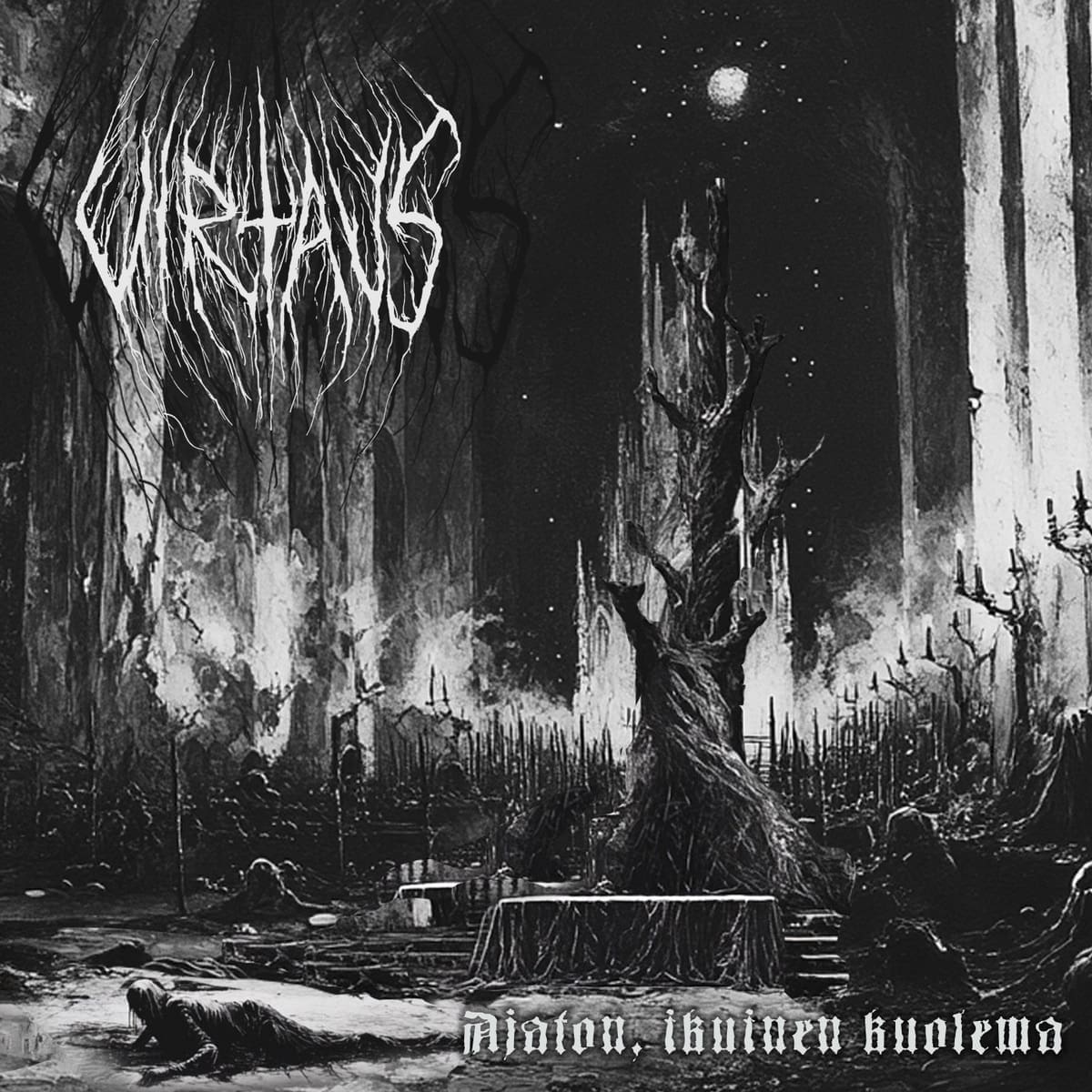
The artwork’s lack of colour reinforces the “ajaton” (timeless) quality—no warmth, no season, no life.
The Seventh Sin, Disrelish
There is nothing to disrelish here — no words feel necessary. Ajaton, ikuinen kuolema is not just dark; it is ceremonially bleak fruit of art.
The Hymns
01. Epäonnistuneille
02. Epätoivo
03. Vapahtaja
04. Ylle palavan maailman
05. Kahleet
06. Tyhjyys
07. Tulevaisuudelle
08. Eksyneet
09. Kuoleman saattamana
Virtaus
Timo Honkanen — All instrumentation
N. Pennanen (NP) — Bass
H. Hyytiäinen (HH) — Drums
Hear The Music
Social Links
Fetzber Death Records | Home Page
Fetzber Death Records | Facebook