Urku Llanthu — Wachuma Review
Urku Llanth is an Ecuadorian dark folk and dungeon synth project. In 2026, Urku Llanthu released his sixth studio album, Wachuma, via Takiri Prod. Ind.
Urku Llanth, Wachuma Review: This review will evaluate every aspect of the album, from its intricate musical composition to its production.
The First Three Sins, The Summary
The First Sin, The Strings/Keys: Ceremonial synth layers drift like mountain fog—slow, meditative, and heavy with atmosphere. Rather than pushing forward, the melodies unfold patiently, allowing the listener to enter the ritual space of the Andes. The Second Sin, The Vocals: Human voices are largely absent; instead, atmosphere and wind instrumentation become the voice of the ceremony. The Third Sin, The Percussions: Rhythm appears sparingly, favouring subtle pulses and organic movement over rigid structure. When it emerges, it feels less like percussion and more like the heartbeat of the ritual.
The Fourth Sin, Overall Discussion
The Sacred Gate
The opening hymn greets the listener with mystical synths, an ethereal gateway that draws the spirit into the world of Wachuma. This is more than an album; it is a musical translation of the sacred Quechua medicine—an Andean plant believed to bridge the material and spiritual worlds.
As the music unfolds, we are ushered into a ceremony administered by the wachumeros (Andean priests). Within the Andean worldview, Wachuma is a medicine believed to clarify thought and soften the soul. The objective of the rite is for the participant to bloom—allowing the subconscious to open like a flower, mirroring the cactus that blooms under the cover of night.
The Stillness of the Ceremony
This is an experience that demands complete stillness. The modern world, with its noise and technical distractions, must fall silent. To enter Wachuma is to step outside linear time and into a space where the digital pulse is replaced by the ancestral heartbeat. Here the synths act as the fog of the high Andes, creating a sense of weightlessness before the rhythmic ceremony begins. It invites the listener to move from the mundane to the medicinal, where the music serves as the vehicle for the ascent of the spirit.
As the synths swirl and the atmosphere deepens, the music becomes the medicine. It is a guided meditation in the form of sound, where the blooming of the soul requires the listener to first be still.
Roots in Shadow and Earth
Urku Llanthu’s work grows from deep, shadowed roots. It is a place where the eerie, atmospheric vibes of dungeon synth meet the hushed, expansive textures of dark ambient. Here, the sharp bite of blackened atmosphere finds a strange, symbiotic peace with the ancient heart of Andean folk traditions and instruments.
As a solo project, Urku Llanthu displays a level of devilmanship that offers more than just a performance; it is an ear-to-soul experience. The compositions are profoundly well thought through, with arrangements that breathe life into the ancestral themes.
This is no longer mere music—it is a living soundscape.
The Pulse of the Ritual
The essence of the Wachuma ceremony is not just found in the lore or the spiritual concepts—it is embedded in the very fabric of the music. From the intentionality of the composition to the spirit-led solos of the artist himself, every note becomes a pulse. This is what brings the ritual to life, ensuring the cactus bloom is felt as much as it is heard.

Instruments of the Andes
The listener is ushered into a minimal yet profound arrangement: a foundation of mystical synths and ancient folklore layered with traditional instrumentation. Throughout the album, the calls of nature remain ever-present—the rush of a stream, the sigh of the wind, the breathing Andes themselves.
These organic textures are woven together with piano, acoustic guitars, and the distinctive wind instruments of the region, such as the Zampoña (the acoustic wood lurker) and the Quena (the traditional wood flute).
While the palette of instruments remains consistent, no two hymns are identical. There is a deliberate curation at work; certain effects or instruments are omitted when the spirit of the hymn demands it.
Whatever is necessary to cultivate this spiritual fruit of art is included—nothing more, nothing less.
The Spirit of Lo-Fi
The world of Urku Llanthu is entirely self-produced, utilising lo-fi techniques that bypass the sterile shine of modern studios. The mix deliberately resists high-definition clarity, choosing grain over gloss and grit over polish.
This is not a technical flaw, but a spiritual vow—a conscious rejection of studio sheen in favour of raw, unfiltered soul.
Entering the Vision
Overall, Urku Llanthu is a magical, hypnotic spiritual fruit of art. It is an experience that defies traditional critique; it simply is.
To experience Urku Llanthu is to surrender. You are invited to settle into this magical world; to let the music lead you on a profound journey. It is a path that is not necessarily easy—it explores the depths of the subconscious—but the composition guides the listener through the ritualistic realm of sound.
Crossing the Threshold
In the end, Wachuma is not merely listened to—it is entered. Urku Llanthu does not perform so much as he opens a doorway, inviting the listener to cross from the ordinary world into something older, quieter, and profoundly sacred.
The Fifth Sin, The Memorabilia
Once again, I find myself within the magical world of Urku Llanthu. As I have noted in my previous reviews of this project, this is music that feels truly out of this world. It is a realm that does more than just describe the Andean landscape; it transports the listener directly into it through a minimalist yet fruitful instrumental setup. It is a bridge between the soil and the cosmos.
The Sixth Sin, The Artwork
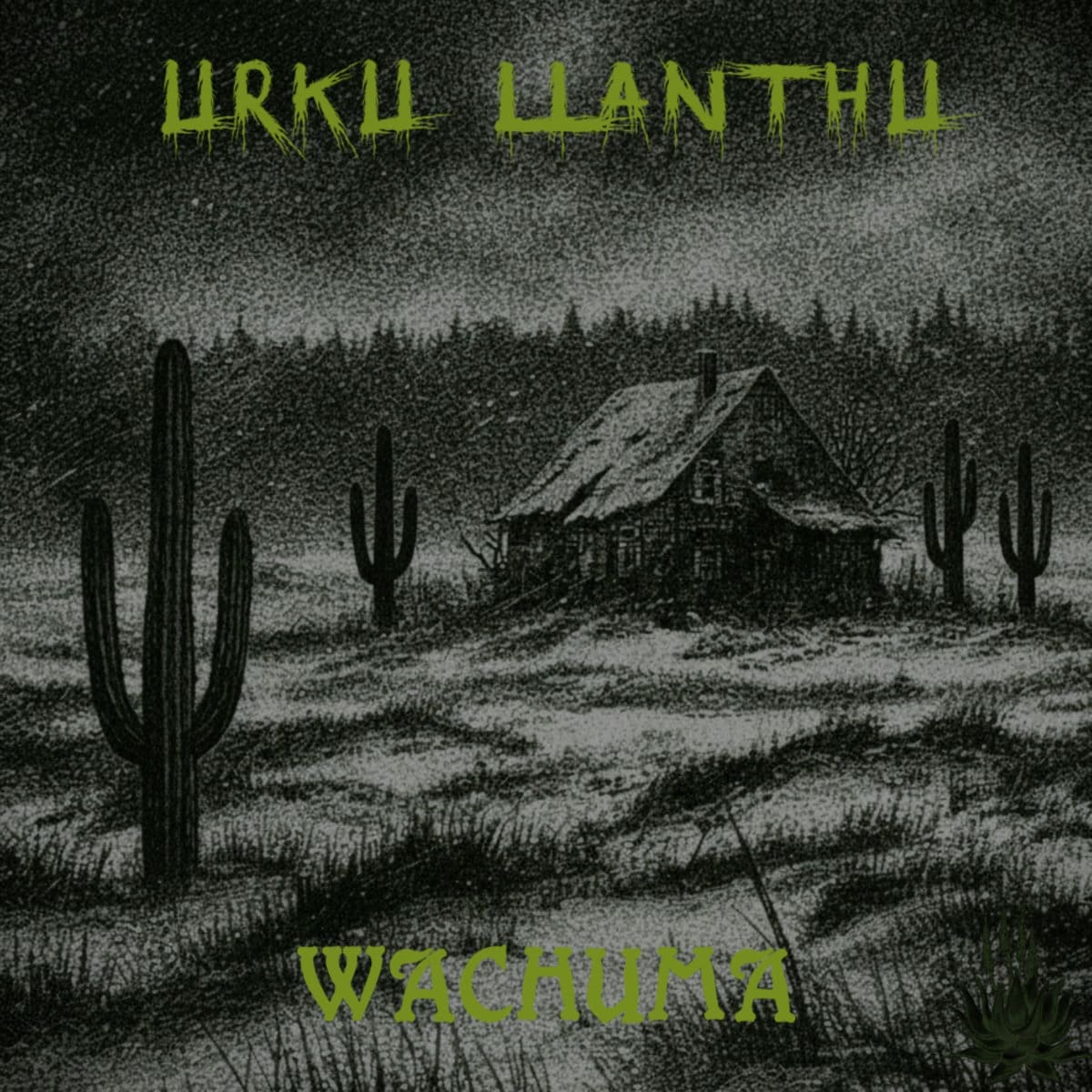
The artwork is a perfect reflection of the project’s soul. It captures the world of Urku Llanthu and the lyrical concept of the ceremony with visual precision, acting as the final ritual component that completes the music.
The Seventh Sin, Disrelish
I find no dislike here. Every review of this project presents a unique challenge, yet it remains fun and deeply enjoyable. I find myself constantly immersed in the music—like water drawn into a cactus, stored and held within.
The Hymns
01. Amawta
02. Chakuk
03. Hamutana
04. Pawana
05. Runa
Urku Llanth
Atuk Urku Llanthu (Pablo Mesías) — Everything