Dominance — But The Thorns Remain Review
Dominance is an Italian death metal entity. On 21 March 2026, the band unleashed their new full-length …But the Thorns Remain, via Maledict Records.
Dominance, …But the Thorns Remain Review: This review will evaluate every aspect of the album, from its intricate musical composition to its production.
The First Three Sins, The Summary
The First Sin, The Strings/Keys: Weight-driven riff architecture — slow-burning, earthbound, and steeped in ancient, processional force. The Second Sin, The Vocals: Deep, sepulchral command — clear, resonant, and delivered with ritual authority rather than obscured brutality. The Third Sin, The Percussions: Measured, mid-tempo dominance — deliberate, grounding, and built to sustain the album’s ceremonial march.
The Fourth Sin, Overall Discussion
Opening: The Threshold
The moment the listener presses play, the opening hymn Golgotha of Worms (Intro) acts as a sensory threshold. It presents the raw sounds of nature — the crackle of a burning fire and the resonance of clean guitar tones. It is not merely an intro; it is a slow-burn preparation.
This atmospheric layering builds tension, rooting the listener in the physical earth before the sonic thorns of the album begin to take hold.
Following this natural invocation, the hymn shifts into a grander, more harrowing territory. Epic drums and guitars rise in force, punctuated by background cries of pain and torment.
It feels less like a song and more like a procession — a majestic, mid-tempo march through a landscape of suffering.
Passage I: The Form
As the journey continues across the seven remaining hymns, …But the Thorns Remain reveals its true form. Clocking in at over fifty minutes, the record demands patience and immersion. It offers a unique blend of atmospheric blackened death metal that prioritises three pillars:
- The Ancient— a sound that feels unearthed rather than produced.
- The Heavy — weight felt in the soul, not just the ears.
- The Ritualistic — each composition feels like a deliberate step in a larger, dark ceremony.
This is not music for a quick listen; it is a long-form experience that avoids modern technical traps in favour of a deep, atmospheric gravity.
Passage II: The Architecture
The eight movements are built upon a processional architecture. With nearly every piece stretching past the six-minute mark, Dominance gives its riffs the space to circle, return, and deepen. These are not merely hymns; they are ritual incantations.
By letting themes reappear with a heavier weight each time, the music feels as if it is physically carving its own memory into stone — permanent, unyielding, and ancient.
Passage III: The Forces
Within each hymn, the pace is deliberate, ceremonial, and unbroken. This is not movement — it is procession. Not momentum — but weight advancing with purpose.
The record is governed by three forces:
- Ancient Violence— echoing a primal, forgotten past.
- Sorrow — a suffocating, atmospheric grief that saturates every passage.
- Grandeur — a scale that elevates the work beyond standard blackened death metal.
There is no drift, no excess, no indulgence. Every passage is placed with intent. Every note serves the ritual. This is not a journey that wanders — it is a march that knows its end.
Passage IV: Devilmanship
From the moment of play until the final note folds into the darkness, Dominance exhibits a level of devilmanship that is both powerful and remarkably disciplined. Every member of the collective understands their timing and place within the ritual.
The instrumental arrangements are precise — tight, purposeful, and expertly composed to ensure the fifty-minute journey never loses its gravitational pull.
Passage V: The Earthy Strings
The backbone of the record is built on dual guitars that operate like ancient death architecture. They balance heavy, mid-tempo death metal riffing with dark melodic phrasing that leans heavily into a blackened atmosphere. They carry a tone that is earthy and thick, avoiding the plastic sheen of modern production.
Tremolo passages are treated as a rare resource, used sparingly but with maximum emotional effect. The guitars favour weight and grandeur over speed. They feel ceremonial, leading the listener through the thorns with a steady, unyielding hand.
The bass follows the guitar architecture with surgical precision, reinforcing the monolithic pacing and ensuring the music feels anchored deep within the earth.
Passage VI: Pulse and Voice
The drums provide the heartbeat of the ritual, characterised by a mid-tempo dominance, prioritising weight over velocity. Rather than relying on hyper-modern blasting, the percussion is measured and ritualistic. Heavy tom work delivers deep, resonant strikes that reinforce the ritual atmosphere, sounding like the rhythmic pounding of earth in a subterranean chamber.
Double-kick work remains steady and powerful, acting as the structural pulse that keeps the fifty-minute march moving forward without ever breaking the ceremonial trance.
The vocal delivery is deep, sepulchral, and unmistakably commanding. Eschewing the murky, swallowed textures of traditional death metal, the vocals remain clear and forceful.
The vocals feature:
- Deep Resonance— a low-end power that feels as if it emanates from the roots of the earth.
- Clear Phrasing — every word is delivered with intention. This clarity is essential for the long-form, epic nature of the hymns, allowing the narrative of the thorns to remain at the forefront of the listener’s consciousness.
Passage VII: The Sound
The production on …But the Thorns Remain is a deliberate act of defiance. It rejects modern sterility in favour of an organic, heavy, and unhurried sound. This choice allows the riffs the necessary space to breathe and, eventually, to decay in their own time. It is a rare example of a record that understands that rawness does not have to mean lo-fi — it means life.
Every element of the record feels harvested from the earth. There are no synths and no gloss here — just the ancient weight of blackened death metal captured with clarity, profound patience, and a deep, analogue warmth.
Closing: The Rite
The pilgrimage concludes with a remastered echo from the band’s 1999 era. This final hymn functions as a historical mirror, binding the past and present into a single, unbreakable continuum.
It is a powerful reminder that while the majesty of the ancient splendour may fade into memory, the thorns — the pain, the persistence, and the creative lineage — remain. It is the perfect closing statement for an album that celebrates the enduring nature of the shadows.
Overall: The Final Inscription
Overall, …But the Thorns Remain is a dark fruit of art — a ritual carved in stone, where the thorns do not fade — they endure.
The Fifth Sin, The Memorabilia
…But the Thorns Remain is a high-energy, epic release that refuses to fade into the background. It is that rare record that translates perfectly to headphones — rich in detail and atmosphere — yet it maintains a pulse that keeps the blood pumping and momentum high. Even during desk-bound tasks, this album bridges the gap between deep immersion and kinetic energy.
The Sixth Sin, The Artwork
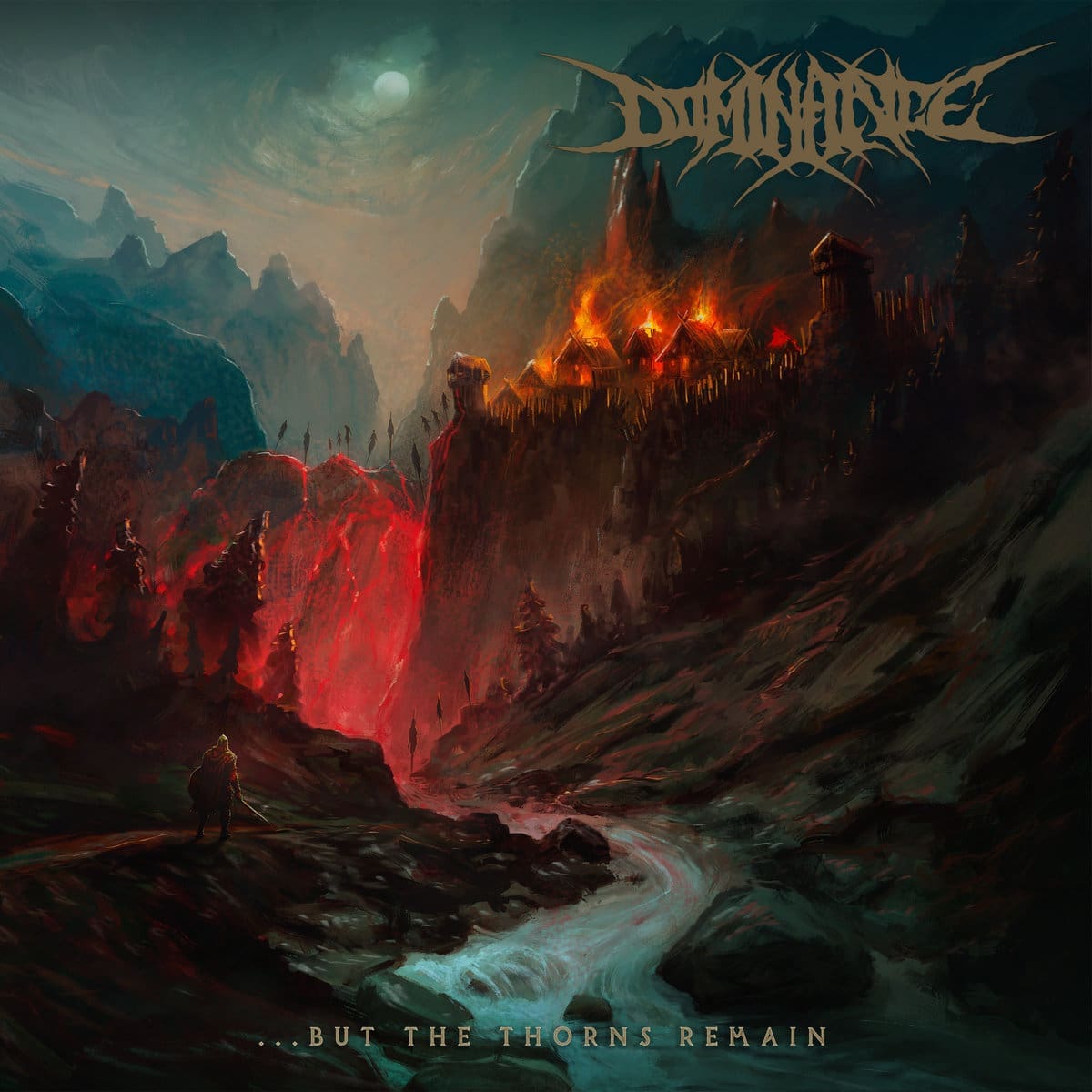
The visual presentation offers a mythic, doom-laden landscape — a vision that feels carved from the same ancient, unyielding stone as the music itself.
There is no disrelish to be found within …But the Thorns Remain. Every element — from the processional pacing and the sepulchral vocals to the organic, analogue production — serves the ritual.
The Hymns
01. Golgotha of Worms (Intro)
02. The Revenge of Steel
03. …But the Thorns Remain
04. The Devourer of Worlds
05. When the Blood Froze the Earth
06. The Wanderer
07. Darkness Within
08. Anthem of Ancient Splendour (Remastered from debut album 1999)
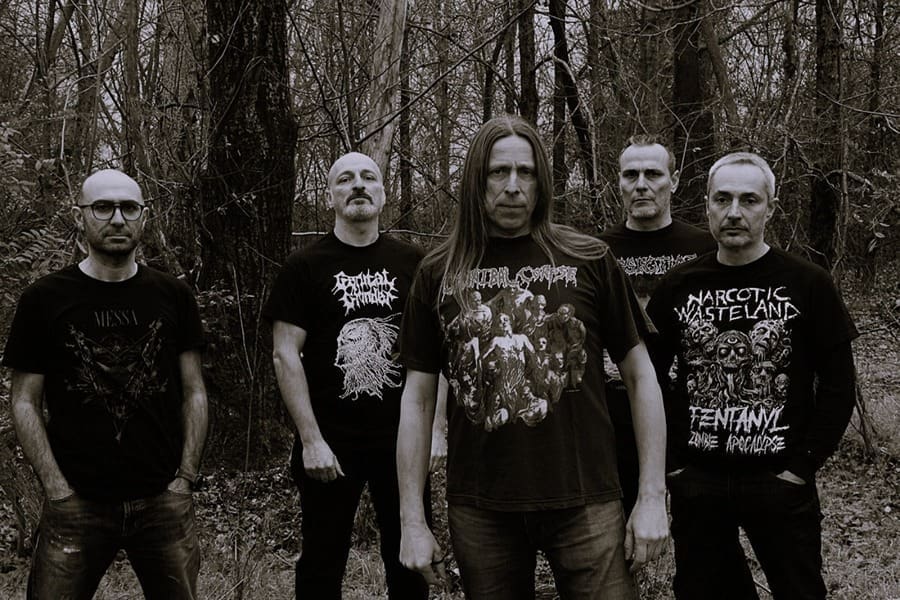
Dominance
Massimo Baroni — Guitar
Maurizio Bandiera – Bass
Mauro Bolognesi – Vocals
Davide Tognoni – Drums
Alessandro Simeoni – Guitar