Primordial Black — Heterotopia Review
Primordial Black is a Tunisian avant-garde project. On 15 May 2026, Primordial Black released its second full-length, Heterotopia, via Darkside Records.
Primordial Black, Heterotopia Review: This review will evaluate every aspect of the album, from its intricate musical composition to its production.
The First Three Sins, The Summary
The First Sin, The Strings/Keys: Dissonant blackened death architecture collides with industrial ambience and cinematic layering, constructing an immense psychological labyrinth of ritual atmosphere and controlled chaos. The Second Sin, The Vocals: Deep ritual proclamations, spectral guest passages, and commanding atmospheric delivery transform the vocals into psychological narration rather than conventional aggression. The Third Sin, The Percussions: Industrial precision, ritual tom work, and crushing blackened death propulsion drive Heterotopia with mechanical force and calculated violence.
The Fourth Sin, Overall Discussion
Threshold & Structure
As soon as the listener presses play, the opening hymn Caos Guidato greets them with a cold, ritual pre-signal — built from mechanical ambience and dissonant harmonic beds, it carries the chilling sense of an unseen, chaotic force being deliberately guided into form.
It does not merely introduce the album; it constructs a threshold, building up to a distinct, unsettling feeling — the exact moment the world begins to tilt.
The second hymn Ruines Suspendues establishes the album’s immense architectural blackened death foundation, pulsing with the poetic-ominous energy found in Rotting Christ’s The Raven.
Fragmented Realities
Heterotopia carries strong conceptual and psychological weight. Primordial Black states in their interview: “Each track acts like a portal into a different fragmented reality inspired by literature, cinema, or philosophy, but all connected by the same feeling of dislocation and confrontation with the unknown.”
Heterotopia expands into a staggering, multi-layered monolith. It seamlessly blends a rich, ritualistic atmospheric weight with the jagged, unsettling edges of avant-garde and dissonant blackened death metal warped by industrial textures and a cold, mechanical ambience that grinds against the organic black metal foundation.
With its cinematic layering and deeply integrated philosophical themes, the record feels less like a collection of hymns and more like a vast, architectural simulation of an alternate reality — a guided descent through a world that continues to tilt until all coordinates are lost.
- Hymn III — the conceptual core. This is where the album’s thesis fully crystallises, dragging the listener through themes of decay, memory, identity, and the spaces that exist between reality and illusion.
- Hymn IV — featuring a guest guitar appearance by Karim Bouazra, this hymn stands tall as one of the album’s most profound emotional pillars.
- Hymn V — featuring the legendary Steve DiGiorgio on bass. His presence makes this hymn noticeably more kinetic and serpentine as it twists through the dissonance.
Walls of the Labyrinth
The devilmanship pushes beyond technical execution into architectural construction. What truly expands and deepens the listener’s journey is the seamless integration of the additional guest members, each acting as a vital organ within the larger machine.
Walid Chaaben serves as the structural spine of the album’s guitar identity. His work is defined by highly angular, dissonant riffing and ancient, ritual-melodic motifs, while his tremolo patterns carry an industrial-tinged coldness. Combined withcinematic chord voicings, Chaaben constructs the rigid, monumental walls of the labyrinth itself.
Woven directly into this framework are the guest guitarists, Karim Bouazra and Gianluca Morelli. Their contributions inject mournful, lyrical counter-melodies, spectral leads, and fluid, avant-garde phrasing into the grey concrete of the mix. Rather than fracturing the record’s identity, these guest textures expand the emotional palette, adding layers of human grief without ever breaking the core, mechanical aesthetic.
Machine & Ritual Engine
The low-end architecture of Heterotopia is split between structural grid-work and organic menace. Walter Rehouma’s bass work provides crucial high-end weight and immaculate clarity, slicing through the densest industrial passages to anchor the chaos. In contrast, legendary guest bassist Steve DiGiorgio pushes the fifth hymn into different territory entirely. Here, the bass moves beyond structural foundation — rising through the dissonance with fluid, serpentine expression. Crucially, within this hymn, it is not merely felt; it is heard.
Driving the machine forward is Nikola Dušmanić, whose drum work seamlessly blends the raw speed of black metal blast beats with the crushing, physical weight of death metal. This foundation is topped with industrial precision and ritualistic tom patterns that make the rhythm tracks feel like an automated factory floor undergoing a pagan rite.
Urban Decay & Third Dimensions
Perhaps the most striking element of the album’s atmosphere is the integration of the saxophone, commanded by Khairi Doudech. This is far removed from jazz convention; instead, it is the sound of urban decay and noir atmosphere — a dissonant wailing that acts as a desperate voice crying out from a collapsing city.
This urban dread is given a third dimension by Fadhel Bouazra’s orchestrations. By threading low, subterranean drones beneath the metallic friction and layering string-like tension beds, Bouazra casts the immense cinematic shadows that transform Heterotopia into a suffocating, avant-garde horror chamber.
The Haunted Collapse
The organic intersection where the avant-garde and ritual elements come alive belongs to Yasser Mahammedi Bouzina. Handling the industrial pulses, dark ambient beds, ritual drones, cinematic sound design, and Heterotopic spatial effects, his synthesisers are entirely structural, never decorative.
Taking on vocal duties as well, Yasser‘s delivery aligns perfectly with the record’s deep philosophical and horror tone. He utilises deep, sepulchral, and ritual-intoned vocals that feel like a proclamation rather than a standard black metal shriek — a commanding, atmospheric presence that guides the chaos rather than dominating it through volume alone.
- Hymn VI — the conceptual core. This is where the album’s thesis fully crystallises, dragging the listener through themes of dislocation, mirrored spaces, and total identity erosion. Guest vocalist Camilia introduces a layer of spectral femininity and profound emotional fragility, shattering the cold, mechanical armour of the mix with a hauntingly human grace.
- Hymn VII — psychological horror rendered entirely in sound. It is a claustrophobic, paranoid passage filled with the suffocating weight of an internal collapse.
- Hymn VIII — the album’s final, cataclysmic unravelling. With guest guitarist Gianluca Morelli, the music spins a dark tale of an unseen presence slowly eroding the narrator’s sanity — a perfect encapsulation of the album’s overarching psychological dread.
This is the moment where Heterotopia collapses inward until nothing is left but silence.
The Final Implosion
Overall, Heterotopia is an avant-garde fruit of art — and sounds as if it were captured inside a sealed chamber of psychological ruin — a suffocating, claustrophobic sound that echoes from the far end of a long corridor where the light simply cannot reach.
Simultaneously Heterotopia fuses the dissonant, theological severity of Deathspell Omega with the urban-decay, smoky noir atmosphere of White Ward, and the cold, ritualistic industrial architecture of Blut Aus Nord— forging these influences into its own distinct, unyielding Tunisian avant-garde identity.
The Fifth Sin, The Memorabilia
While Primordial Black’s debut, Dark Matter Manifesto, stood as a strong and formidable release, Heterotopia transcends it entirely — shattering previous boundaries in sound, atmosphere, and sheer cinematic scope.
From the moment of pressing play, what more could you ask for? Crushing strings and an atmosphere steeped in horror and occult-inspired concepts take hold, driven by cinematic soundscapes, relentless drums, and vocals that tear fiercely through the lyrics and music.
What truly brings this album to life are the guest members, who do not feel like guests at all — but an integral part of Primordial Black. They operate as one unit, one family, forged together in the dark.
The Sixth Sin, The Artwork
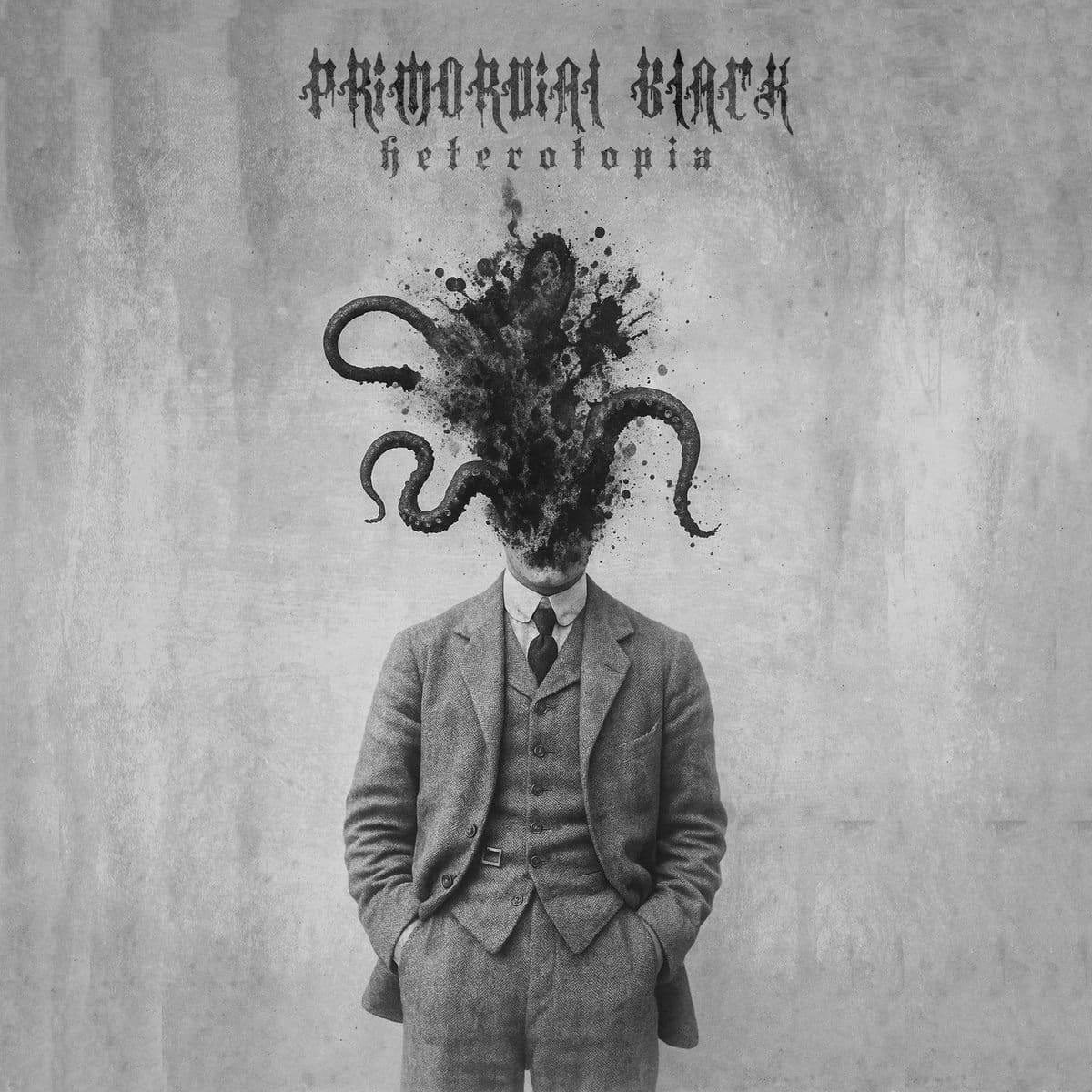
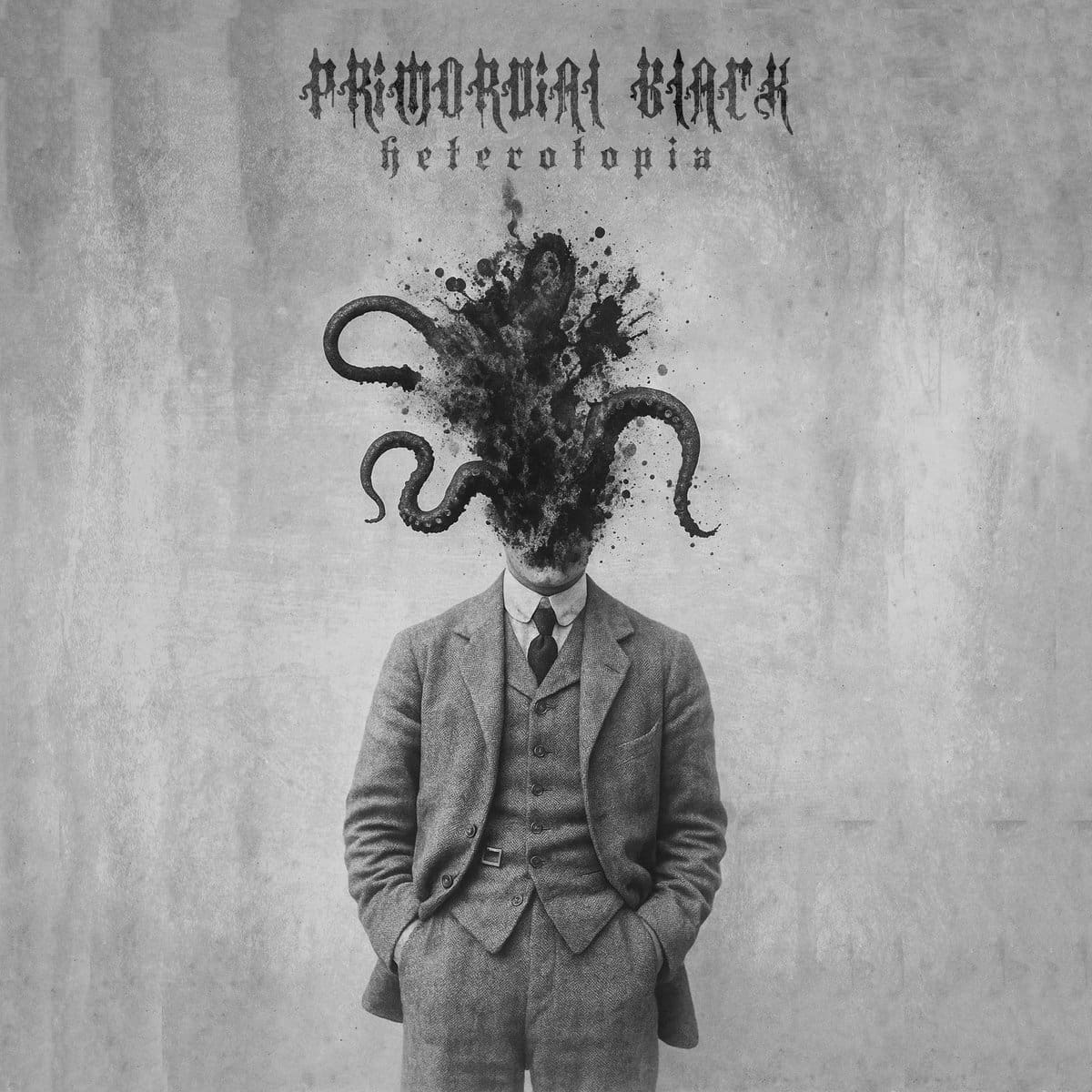
A formal human silhouette remains intact while its head blossoms into a primordial void, marking the album’s descent into heterotopic rupture.
The Seventh Sin, Disrelish
There is no disrelish to be found within Heterotopia. Every calculated movement, from the industrial pulses to the suffocating dissonant leads, serves a precise purpose. To pick apart its walls would be to misunderstand the labyrinth entirely; the immersion is so complete, and the execution so razor-sharp, that the listener is left completely weaponless against its terrifying design.
The Hymns
01. Caos Guidato
02. Ruines Suspendues
03. Heterotopia
04. Mater Suspiriorum
05. Immaculate
06. Begotten
07. Gorrister
08. Le Horla
Primordial Black
Yasser Mahammedi Bouzina — Rhythm Guitars, Synths, Programming, Vocals
Walid Chaaben – Lead Guitar
Walter Rehouma – Bass
Nikola Dušmanić – Drums
Camilia Bayazi – Guest vocals
Mehdi Beltaief – Guest Vocals
Steve DiGiorgio – Guest Bassist
Karim Bouazra – Guest Guitarist
Gianluca Morelli – Guest Guitarist
Khairi Doudech – Guest Saxaphone
Fadhel Bouazra – Additional Orchestrations