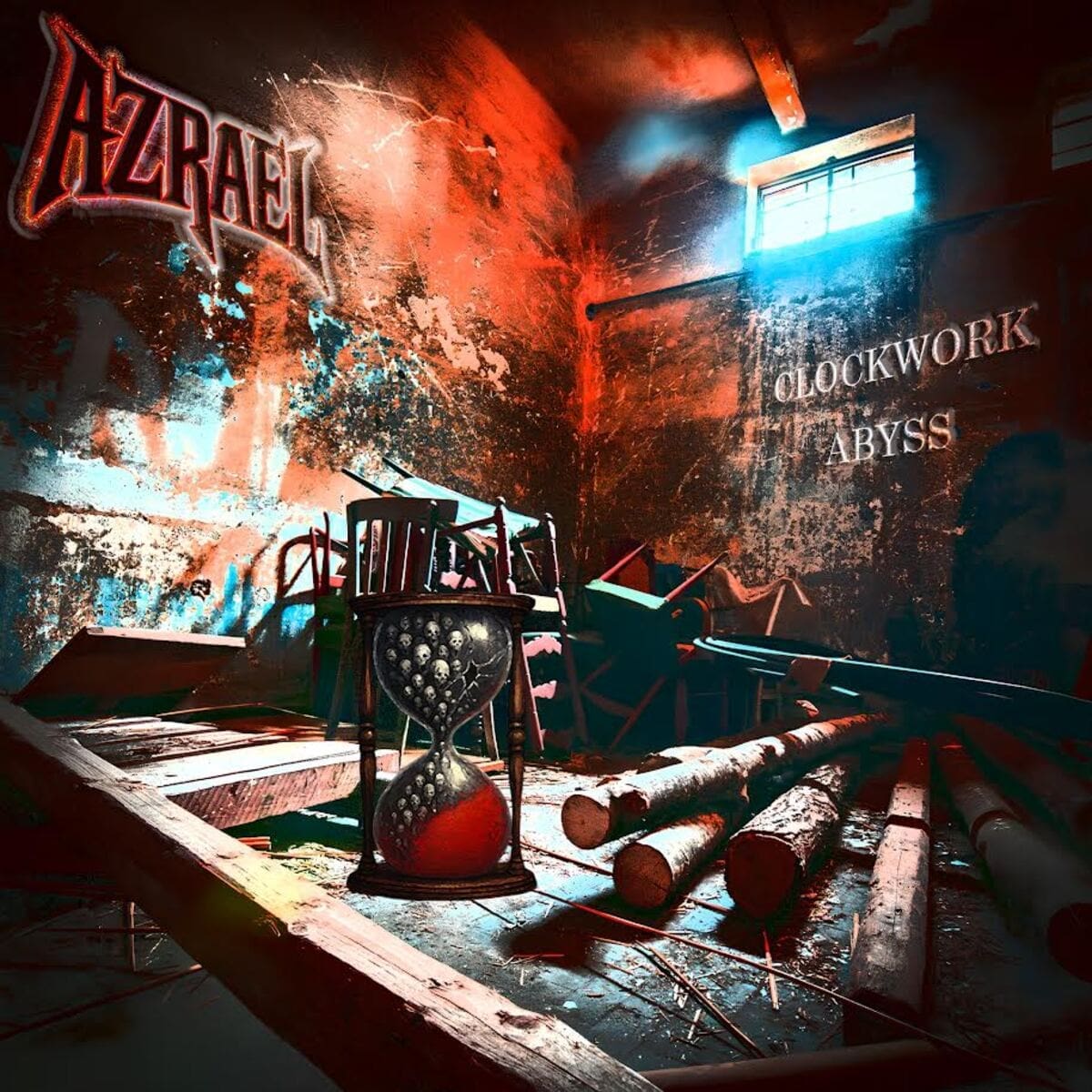
Azraël — Clockwork Abyss Review
Azraël is an Italian classic heavy metal entity formed in 1988. After a lengthy hiatus, on 1 May 2026, the band released their independent debut EP, Clockwork Abyss.
Azraël, Clockwork Abyss Review: This review will evaluate every aspect of the album, from its intricate musical composition to its production.
The First Three Sins, The Summary
The First Sin, The Strings/Keys: Twin-guitar heavy-metal devilmanship, harmonised lead architecture, galloping NWOBHM riffcraft, subtle synthesiser atmosphere, and flashes of neoclassical precision forge a vibrant clockwork soundscape rooted firmly in the late 1980s. The Second Sin, The Vocals: Federico Travi delivers a commanding performance of soaring traditional heavy-metal vocals, balancing theatrical drama, melodic power, and narrative authority with effortless conviction. The Third Sin, The Percussions: Driving gallops, disciplined rhythmic precision, explosive double-time surges, and commanding classic-metal momentum provide the mechanical heartbeat that powers Clockwork Abyss from beginning to end.
The Fourth Sin, Overall Discussion
Return of the Hourglass
Before heading into the review and taking from my interview with the band: Formed upon the Ligurian coast in 1988, Azraël emerged during the final years of the classic heavy metal underground before vanishing into silence. More than three decades later, the entity has returned with its debut EP, Clockwork Abyss—a record carrying the spirit of the late 1980s into the present day without compromise or modern reinvention.
Enter the Clockwork Abyss
Upon pressing the play button, the listener is instantly captivated by a handcrafted heavy metal saga — throughout its five hymns, Clockwork Abyss unfolds a compelling narrative of mechanical, pulsating energy, executed with precision in its musical devilmanship.
Steel, Neon & Devilmanship
Musically, Clockwork Abyss is a masterfully executed blend of classic heavy metal and the golden lineage of the New Wave of British Heavy Metal and a hint of Melodic Power Metal. The album’s sonic DNA pays homage to the soaring, dual-guitar architecture that mirrors the classic twin-lead attack of Iron Maiden and the sophisticated, theatrical metal majesty of Crimson Glory.
Far from a mere nostalgic callback, the release is built on a foundation of rock-solid devilmanship from the past — a display where every technical manoeuvre, every rhythmic shift, intricate harmony, and sweeping compositional movement is honed to perfection and structural discipline— that acts like a beautifully oiled machine navigating through neon-lit streets of the band’s clockwork world.
Twin Engines of Steel
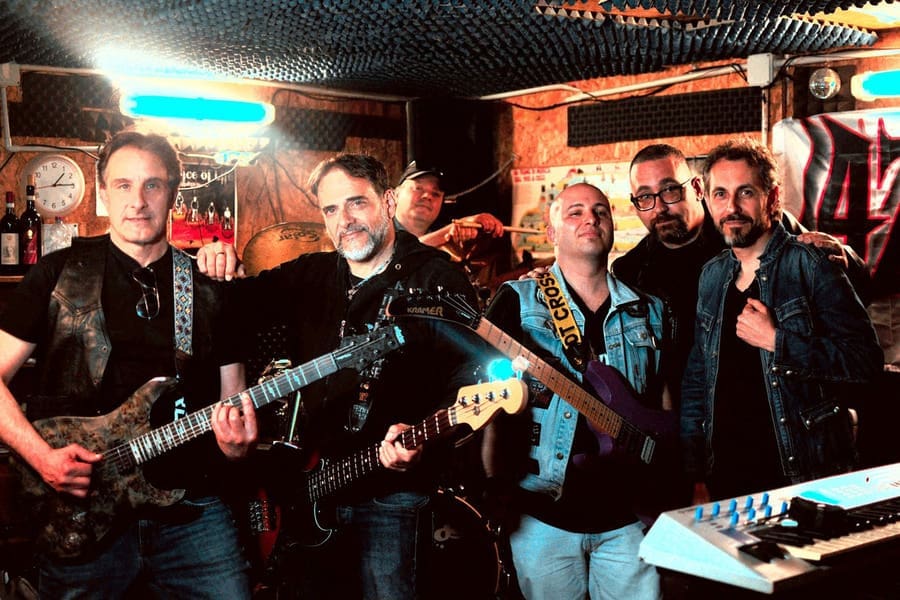
The twin-guitars serve as the core engine of Azraël’s sound. Utilising an interplay between Edoardo Napoli and Andy Lijoi that does not simply mimic one another; they employ sophisticated melodic counterpoint, allowing the leads to weave over and around the rhythm hymns like a metallic tapestry.
Rather than cluttering the soundstage, the fretwork thrives on impeccable execution: highly infectious, hook-driven melodies, rich harmonised leads, and driving, mid-tempo galloping riffs that provide an immediate sense of forward motion.
When the time comes to break away for the solos, the performance takes on a distinct neoclassical tint. These leads are clean, fluid, and surgically precise, flashing through the urban tension with the cold brilliance of a blade.
If the guitars are the engine, the rhythm section serves as the chassis that keeps the entire machine glued to the concrete.
The Machine Beneath the Guitars
Gianluca Eroico’s bass guitar riffs operate as a root-driven reinforcement of the main guitar lines, thickening the lower frequencies to ensure that the band’s driving gallops hit with maximum impact.
Daniele Di Tullio’s drums act as the unyielding heartbeat of the music. The drums avoid flashy, over-complicated fills in favour of straight, driving patterns that push the narrative forward with total authority. The performance shifts seamlessly through a classic metal lexicon: infectious 4/4 gallops, explosive double-time choruses that heighten the urban anxiety, and massive, half-time stomps designed to crush the listener under their sheer weight.
Voice Within the Mechanism
Floating above the music’s mechanical drive are the clean, highly melodic heavy metal vocals of Federico Travi. Operating with confidence in a commanding mid-to-high register, his delivery leans into dramatic phrasing and a controlled, theatrical edge.
Travi draws from the classic school of heavy metal storytelling. His performance channels the lineage of traditional masters — operatic control, soaring lines, and a sense of narrative authority — injecting human emotional stakes into an otherwise cold, clinical soundscape. It is a performance defined by presence: authoritative, passionate, and utterly mesmerising.
Chinatown After Dark
Far from being an overwhelming wall of digital noise, Mik Radogna’s synthesisers operate primarily as a low-volume harmonic pad tucked neatly beneath the music — a sustained, warm analogue texture specifically engineered to fill the frequency gap and add a subtle depth to the soundstage.
The true genius of this arrangement unveils itself on the third hymn, Chinatown. This is the precise coordinate where the keys step out of the shadows, infusing the soundscape with a classic 1980s power metal colour. It is here that the promised Crimson Glory lineage fully crystallises, using the synths to elevate the track’s driving rhythm into a grand, neon-lit heavy metal theatre.
By holding the keys back until this pivotal moment, Azraël ensures the atmosphere hits with maximum dramatic impact.
The Tape Never Stopped Rolling
Self-forged from the first note to the final master, Clockwork Abyss bears the unmistakable grain of a band shaping their sound with no intermediaries — a truth Azraël themselves emphasised when describing the process. The dry, analogue-leaning drums, the warm mid-gain guitars, the rounded bass-guitar tone, and the discreet synth vapours that widen Chinatown all arise from that total autonomy: performances left human, tones left breathing, decisions made without a producer’s hand smoothing or redirecting them.
The mix follows instinct rather than fashion, guided by the band’s own 1988 sensibilities rather than 2026 expectations.
It is not nostalgia but continuity — it proves that Azraël does not need to rely on modern studio tricks or artificial sample-triggering to achieve power—their strength comes purely from airtight group chemistry and flawless execution — Azraël sounding exactly as they intended, as if the tape had never stopped rolling.
Overall, Clockwork Abyss is a stellar time capsule and an authentic fruit of art.
The Fifth Sin, The Memorabilia
For me, Clockwork Abyss was entirely unexpected. Dropping the needle on this record did not feel like discovering a forgotten relic in the dusty attic of some old house; instead, it felt as if I had touched the hourglass itself and been transported back in time.
The band’s sheer sonic identity, the breathtaking dual-guitar work, the vocals, the unyielding drum pulse, and the execution of Chinatown all coalesce into an unforgettable experience.
My only real grievance, one that does not truly warrant a disrelish, is that this is not a full-length record — the five hymns are so addictive that my repeat button quickly became an hourglass of its own, constantly being turned over and over.
The Sixth Sin, The Artwork
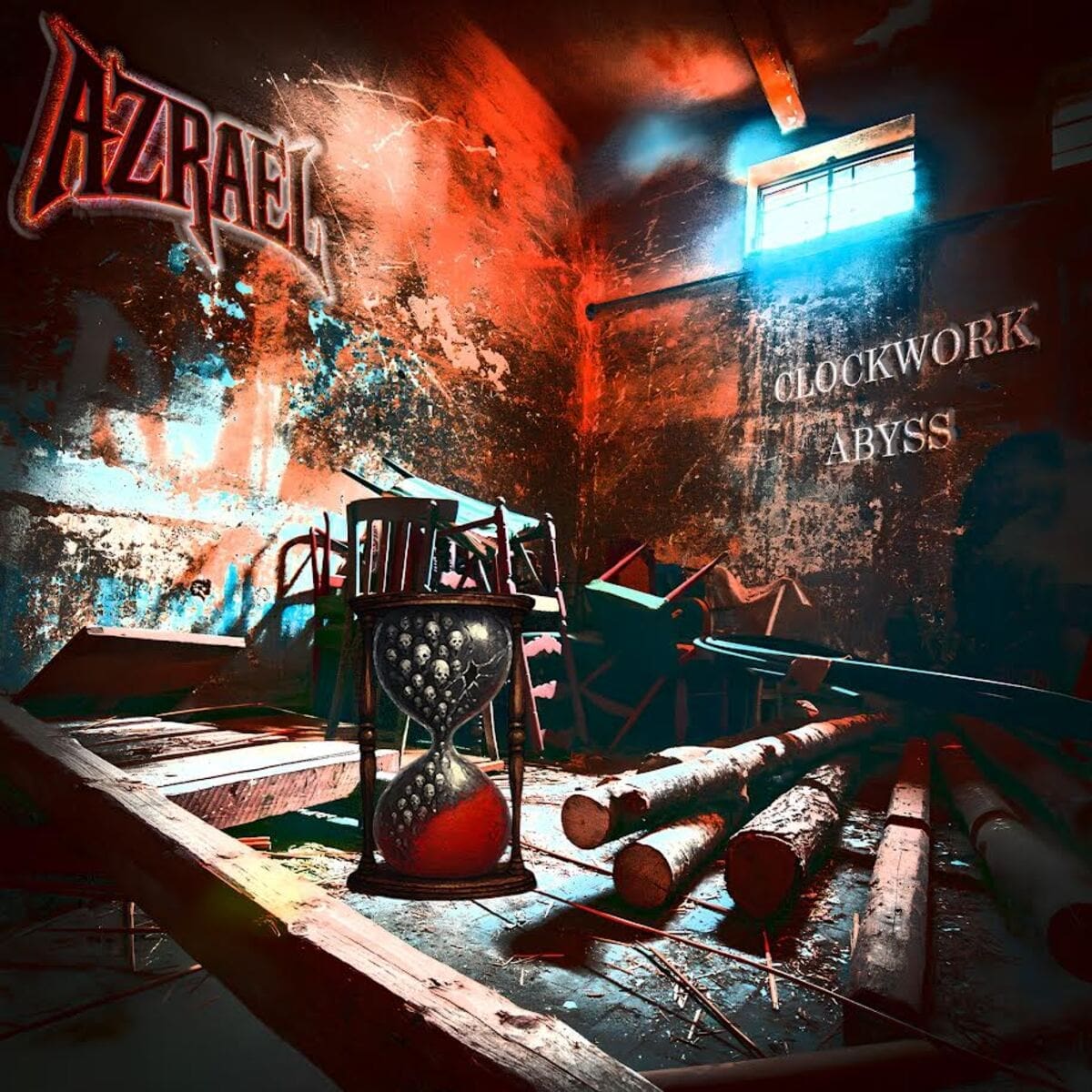
Pulling directly from my exclusive interview with the band, Azraël stated: the artwork shows an abandoned room, dust and old timber, with that hourglass still standing in the middle of it. That is us, more or less. The room was left behind. The clock kept going. We came back for it.
The Seventh Sin, Disrelish
There is exceptionally little to actively disrelish across these five hymns. The execution is flawless, the production is uncompromised, and the songwriting is remarkably sharp.
The Hymns
01. Nemesys
02. Call Me Rover
03. Chinatown
04. My Lost Delight
05. No More Time
Azraël
Federico Travi — Vocals
Edoardo Napoli – Guitar
Andy Lijoi – Guitar
Mik Radogna – Keyboards
Gianluca Eroico – Bass
Daniele Di Tullio – Drums