Blasphemists Temple — Demo Review
Blasphemists Temple is a UK (Glasgow-based) extreme doom/drone/noise trio whose debut release, simply titled Demo, arrived on 6 July 2026. Released through Makeshift Swahili, available digitally and as a red C40 cassette with a bonus hymn.
Blasphemists Temple, Demo Review: This review will evaluate every aspect of the album, from its intricate musical composition to its production.

The First Three Sins, The Summary
The First Sin, The Strings/Keys: Monolithic baritone and 7-string guitar interplay, immense drone textures, and ritualistic doom riffing forge a crushing subterranean soundscape. The Second Sin, The Vocals: Cavernous incantations and eldritch vocal rituals become another instrument within the suffocating wall of noise. The Third Sin, The Percussions: Slow, ceremonial percussion, cavernous tom work, and expansive cymbal washes anchor every hymn with oppressive patience.
The Fourth Sin, Overall Discussion
Opening Rite: The Eldritch Noise Vault
The moment the listener presses play, they are engulfed by a thirty-minute wall of sheer, riff-forward noise. Spread across four sprawling hymns, Blasphemists Temple wastes no time establishing a suffocating sonic domain, grounding its vision deep within the unearthly realms of Lovecraftian horror and dark fantasy.
Ritual Act II: The Arcane Threshold
Blasphemists Temple constructs an extensive, immersive architecture. The four hymns function less like standard hymns and more like dark rituals conjuring from an ancient grimoire, utilising a dense wall of noise and heavy riffing to evoke ancient, nameless entities lurking in the shadows of dark fantasy lore.
Ritual Act III: The Weight of the Monolith
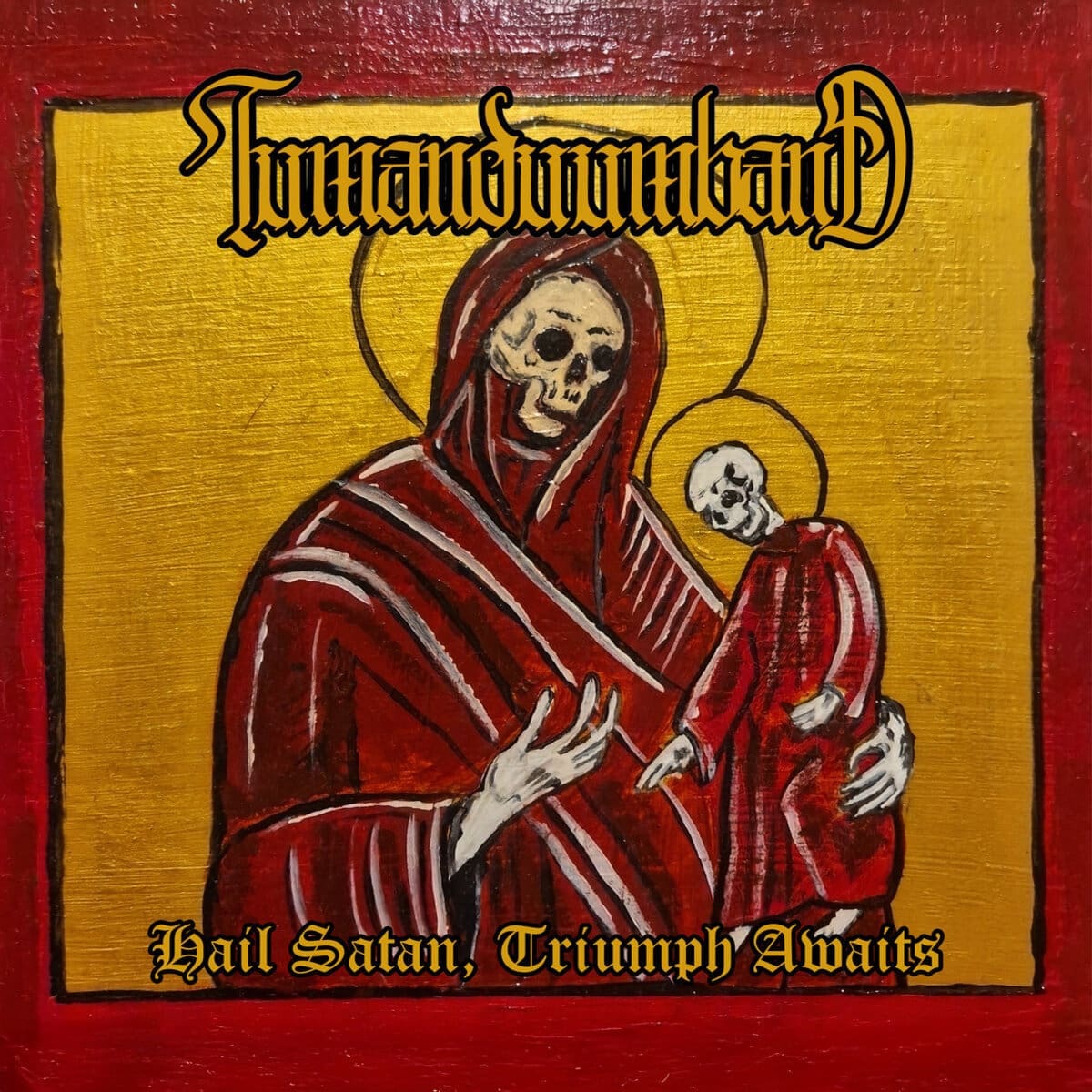
Musically, Blasphemists Temple is certainly not intended for every listener. However, for those who revere the riff-heavy songwriting of Sleep and Neurosis, the experimental sludge of Melvins, the drone-drenched noise of Sunn O))), and the painful, ritual doom of Tumanduumband, this beast was built specifically for you.
The band deploys a low-frequency, monolithic sound, utilising a baritone and 7-string guitar interplay that creates a crushing, subterranean harmonic field. These drone elements reveal a deep commitment to ritual ambience and extended-tone minimalism, firmly placing them within the darker, unholy fringes of UK doom experimentation.
Ritual Act IV: The Agonising Rhythmic Arc
The songcraft here is long, painful, and deliberately gruelling. The opening hymn sets the altar with seven minutes of crushing weight, followed by a second hymn stretching past nine minutes. The third hymn serves as the album’s massive, twelve-minute centrepiece of pure eldritch dread, before the closing hymn seals the hidden ritual with six final minutes of suffocating drone noise.
Not for the timid — a challenging journey to embrace…
Sub-header V
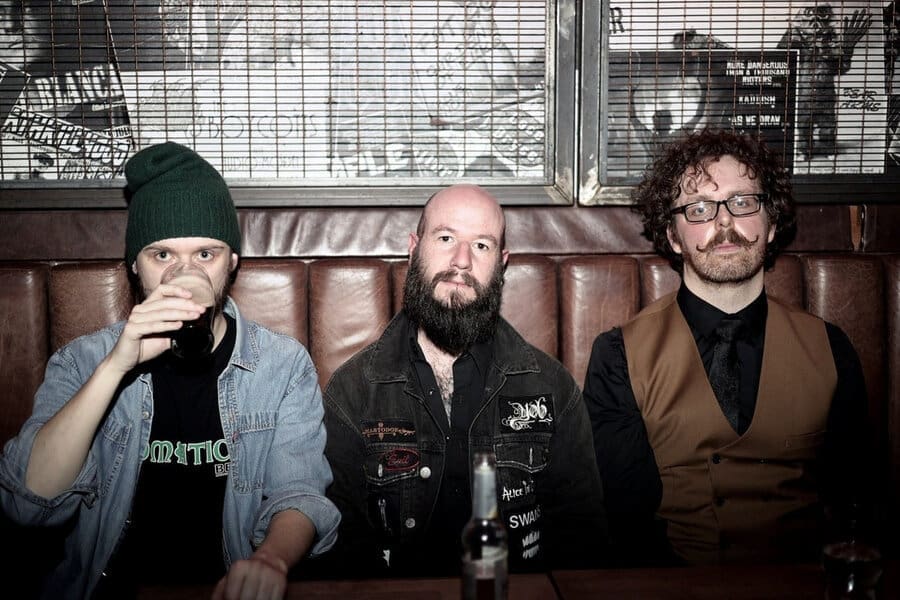
The devilmanship shared among the three members is mammoth, and the overarching composition across these four hymns is executed with unholy perfection. Rather than relying on the traditional guitar-and-bass framework, Blasphemists Temple deploys a specialised dual-guitar configuration that entirely omits a conventional bass guitar:
- The Baritone Guitar (spell-crafted by Alistair Quietsch) — tuned extremely low, it functions as the pseudo-bass register of the band. Its primary role is to deliver sub-harmonic physical weight through long, sustained notes and slow, crushing chordal movements.
- The 7-String Guitar (Conjured by Neil Smith) — provides upper-midrange dissonance, abrasive scraping textures, and haunting, droning intervals over the low-end foundation.
Together, the two guitars behave as living drones, occasionally fracturing their sustained noise to erupt into primitive doom motifs. Omitting a dedicated bass guitar gives the music a raw, unpolished low-end — less defined than a standard bass line, and far more like a continuous seismic rumble shaking the earth beneath the listener.
Code Rite I: The Incantation & Ritual Coda
Completing the trio, Leo Hancill commands the drum battery alongside the foundational drones. His percussion style is slow, deliberate, and deeply ritualistic — relying heavily on cavernous floor tom thuds, wide ride cymbal washes, and expansive, uncomfortable gaps of silence.
The ambient drones woven throughout are built from raw amp hums, feedback, sustained tones, and manipulated guitar resonance.
Code Rite II: The Incantation & Ritual Coda of Tape Hiss
The cassette-only fourth hymn distils Hancill’s drone craft into a single, unbroken ritual tone-field. Functioning as a slow exhalation of raw amp hum, feedback pressure, and sustained resonance, it serves as a final, eerie descent — a pure ambient coda that lets the subterranean frequencies linger in the air long after the primary three hymns have collapsed.
Fronting this horror, Alistair Quietsch delivers vocals that are deep, cavernous, and ritual-intoned. It is far more akin to an ancient, eldritch incantation than traditional singing, grounding the album’s dark fantasy narrative in pure sonic dread.
Ritual VII: The Pressure of the Void
The production across Demo is raw, subterranean, and deliberately unvarnished. Rather than serving as a polished studio artefact, it stands as a direct document of massive amplifier weight, suffocating room pressure, and ritualistic minimalism. Engineered to feel immediate, humid, and physically oppressive, the recording completely strips away modern metal sheen.
Instead, the soundscape is built entirely around extreme density, low-frequency bloom, and the physical force of slow-moving air pressure.
The Closing Rite
Overall, Demo is a subterranean, eldritch fruit of art. As the final amp hum and feedback settle into the mind of the listener, that primitive ringing lingers long in the ears as the void collapses within.
Blasphemists Temple has conjured a heavy, unapologetic four-hymn monument that embraces ritualistic doom, noise minimalism, and Lovecraftian dread with dedication.
The Fifth Sin, The Memorabilia
For me, Demo proved itself to be something undeniably heavy, dark, and conjured by hymns that felt like passageways into ancient shadow. I genuinely found myself absorbed by this release; it vividly evoked three entities whose sound and vision I deeply revere: Sunn O))), Sleep, and Tumanduumband. Combined with the thematic influence of one of my favourite authors, H.P. Lovecraft.
Blasphemists Temple essentially crafted a bedtime story for me — only told through crushing doom, drone, and noise.
In terms of runtime and track count, it hit the perfect sweet spot. Thirty minutes across four hymns was just right; anything longer would have risked diminishing returns.
The Sixth Sin, The Artwork
The artwork resembles the cover of an ancient spell book. Created by Alistair Quietsch — whose visual art is also woven into their stage dress and release materials — the design seamlessly incorporates occult symbolism that mirrors their lyrical fascination with Lovecraftian horror and dark fantasy.
The Seventh Sin, Disrelish
There is nothing to disrelish across this entire subterranean assault; this is music that does not ask to be heard, but to consume the listener whole.
The Hymns
01. Devil’s Flies
02. Thine
03. Curse
04. Bonus Hymn (cassette only)
Blasphemists Temple
Alistair Quietsch — Baritone, Vocals
Neil Smith — 7 Strings
Leo Hancill — Drums, Drones (hymn four)