Oskaal — (A)live Review
Oskaal is a Norwegian extreme metal entity. On 25 September 2026, Oskaal released their debut full-length, (A)live, through WormHoleDeath Records.
Oskaal, (A)live Review: This review will evaluate every aspect of the album, from its intricate musical composition to its production.
The First Three Sins, The Summary
The First Sin, The Strings/Keys: Aggressive death metal riffing, soaring melodies, technical precision, and blackened atmospherics. The Second Sin, The Vocals: Deep gutturals, piercing shrieks, and commanding vocal aggression. The Third Sin, The Percussions: Tight rhythmic execution, dynamic tempo shifts, explosive brutality, and driving grooves.
The Fourth Sin, Overall Discussion
The Resurrection of Familiar Hymns
Before heading into the review, it is vital to note how the album itself is carefully structured. Released as a live album, six of its hymns — apart from “Annihilation” — are drawn directly from their previous EP, Drenched in Sin. However, (A)live is far from a simple carbon copy transposed to a stage setting; it features an entirely reimagined hymn sequence.
Whereas the atmospheric dread of Hymn served as the gateway to the studio release, this live record boldly kicks off with the relentless onslaught of Refused.
Seven Hymns Beyond the Veil
The moment the listener presses the play button, any illusion of safety is instantly stripped away as seven towering hymns plunge them into a relentless, suffocating, hypnotic thirty-three-minute journey.
This is no ordinary listening experience; it is a suffocating journey that drags the listener straight into jagged, unmapped thematic territories of collapsing realities, slumbering and forgotten gods, creeping psychological madness, and blasphemous dark revelation.
Yet, what makes the descent truly unsettling is not just the sheer weight of its apocalyptic dread, but the razor-sharp, sardonic black humour that underpins the entire composition — a grim, mocking grin in the face of the abyss that makes the darkness feel all the more personal, cynical, and biting.
The Architecture of Sonic Extremity
Musically, Oskaal pushes far beyond the rigid confines of standard genre boundaries, forging death metal into something visceral yet meticulously controlled, executed with flawless instrumental devilmanship that feels almost supernatural in its precision. At the heart of Oskaal’s sonic architecture lies a powerful, hypnotic interplay between soaring melody and relentless, driving rhythm — a symbiotic pulse that keeps the listener anchored even as the music threatens to tear itself apart.
Their compositions are emotionally intense and structurally dynamic, shifting fluidly from moments of bleak disintegration and spiritual decay to bursts of raw aggression. By fusing a death metal foundation with intricate technical flourishes, progressive complexities, and the frostbitten dissonance of blackened extremities, they summon a crushing, multilayered soundscape — an imposing auditory force that demands not merely to be heard, but deeply and anxiously experienced.
The Rhythmic Machinery of Desolation
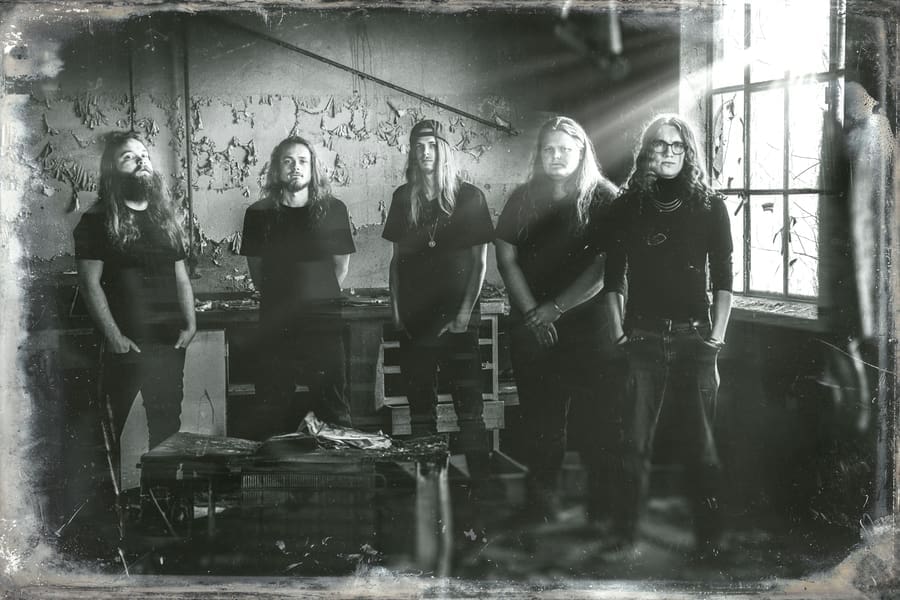
The rhythm section operates as a singular, monolithic force of nature — drums and bass move as one, tightly synchronised and sonically rich. Behind the kit, Jonathan Hamre approaches his performance with an expressive intensity and an undeniable, deep-seated groove, prioritising tight execution over primitive rawness.
This calculated approach is vividly displayed through controlled tempo manipulation; Jonathan Hamre executes seamless transitions that bridge sweeping, atmospheric passages with moments of sheer, unadulterated brutality. Rather than relying upon continuous blasting, his drumming remains intensely dynamic, serving the emotional and structural needs of each hymn.
Concurrently, Tommy Køhler Salte anchors the lower frequencies, his bass guitar injecting a critical depth and menace into the soundscape. This reinforces the sheer heaviness during the death metal sections while locking closely with the drums to create a groove that is both grounded and immersive.
Twin Strings and Fork-Tongued Fury
At the very heart of the sonic assault lies the formidable twin-guitar attack of Jo Aslak Aspås and Erlend Andersen, whose contrasting styles collide in a rare and devastating synergy. Their approach unites analytical precision with instinctive, visceral expression, marrying technical execution with soaring, evocative melodies and relentless, aggressive riffing.
Yet, for all their prowess, their technical skill remains resolutely unpretentious — never self-serving or indulgent. Every single note and razor-sharp riff is placed with surgical intent, serving the greater good of the composition rather than striving to dominate it.
One guitar drives the structural foundation with merciless death metal riffing, while the second provides a haunting melodic and atmospheric counterpoint. Together, they forge a transfixing fusion that bridges the icy desolation of Scandinavian blackened atmosphere with the modern arrangements, sheer weight, and punishing attack of melodic death metal.
At the forefront of this auditory onslaught stands vocalist Ole Stensgård, wielding a voice that does not merely scream — it conjures. Possessing a formidable dynamic range that moves effortlessly between subterranean, earth-shaking gutturals and chilling, piercing shrieks, his performance anchors the music, carrying its suffocating atmosphere just as potently as its raw, unbridled aggression.
The Chamber of Controlled Chaos
The production on (A)live achieves a striking sonic equilibrium, navigating the divide between modern technical clarity and primordial extremity. The mix maintains a sharp, surgical definition, allowing the individual nuances of the performance to emerge without diminishing its crushing intensity.
The freezing, desolate hostility of classic black metal and the low-end physical weight of traditional death metal remain visceral, ensuring the album sounds dangerous, breathing, and violently alive.
The Fruit of Apocalyptic Duality
Overall, (A)live stands as a dark, mythos-laden fruit of art — a relentless, thirty-three-minute exercise in duality, precision, and atmospheric extremity.
Oskaal has successfully forged a terrifying, claustrophobic auditory landscape where collapsing realities and sardonic, razor-edged black humour violently collide, subverting traditional expectations of the genre. Every hymn functions as a jagged pillar within a crumbling architecture of sound, balancing blinding chaos with chilling, calculated control.
The Fifth Sin, The Memorabilia
For me, engaging with (A)live has been an absolute blast from the opening chord all the way to its dying reverberation. Yet, what makes the experience so fascinating is that it simply does not sound or feel like a traditional live release.
Overall, this is a blackened, heavy, brutally driven, progressive, and technical creation. There is not a single bad hymn on the album, but the closing hymn, Necrosis, is an absolute beast — its composition will blow your ears and mind straight into a mythos of utter darkness, leaving you breathless, disoriented, and desperate to return to the void.
The Sixth Sin, The Artwork
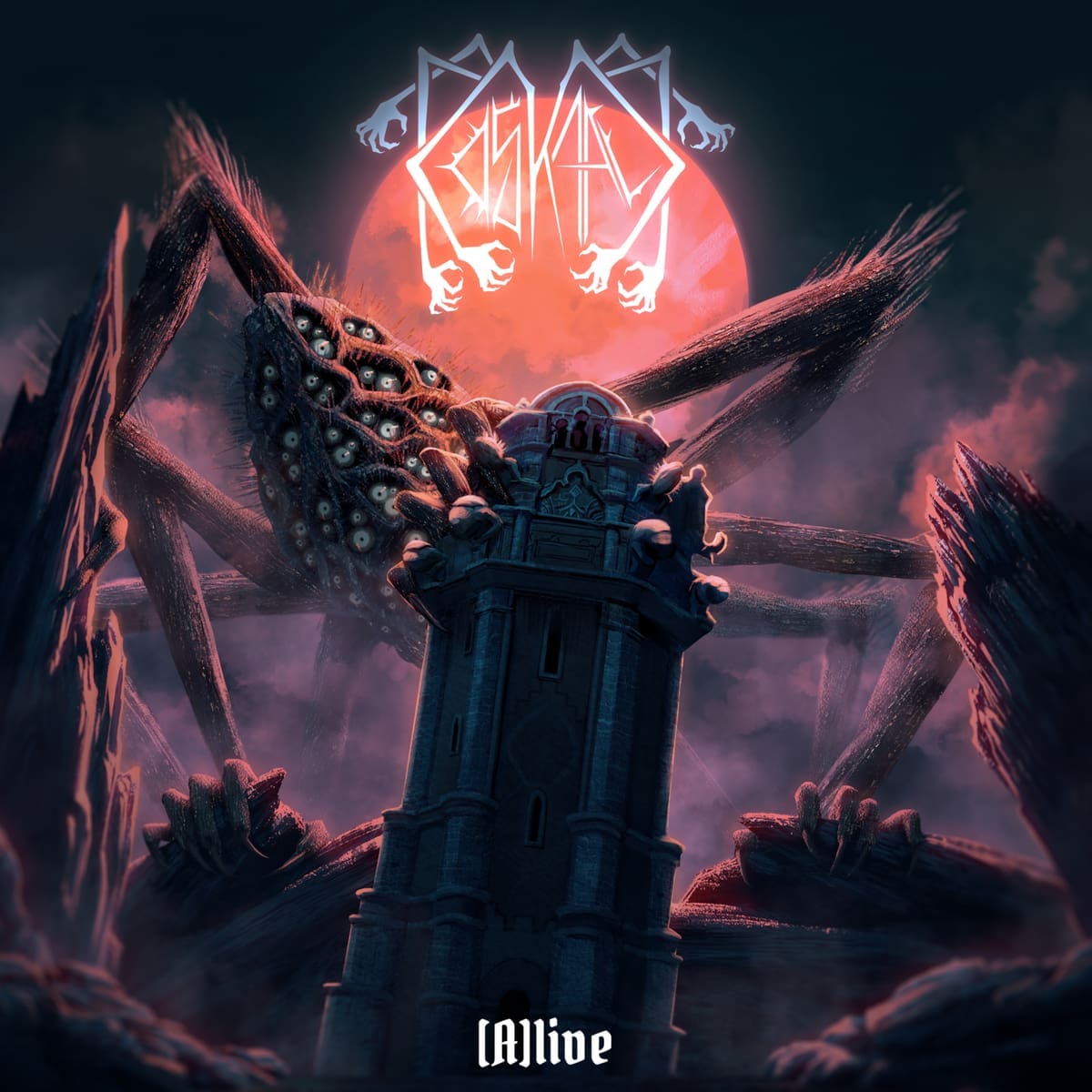
The album artwork carries that distinct Bloodborne video game feeling, but leans even deeper into that cosmic, Lovecraftian universe — a haunting reminder of humanity’s utter insignificance before the sprawling, indifferent madness of the outer gods.
The Seventh Sin, Disrelish
From any rigorous critical standpoint, there is simply nothing to dislike about this release. It is a masterclass in atmospheric darkness and crushing execution, forging a sonic monolith of such profound depth and terrifying beauty that it transcends mere heavy music — echoing loudly from the sunken city of R’lyeh as a fitting soundtrack to the end of all things.
The Hymns
01. Refused
02. Slaughter the Divine
03. Hymn
04. Death
05. Sin
06. Annihilation
07. Necrosis
Oskaal
Jo Aslak Aspås — Guitar
Jonathan Hamre – Drums
Erlend Andersen – Guitar
Tommy Køhler Salte – Bass
Ole Stensgård – Vocals