ExpiatoriA — A History In Three Acts Review
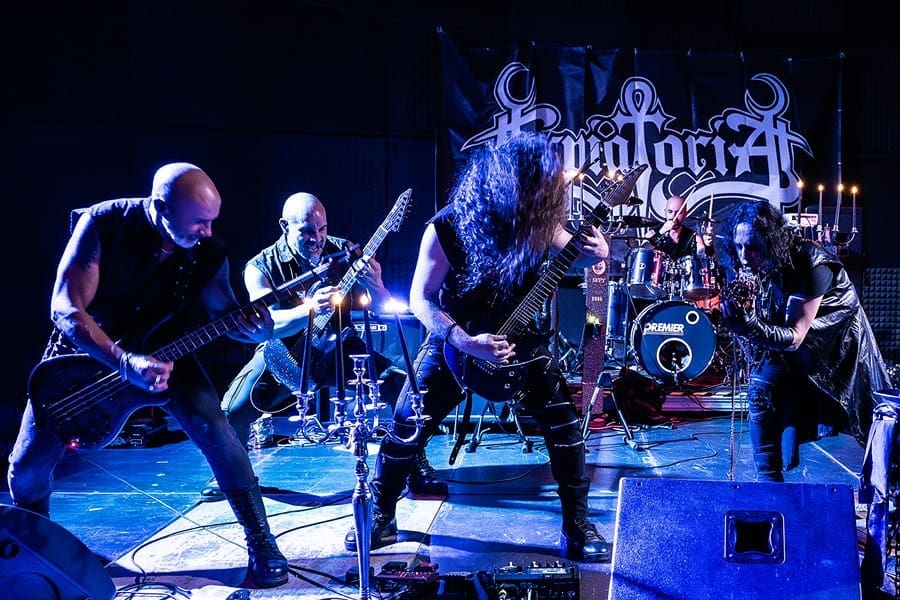
ExpiatoriA is an Italian heavy progressive doom metal entity. On 18 July 2026, the band will release their second full-length album, A History In Three Acts via Diamonds Prod.
ExpiatoriA, A History In Three Acts Review: Based upon a promotional copy provided ahead of release, this review will evaluate every aspect of the album, from its intricate musical composition to its production.

The First Three Sins, The Summary
The First Sin, The Strings/Keys: Ancient heavy-metal riffcraft fuses classic heavy metal, progressive doom, theatrical synthesisers, and warm analogue production into a richly atmospheric sound. The Second Sin, The Vocals: The vocal performances balance traditional heavy-metal conviction with doom-laden gothic theatricality, uniting ExpiatoriA’s past, present, and future. The Third Sin, The Percussions: Organic, dry percussion favours restrained theatrical pacing and natural room resonance, preserving the historical spirit of every hymn.
The Fourth Sin, Overall Discussion
Three Acts, One Legacy
Before heading into the review, this retrospective deserves a different approach. Rather than presenting five entirely new compositions, A History In Three Acts revisits key chapters of ExpiatoriA‘s history through newly recorded interpretations, making this release as much a retrospective of the band’s evolution as it is an album.
The Living History
A History In Three Acts celebrates every official chapter of ExpiatoriA’s career. The journey begins with Underground Forever, originally composed in 1987, and concludes with The Incredible Worm Man, a newly revealed liturgical fragment that offers the first glimpse of the band’s forthcoming studio album. Between these two chronological markers stand An Angel Came To Me from Return To Golgotha (2010), The Librarian from Crimson Evil Eyes (2018), and a newly recorded version of Seven Chairs And A Portrait from the debut full-length, Shadows (2022).
Original vocalist Massimo Cottica returns on Underground Forever and The Incredible Worm Man, further strengthening the bridge between ExpiatoriA’s past, present, and future.
Act I. Underground Foreve ‐ 1987 Reawekened
The album opens with its foundational hymn, Underground Forever, a tracking sequence that feels less like a modern studio playback and more like a sacred reliquary being unsealed the exact moment the play button is pressed. Originally composed in 1987, the hymn is presented here not as a piece of safe, commercial nostalgia, but as a living artifact — exhumed, weaponised, and re-consecrated by the present line-up.
The instrumentation preserves the raw, basement-born angularity that defined late-1980s Italian heavy metal. However, this new arrangement intentionally sharpens the structural edges of the riffs; they strike the mix with a distinct, Mercyful Fate-like diagonal cut — the precise kind of fretwork that feels simultaneously ritualistic and insurgent. This assault is underpinned by drums that are dry, old-school, and time-honoured in their execution.
Elevating this historical reconstruction to its absolute peak are the vocals performed by original frontman Massimo Cottica. His delivery provides this composition with a remarkably tight, piercing throat resonance, gifting the lyric lines a raw, urgent quality that modern production styles simply cannot replicate.
Underground Forever delivers the volatile energy of a sealed chamber suddenly ventilated, forcing the past to rush outward in clouds of dust and unyielding vigour.
Act II. An Angel Came To Me ‐ Golgotha’s Lament
With the second hymn, An Angel Came To Me, the band enters their distinct middle era, a period where their signature sound evolved into something far more theatrical, layered, and devotional. Here, the guitars move in a magnificent dual-harmonic procession drenched in cathedral-reverb, beautifully echoing the sacred-profane tension that lies at the absolute heart of ExpiatoriA’s storytelling.
Every component of the instrumentation is dialled back to serve a higher, theatrical purpose. The drumming is entirely restrained, consciously designed to carry the dark narrative weight forward rather than dominate the mix, while the synths introduce airy, light atmospheric pads beneath the verses. These keys remain subtle and almost subliminal — functioning effectively as an ethereal halo effect hovering around the vocal lines.
The vocal delivery itself hovers in a powerful state of perpetual tension between desperate supplication and bitter accusation, sounding as if it is addressing a celestial witness who flatly refuses to intervene. In this revitalised re-recording, the current line-up leans heavily into the operatic melancholy of the original composition.
The hymn’s true ritual core lies entirely within its meticulous pacing: a measured, candlelit march that is neither simple funeral dirge nor standard metal ballad, but a profound, devotional recitation.
Act III. The Librarian ‐ Crimson Eyes Watching
As the listener stands deep within the dust-choked halls of the library, the occult narrative of the third hymn, The Librarian officially manifests. This tracking sequence beautifully embodies the forbidden knowledge, custodianship, and architecture of secrecy that defines the band’s conceptual core. The riffs here are noticeably sharper and more modern, yet they remain deeply and unyieldingly rooted in classic heavy metal dramaturgy.
Beneath this vaulted archive, the rhythm section behaves like a complex clockwork mechanism, its gears turning relentlessly beneath the stone floors. The drums are modern, tight, and exceptionally controlled, while the synths are kept entirely subtle — operating more like shadowy keyboard layers than overt melodic leads.
This restraint emphasises the hymn’s labyrinthine structure, where the guitar lines interlock precisely like dusty shelves in a vast, torch-lit repository, culminating in a chorus that emerges like a hot sigil stamped directly onto ancient parchment. Vocally, the song is delivered with a pristine storyteller’s cadence; each lyrical line feels deliberately turned like a heavy page in a forbidden tome.
The Librarian sings with all of Candlemass’s crushing cathedral solemnity, yet suddenly erupts with King Diamond’s legendary ghost-theatre shriek. It is the performance of a true chronicler whose voice fluidly shifts between a weary archivist, a horrified witness, and a lingering apparition.
Act IV. Seven Chairs and a Portrait ‐ Shadows Reframed
As the seventh chair is drawn forth, the listener finds themselves staring directly into the frame of the fourth hymn, Seven Chairs and a Portrait. This hymn operates as a gothic tableau, evoking the heavy, claustrophobic atmosphere of an abandoned room frozen in ritual time.
The guitars are massive, carving out the sonic space like exposed architectural beams inside a decaying manor. Rather than simply maintaining a basic rock beat, the percussion is used with incredible theatrical intent to create a chilling sense of physical, spatial movement. The drums echo through the mix like slow, deliberate footsteps pacing across a hollow wooden floor in a dark gallery.
Layered beneath this tension are dense, possibly choir-like synth sheets, meticulously deployed to reinforce the sensation of a room completely suspended outside of normal clockwork time. Vocally, the hymn reaches a fever pitch of avant-garde horror. The lines are delivered with a distinct, Francis Bacon-like distortion, psychologically bending the human form into twisted, agonisingly symbolic postures.
The voice feels entirely non-linear — warping and stretching across the architectural scaffold of the guitars like a painted figure trying to scream its way out of the canvas itself.
Act V. The Incredible Worm Man ‐ The Twisted Carnival Hymn
The retrospective concludes with its crowning, previously unreleased hymn, The Incredible Worm Man. Serving as a direct preview of their forthcoming studio album, this hymn features the return of original frontman Massimo Cottica on vocals, bridging the band’s rich history with their impending future.
Musically, the composition is noticeably faster, more sinewy, and more grotesquely playful — operating like a twisted carnival piece delivered with absolute heavy metal bravado.
The instrumentation shifts away from the stately, candlelit paces of the middle eras toward a more manic, organic energy. The guitar riffs coil and uncoil relentlessly across the hymn like subterranean creatures carving through soil, while the drums pulse with a striking live-room immediacy. This organic percussive force strips away any sterile studio polish, allowing the band’s foundational heavy metal roots to breathe with raw, uncompromised energy.
Vocally, Cottica delivers a tour de force of unhinged devilmanship. The performance is extraordinarily exuberant, leaning heavily into a grotesquely theatrical delivery that balances classic metal grit with carnivalesque madness.
As a definitive final act, The Incredible Worm Man purposefully refuses to close the album with a standard, clean resolution; instead, it aggressively opens a dark, winding tunnel leading straight into the next official chapter of ExpiatoriA’s evolving legacy.
The Analogue Testament
The production is intentionally unvarnished, as if the band recorded live in the room, letting the natural acoustic bleed of drums, guitars, and voice organically shape the entire mix and the synths appear only as faint, atmospheric veils. Everything is kept close and strictly analogue — characterised by a dry snare, warm distortion, and minimal vocal doubling — so the hymns feel like authentic, preserved artifacts rather than modern digital reconstructions.
The Verdict of the Three Acts
Overall, A History In Three Acts is a theatrical fruit of art, composed and arranged with consummate devilmanship. The overarching sound feels as though an ancient seal has been unbroken. An immersive aura woven from the spirits of King Diamond, Crypt Sermon, Goblin, Dario Argento, and Candlemass, and classic 80s heavy/doom metal wraps around the listener like a thick, heavy fog on a freezing winter night.
The Legacy Lives On
By refusing to iron out the organic wrinkles of their history, ExpiatoriA has achieved something remarkably rare. This release proves that their legacy is not a static museum piece, but a living, breathing force. Through this raw, analogue restoration, the current line-up has successfully gathered the ashes of their past chapters and used them to ignite a blazing, uncompromised path directly into the future.
The Fifth Sin, The Memorabilia
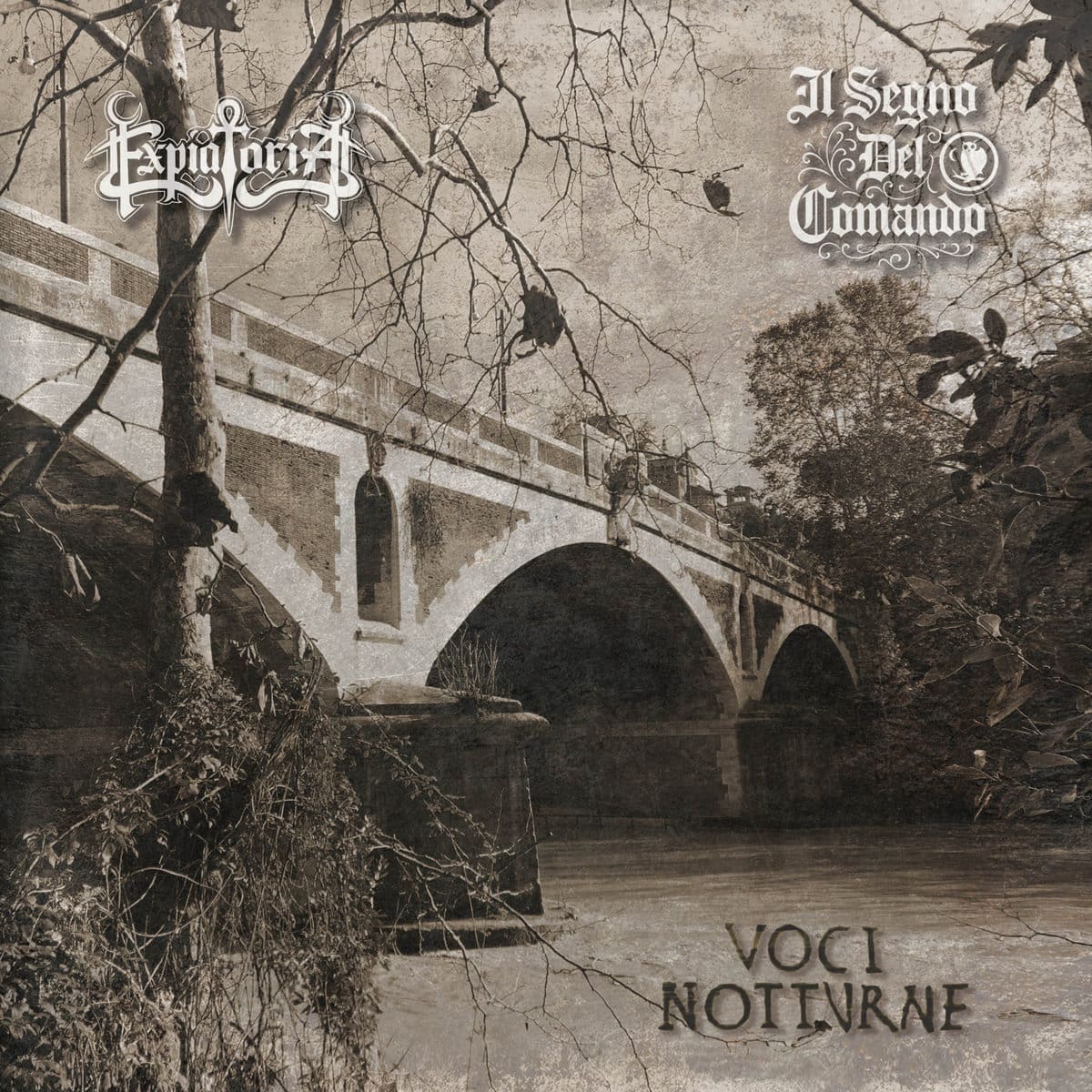
Where should I commence? As with their Voci Notturne release — which I previously reviewed — A History In Three Acts stands as something distinctly different yet equally profound. Both works capture an essence that feels magical, timeless, and uniquely Italian, transcending the boundaries of heavy or doom metal. ExpiatoriA operate instead within the realm of authentic Italian Gothic horror and occult artistry, a tradition they embody with absolute conviction.
Every hymn within this short historical compilation is deeply enjoyable, forming a perfectly measured and tightly bound ritual. The decision to open and close the work with hymns sung by original vocalist Massimo Cottica adds a rare alchemy — a sense of return, remembrance, and continuity that feels genuinely enchanted.
And now, having witnessed this retrospective arc, I find myself longingly awaiting the next official chapter. Whatever ExpiatoriA unveil next, I am ready for it to carve its mark upon my ears.
The Sixth Sin, The Artwork
The artwork presents a striking ritual-library tableau constructed to mirror the exact heart of ExpiatoriA‘s aesthetic. It evokes a dense atmosphere of occult scholarship, rich gothic theatricality, and a profound sense of an ancient narrative unfolding across distinct acts, preparing the listener visually for the historical restoration contained within.
The Seventh Sin, Disrelish
I find nothing to disrelish across this entire theatrical library. The only downside is that my repeat button is like a frayed, ancient manuscript of the Necronomicon.
The Hymns
01. Underground Forever
02. An Angel Came to Me
03. The Librarian
04. Seven Chairs and a Portrait
05. The Incredible Worm Man
ExpiatoriA
AngeleX — Vocals
Massimo Malachina — Guitar, Keyboards
Roberto Lucanato — Guitar
GB Malachina — Bass
Enrico Meloni — Drums
Massimo Cottica — Vocals on hymns I & V