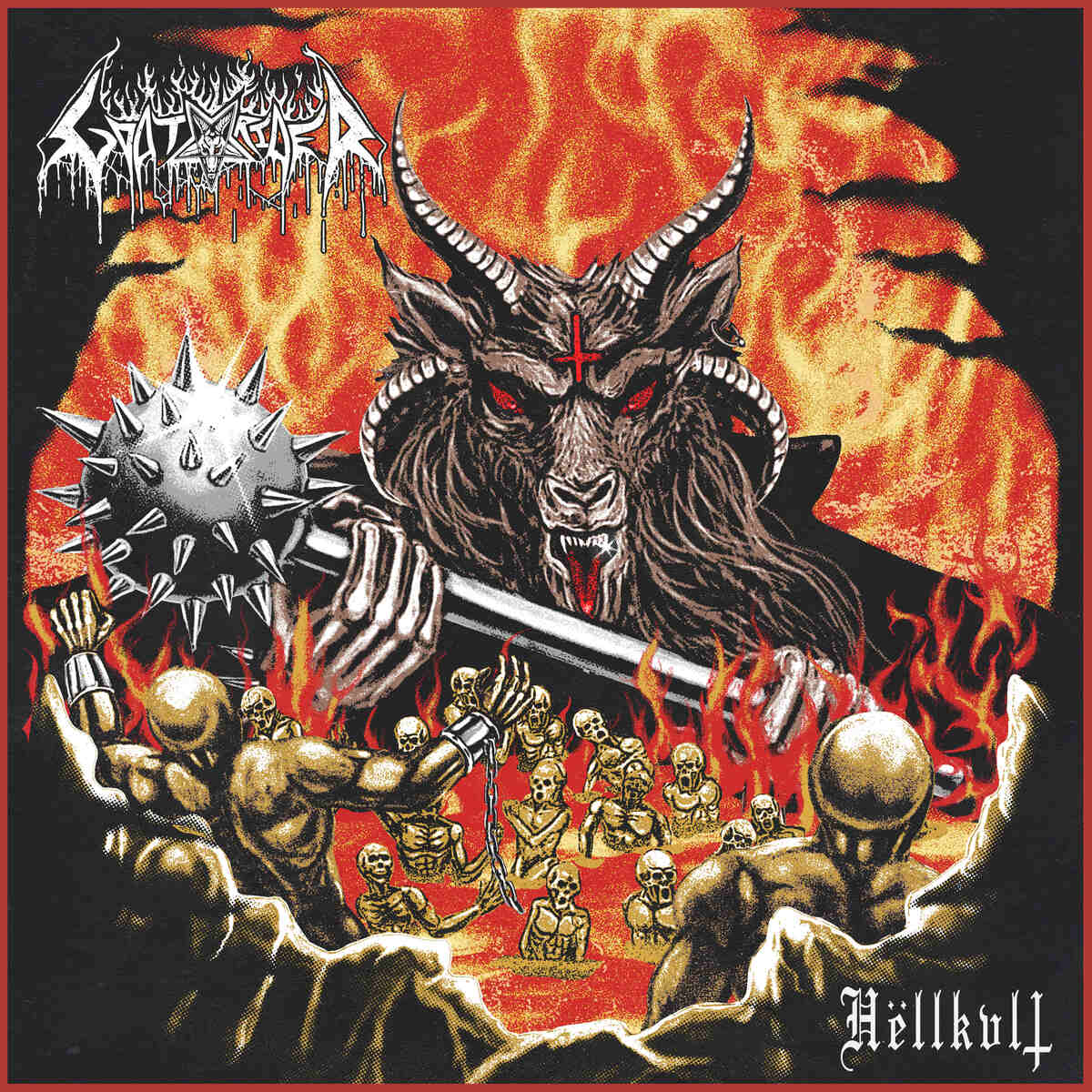
Goat Rider — Hellkvlt Review
Goat Rider is a Costa Rican blackened speed metal entity. On 31 October 2026, Goat Rider released their fourth full-length Hellkvlt. The album was co-released via Crypt of Dr. Gore Records, Witches Brew, Selvajaria Records, and Fallen Temple.
Goat Rider, Hellkvlt Review: This review will evaluate every aspect of the album, from its intricate musical composition to its production.
The First Three Sins, The Summary
The First Sin, The Strings/Keys: Twin guitars unleash blood-soaked, razor-sharp riffing, vicious tremolo assaults and blistering old-school solos. The Second Sin, The Vocals: Rough, phlegm-soaked snarls spew blasphemy with the venom of black metal and the aggression of punk. The Third Sin, The Percussions: Relentless d-beats, thunderous double-kicks and breakneck speed-metal rhythms propel the chaos forward.
The Fourth Sin, Overall Discussion
Nine Hymns of Blasphemous Speed
From the very second the listener presses play, Goat Rider wastes no time dragging them headfirst into the abyss. Clocking in at just under twenty-eight minutes, Hellkvlt is relentless and lightning-fast in extreme aggression. The album delivers nine blasphemous hymns — well, technically eight proper hymns of chaos, rounded out by a ferocious closing medley.
The band unleashes a grand finale: a blistering medley that seamlessly welds Sodom’s proto-thrash anthem Outbreak of Evil with Venom’s legendary blueprint of blasphemy, Witching Hour.
It is not merely a cover, but a direct, headbanging nod to the founding fathers of extremity who paved the way, proving that Goat Rider’s allegiance to the old-school underground is absolute and unwavering.
Devilmanship Forged in the Underground
At the very helm of Goat Rider is a devilmanship that has been honed to razor-sharp, malevolent perfection — a testament to a band that understands the dark arts of extreme music intimately. Yet, rather than utilising this mastery to chase modern standards of production, their execution in instrumental composition feels deliberately and meticulously engineered to sidestep the sterile, over-compressed polish plaguing contemporary metal.
Consequently, it feels less like a contemporary studio product and more like a relic excavated from an alternate 1985 tape-trading network.
Twin Blades of Blackened Steel
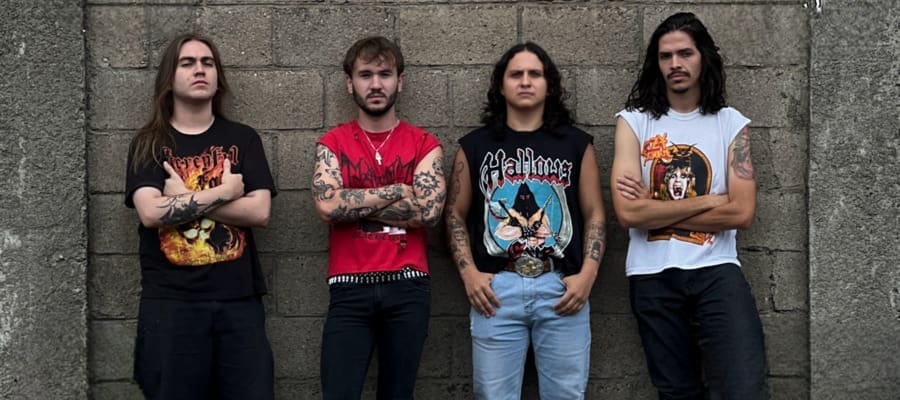
From the moment the needle hits the wax, the twin-guitar assault executed by Deströyer and SU Desecrator establishes itself as the album’s ultimate weapon — acting as blood-soaked blades. Rather than relying on the conventional, rigid dichotomy of standard rhythm and lead separation, the two fretboards feel locked in a vicious, dynamic conversation — playing, sparring, and teasing with each other in a chaotic display of chemistry.
When the time comes for lead breaks, the solos are kept intentionally short and aggressive — surgically precise bursts of noise that serve the song and enhance its momentum rather than dominating or derailing it.
The riffcraft is controlled aggression, driven by filthy, rapid-fire speed metal riffing and deeply primitive, infectious blackened thrash, characterised by a relentless barrage of fast tremolo-picked black riffs. To add to the authentic, underground atmosphere, the duo makes heavy use of old-school, first-wave black metal chord voicings, summoning a bleak, cavernous aura.
The Unholy Rhythm of Sacrilege
Binding the chaos together like a rusted iron chain, bassist and vocalist Christo Messiah delivers a muscular performance that acts as the perfect foil to the band’s searing guitar attack. Rather than merely following the root notes, his bass lines reinforce the relentless rhythmic momentum, locking in tightly with the percussion to create a dense, impenetrable wall of sound.
Messiah’s vocals sound like a howling, drunken prophet spewing blasphemies and screaming sacrilege with a rough, phlegm-soaked vocal grit. Sonically, his style occupies a brutal, liminal space — hovering somewhere between the venomous, ice-cold snarls of early Norwegian black metal, the aggressive, rhythmic barking of classic crossover thrash, and the raw, confrontational urgency of street-level punk.
Driving this chaotic engine from behind the kit is JC Alcoholic Wizard, whose drumming serves as the ferocious heartbeat of the ensemble. He exhibits a relentlessly high-energy performance. JC propels the music forward through a relentless barrage of blistering d-beats and breathless speed-metal rhythms. He intersperses these punk-fuelled charging segments with thunderous, high-speed double-kick passages.
The First-Wave Blackened Conspiracy
Musically, Hellkvlt is a lethal, high-octane sonic cocktail that seamlessly welds the ice-cold malice of black metal, the razor-sharp riffing of thrash, the breathless urgency of speed metal, and the raw, unpolished aggression of punk, all underpinned by an unmistakable, swaggering black ‘n’ roll groove.
The band channels a distinct pedigree of extreme music pioneers, drawing heavily from the sulphurous, filthy aura of early Venom, the reckless, breakneck velocity of German thrash architects Sodom, and the undeniable, leather-clad rock ’n’ roll swagger of Motörhead, Bathory, and Hellhammer.
Topping off this sonic onslaught is a lyrical assault steeped in traditional occult darkness, exploring forbidden themes of witchcraft, demonic invocation, blood sacrifices, blasphemy, wartime carnage, and relentless, heavy-metal-fuelled mayhem.
A Rotten Relic of Sonic Extremity
Overall, Hellkvlt emerges as a raw, old-school and rotten fruit of art — a vicious sonic artefact that cares little for modern polish and everything for primal impact.
The album’s power comes not from technical sophistication but from the violent, unholy collision of blistering speed, unrelenting sonic filth, and the unyielding, devilish conviction of first-wave black metal.
The Fifth Sin, The Memorabilia
For me, Hellkvlt delivers far more than I could ever ask for. As a devoted fan of extreme metal, I am always chasing that next great sonic adrenaline rush, but when you inject the filthy, untamed swagger of dirty rock ‘n’ roll into the mix, the resulting combination transcends standard genre boundaries. It becomes something altogether heavier, more degraded, rawer, and thoroughly speed-ridden — a relentless assault on the senses.
Beyond that, Goat Rider does not just offer garden-variety extreme rock ‘n’ roll; it delivers a masterclass in nostalgia, capturing the unmistakable, analogue atmosphere of music that feels genuinely like it was recorded in the damp, rehearsal-soaked dungeons of the early or mid-1980s.
The Sixth Sin, The Artwork
Complementing this sonic onslaught is the artwork, which pulls a direct visual lineage back to the glorious, unpolished days of early extreme metal, setting the perfect mood before the needle even drops.
The Seventh Sin, Disrelish
Ultimately, there is simply nothing to dislike here. It is an unapologetic triumph of underground grime, and as a result, it has already earned a more-than-fair share of heavy rotation on my turntable.
The Hymns
01. Slave
02. Infant Sarcrifice
03. Häxan
04. The Key
05. To Get Drunk n’ Get Laid
06. Time to your Death
07. Blood & Rust
08. Violent Witch
09. Outbreak of Evil (Sodom cover) / Witching Hour (Venom cover)
Goat Rider
Deströyer — Guitars
Christo Messiah – Bass, Vocals
JC Alcoholic Wizard – Drums
SU Desecrator – Guitars
Hear The Music
Social Links
Crypt of Dr. Gore Records | Home Page