Pig’s Blood — Destroying the Spirit Review
Pigs Blood is a bestial death metal horde from the United States. On the 24 April 2026, the band unleashed their third full-length Destroying the Spirit, via Dark Descent Records, with promotion handled by Clawhammer PR
Pigs Blood, Destroying the Spirit Review: This review will evaluate every aspect of the album, from its intricate musical composition to its production.
The First Three Sins, The Summary
The First Sin, The Strings/Keys: A continuous barrage of mid-range-heavy guitar fire — dense, dry, and built on strafing tremolo runs and dissonant chord-cluster violence. The Second Sin, The Vocals: Low, bestial, and command-driven — barked with militaristic force, cutting through the mix with sharp-edged authority. The Third Sin, The Percussions: Hammering blasts and a high-set, relentless kick — disciplined, locked, and engineered as the driving engine of a sustained tactical assault.
The Fourth Sin, Overall Discussion
The Immediate Drag into Filth
As soon as the listener presses play, there is no welcome. Instead, they are dragged immediately into an extreme filth defined by a raw, brutal battlefield. This is the sound of a bestial death horde going scorched earth.
Over its thirty-plus minute runtime, the record removes any sense of safety, replacing it with a madness that boils dangerously — like fire ants crawling through the veins of the listener.
The War-Death Convergence
While often grouped under the war metal banner, Destroying the Spirit is an unrepentant beast that stretches beyond simple categorisation. It is a hostile merger of:
- Death Metal Density — muscular, suffocating weight that provides the record with its bludgeoning power.
- Militaristic Atmosphere — a raw, disciplined form of chaos that feels like a calculated strike rather than a random outburst.
- Blackened War Hostility — the high-velocity spite and serrated edge of bestial black metal.
Rifled Devilmanship & Strafing Fire
Pig’s Blood draws from the raw fury of titans like Revenge, Conqueror and Blasphemy, but they deliver their battle hymns with a density that feels uniquely thick and death-heavy. It is a thirty-plus-minute campaign of scorched-earth violence — no walk in the park, and certainly no place for the faint of heart.
The devilmanship here is honed toward precision, but it is a perfection of violence rather than polish.
The twin guitars operate as continuous assault fire, forgoing traditional riff-narration for a relentless barrage. The tone is thick and dry: a mid-range-dominant distortion that avoids the typical war-metal fuzz in favour of a clear, bestial death metal density. Strafing Runs: fast, hostile tremolo surges that feel like aerial bombardment — deliberately unmelodic and calculated for maximum suppression through chord-cluster violence.
Dissonant shapes are hammered into the listener’s consciousness rather than articulated, prioritising impact over structure.
Engine of War: Bass & Percussive Discipline
The bass does not seek its own identity; it is a tool oflow-end saturation. It merges with the guitars to create a singular, impenetrable wall of noise. The devilmanship of the percussion avoids the common trap of chaotic, spiralling noise.
Instead, the drums provide a foundation of structured violence. Every movement is locked to the guitar’s strafing runs, ensuring that the aggression never loses its focus.
- Hammer Blasts — fast and relentless, yet possessing a mechanical discipline that bolsters the riff rather than obscuring it.
- The Dry Kick — high in the mix and rapid, the kick drum provides the record with a relentless forward motion, acting as the engine of the assault.
- No Mercy, No Noise — by staying locked, the drums transform the thirty-plus-minute runtime into a single, sustained tactical strike.
Command Voice Over the Battlefield
The vocals provide the bestial roar needed to lead this assault. They are deep, hostile, and delivered with a barked militaristic force. Rather than hiding behind cavernous echo, the delivery is:
- Low & Bestial — a guttural presence that feels grounded in death-metal brawn.
- Sharp-Edged — a harshness that cuts through the hostile slab of the guitars.
- Commanding — the short, barked phrases sound like orders being issued in the heat of a chord-cluster bombardment.
The Anatomy of the Siege
The production philosophy of this record is defined by itsimmediate and abrasivenature. It is not polished, yet it avoids the murky, reverb-heavy pitfalls of its peers. The mix is dense and mid-range-heavy, pushed forward to create a sensation of continuous assault that never collapses into indecipherable noise.
The Anatomy of the Siege — every element of the recording is engineered for a specific, lethal purpose:
- Volcanic, forward-pushed guitars — with no atmospheric reverb to soften the blow, the guitars sit right in front of the listener — an inescapable wall of strafing runs.
- Subterranean support — the bass recording is designed purely to thicken the assault, acting as a structural reinforcement rather than a melodic voice.
- Martial precision — the drum production prioritises precision within violence, providing the record with its relentless, martial cadence.
- Vocal Authority — the vocal recording is built for authority, not atmosphere. It is a commanding presence issuing decrees over a burning battlefield, ensuring the bestial growls carry the weight of a general’s command.
Final Strike: Collapse into Silence
The album concludes with the devastating strike of its final hymn, Strikeforce of Isolate Will. When the final note drops, the martial cadence stops dead, leaving only the ringing silence of a flattened battlefield.
The Document of Violence
Overall, Destroying the Spirit is a brutal and forbidden fruit of art. It is a record that demands endurance and rewards the listener with a strange clarity within its brutality.
The Fifth Sin, The Memorabilia
For me, Destroying the Spirit hits like a relentless, brutal assault. The most compelling aspect of their devilmanship is the way they have weaponised a battlefield sound, twisting the fusion of war metal and death metal like a strand of razor-sharp barbed wire.
As a follower of the bestial black metal lineage — bands like Revenge, Conqueror, and Blasphemy — I find Pig’s Blood to be a fresh and punishing take on the extreme. They don’t just merge genres; they forge an entirely new, blackened form of death metal that stands as its own lethal entity.
The Sixth Sin, The Artwork
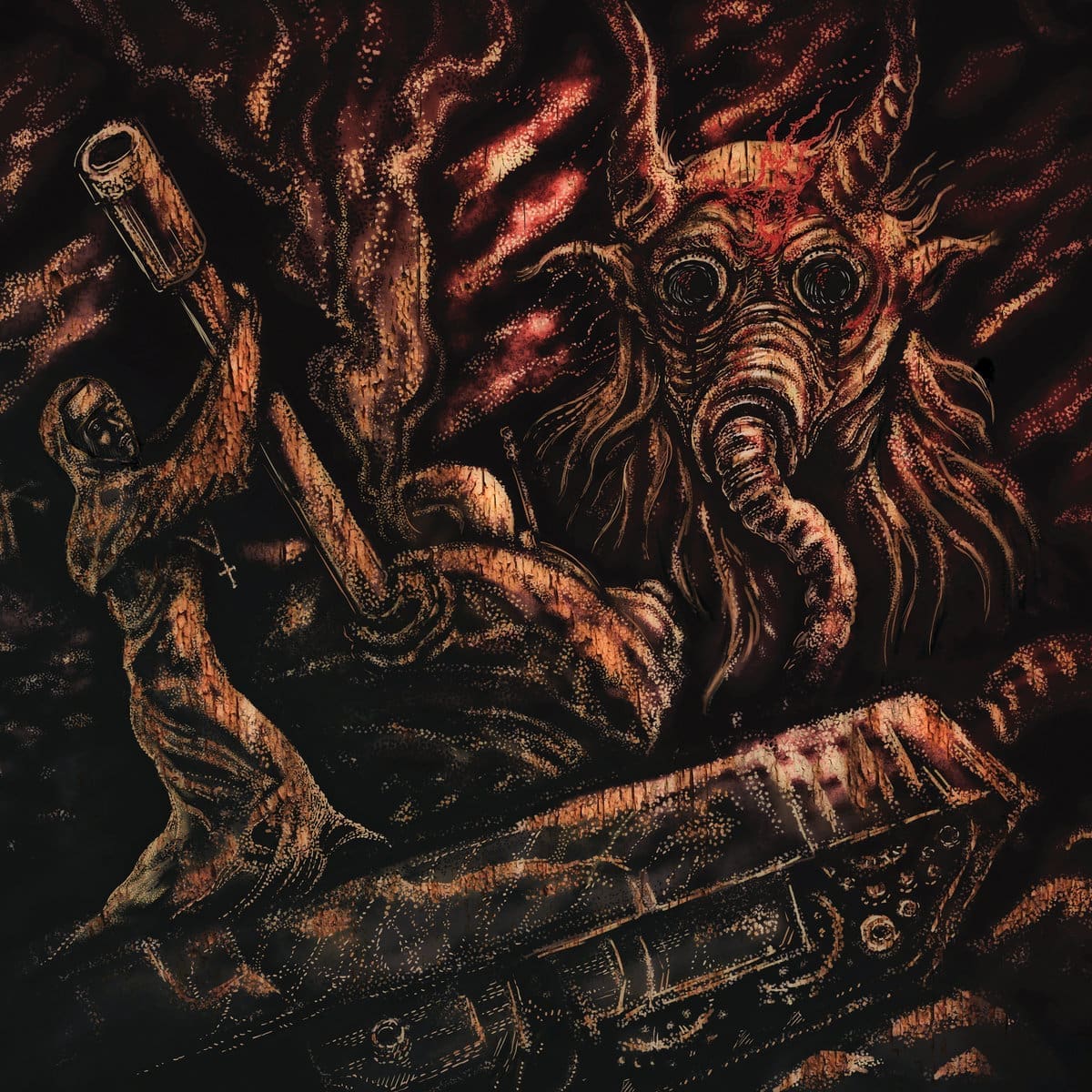
The artwork captures a mechanized rite confronting a molten, ancient horror in a single, held exhalation.
The Seventh Sin, Disrelish
There is no disrelish to be found within Destroying the Spirit. From its assault-driven guitars to its martial cadence percussion and vocal authority, the record remains a cohesive and uncompromising document of bestial power.
The Hymns
01. Standing in Depravity
02. Destroying the Spirit
03. Tartarean Infection
04. Power to Stop It…
05. Rabid Dogs
06. Satanic Hammer of Justice
07. Afternath
08. Commitment to Death
09. Ravenous Hellslaught
10. Strikefroce of Isolate Will
Pigs Blood
Bubba Nitz — Bass
Chris Ellis – Vocals
Brian Serzynski – Drums
Mike Gamm – Guitars
Paul Mirenda – Guitars
Hear The Music
Social Links
Dark Descent Records | Home Page
Dark Descent Records | Bandcamp