Emergenz — Becoming None Review
Emergenz is a German melodic black-death metal entity. On 24 April 2026, the band released their independent debut full-length, Becoming None, promoted via GlobMetal Promotions.
Emergenz, Becoming None Review: This review will evaluate every aspect of the album, from its intricate musical composition to its production.

The First Three Sins, The Summary
The First Sin, The Strings/Keys: Swedish-rooted tremolo riffing, harmonised melodic leads, and dynamic structural shifts forge a guitar-driven assault balanced between aggression and autumnal atmosphere. The Second Sin, The Vocals: Emotionally strained black-metal screams and strategically placed growls embody the protagonist’s descent through memory, conflict, and self-erasure. The Third Sin, The Percussions: Blast-beat violence, sharp snare articulation, and relentless double-kick precision drive the narrative pacing through the shifting forest journey.
The Fourth Sin, Overall Discussion
Serenity Before Collapse
As soon as the listener presses play, the opening hymn Serenity greets them with a two-minute instrumental passage. This passage acts as a structural buildup, a moment of stillness that prepares the spirit for what is about to unfold.
However, this peace is short-lived; as the listener continues the journey through the remaining ten hymns, they are faced with a relentless sonic bombardment.
The Path Toward Nothingness
The album functions as a cohesive narrative, where the band utilises the journey of a protagonist wandering through an autumn forest to mirror the internal experience of life, memories, self-doubt, and inner conflict. These themes unfold metaphorically as the wanderer moves through the trees, eventually reaching the point where he accepts his own inevitable finitude and fades away into nothingness.
To capture this fading of the self, Emergenz blends Swedish-rooted melodic black metal with visceral death metal aggression.
The sonic onslaught that follows the opening serenity is constructed through a diverse tactical array:
- Violent Precision — the core of the sound is built on fast tremolo riffing and relentless blast beats.
- The Vocal Conflict — high-pitched black-metal screams carry the emotional weight, while occasional growls provide a deeper, more grounded emphasis.
- Harmonic Grandeur — melodic solos and harmonised leads provide the Swedish character, adding a sense of tragic beauty to the protagonist’s struggle.
- Experimental Layers — the album is enriched with cinematic textures, including fire sounds, synths, and classical guitars in the intro, alongside brief clean singing and spoken passages that punctuate the journey.
The Architecture of Melancholy
The devilmanship on display throughout Emergenz reveals a solid composition score, particularly within the meticulously crafted instrumentation. The architecture of the sound is defined by sophisticated twin guitar work that balances melodic black metal tremolo with Swedish-leaning harmonised leads and the heavy rhythmic weight of death metal.
The riffs are highly dynamic, shifting seamlessly between fast tremolo sections and mid-tempo melodic phrasing that carries a clear Scandinavian lineage. This is not merely a wall of noise; it is a structured, dual-guitar framework that forms the unbreakable backbone of the album.
The Lead Profiles:
- Melodic Fluidity — the leads are lyrical and mournful, focusing on atmospheric storytelling rather than shredding-oriented technicality.
- Stereo Field — the production utilises a wide stereo field, allowing the dual guitars to breathe and creating a sense of being surrounded by the protagonist’s shifting mental state.
- Compositional Depth — by grounding the melodic black metal elements with death-metal rooted weight, the guitars mirror the weight of the inner conflict central to the concept.
The Pulse of the Forest
The bass provides a warm, supportive low-end that serves as the root system for the twin-guitar work. Rather than seeking to counterpoint the guitars, it follows the architecture of the riffs closely to ensure a cohesive, powerful sound. This is balanced by drums that are precise and mix-forward, featuring a relentless combination of blast beats and double-kick runs, while sharp snare articulation cuts directly through the melodic layers.
The percussion dictates the dynamic pacing shifts, mirroring the protagonist’s movement through the shifting autumnal forest.
Voices of Self-Erosion
The vocal delivery is the primary vehicle for the album’s themes of self-doubt and memory. Positioned forward in the mix, the vocals are primarilyhigh-pitched black metal screams, punctuated by occasional death metal growls.
The delivery is emotional and strained, rejecting theatrical choirs or layered cleans in favour of a raw, authentic sound:
- Spoken Passages — used effectively during atmospheric transitions to ground the metaphorical story.
- Clean Phrasing — brief clean or semi-clean phrases appear sparingly, utilised strictly for narrative emphasis rather than melodic hooks.
- Theatricality — the album avoids all unnecessary vocal effects, ensuring the emotional descent feels honest and direct.
The Interior Void
While not a dominant layer throughout the album, atmospheric textures are added with a surgical hand to establish the forest-ritual atmosphere.
These elements serve as the connective tissue of the Interior Void:
- Organic Textures — synths are used sparingly, appearing as subtle pads or ambient textures that breathe life into the silence.
- Environmental Immersion — field-recording-style ambience, such as the sound of wind and crackling fire, enhances the conceptual journey and makes the autumn forest feel tactile and immediate.
- Sonic Bridges — reverb-treated clean guitars and classical guitar passages act as atmospheric bridges, providing a moment of reflection between the heavier assault sections.
Despite these additions, the album remains fiercely grounded in black and death metal fundamentals. There is no orchestration, no choirs, and no electronic beats to be found. By stripping away these common theatrical crutches, Emergenz ensures that the Becoming None transition is achieved through the raw power of the instruments alone.
The Clearing Within the Overgrowth
The production is shaped like a clearing cut into a dense forest — a space of absolute clarity within the overgrowth. Every element is bound into a bright, controlled master that favours articulation over haze, giving the record a modern, deliberate edge. This mirrors the conceptual shedding of identity; it is a soundscape where nothing is left to bleed except the story itself.
- Guitars — rendered as twin, sharpened paths of tremolo and melody, cutting through the silence with precision.
- Bass — laid as the dark soil beneath the paths, providing a grounded, organic weight to the journey.
- Drums — struck with the precision of ritual markers, driving the narrative forward without losing the beat in the atmosphere.
- Vocals — rise in a dry, immediate arc, un-softened by excess reverb, ensuring the emotional strain is felt directly.
- Atmospheric Threshold — sparse synths, fire textures, and classical-guitar embers appear only at the threshold, framing the journey rather than colouring its core.
The Final Footsteps
The album reaches its inevitable conclusion with the closing hymn, Footsteps, serving as the definitive end to the protagonist’s passage through the autumn forest.
As the Becoming None transition completes, the sound of these final footsteps represents the last remnants of the self before it is reclaimed by the silence of the woods. It is the rhythmic pulse of a life fading out — a deliberate, steady departure that leaves the listener standing alone in the clearing created by the production.
The Final Shedding of Identity
Overall, Becoming None is a forest-driven fruit of art shaped by aggression, atmosphere, and autumnal introspection.
The Fifth Sin, The Memorabilia
For me, Becoming None acts as the final shedding of the leaves. The true memorabilia value lies in its narrative cohesion; it is rare to find an aggressive assault that also manages to feel like a vulnerable, intimate story of inner conflict.
While the entire album, including its instrumentation and hymns, is well-executed, the closing hymn, Footsteps, particularly distinguished itself. Its vocals, composition, and instrumentation — especially the relentless and precise drum sections — create a definitive end to the journey.
The Sixth Sin, The Artwork
The artwork — not much to say.
The Seventh Sin, Disrelish
The only disrelish to be found within this release is not the music or the devilmanship — it is the album artwork itself. It is a shame that the visual gateway does not match the quality of the hymns. However, the music, the instrumentation, and the sheer power of the composition make up for this flawlessly.
The Hymns
01. Serenity
02. Stillness
03. Whispers
04. Treadfall
05. Overgrown
06. Gnarled
07. Whithering
08. Wanderers
09. Cycles
10. Footsteps
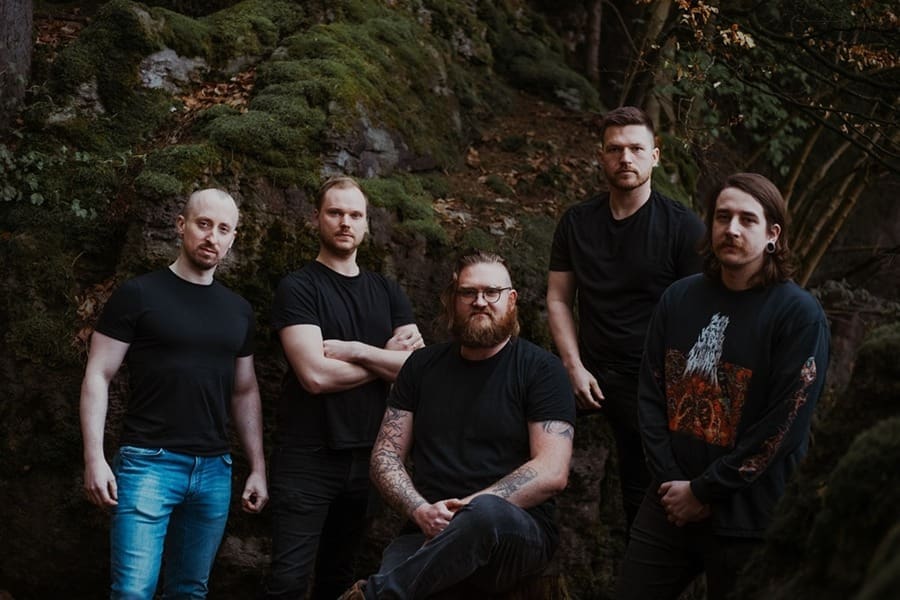
Emergenz
Paul Burd — Vocals
Markus Klein – Guitars
André Reinhold – Guitars
Philipp Jakob – Drums
Til Poot – Bass