Totenlegion — Einschlag Review
Totenlegion is a German melodic black metal entity. On 30 May 2026, the band released their independent second full-length, Einschlage.
Totenlegion, Einschlage Review: This review will evaluate every aspect of the album, from its intricate musical composition to its production.
The First Three Sins, The Summary
The First Sin, The Strings/Keys: Cold melodic black-metal riffcraft, mournful minor-key passages, sweeping atmospheric textures, and martial guitar movements forge a vast sonic battlefield where memory and devastation march side by side. The Second Sin, The Vocals: A three-pronged vocal assault of rasped anguish, layered desperation, and solemn spoken passages captures collective trauma rather than individual rage, sounding less like performers and more like witnesses to catastrophe. The Third Sin, The Percussions: Militaristic drum structures, relentless blast-beat barrages, and disciplined marching rhythms create a dynamic rhythmic framework capable of shifting between battlefield violence and reflective sorrow.
The Fourth Sin, Overall Discussion
The Battlefield Revealed
Before descending into the mechanical gears of the instrumentation, one must understand the sheer scope of the battlefield that Totenlegion has constructed. Einschlag manifests as a harrowing, forty-six-minute journey, meticulously deployed across eleven hymns.
The Line of Battle: A Campaign in Eleven Wounds
Musically, the record navigates a devastating spectrum of emotional, raw, martial atmospheric melodic black metal. This is not merely cold atmospheric isolationism; it is an industrialised storm fuelled by a grim lyrical framework entirely dedicated to the horrors of the Great War.
Every movement is deeply, thematically bound to the concepts of industrialised conflict, mechanised mass death, and the lingering, unhealed historical trauma of World War I.
The Initial RuptureEinschlag moves with the calculated, devastating momentum of a military campaign carved deeply into eleven distinct wounds. The sonic assault opens with the blunt, unyielding force of Angriff, immediately followed by the panic-stricken, desperate rupture ofFahnenflucht.
From this void, the music sinks into the haunted, spectral introspection of Stimmen der Vergangenheit, an emotional mire where memory itself transforms into a second, internal battlefield. The barrage shifts the atmospheric pressure, pulling the listener into the eerie, suffocating suspension of Im Auge des Sturms.
The Autumnal DescentThe mid-album transition centres around a striking autumnal dip in the form of Herbstgedicht, a brief, forty-second spoken-word piece delivered entirely in German. Yet, language barriers dissolve instantly here; one does not need to comprehend the literal translation to feel its weight. The chilling atmosphere of the hymn, anchored by ghostly, ethereal female vocals and solemn spoken words, captures the universal essence of grief and historical trauma flawlessly.
This transition bleeds into Herbstsonne which cools the listener’s blood without easing an ounce of the record’s crushing atmospheric weight. The record then marches blindly into the regimented, mechanical machinery of Bataillon Tod.
The Grey Ache of SurvivalWhat follows is Aufbruch tracked as the weary, agonizing act of rising again. It plays out like a grim, exhausted mobilisation — a painful step forward taken not out of hope, but out of sheer, fatalistic obligation.Before colliding with the fatal, razor-sharp clarity of the title hymn Einschlag.
By the time the final dual movements of Lazarett and Tristesse close the grim march, the record has completely shed all illusions of wartime glory or battlefield heroism.
What remains at the end of this forty-six-minute campaign is pure exhaustion, absolute ruin, and the quiet, hollow, grey ache of survival — an uncompromising, devastating chronicle of impact — physical, historical, and deeply human — delivered with the sharp, unforgiving edge of cold melodic steel.
A Symphony of Ruin
The internal devilmanship driving this record is far more than just executed; it is honed to pure, razor-sharp perfection. Both the instrumental and musical composition function as a grand, magical score rather than a standard metal arrangement.
Totenlegion effortlessly balances the raw, unpolished hostility of classic atmospheric black metal with the fluid, sweeping movements of a cinematic tragedy. Every single instrument is carefully calibrated to act as a voice within a larger, dark orchestra, ensuring that the historical horror of the battlefield is given an appropriately massive, theatrical, and emotionally devastating canvas.
The Three-Front Assault
What ultimately brings Einschlag’s heavy lyrical themes of industrialised warfare, agonising memory, desertion, and grim autumnal decay to life is the record’s exceptional vocal strategy.
Rather than leaning on a solitary frontman, the album features a cold, rasped, and chillingly emotionally detached vocal delivery executed by three separate members.
- This three-way split creates an overwhelming sense of collective trauma. The performance intentionally completely avoids hot, passionate anger; instead, it opts for a freezing, unfeeling numbness that perfectly encapsulates the psychological desolation of soldiers trapped on the front line.
Structurally, this vocal devilmanship is organized to simulate the chaotic environment of a battlefield:
- The Layered Grime — Layered harsh vocals, stacking distinct vocal takes to create a thick, suffocating wall of desperate screams that mimics the overwhelming roar of an artillery barrage.
- The Call-and-Response Phrasing — Within the album’s more narrative hymns, Totenlegion utilises sharp call-and-response phrasing. This technique makes the album feel like a frantic, desperate dialogue passing between scattered squads across a shattered landscape.
- Contrasting Textures — The subtle differences in rasp textures between the three members ensure that the vocal field remains dynamic and distinct, preventing the eleven hymns from bleeding into a monotone drone.
- The Melancholic Spoken Passages — During the album’s most introspective, sorrowful movements, the band drops the harsh screams entirely in favour of spoken-word or atmospheric passages.
These quiet, haunting interludes evoke the feeling of a soldier reading a final, rain-soaked letter from home amidst the ruins.
Tremolo and Shrapnel
The structural spine of Einschlag is dictated by the precise, fluid dual guitar interplay performed by Stefen and Christian. Their tracking is highly adaptable, deliberately mirroring the shifting emotional tones of the hymn list. On the war-driven hymns, they unleash blistering, hyper-fast tremolo-picked lead lines that slice through the mix like shrapnel.
When the narrative descends into the bleak, autumnal pieces, the guitars pivot seamlessly into weeping, melancholic minor-key motifs. Supporting the album’s overarching martial themes, they drop into heavy, rhythmic, mid-tempo riffing.
This dynamic approach allows the guitars to constantly mutate, shifting effortlessly between freezing, cold aggression and sombre, vast atmospheric passages.
The Machinery of War
Providing an iron-clad foundation beneath this guitar assault is Thomas’ bass playing. It is tracked with foundational and gritty character, choosing to lock arms with and support the guitars rather than competing with them for dominance.
This creates a dense, impenetrable low-end wall.
Atop this mud-caked foundation stands Emil’s drum devilmanship. His performance is fiercely precise and explicitly martial, matching the dark wartime concepts perfectly.
The drum structures feature a highly calculated blend of unrelenting, chaotic blast beats, rigid, march-like rhythms, and heavy, mid-tempo stomps. Yet, demonstrating remarkable versatility, Emil is equally capable of shifting into fluid, atmospheric pacing, letting the percussion breathe during the album’s deeply reflective, melancholic hymns.
Disciplined by Fire
The production of Einschlag is disciplined, unadorned, and militarily precise — the sound of a band carving its campaign into tape with no external interference. The guitars cut like cold steel, the drums march with fatalistic resolve, and the three-voice vocal phalanx gives the record its human edge: strained, exhausted, unyielding.
Nothing here is ornamental. Everything serves the impact.
Language as Weapon
Overall, Einschlag stands as a profound, atmospheric, and deeply emotional fruit of art. A massive element of this success lies in the band’s uncompromising decision to deliver the entire forty-six-minute campaign exclusively in German.
This choice is entirely non-cosmetic. The language itself actively shapes the album’s overarching atmosphere, dictating its rigid rhythmic cadence and freezing its emotional temperature. The sharp, percussive nature of the native tongue seamlessly locks horns with the martial drumming and cold melodic steel of the guitars, embedding an undeniable sense of terrifying, historical realism directly into the vocal phalanx.
The Fifth Sin, The Memorabilia
For me, Einschlag was a difficult listen the first time around — not because of the quality, but because of the sheer emotional weight of the hymns. The second and fifth tracks, in particular, carry an immense gravity. Listening through headphones, the vocals, and music intimately convey the pure horror and agonizing pain of the lyrical themes.
While I am a fan of Germany’s Kanonenfieber, who navigate similar historical and lyrical territory, Einschlag hits noticeably harder both musically and lyrically. In fact, during my very first spin, the impact of the fifth hymn was so overwhelming that I actually had to hit pause and step away for a moment to collect myself.
The Sixth Sin, The Artwork
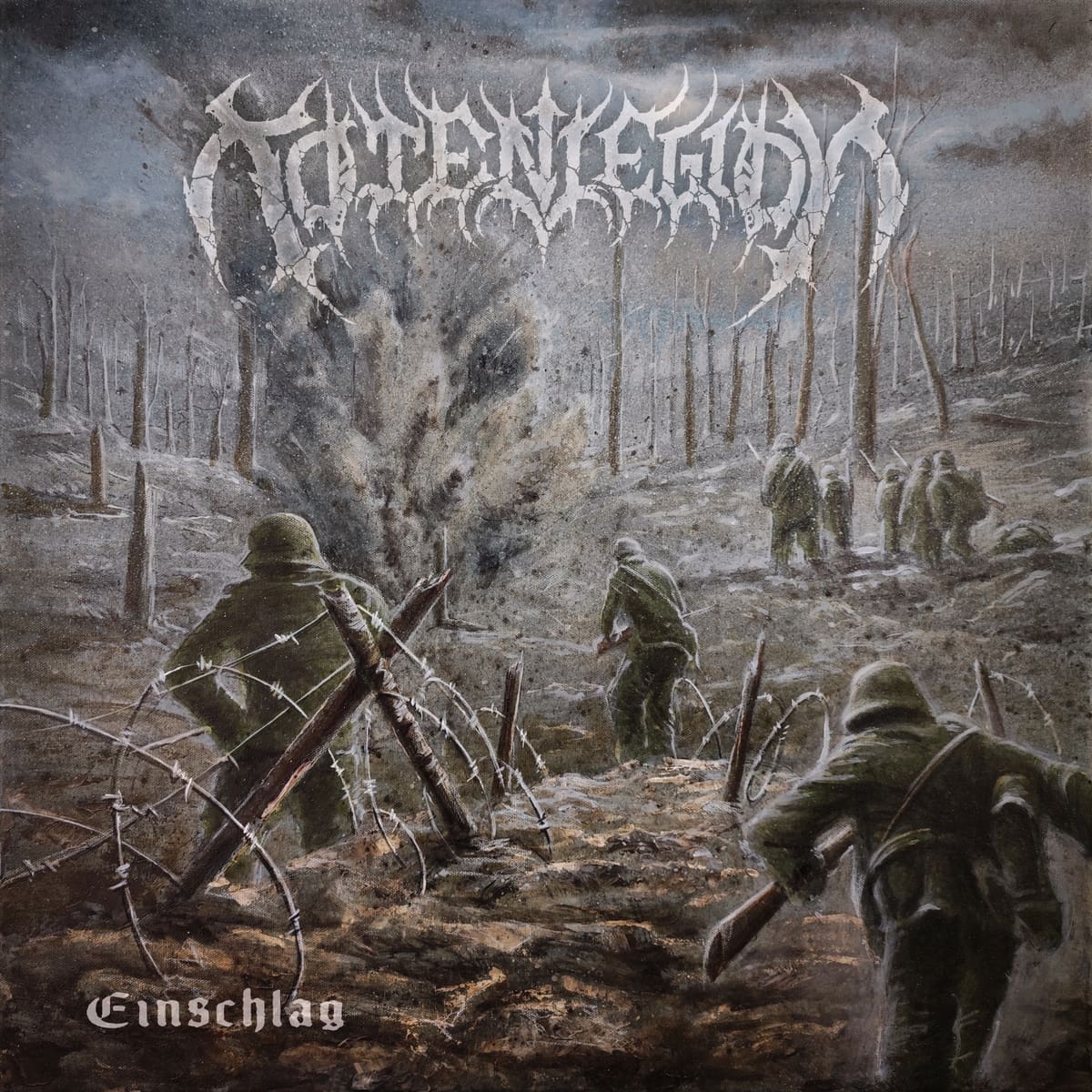
The artwork captures everything. It visualises perfectly the bleakness, the devastation, and the historical trauma embedded in the audio, serving as the ideal visual gateway to the music.
The Seventh Sin, Disrelish
Very little to disrelish. When an album manages to evoke such a visceral, physical reaction, any minor critiques pale in comparison to the sheer power of the art.
The Hymns
01. Angriff
02. Fahnenflucht
03. Stimmen der Vergangenheit
04. Im Auge des Sturms
05. Herbstgedicht
06. Herbstsonne
07. Bataillon Tod
08. Aufbruch
09. Einschlag
10. Lazarett
11. Tristesse
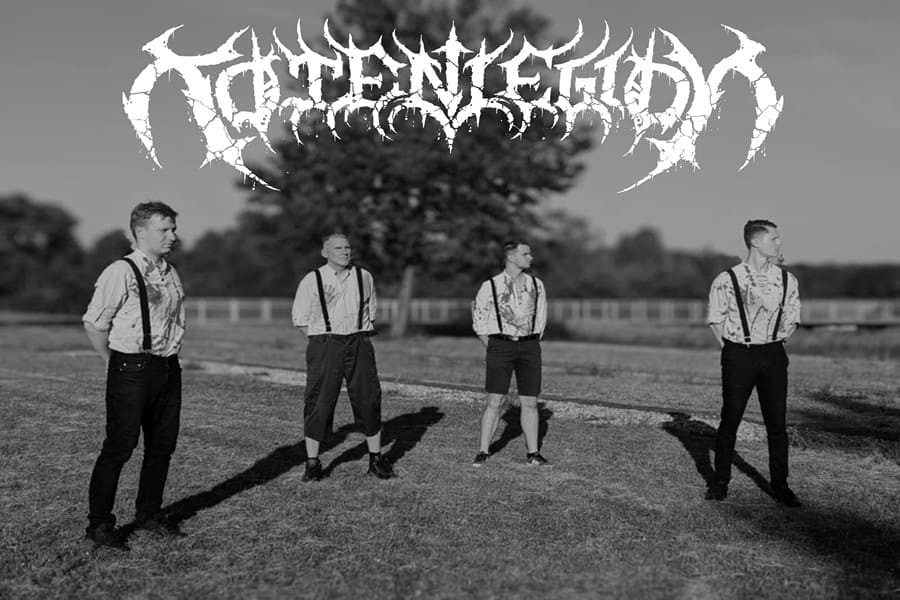
Totenlegion
Thomas — Vocals, Bass
Stefan – Vocals, Guitars
Christian – Vocals, Guitars
Emil – Drums