Tombal — Grave of the Damned Review
Tombal is an Italian death metal entity. On 12 June 2025, Tombal released their debut EP, Grave Of The Damned. Co-released via through Blood Harvest (CD) and Unholy Domain Records (cassette)
Tombal, Grave Of The Damned Review: This review will evaluate every aspect of the album, from its intricate musical composition to its production.
The First Three Sins, The Summary
The First Sin, The Strings/Keys: HM-2-soaked guitar work balances blistering tremolo-picked aggression with crushing grooves, delivering uncompromising old-school Swedish death-metal ferocity. The Second Sin, The Vocals: Delivering cavernous, commanding growls rooted in classic Scandinavian death metal, remaining forceful, intelligible, and relentlessly oppressive throughout. The Third Sin, The Percussions: Disciplined drumming unleashes relentless blast beats and punishing rhythms, driving the EP forward with precision and uncompromising intensity.
The Fourth Sin, Overall Discussion
Whispers Beneath the Stone
The very instant the listener presses the play button, the opening hymn Cryptic Invocations (Intro) greets them not with immediate chaos, but with a deeply unsettling atmospheric instrumental.
Instead of rushing headfirst into standard violence, Tombal uses this introductory space to alter the air in the room. It forces the listener to sit in the cold, damp dark of the crypt, preparing their senses for the pure underground malignancy that lies just beyond the threshold.
The Tomb Opens
As the listener crosses the catacomb threshold, they are thrown headfirst into the remaining four hymns. Clocking in at a razor-sharp, hyper-focused run-time of under fifteen minutes, Grave of the Damned carves out a path of relentless aggression and pure sonic ferocity.
Forged entirely in death, rot, decay, and relentless forward momentum — channelling the iconic, buzzsaw traditions of classic Swedish death metal. Despite the brief runtime, Tombal ensures that each of the five hymns possesses its own distinct, uncompromised character:
- Cryptic Invocations & Grave of the Damned — the threshold breaks and the tomb opens. The title hymn functions as the primary invocation — it is the sound of the dead actively rising and the soil physically splitting apart.
- Cemeterial Death Worship — the anthem of the release. Serving as a massive, mid-tempo hymn to completely rot to, anchoring the band’s old-school groove.
- Funebral Furnace — the zenith of hostility on the record, delivering the most relentlessly aggressive, fast, and violent moments of the entire album.
- Cathedrals of Rot — the grand, terrifying climax. This final piece expands the sonic soundstage, evoking the image of vast, cold underground halls lined entirely with human bones.
The Architects of Decay
The creative devilmanship on display throughout Grave Of The Damned is honed to perfection, skilfully capturing the raw, concentrated energy of a classic old-school extreme metal trio lineup.
Holding down dual responsibilities on both vocal and guitar duties is Luigi Cara, whose razor-sharp fretwork serves as the core engine of the release. The guitar architecture is drenched in a low, filthy, HM-2 tone that constantly alternates between blistering, tremolo-picked surges — evoking a relentless, bone-sawing forward motion — and crushing mid-tempo stomps built on thick, percussive down-picking.
Buried deep beneath this wall of distortion are haunting melodic fragments that briefly gleam through the rot.
Cara’s vocals act as the ritual officiant of the release, commanding the unfolding sonic violence with total authority, without ever overshadowing the instrumentation. Utilising deep, cavernous roars that are deeply rooted in the finest traditions of early Scandinavian death metal, his delivery remains forceful yet remarkably intelligible, characterised by crisp, clear phrasing that ensures every incantation hits home.
The Bones Beneath the Flesh
Providing the dark undercurrent to this sonic tomb is Massimiliano Falchi’s bass work. Instead of competing with the guitar for space, the bass lines follow the guitar lines closely, actively thickening the abrasive HM-2 roar and adding a massive sense of weight and physical body to the riffs.
This punishing foundation is locked into place by Luca Barone‘s drumming, which provides the album’s rigid skeletal structure. Rooted in classic, uncompromising death-metal discipline, the percussion is tight, relentless, and intensely aggressive. Savage blast beats appear frequently to accelerate the violence, but they are deployed with expert restraint, ensuring they never lose their devastating impact.
Forged Inside the Mausoleum
The production style of Grave Of The Damned gives the impression that the entire album was forged inside a forgotten mausoleum. Every aspect of the instrumental and musical composition is showcased with remarkable clarity despite the deliberately filthy presentation.
The soundstage places every instrument in close, suffocating proximity, surrounded by damp stone and stale, heavy air. The guitars scrape relentlessly forward like rusted blades being forcefully dragged across ossified walls, while the drums strike with a bone-dry, concussive impact. The vocals bloom outward like a commanding voice raised in a chamber built exclusively for the dead, while the bass moves as a low, funereal hum vibrating right beneath the concrete slabs.
The mix refuses any sense of studio warmth, choosing instead to highlight the cold, mineral clarity of a deep subterranean chamber. Every note remains sharp and discernible, yet it is drenched in a grim, geological isolation. Complementing this approach is the mastering, which purposely leaves the edges raw and abrasive.
The Sarcophagus Seals
Overall, Grave Of The Damned is a deeply decaying and raw fruit of art that feels like a heavy stone lid of a sarcophagus being violently slammed shut over the listener’s head.
Cathedrals of Rot, the album’s last hymn, returns to the stale air and bone-lined tomb walls from which it originated, refusing to provide a pleasant exit.
The Fifth Sin, The Memorabilia
For me, Grave Of The Damned delivered an abbreviated burst of fiercely old-school death metal that was dug up from an unmarked grave. It doesn’t sound like it was mixed on a computer; it sounds like it was exhumed. That relentless under-fifteen-minute burst of traditional Swedish-style ferocity leaves an indelible, filthy mark on the listener, proving that a release does not need an hour-long runtime to leave a permanent, crushing scar.
The Sixth Sin, The Artwork
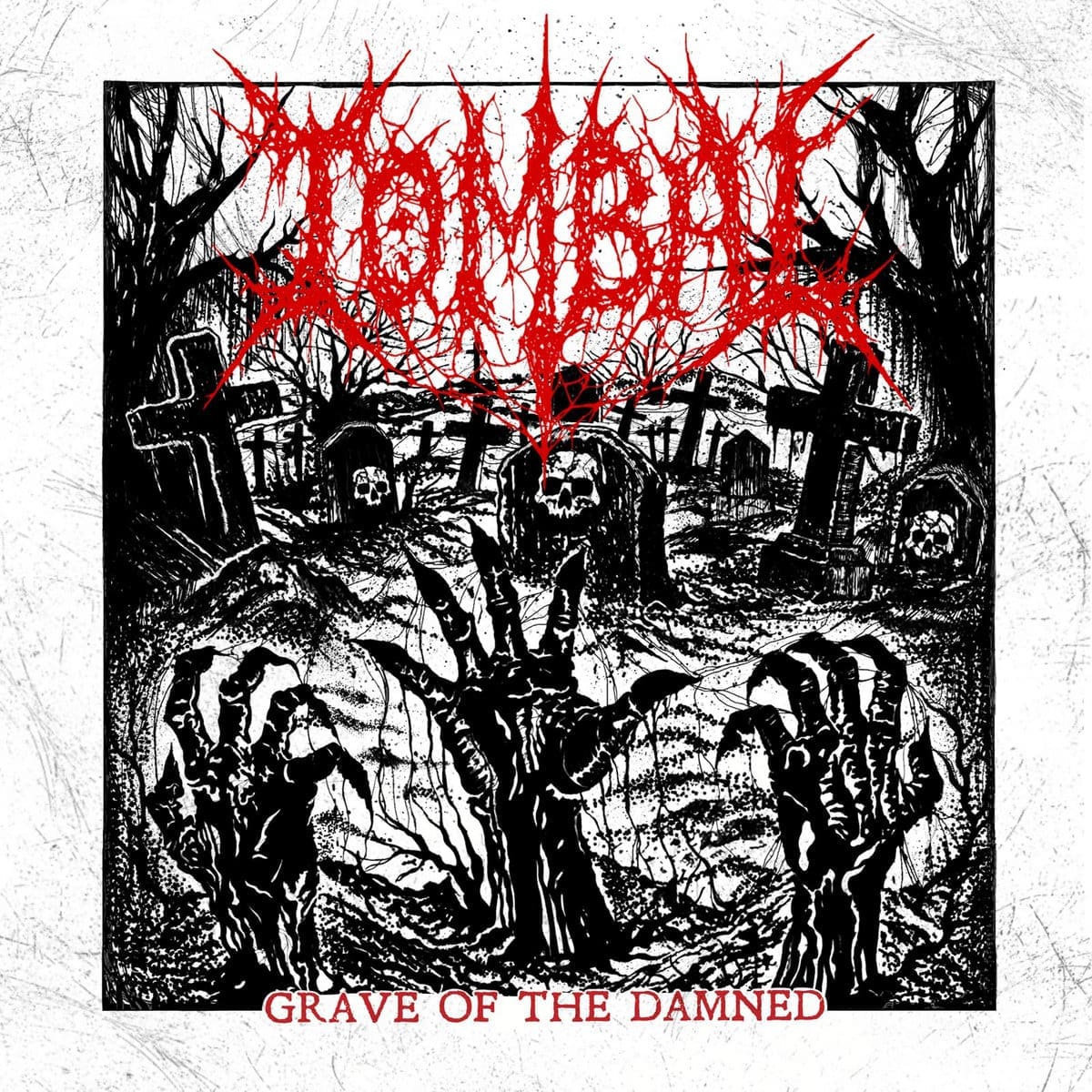
The artwork entirely avoids modern, digital trends or clean, artificial graphics, choosing instead a gritty visual style that feels like a classic, hand-drawn relic of the early tape-trading days.
The Seventh Sin, Disrelish
I find little to actively disrelish across this entire, blistering release. However, as a hyper-focused, raw blast of pure underground extremity, its short, razor-sharp execution is precisely what keeps you coming back to rot all over again.
The Hymns
01. Cryptic Invocations (intro)
02. Grave of the Damned
03. Cemeterial Death Worship
04. Funebral Funrnace
05. Cathedrals of Rot
Tombal
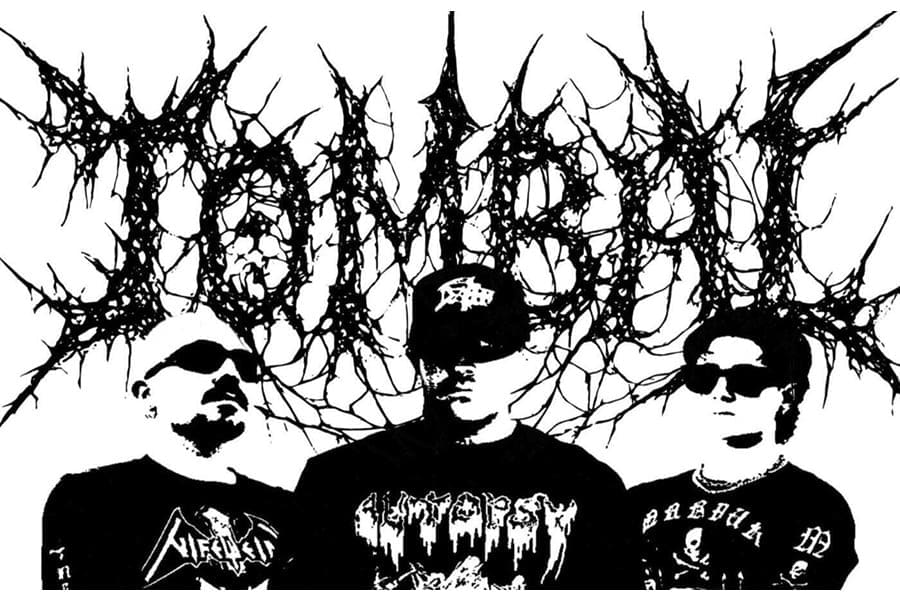
Luigi Cara — Guitars, Vocals
Massimiliano Falchi – Bass
Luca Barone – Drums
Hear The Music
Social Links
Unholy Domain Records | Bandcamp