Azgaal — Divine Hitman Review
Azgaal is a French one-man black metal entity forged around 2000 and operating under the solitary command of Naïwyn. On 28 August 2026, Azgaal returned with its ninth full-length, Divine Hitman, released through Fetzner Death Records.
Azgaal, Divine Hitman Review: This review will evaluate every aspect of the album, from its intricate musical composition to its production.
The First Three Sins, The Summary
The First Sin, The Strings/Keys: Razor-edged tremolo riffing, melodic leads, grounded bass, and restrained synths forge an expansive celestial atmosphere. The Second Sin, The Vocals: Piercing shrieks, snarls, deeper growls, clean singing, and spoken passages deliver a commanding bilingual invocation. The Third Sin, The Percussions: Dynamic blast-driven aggression and disciplined rhythmic shifts follow each hymn’s changing intensity.
The Fourth Sin, Overall Discussion
The Divine Executioner
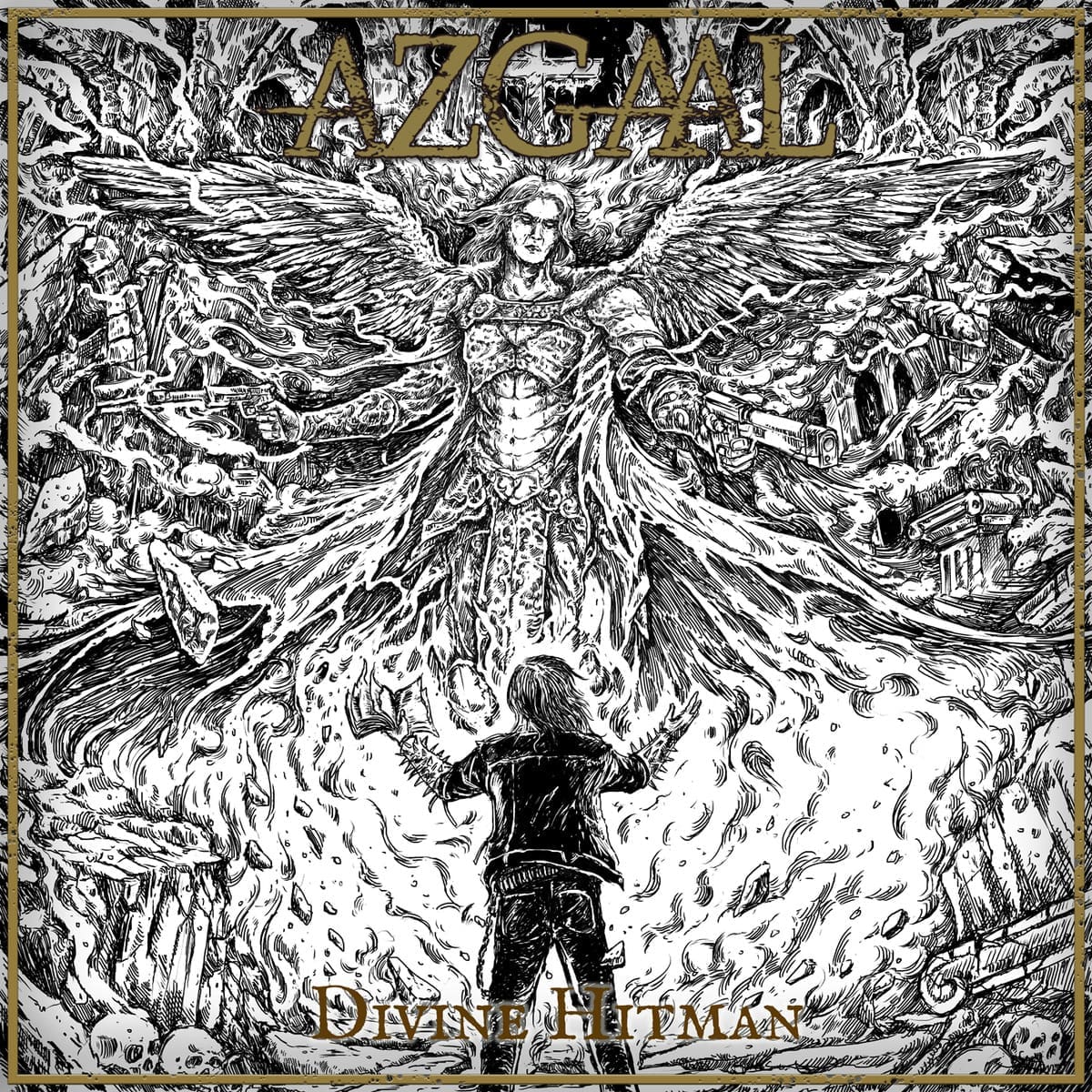
The moment the listener presses play, they are drawn into an unyielding trial spanning under sixty minutes across ten hymns, all constructed around the album’s central concept. The title Divine Hitman refers directly to Daovith, an angelic figure linked to the esoteric mystical text Sefer Ha-Razim.
Through this figure, Azgaal envisions Daovith as a cold, divine executioner charged with administering merciless punishment upon humanity for its systemic transgressions.
The Divine Executioner
Divine Hitman deliberately sidesteps conventional, surface-level Satanic black metal tropes. Instead, Azgaal constructs a theological nightmare concerned with ritual spirituality, esoteric mysticism, and unyielding celestial judgment. Humanity is not tempted or seduced — it is systematically tried, condemned, and executed under the cold, absolute authority of a divine decree.
One Architect, Ten Decrees
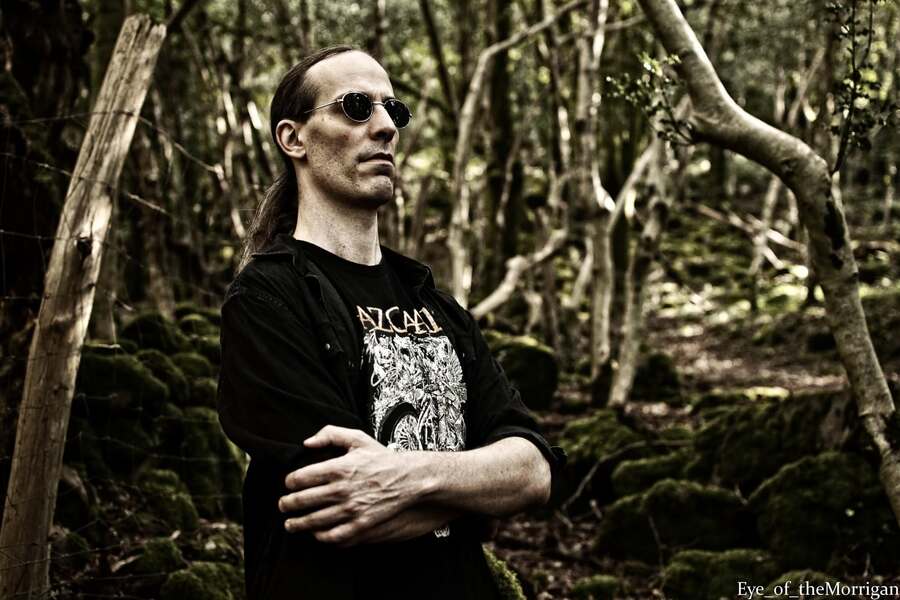
The overall composition and execution across Divine Hitman is scored to perfection. The devilmanship is controlled entirely by Naïwyn, who commands all vocals and instrumentation; consequently, the record operates with the razor-sharp discipline of a solitary mastermind executing a divine decree.
Naïwyn’s execution is honed to perfection, while the songcraft remains remarkably tight, sharp, and meticulously arranged. Naïwyn ensures that each composition possesses its own distinct structural identity; no two hymns feel identical.
The dynamic shifts across the hymn-list keep the near-sixty-minute runtime engaging, proving that Divine Hitman is built on genuine songwriting rather than repetitive, monotonous filler.
The Progressive Anatomy of Judgment
Divine Hitman successfully transforms cold celestial judgment into a sophisticated form of atmospheric black metal. Across its runtime, Naïwyn balances razor-sharp aggression with rich melodic passages, solemn majesty, and progressive structural movement:
The Progressive Spectrum: Rather than relying purely on relentless speed, the record builds its atmosphere on dynamic contrast — interweaving cold, aggressive black metal riffing with majestic melodic flourishes and progressive song structures.
- The Progressive Spectrum — rather than relying purely on relentless speed, the record builds its atmosphere on dynamic contrast — interweaving cold, aggressive black metal riffing with majestic melodic flourishes and progressive song structures.
- The Sunken Threshold — the seven-minute instrumental “In the Bowels of the Sunken City” acts as a vital structural pivot. Beginning in a clear, serene sonic space, it slowly accumulates weight, heavy distortion, and oppressive density. It serves as an atmospheric threshold, resetting the listener’s palate right before “The Bewitched Souls” erupts to restore vocal fury and full-throated intensity.
- The Gothic Finale — the album’s closure, “The Occultist Error,” stands as a masterclass in dynamic synthesis. It pairs jagged, razor-raw black metal riffing with haunting, melancholic passages that possess an almost Gothic character — leaving a chilling, majestic resonance as the final decree concludes.
Strings Forged for Execution
The guitar architecture stands as the primary driving engine across Divine Hitman. Naïwyn crafts a dynamic, multi-layered string attack that balances raw black metal velocity with technical control and atmospheric depth. The guitars move effortlessly across diverse sonic landscapes. Naïwyn pairs blistering, raw tremolo-picking with compact, tight-muted riffs that carry a distinct blackened thrash and classic heavy metal character.
When the tempo slows, the guitars shift into dissonant, atmospheric passages and clean, ringing sections punctuated by technically controlled, melodic lead solos. The bass work remains clearly present throughout the mix rather than being lost beneath the distortion. It solidifies the album’s overall rhythmic weight while occasionally introducing subtle melodic motion underneath the guitar substrate, providing a rich, grounded foundation for every shift in tempo.
The Voice, Battery & Ethereal Veil
The vocal performance, drum architecture, and background synth arrangements across Divine Hitman reinforce the album’s dynamic, multi-layered approach to celestial judgment.
Naïwyn’s vocal delivery commands a vast, expressive range — combining harsh black metal screams, piercing snarls, and deeper black/death-inflected growls with clean singing and spoken-word passages. The album alternates seamlessly between French and English, endowing the French-language hymns with a distinct, regal, and deeply individual character.
Rather than resorting to endless, continuous blast beats, the drumming precisely follows each composition’s rise-and-fall structure. The percussion hammers with unrelenting violence during heavy passages, yet recedes into steady, disciplined patterns whenever melodies, clean vocals, or atmospheric elements require room to resonate.
The ethereal synth background consists of restrained, haunting textures that hover low in the mix. Never overbearing, these subtle layers expand and deepen the record’s ethereal, occult, and ritualistic atmosphere.
Rawness Within the Celestial Chamber
The production across Divine Hitman achieves an ideal balance between raw, underground black metal grit and expansive atmospheric depth. The mix ensures that every instrument — from the biting guitar substrate and present bass lines to the background synths and dynamic vocal shifts — remains clear, legible, and spiritually weighty across its near-sixty-minute runtime.
The Final Decree
Overall, Divine Hitman is an extraordinary, meticulously crafted fruit of art. The final decree ends with a chilling, majestic resonance as the album folds into the void. Solitary architect Naïwyn has delivered a deeply compelling ten-hymn esoteric black metal record — flawlessly fusing cold aggression, progressive structural shifts, and French/English ritualistic narratives into an unforgettable trial of divine judgment.
The Fifth Sin, The Memorabilia
For me, Divine Hitman ultimately proved to be an extraordinary black metal record — masterfully capturing the raw, unholy spirit of Les Légions Noires alongside majestic, atmospheric, and deeply occult traditions. The overall composition and solitary devilmanship stand as a true fruit of art; every hymn and arrangement is nailed to perfection.
Experiencing this entire (under) sixty-minute trial through headphones is an immediate pleasure — particularly during those clean, majestic passages where the ethereal space truly opens up.
While there is not a single weak link across the entire hymn list, the seventh hymn, In The Bowels Of The Sunken City, and the eighth hymn, The Bewitched Souls, stand out as my personal favourite monumental peaks.
The Sixth Sin, The Artwork
The visual presentation directly mirrors and elevates the album’s core lyrical concept — serving as a striking aesthetic gateway into the esoteric domain of Daovith and the cold, unyielding reality of divine execution.
The Seventh Sin, Disrelish
There is absolutely nothing to disrelish within the musical spectrum of Divine Hitman. Across its ten-hymn trial, Azgaal maintains a remarkable balance between raw aggression, atmospheric depth, melodic grandeur, and progressive movement without allowing one element to overwhelm another. Even across its near-sixty-minute runtime, there is no discernible weakness capable of breaking the album’s carefully sustained atmosphere.
For me, Divine Hitman remains compelling from the opening decree to the final judgment — a meticulously constructed fruit of art where every compositional shift serves the greater celestial trial.
The Hymns
01. Versipellis
02. Dans le flammes du purgatoire
03. The Reaper Comes To You
04. La marche du pénitent
05. To The Ice Palace
06. Breaker of the Tides
07. In The Bowels of the Sunken City (instrumental)
08. The Bewitched Souls
09. Finis Temporis
10. The Occultist Error
Azgaal
Naïwyn – All Instruments
Hear The Music
Social Links
Fetzner Death Records | Home Page
Fetzner Death Records | Facebook